

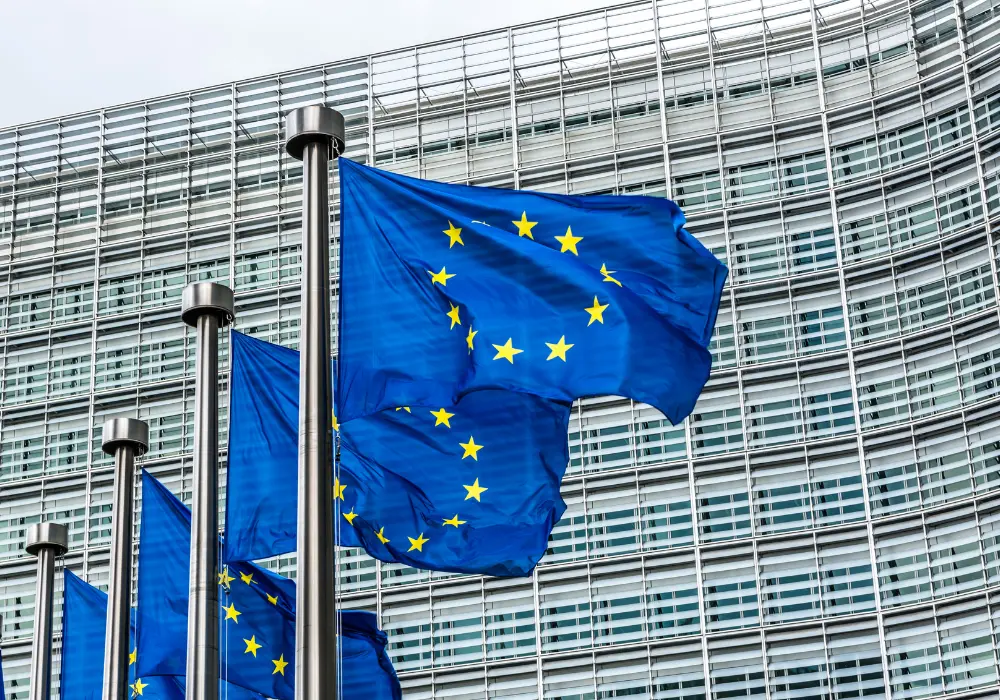
The global narrative surrounding climate action has undergone a fundamental shift, moving from the idealistic goals of total mitigation to the pragmatic necessity of "resilience," a theme that dominated the recent New York Climate Week and is set to define the European Union’s upcoming policy agenda. As the EU prepares to release its highly anticipated climate resilience framework later this month, the urgency of the matter is underscored by a sobering summer in which record-breaking heatwaves resulted in at least 35,000 excess deaths across the continent. This shift in focus reflects a growing recognition that climate change is no longer a future threat to be avoided, but a present reality that must be managed through robust infrastructure, secure supply chains, and strategic international alliances.
In this evolving landscape, the concept of "collective resilience" has emerged as a cornerstone of a burgeoning partnership between the European Union and Canada. This was the central message delivered by Canadian Prime Minister Mark Carney during a recent landmark address to the European Parliament. The speech followed a significant geopolitical development: European Commission President Ursula von der Leyen’s unexpected proposal to grant Canada "associate membership" within the EU. While the legal definitions of such a status remain opaque and unprecedented within the EU’s existing framework, the proposal signals a profound realignment of Western powers seeking to navigate an increasingly volatile global environment.
The Strategic Logic of an EU-Canada Alliance
The move toward an EU-Canada associate membership, though legally complex, is rooted in the mutual desire for strategic autonomy. For the European Union, the transition to a green economy requires an immense and steady supply of critical raw materials and energy—resources that are currently dominated by China or subject to the shifting political winds of the United States. Canada, conversely, seeks to diversify its partnerships and position itself as a premier global supplier of the "building blocks" of the energy transition.
The proposed alliance aims to bridge the gap between the EU’s regulatory leadership and Canada’s resource wealth. Despite internal debates and recent revisions to the European Green Deal intended to address industrial competitiveness, President von der Leyen has remained steadfast, asserting that Europe "can, must and will stay the course" on its climate targets. By integrating Canada more closely into the European fold, the bloc hopes to secure the materials necessary for wind turbines, electric vehicle (EV) batteries, and solar panels, thereby reducing its vulnerability to external shocks.
The Evolution of Mark Carney: From Central Banker to Political Leader
The architect of this new Canadian strategy, Mark Carney, is a figure well-versed in the intersection of finance and climate policy. His career trajectory provides essential context for Canada’s current diplomatic pivot. Before entering the political arena, Carney served as the Governor of the Bank of England, where he was a pioneer in integrating climate risk into financial stability assessments. He was instrumental in the creation of the Task Force on Climate-related Financial Disclosures (TCFD), which mandated that UK financial institutions account for climate-related risks in their governance structures.
Carney’s influence extended to the global stage as the UN Special Envoy on Climate Action and Finance and the leader of the Glasgow Financial Alliance for Net Zero (GFANZ). However, his transition to the role of Prime Minister has brought new challenges and criticisms. His domestic record is increasingly viewed as a departure from his previous role as a "climate champion." In recent months, Carney has faced backlash for policy reversals on carbon taxation and the relaxation of EV mandates—moves critics argue were necessitated by political survival in a country with a large carbon-intensive industrial base.
Furthermore, a recent proposal to include fossil-fuel abatement technologies within Canada’s sustainable finance taxonomy has sparked accusations of "greenwashing." Skeptics argue that by labeling carbon capture and storage for oil and gas as "sustainable," the Carney administration is diluting the very standards he once helped establish. This tension highlights the difficult balancing act Carney must perform: maintaining international climate credibility while managing the economic realities of a resource-rich nation.
Resource Diplomacy and the Critical Mineral Race
Central to Canada’s appeal to the European Union is its vast mineral wealth. Prime Minister Carney has positioned Canada as a "reliable and alternative partner" to the United States, particularly as the latter grapples with internal political divisions and a trade agenda increasingly defined by protectionist tariffs. In his remarks to MEPs, Carney emphasized that Canada is a top producer of 10 of the most essential critical raw materials required for the energy transition, including lithium, nickel, cobalt, and copper.
"Canada brings energy at huge scale and in every form that the transition requires," Carney stated, signaling that Canada’s strategy involves not just "green" energy, but a comprehensive energy portfolio that includes hydrogen, nuclear, and abated fossil fuels. This "all-of-the-above" energy strategy is designed to meet the EU’s immediate needs as it attempts to decouple from Russian gas and reduce its reliance on Chinese-processed minerals.
The timing of this diplomatic outreach is significant. With the United States entering a period of potential political volatility ahead of its midterm elections and the ongoing geopolitical tensions spurred by the energy crisis and conflicts in the Middle East, Canada sees a window of opportunity. By aligning with the EU, Canada aims to insulate itself from the "climate denialism" or isolationist tendencies that have occasionally surfaced in U.S. policy circles.
A Timeline of Growing Cooperation
The path toward this potential associate membership has been marked by several key milestones:
- September 2023: Record-breaking summer temperatures in Europe lead to a re-evaluation of the EU’s climate adaptation strategies, placing "resilience" at the top of the legislative agenda.
- January 2024: At the World Economic Forum in Davos, Mark Carney delivers a speech outlining Canada’s role as a "stabilizing force" in the global energy market, catching the attention of European leaders.
- Summer 2024: The European Commission begins drafting the Climate Resilience Framework, moving beyond mere emissions reductions to focus on water security, infrastructure protection, and supply chain integrity.
- Current Month: Mark Carney addresses the European Parliament, welcoming the "associate membership" proposal and setting the stage for the upcoming EU-Canada Summit.
The upcoming summit, scheduled just days before the U.S. midterm elections, is expected to provide the first concrete details on the legal and economic parameters of the EU-Canada relationship. Analysts expect discussions to focus on "green corridors" for shipping, joint investment in critical mineral processing, and the alignment of carbon pricing mechanisms to prevent trade disputes.
Geopolitical Implications for Middle Powers
The deepening ties between the EU and Canada represent a broader trend of "middle powers" seeking to exert influence in a world dominated by the U.S.-China rivalry. Both China and the United States have adopted divergent paths regarding the climate transition; while China dominates the manufacturing of green technology, its domestic coal consumption remains high. Conversely, the U.S. has passed landmark climate legislation like the Inflation Reduction Act but remains politically polarized on the long-term viability of the transition.
In this context, the EU and Canada are attempting to build a "third way" that prioritizes democratic values, environmental standards, and economic security. However, this path is fraught with fiscal and political obstacles. Many EU governments are currently facing "fiscal headaches" due to rising interest rates and the need for increased defense spending in response to regional conflicts.
Furthermore, the rise of far-right rhetoric in Europe has shifted the language of the green transition. Decarbonization is increasingly being framed not just as an environmental necessity, but as a quest for "re-industrialization" and "competitiveness." This shift in rhetoric is a pragmatic response to voters’ concerns about energy costs and job security. By framing climate action as a matter of national and regional resilience, leaders like von der Leyen and Carney are attempting to maintain public support for the transition in a more hostile political environment.
Conclusion: Pragmatism as the New Climate Paradigm
The emergence of "resilience" as the dominant theme in climate discourse signifies a maturing of the movement. It is an acknowledgment that the world has entered a period of permanent volatility, where geopolitical, economic, and environmental risks are inextricably linked. The proposed alliance between the EU and Canada is the most visible manifestation of this new pragmatism.
Whether the "associate membership" becomes a formal legal reality or remains a symbolic gesture of cooperation, the underlying shift is clear: the energy transition is now a core component of national security and industrial strategy. For Canada, it is an opportunity to reclaim its status as a global leader by leveraging its natural resources. For the EU, it is a necessary step toward strategic autonomy.
As the world watches the outcomes of the upcoming EU-Canada summit, the success of this partnership will be measured by its ability to deliver tangible results: secure mineral supplies, stable energy prices, and a measurable increase in the resilience of infrastructure against the inevitable shocks of a changing climate. In an ever more fragmented world, such collaborations may be the only way to ensure that climate action remains a global priority rather than a casualty of geopolitical strife.
