

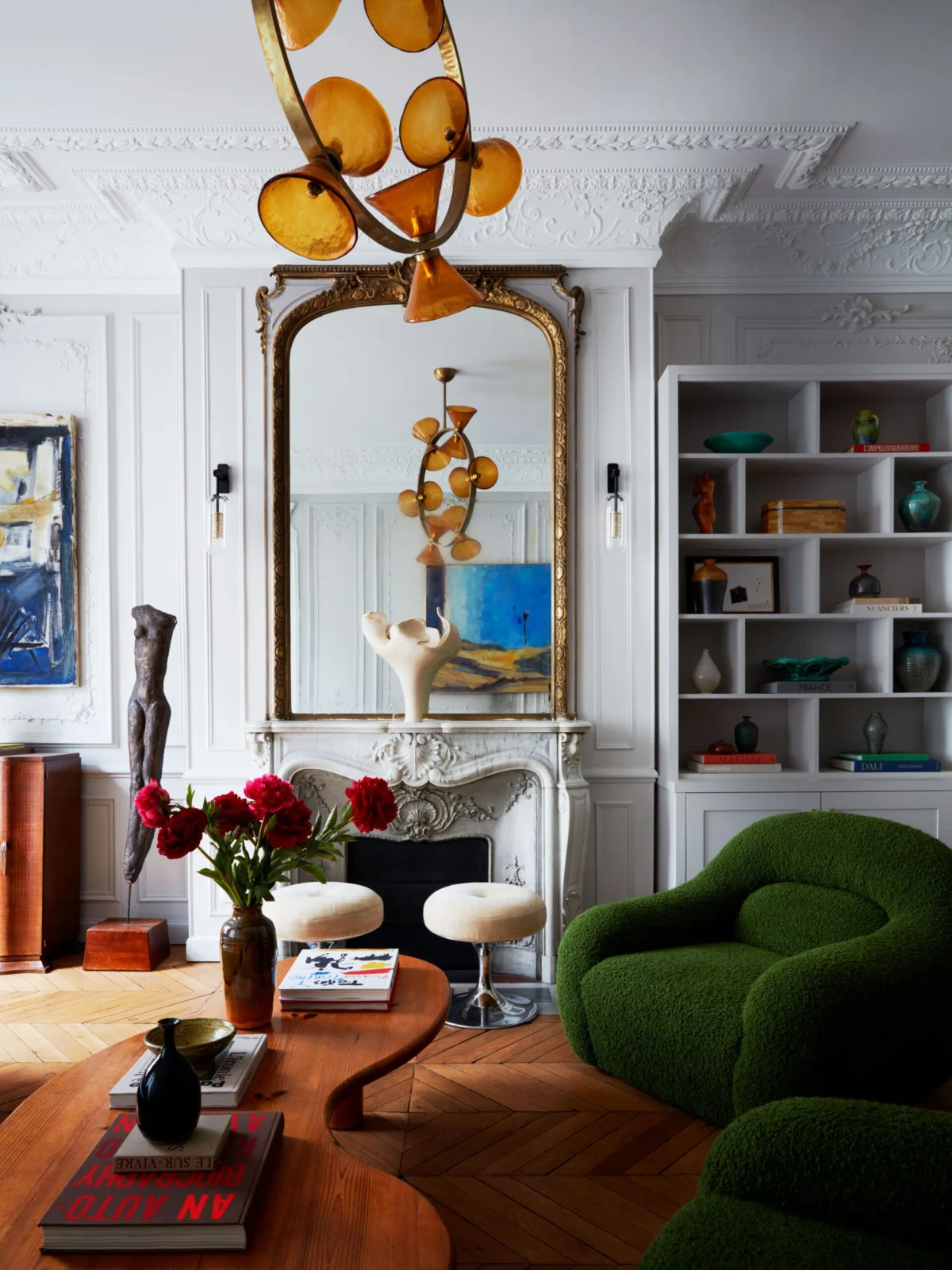
Renowned fashion designer and interior decorator Christian Siriano has officially revealed his latest architectural endeavor: a meticulously restored four-bedroom pied-à-terre located in the heart of Paris’s historic eighth arrondissement. The acquisition and subsequent renovation mark a significant milestone in Siriano’s career, signaling his deepening commitment to his burgeoning interior design practice, Siriano Interiors. Having frequented the French capital since 2009 to present his eponymous clothing line, Siriano’s transition from a visitor to a homeowner reflects both a personal sanctuary and a professional evolution. The property, shared with his partner, menswear designer Kyle Smith, serves as a testament to the intersection of high fashion, historical preservation, and modern residential luxury.

A Strategic Acquisition in the Eighth Arrondissement
The search for the perfect Parisian residence was a rigorous process that saw Siriano evaluate approximately 15 different properties. His criteria were specific: a central location that maintained a classic Parisian aesthetic, characterized by grand windows, Juliet balconies, and a minimum of four bedrooms to accommodate both personal use and professional hosting. The eighth arrondissement, home to the Élysée Palace and the iconic Avenue des Champs-Élysées, provided the ideal backdrop for a designer whose brand is synonymous with elegance and red-carpet glamour.
The eighth arrondissement is historically recognized as a center of power and luxury in Paris. By securing a residence in this district, Siriano has positioned himself within the "Golden Triangle" of French commerce and culture. Real estate experts note that properties in this sector are among the most coveted in the world, often retaining value through architectural integrity and proximity to the city’s most significant cultural landmarks. For Siriano, the choice was as much about the "fashion mecca" status of the city as it was about finding a space that resonated with his maturing design sensibilities.

Architectural Preservation and the Versailles Legacy
Upon acquiring the historic building, Siriano opted for a preservation-first approach. Rather than gutting the interior to create a contemporary open-concept space, he adhered strictly to the existing floor plan. This decision allowed for the protection of original architectural details that are increasingly rare in modern renovations. Among the preserved elements are the ornate fireplaces, overmantel mirrors, and the iconic parquet de Versailles flooring.
The parquet de Versailles is a specific style of wood flooring characterized by large square panels with a diagonal weave, originally commissioned for the Palace of Versailles in 1684 to replace deteriorating marble floors. By retaining these floors, Siriano has anchored his home in 17th-century French craftsmanship. He noted with humor during the reveal that the intricate crown moldings within the apartment are "practically older than America," highlighting the weight of history that defines the residence. This reverence for the past provides a structural counterpoint to the vibrant, modern aesthetics introduced through his choice of color and furnishings.

A Departure in Color: From Zen to Chromatic Expression
One of the most striking aspects of the renovation is Siriano’s bold use of color, a departure from his typical preference for "zen" or neutral domestic environments. In his American residences, such as his home in Westport, Connecticut, Siriano often favors a more muted palette to provide a psychological escape from the high-energy, color-saturated world of fashion. However, he concluded that the inherent atmosphere of Paris—which he describes as naturally relaxing—afforded him the freedom to experiment with a more diverse chromatic range.
The design journey begins in a lilac-toned entryway, which leads into a dining room painted in Benjamin Moore’s Woodland Green. This mint-hued space was inspired by vintage lighting fixtures found during the curation process. The living room utilizes a more subtle backdrop of Benjamin Moore’s Gray Owl, with trim in Chantilly Lace, allowing the vibrant abstract paintings and vintage furniture to command attention. Siriano’s lifelong affinity for textiles—a passion inherited from his mother, who crafted her own upholstery and garments—is evident in the lush textures found throughout the home, from velvet seating to intricate drapery.

The Curation of 20th-Century European Design
In a move that distinguishes this project from his previous interior design commissions, Siriano furnished the apartment almost entirely with vintage pieces. He sourced items from the puces (flea markets) of Paris and second-hand shops in the Marais district, focusing on French and Italian designs from the 1930s through the 1960s.
Key pieces within the collection include:

- Pierre Chapo Furnishings: A table by the celebrated French furniture designer Pierre Chapo anchors the living room. Chapo is known for his masterful joinery and use of solid elm, and his work has seen a resurgence in the luxury design market.
- Art Deco Accents: A 1930s Art Deco cabinet provides a geometric contrast to the flowing lines of the apartment’s original architecture.
- Mid-Century Italian Design: The dining room features a 1950s Italian credenza and 1970s Italian chairs, showcasing the evolution of post-war European aesthetics.
- Contemporary Art: Unattributed abstract paintings are hung throughout the residence, providing a modern dialogue with the historic surroundings.
This commitment to vintage sourcing reflects a broader trend in high-end interior design toward sustainability and "slow decorating," where rooms are assembled over time based on intuition and the discovery of unique objects rather than mass-produced sets.
The Parisian Lifestyle and Creative Inspiration
The pied-à-terre is not merely a static showcase of design; it is a functional hub for Siriano’s European operations and personal life. His daily routine in the city involves walks to open-air markets for fresh produce and flowers, a ritual that informs his sensory approach to design. Proximity to the Picasso Museum and the Sacré-Cœur Basilica provides a constant stream of visual inspiration, while the Château de Versailles remains a frequent destination for the couple to study classical decorative arts.

The residence also serves a dual purpose as a "crash pad" for high-profile friends, such as supermodel Coco Rocha, and as a viewing suite for Siriano’s latest fashion collections. This multi-functional use of the space highlights the modern reality for global creatives who require homes that can transition seamlessly from private sanctuaries to professional showrooms.
Market Analysis: The Rise of the Designer-Decorator
Siriano’s successful foray into Parisian real estate and interior design mirrors a larger industry shift. Fashion designers like Ralph Lauren, Giorgio Armani, and Diane von Furstenberg have long established home lines, but a new generation of designers is taking a more hands-on approach to full-scale interior architecture. Siriano Interiors, launched to formalize his design work, has quickly gained traction, with projects ranging from commercial hotels to private mansions in Richmond, Virginia.

Market data suggests that the luxury home decor market is projected to grow significantly through 2030, driven by a consumer desire for curated, "lifestyle" environments that reflect the brand identity of their favorite fashion houses. By establishing a permanent and highly publicized foothold in Paris, Siriano has elevated his brand from a New York-centric fashion label to a global lifestyle entity.
Implications for Future Design Trends
The reveal of the Siriano pied-à-terre offers several insights into the future of luxury residential design:

- Hyper-Personalization: The move away from "safe" neutrals toward bold, personal color palettes (like lilac and mint) suggests a waning interest in standardized luxury.
- Historical Integration: The meticulous preservation of the eighth arrondissement property proves that modern luxury can—and perhaps should—exist within the constraints of historical architecture.
- The Vintage Premium: The decision to use 100% vintage furniture underscores a shift toward "collected" interiors that prioritize craftsmanship and history over brand-new showroom pieces.
As Siriano continues to expand his footprint in both the fashion and interior design sectors, his Parisian home stands as a definitive statement of his aesthetic philosophy. It is a space where the "fashion mecca" meets the "sanctuary," proving that for the modern designer, the home is the ultimate canvas for creative expression. The project, featured in the September issue of Architectural Digest, serves as a blueprint for how to honor the past while boldly embracing a colorful, curated future.
