

The atmosphere inside a conference center in The Hague last October was one of calculated academic and diplomatic rigor, as a roomful of Asia-watching European officials, policy analysts, and industry experts gathered for a high-stakes symposium on the future of EU-China relations. The mood shifted abruptly when news broke that Beijing was expanding its export controls on rare earths and other strategic minerals. This was not merely another incremental update to trade policy; it represented a fundamental shift in the geopolitical landscape. Crucially, the new measures introduced an extraterritorial element that sent shockwaves through European capitals. Beijing’s updated regulations stipulated that China could deny exports not only to direct purchasers but could also restrict products manufactured in third countries if those products contained Chinese-origin rare earth content or utilized controlled inputs from Chinese sources.
In practical terms, this development granted Beijing the authority to effectively choke critical segments of European high-tech and industrial supply chains, even when the final manufacturing processes occurred well outside of Chinese borders. The implications extended beyond civilian technology into the realm of global security. These controls meant that Beijing could potentially hamper international efforts to provide military aid to Ukraine in its ongoing war against Russia. For instance, if a surveillance drone or a precision-guided munition produced in a third country contained even a trace of Chinese rare earth elements, Beijing could theoretically block the supply of the raw materials necessary to sustain that production line.
During a panel discussion on that consequential day, Dominic Porter, who manages relations with China at the European External Action Service (EEAS)—the European Union’s de facto foreign office—was asked a pointed question: was this the lowest point in the bilateral relationship between the EU and China? Porter’s response was a somber reflection of the current diplomatic climate. He noted that it was not particularly enjoyable for a diplomat to admit to shepherding a steadily declining relationship on a daily basis for several years, but he conceded that it was difficult to disagree with the assessment that relations had reached a historic nadir.
The Strategic Significance of Rare Earth Elements
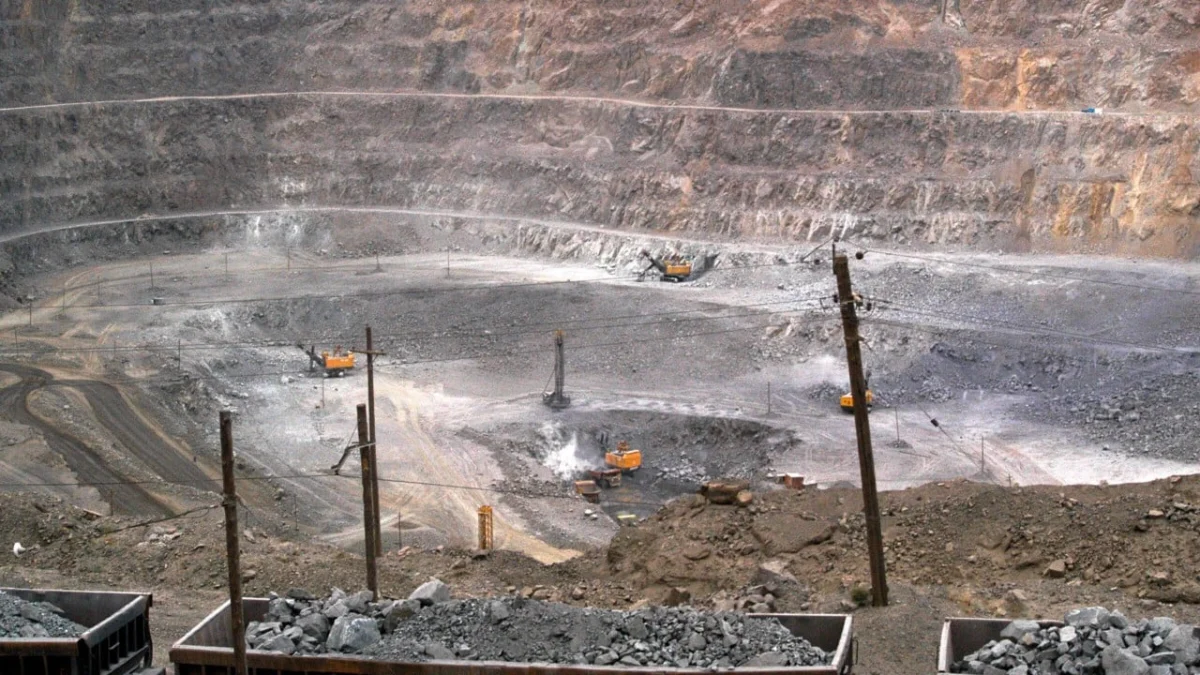
Rare earth elements (REEs) are a group of 17 chemically similar metals that are essential to the modern global economy. Despite their name, they are relatively abundant in the earth’s crust, but they are rarely found in concentrations high enough for economical extraction. More importantly, the chemical processing required to separate these elements is complex, energy-intensive, and environmentally hazardous.
China’s dominance in this sector is not a matter of geological luck but the result of decades of industrial policy. As of late 2023, China accounted for approximately 60% of global rare earth mining and nearly 90% of the world’s refining and processing capacity. For specific heavy rare earths like dysprosium and terbium—critical for the permanent magnets used in electric vehicle (EV) motors and wind turbines—China’s market share is nearly 100%.
For Europe, which has positioned itself as a global leader in the green energy transition, this dependency represents a profound strategic vulnerability. The European Union currently imports about 98% of its rare earth requirements from China. Without these minerals, the production of wind turbines, electric vehicles, and even high-end consumer electronics like smartphones and laptops would grind to a halt.
The Extraterritorial Reach of Beijing’s Trade Policy
The introduction of extraterritoriality into China’s export control regime mirrors, in many ways, the "Foreign Direct Product Rule" used by the United States to restrict global access to American semiconductor technology. By asserting control over the entire lifecycle of its rare earth exports—from raw ore to refined oxides and even to components integrated into foreign-made goods—Beijing has signaled its willingness to use its market dominance as a tool of coercive diplomacy.
This move marks a departure from previous years where trade disputes were largely localized or focused on direct tariffs. By targeting third-country manufacturing, China has created a "Sword of Damocles" hanging over European industries. If a European aerospace firm sources magnets from a supplier in Southeast Asia that uses Chinese-processed neodymium, that firm is now subject to the whims of the Chinese Ministry of Commerce. This creates a climate of extreme uncertainty, discouraging long-term investment in technologies that rely on these critical inputs.
A Chronology of Escalating Tensions
The October announcement did not occur in a vacuum. It was the latest in a series of escalatory steps taken by Beijing in response to Western efforts to "de-risk" their economies and limit China’s access to advanced technology.
- July 2023: China announced export restrictions on gallium and germanium, two metals essential for the semiconductor and telecommunications industries. These restrictions were widely seen as a retaliation for US-led efforts to block China’s access to high-end chips.
- October 2023: Beijing expanded controls to include certain types of graphite, a key component in the anodes of lithium-ion batteries used in electric vehicles.
- Late October 2023: The announcement of the extraterritorial rare earth controls coincided with the symposium in The Hague.
- Late October 2023 (Busan Summit): Following a high-stakes meeting between President Xi Jinping and President Donald Trump in Busan, South Korea, the controls were temporarily paused. While this provided immediate relief to global markets, it did little to resolve the underlying structural tensions.
The pause in controls following the Busan summit highlights the transactional nature of current Sino-Western relations. However, for European policymakers, the message was clear: the supply of critical minerals is now a permanent lever of Chinese foreign policy.
The European Response: De-risking and the Critical Raw Materials Act
In response to these growing threats, the European Commission has accelerated its "de-risk, not decouple" strategy. The center-piece of this effort is the Critical Raw Materials Act (CRMA), which sets ambitious targets for 2030. The Act aims to ensure that no more than 65% of the EU’s annual consumption of any strategic raw material comes from a single third country. Additionally, it mandates that 10% of the EU’s annual consumption of these materials be mined domestically, and 40% be processed within the Union.
However, achieving these goals is a monumental task. Opening a new mine in Europe can take upwards of 15 years due to environmental regulations and local opposition. Furthermore, Europe lacks the specialized industrial base required for the high-tech processing of rare earths. Even if mining capacity increases in places like Sweden or Norway, the ore would likely still need to be sent to China for refining unless Europe builds its own processing facilities at an unprecedented speed.
Geopolitical Implications for the Ukraine Conflict
The inclusion of rare earths in China’s export control regime has direct implications for the battlefield in Ukraine. Modern warfare is increasingly dependent on high-tech sensors, communication arrays, and drone technology—all of which require rare earth magnets and specialized alloys.
If Beijing decides to strictly enforce its extraterritorial controls, it could effectively implement a secondary boycott on any defense contractor providing equipment to Ukraine that contains Chinese minerals. This places European defense firms in a precarious position. They must either find alternative, more expensive sources of rare earths—of which there are currently few—or risk being cut off from the Chinese market entirely. This dynamic complicates the EU’s "strategic autonomy" goals, as it finds its security policy tethered to its industrial dependence on a systemic rival.
Official Reactions and Diplomatic Sentiment
The sentiment expressed by Dominic Porter in The Hague reflects a broader malaise within the European diplomatic corps. For years, the EU attempted to separate trade from politics, viewing China as a "partner for cooperation, an economic competitor, and a systemic rival" all at once. However, the events of the past year have made it increasingly difficult to maintain this balancing act.
European officials have privately expressed frustration that they are caught in the crossfire of the US-China "tech war." While Washington has been aggressive in its use of export controls, Europe remains more vulnerable to Chinese retaliation due to its higher reliance on Chinese manufacturing and raw materials. The Busan summit provided a temporary reprieve, but analysts suggest that the "pause" is merely a tactical retreat by Beijing, intended to prevent a total collapse of relations while it assesses the political landscape in Washington.
Future Outlook: A Fragile Equilibrium
The "Sword of Damocles" mentioned by observers continues to hang over the European economy. While the immediate threat of a rare earth embargo has receded following the Busan summit, the legal framework for such an embargo remains in place. Beijing has demonstrated that it can, at any moment, flip a switch and disrupt the global supply chain for green energy and defense.
For Europe, the path forward involves a painful and expensive diversification process. This includes deepening partnerships with other mineral-rich nations such as Australia, Canada, and Brazil, as well as investing heavily in recycling technologies to recover rare earths from old electronics.
The events of last October serve as a stark reminder that in the 21st century, resource security is inseparable from national security. As the EU navigates its declining relationship with China, the focus has shifted from managing growth to managing vulnerability. The "fun" of diplomacy, as Porter alluded, has been replaced by the grim reality of securing the basic building blocks of the modern industrial age against a backdrop of increasing geopolitical volatility.
