

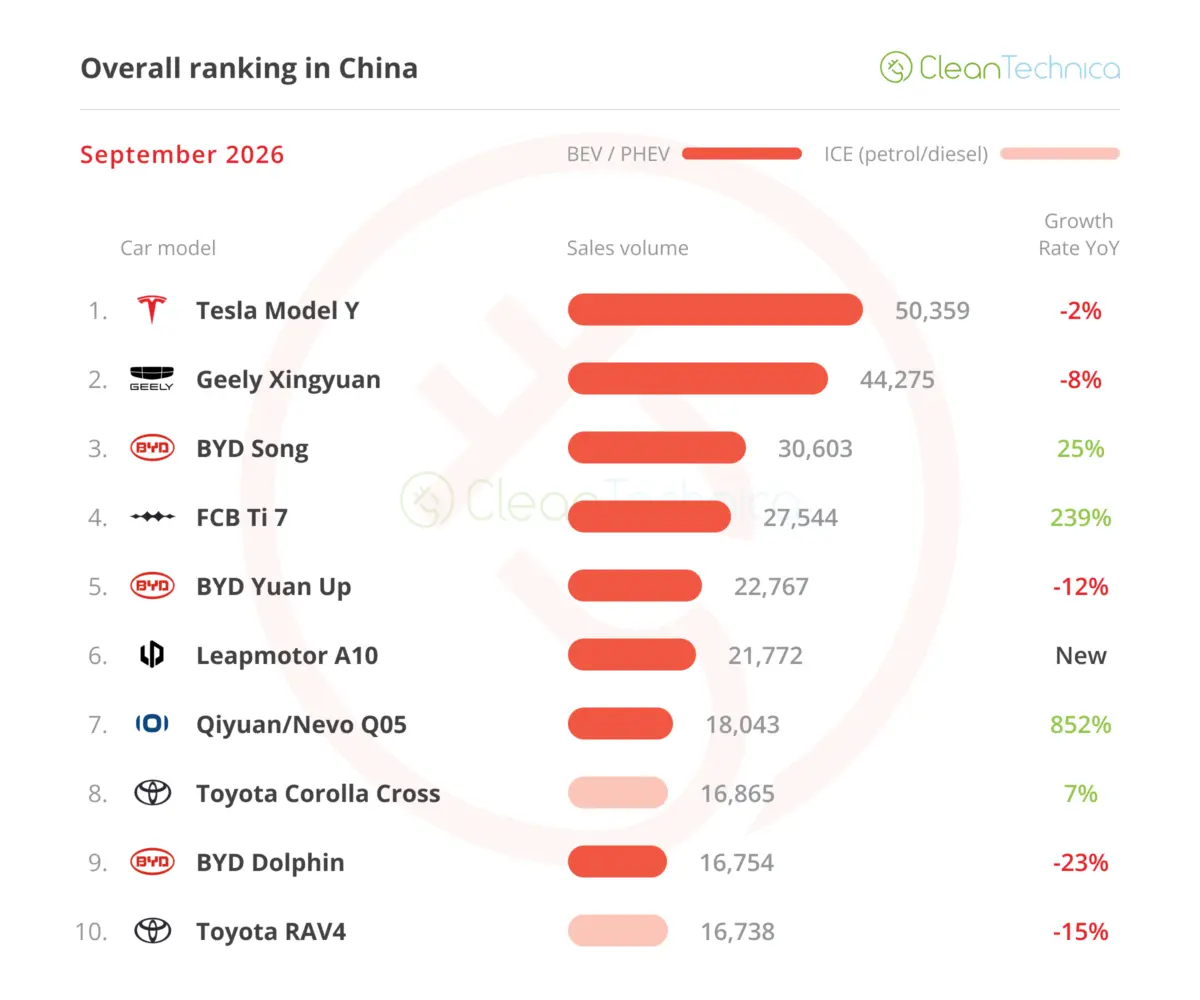
The Chinese automotive landscape reached a historic inflection point in September 2026, with plug-in electric vehicles (EVs) capturing a record-breaking 67% of the total market share. This milestone comes amidst a broader contraction of the domestic auto industry, where a significant decline in traditional internal combustion engine (ICE) sales has accelerated the transition toward a fully electrified future. While total market volume saw a 28% year-over-year (YoY) decrease to approximately 1.6 million units, the disparity between propulsion types has never been more pronounced. Plug-in vehicle sales dipped 17% YoY, yet they fared significantly better than their gasoline-powered counterparts, which saw sales crash by a staggering 49% over the same period.
The September data reveals that Battery Electric Vehicles (BEVs) accounted for 45% of all new car registrations, while Plug-in Hybrid Electric Vehicles (PHEVs) secured a 22% share. This combined 67% penetration rate sets a new benchmark for the world’s largest automotive market. Analysts suggest that if current trajectories hold, China is on track to achieve full electrification of new car sales by 2030, with BEVs potentially making up 100% of the market before 2035. For the 2026 calendar year to date, the plug-in share has risen to 58%, already surpassing the 2025 full-year result of 54%.
The Collapse of the Internal Combustion Engine
The narrative of the September market is defined less by the growth of electric models and more by the rapid obsolescence of the internal combustion engine. The 49% YoY drop in ICE sales indicates a fundamental shift in consumer sentiment, driven by high gasoline prices and a relentless influx of technologically superior electric models. In previous years, record market shares for EVs were typically driven by soaring sales volumes; however, the current record is a "survival of the fittest" scenario where EVs are maintaining a foothold while the ICE segment enters a period of terminal decline.
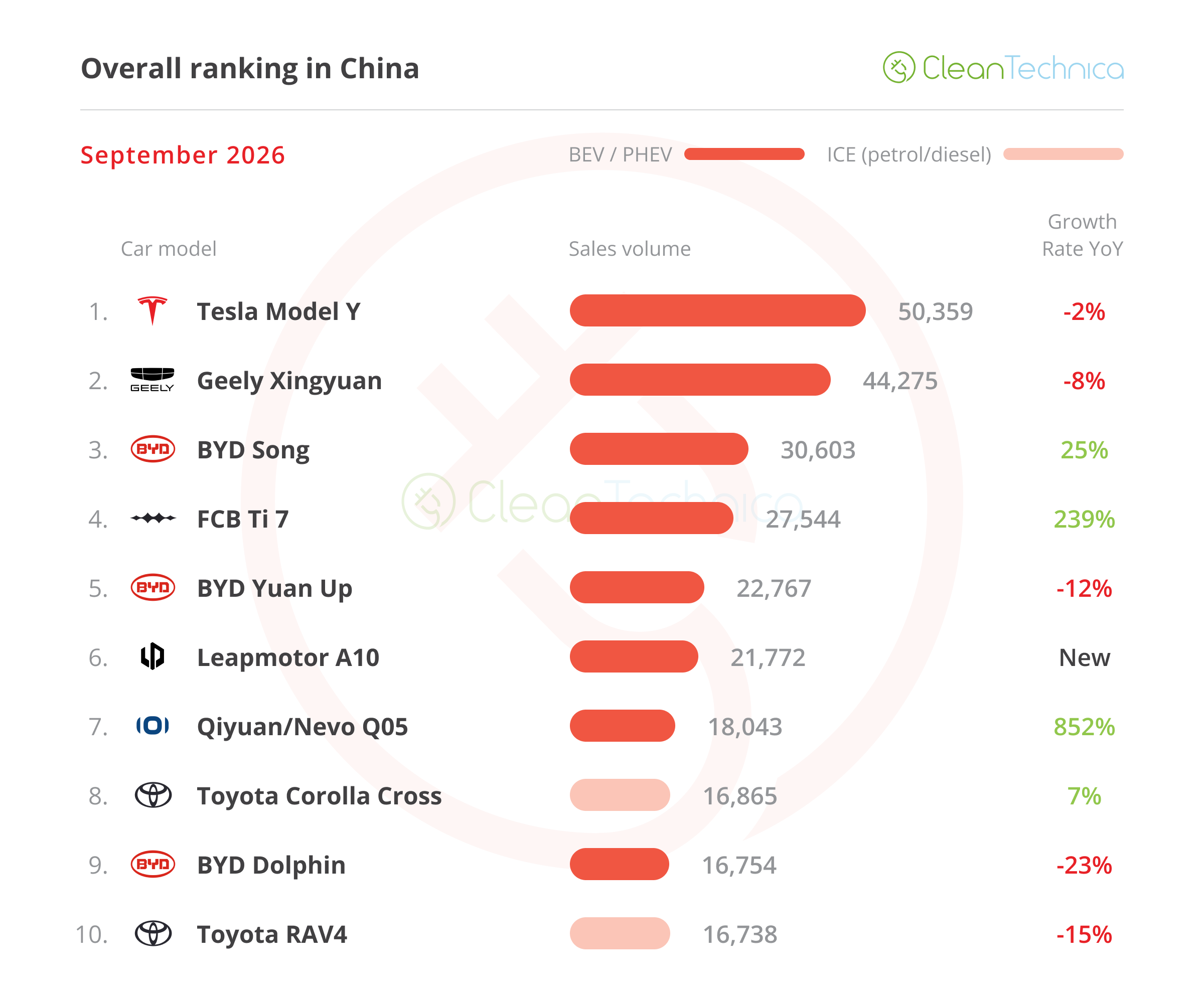
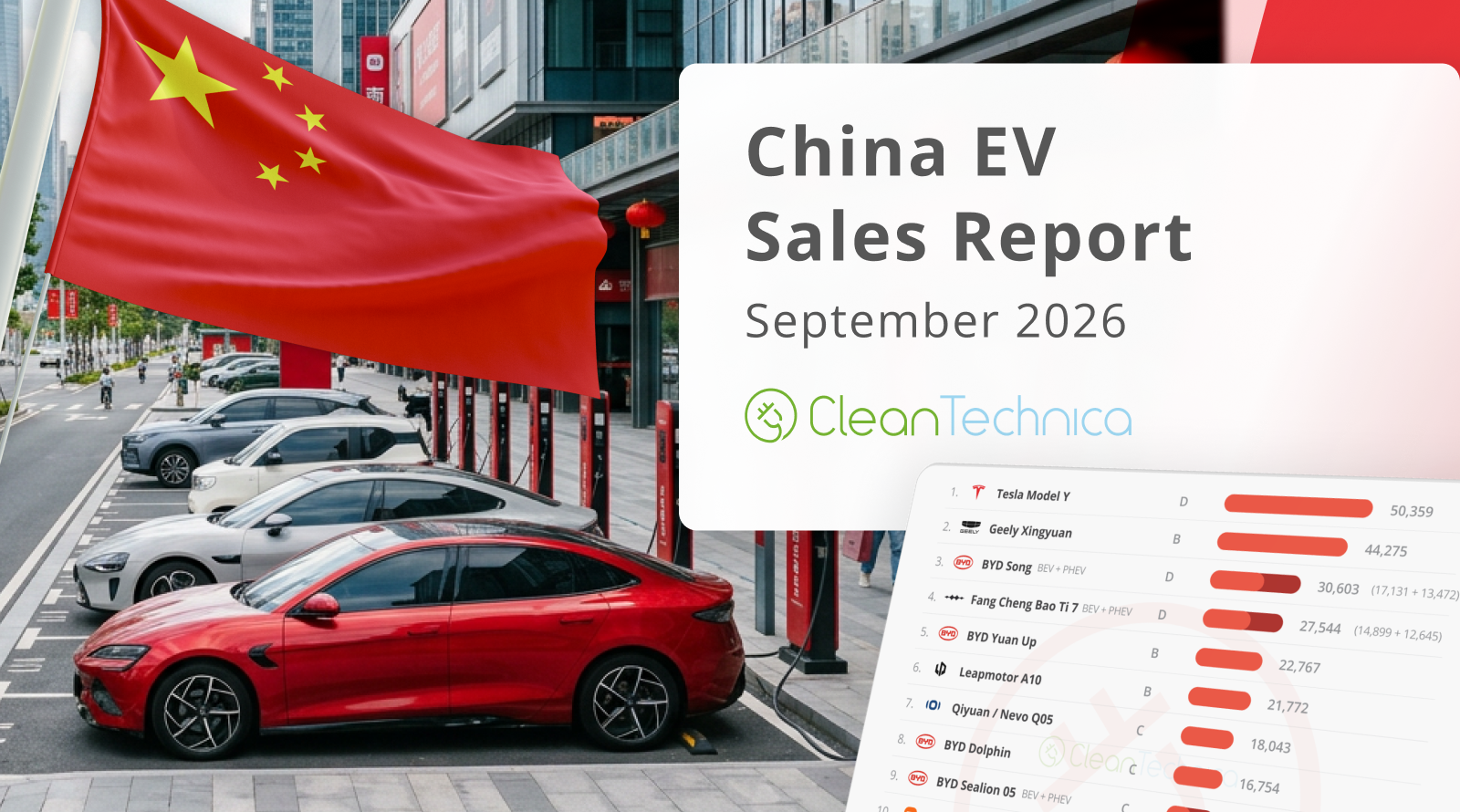
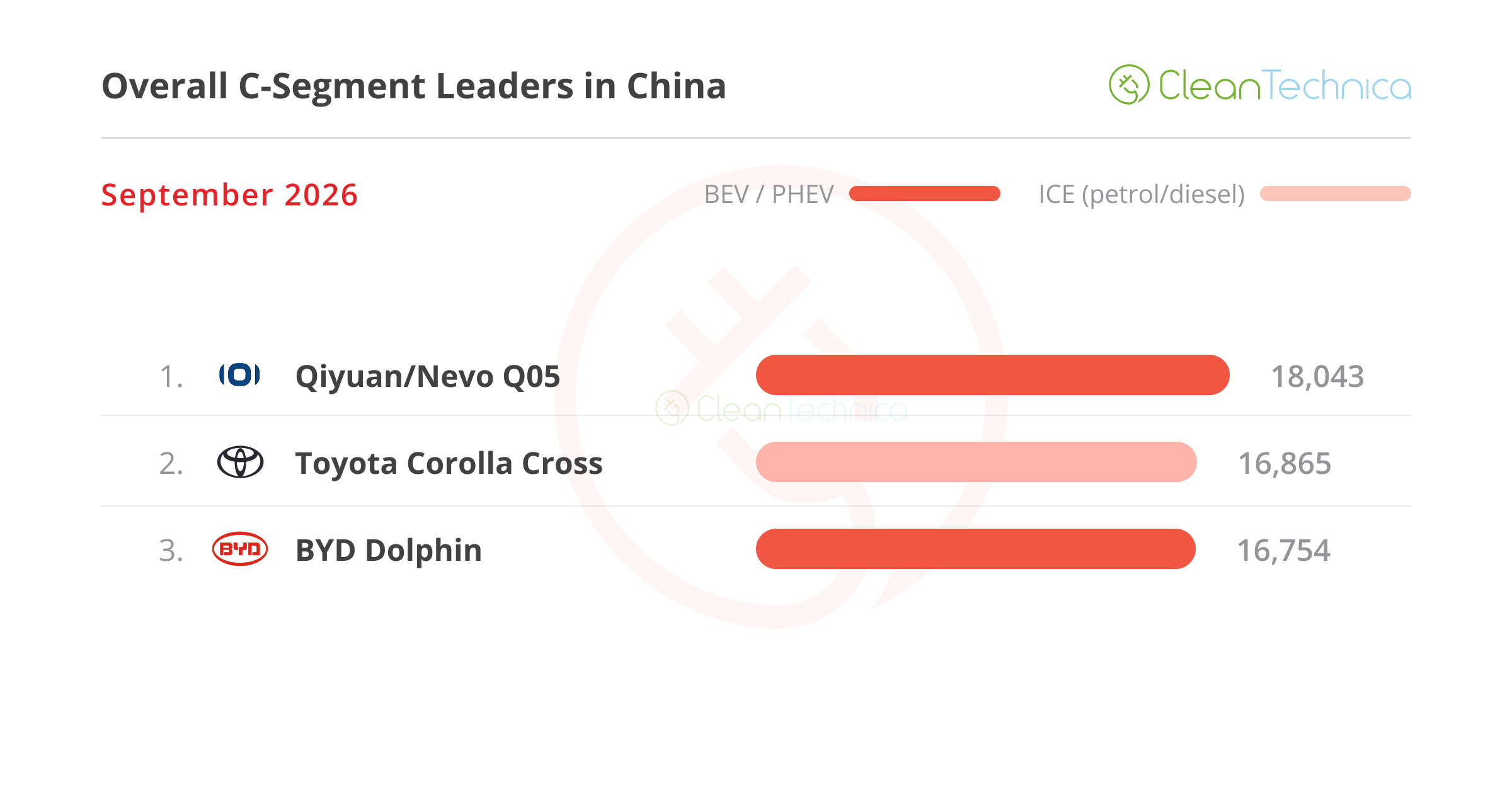
Despite the general retreat of gas-powered vehicles, two models from Toyota—the Corolla Cross and the RAV4—managed to secure positions in the overall top 10, ranking 8th and 10th respectively. Industry observers noted that the appearance of ICE models in the top 10 is now considered an anomaly rather than the norm. For much of 2026, the top-selling charts have been dominated exclusively by plug-in models, making the resurgence of these Toyota stalwarts a notable "man bites dog" story in an otherwise electrified landscape.
Performance Analysis of Leading EV Models
The competitive hierarchy of the Chinese EV market continues to be a battleground between established giants and aggressive newcomers. In September, the Tesla Model Y reclaimed the top spot, though its dominance is increasingly challenged by domestic rivals.
Tesla Model Y: Maintaining the Lead Amidst Aging Architecture
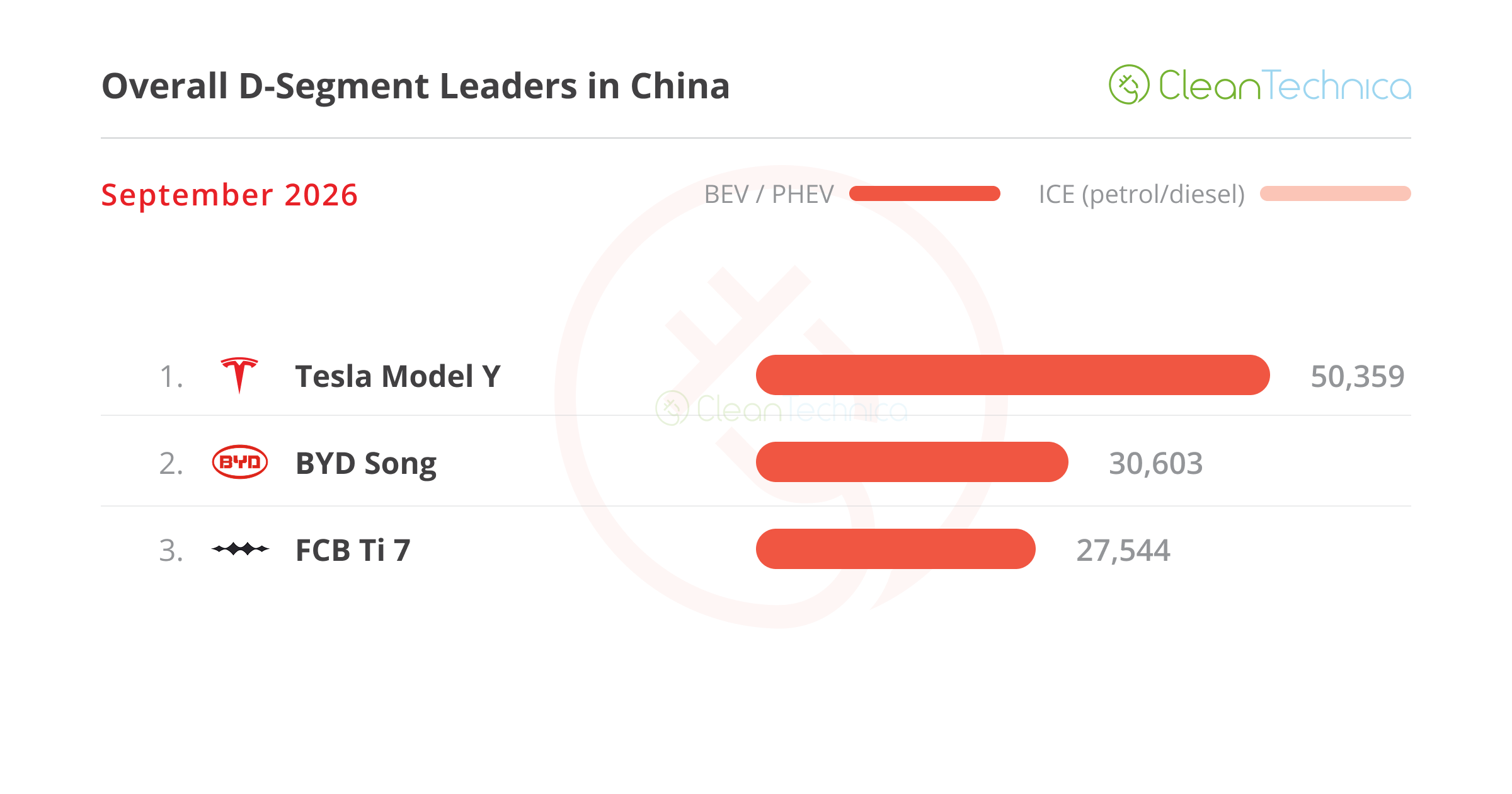
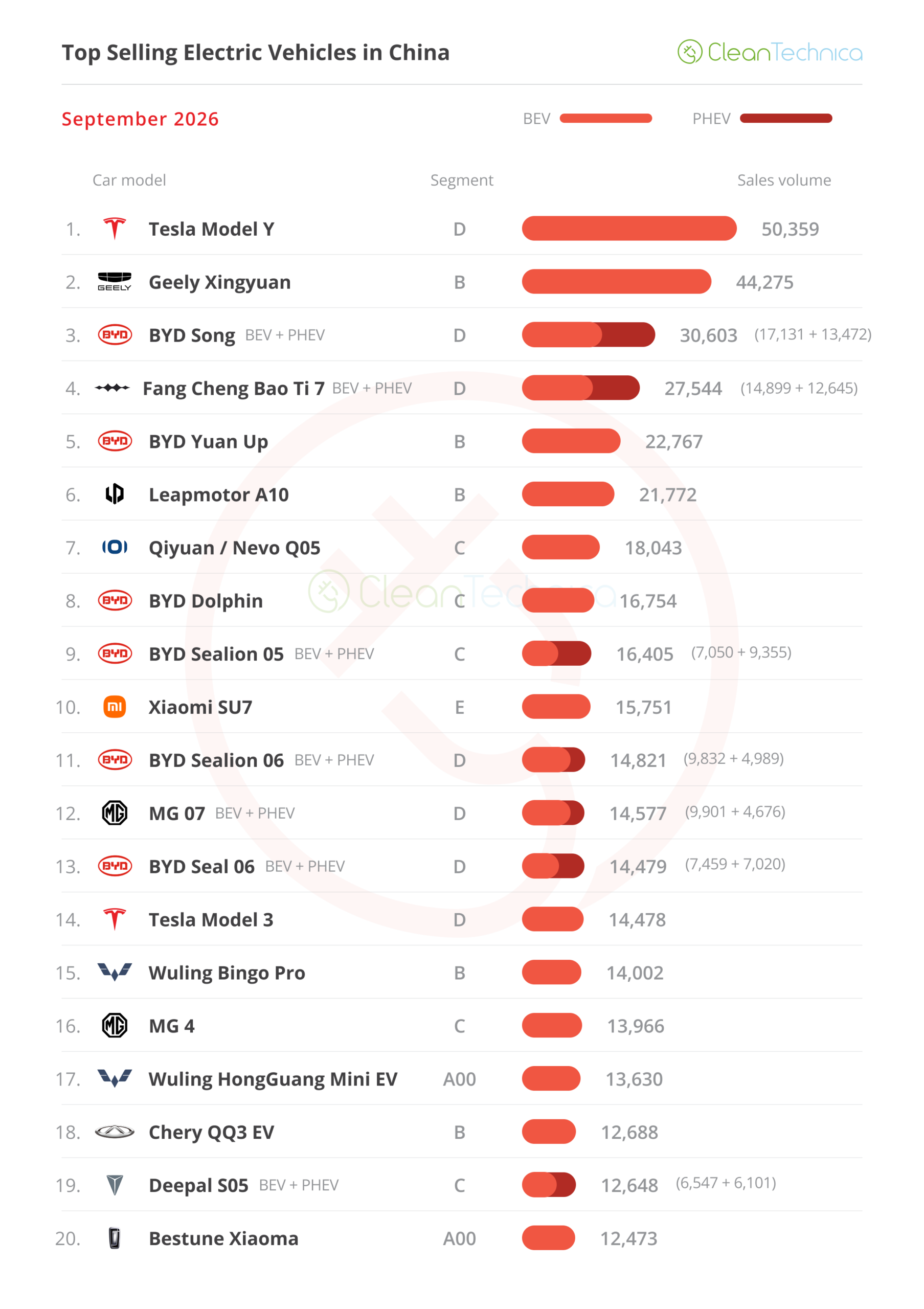
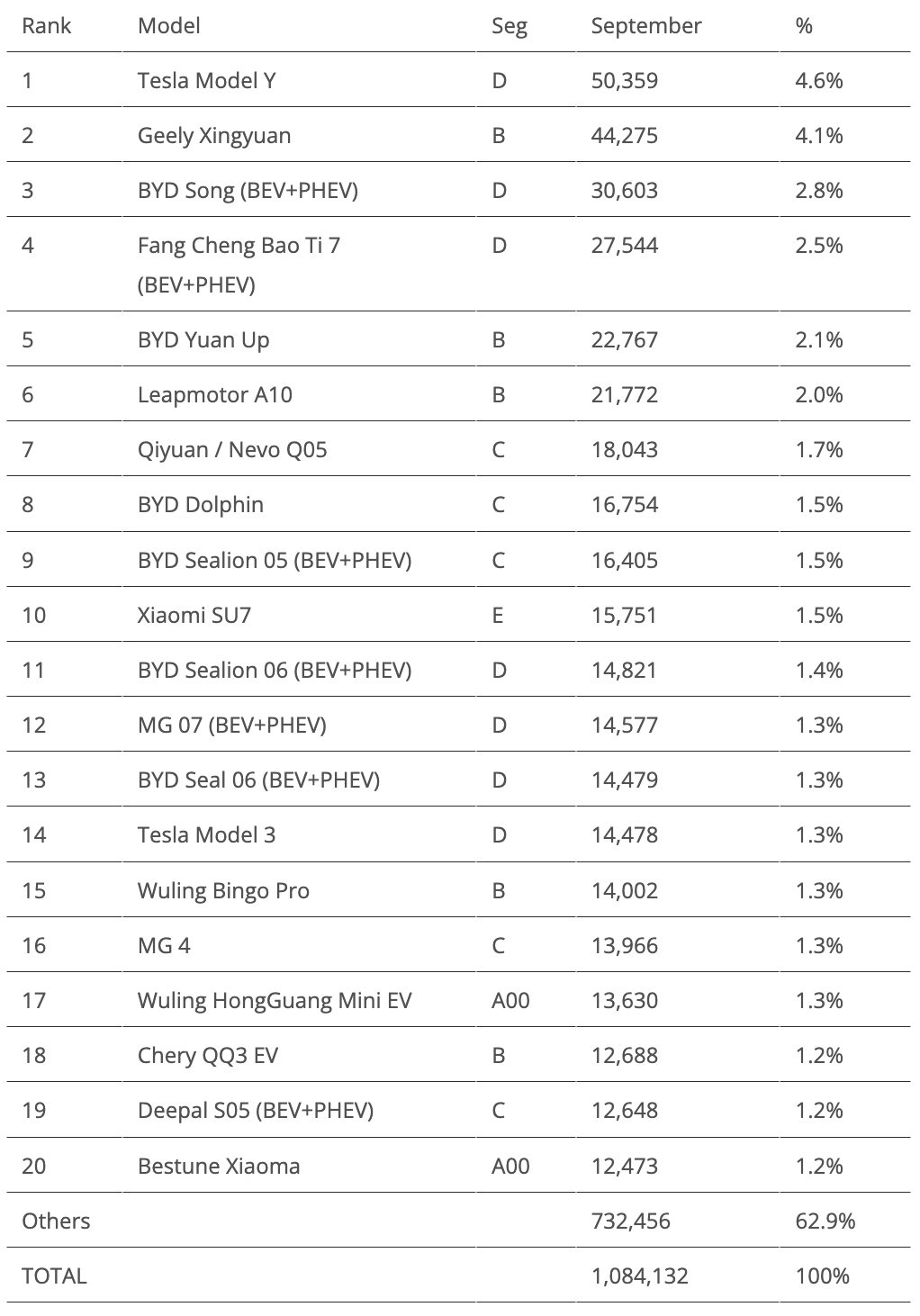
The Tesla Model Y recorded 50,359 deliveries in September, bolstered by the popularity of its extended wheelbase "L" version. Despite winning the monthly sales crown, the Model Y saw a 2% decline compared to September 2025. While the crossover remains a formidable contender, analysts point out that the six-year-old platform is beginning to show its age. As competitors transition to 800V high-voltage architectures and integrate more advanced autonomous driving features, Tesla relies heavily on brand loyalty and incremental variants. While the Model Y is expected to maintain a podium finish for the 2026 fiscal year, its ability to hold the top spot in 2027 remains a subject of intense debate among industry experts.
Geely Xingyuan: The Value Proposition Disruptor
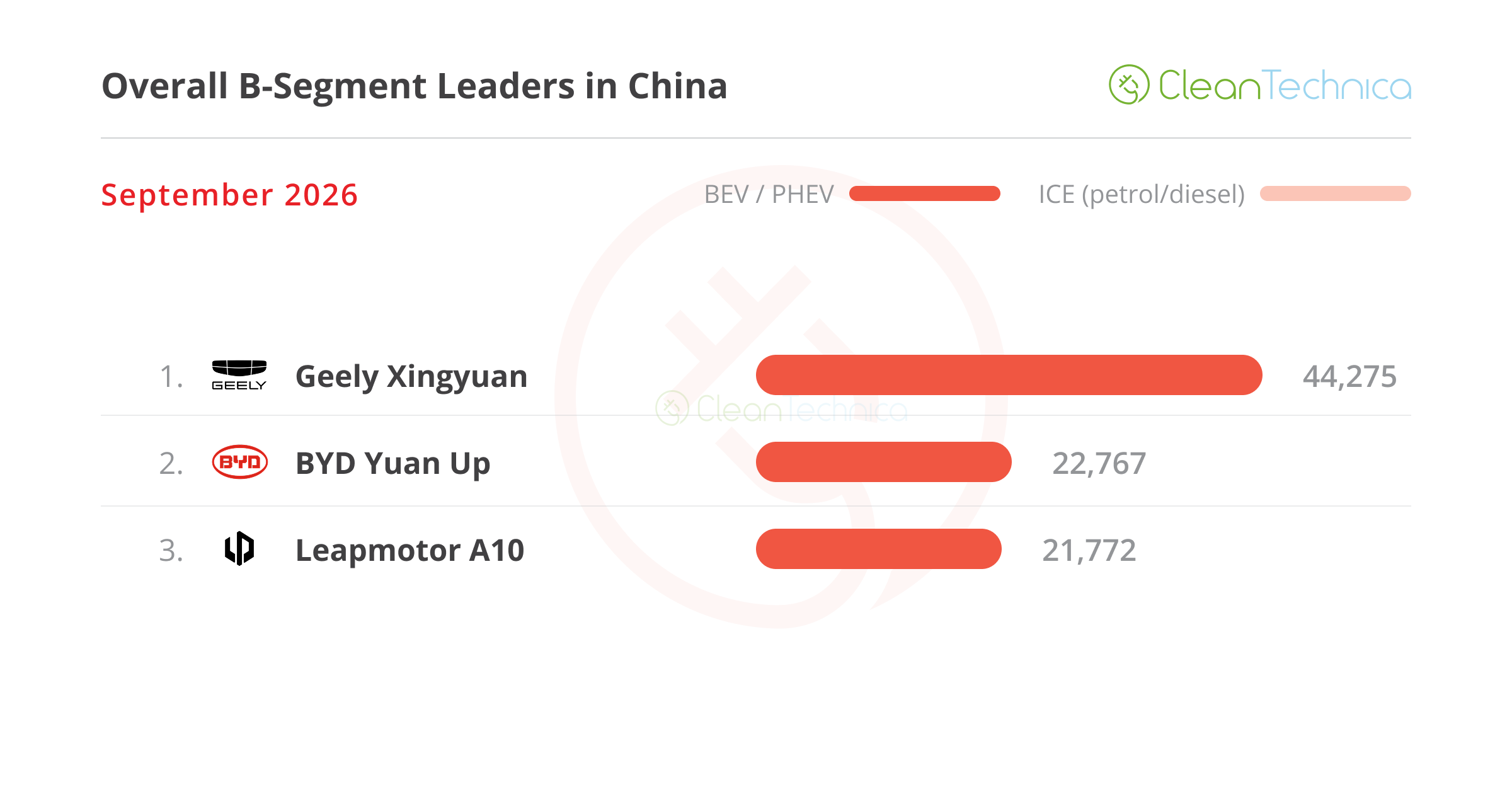
Geely’s Xingyuan hatchback, designed to compete directly with the BYD Dolphin at a price point closer to the entry-level BYD Seagull (approximately $10,000), secured the second position with 44,275 registrations. However, this represented an 8% YoY decline, highlighting the volatility of the B-segment. The Xingyuan now faces a multi-front war against Leapmotor’s A10 and A05 models, the new-generation Wuling Bingo, and Chery’s QQ3.
BYD’s Multi-Tiered Dominance
BYD continues to leverage its massive scale, placing multiple models in the top 20. The BYD Song (BEV+PHEV) took third place with 30,603 registrations, up 25% YoY. The "Ultra" generation of the Song has proven particularly successful, offering LiDAR and 1,500 kW DC fast charging at a starting price of 152,000 yuan ($22,000)—significantly lower than the Tesla Model Y’s starting price of 259,000 yuan ($38,250).
In the premium segment, BYD’s Fang Cheng Bao brand has seen a breakout success with the Tai 7 (Ti7) SUV. This rugged, boxy model, often compared to the Land Rover Defender, recorded 27,544 registrations. The recent launch of pure BEV versions with 92 kWh and 106 kWh batteries has tapped into a growing demand for electrified off-roaders, successfully poaching customers from traditional gas-guzzling luxury SUVs.
Market Dynamics and Emerging Challengers
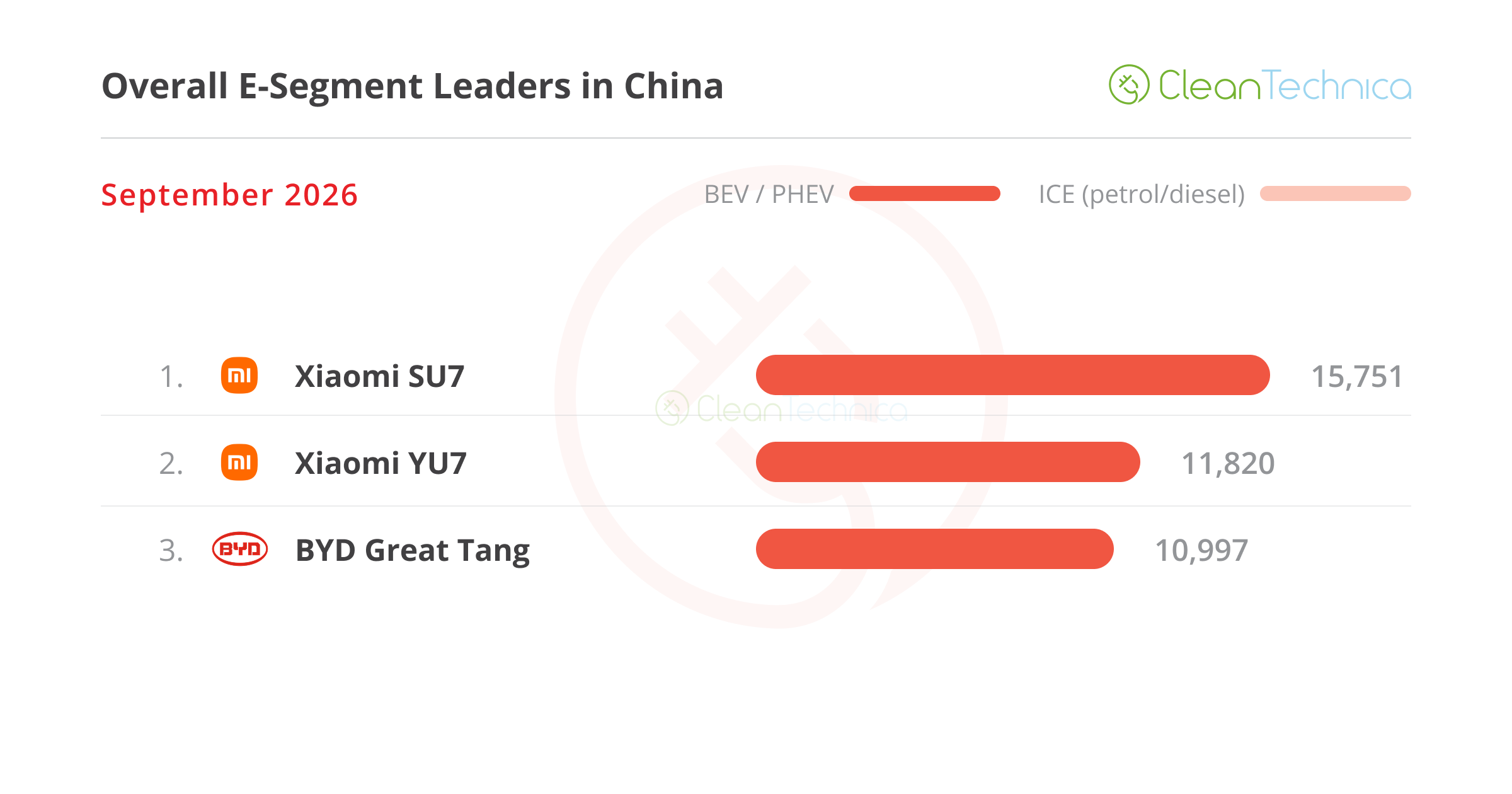
Beyond the top three, the September market was characterized by significant movement among startup brands and new model launches. The MG 07 made a dramatic entrance, delivering 14,577 units in its debut month. The midsize fastback, available in both PHEV and BEV configurations, has already generated a waiting list in the tens of thousands, positioning it as a serious threat to the Xiaomi SU7 and Tesla Model 3.
Leapmotor has emerged as the standout performer of the month. Defying the general market contraction, the Hangzhou-based startup saw registrations jump 31% YoY to 78,000 units. With the ramp-up of the A10 and A05 models, Leapmotor is now threatening to overtake Geely for the silver medal in the brand rankings. This growth is particularly significant as it comes at the expense of both foreign legacy OEMs and established domestic giants.
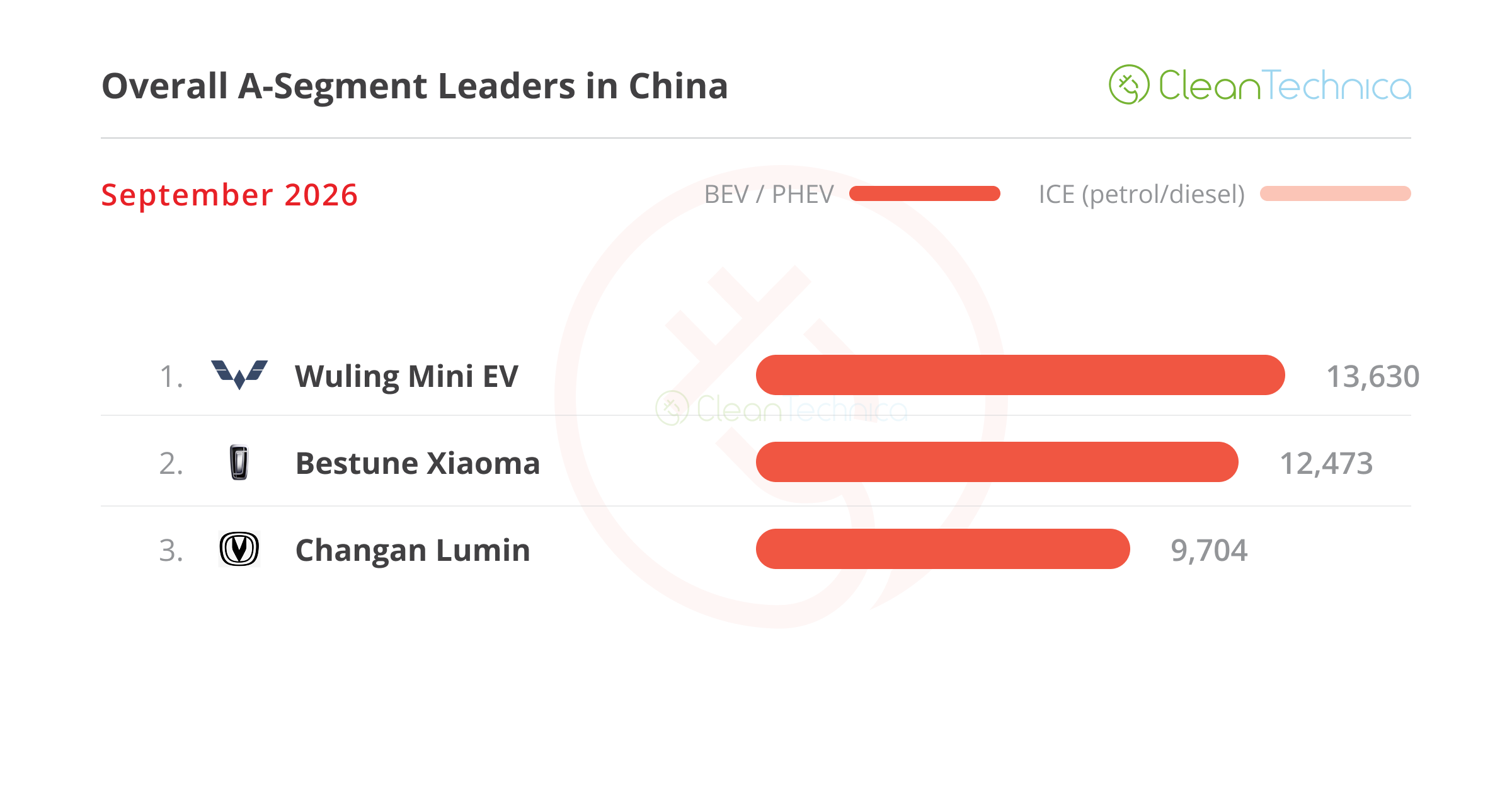
In the smaller vehicle categories, the FAW Bestune Xiaoma and the new Chery QQ3 EV showed strong performance, with approximately 12,500 and 12,688 registrations respectively. This resurgence in the "mini-EV" segment suggests that as the market matures, there is still significant room for affordable, urban-focused electric transport.
Manufacturer and Brand Rankings
The organizational landscape of the Chinese auto industry is currently a study in contrasts. While the overall market is "in the red," specific groups are consolidating power.
- BYD Group: Remains the undisputed leader with a 21.8% market share. The group is benefiting from its diversified brand portfolio, including the mainstream BYD line, the premium Fang Cheng Bao, and the luxury Denza brand.
- Geely Group: Holds the second position with an 11.8% share, though it has seen a slight 0.1% decline as it faces internal competition and pressure from startups.
- SAIC: Maintained a stable 8% share, securing the third spot on the podium.
- Leapmotor: Has surged to 6.5% share, overtaking Changan to claim the fourth position. If current growth rates persist, Leapmotor could challenge SAIC for a podium spot by early 2027.
- Tesla: Despite a 9% drop in volume, Tesla’s market share actually rose to 4.9% (up from 4.7% in August) due to the even sharper decline of the overall market.
Chronology of the Transition: 2024–2026
The road to the 67% market share in September 2026 was paved by several key developments over the preceding 24 months:
- Late 2024: Price parity was achieved in several key segments, most notably in compact SUVs, where PHEVs began undercutting ICE models on sticker price alone.
- 2025: The "800V Revolution" saw high-voltage charging become a standard feature in mid-range Chinese EVs, significantly reducing "range anxiety" for apartment dwellers without home charging.
- Early 2026: Several major Chinese cities expanded ICE vehicle restrictions, further incentivizing the switch to "Green Plate" vehicles.
- September 2026: High global oil prices combined with a domestic economic pivot toward high-tech manufacturing created a "perfect storm" that crashed ICE sales by nearly half.
Broader Impact and Industry Implications
The "ICE extinction" visible in the September data has profound implications for global automotive manufacturers. Foreign legacy OEMs, which have historically relied on their internal combustion expertise to maintain market share in China, are finding their positions increasingly untenable. The 28% drop in the total market reflects a cooling economy, but the 49% crash in ICE sales reflects a permanent structural shift.
For companies like Volkswagen and Toyota, the "bleeding" of sales in the Chinese market is no longer a temporary setback but a strategic crisis. Volkswagen’s recent attempts to stabilize with the ID.ERA 5S—aimed at keeping previous Lavida owners within the brand—have met with moderate success, but they struggle to match the pace of innovation seen in domestic brands like Xiaomi or Xpeng.
The success of Chinese EVs is also beginning to spill over into international markets. Models like the Fang Cheng Bao Tai 7 and the MG 07 are designed with global aspirations, targeting segments long dominated by Japanese and European brands. As the Chinese domestic market becomes saturated and highly competitive, these "electrified survivors" are expected to pivot aggressively toward export markets, carrying the momentum of their domestic success into Europe, Southeast Asia, and beyond.
Ultimately, September 2026 will be remembered as the month when the "dog bit the man"—when the total dominance of electric vehicles became so routine that the survival of a few gasoline models became the only surprising news in the world’s most dynamic car market. With a 60% full-year share now within reach, the era of the internal combustion engine in China is rapidly drawing to a close.
