

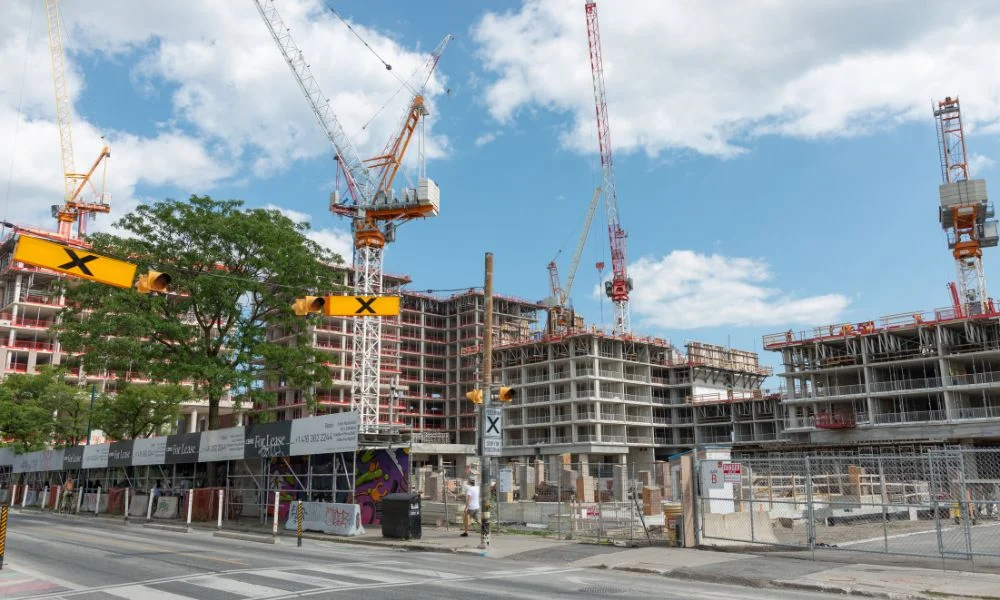
New data released by the Canada Mortgage and Housing Corporation (CMHC) and the Royal Bank of Canada (RBC) paints a complex picture of Canada’s housing market, indicating a period of stabilization rather than an outright recovery. As the second half of 2026 unfolds, sector-specific trends and macroeconomic factors are coalescing to present a challenging environment for new construction and resale activity, with significant implications for real estate-linked investment portfolios. The nuanced data suggests a market caught between persistent headwinds and nascent signs of equilibrium, prompting careful consideration for investors and policymakers alike.
Housing Starts Decline Amidst Rising Uncertainty and Costs
The CMHC’s latest report, issued on July 16, reveals a downward trend in housing starts, a key indicator of future housing supply. The six-month trend in housing starts saw a 2.8 percent decrease in June, settling at 248,123 units. This slowdown is further underscored by actual monthly starts in urban centers with populations exceeding 10,000, which experienced a 13 percent year-over-year decline in June. A total of 20,265 units were initiated, a notable drop from the 23,292 units recorded in June of the previous year.
Cumulatively, the year-to-date total for housing starts stands at 113,017, representing a 1 percent decrease compared to the same period in 2025. CMHC economists project that this trend is unlikely to reverse meaningfully before the end of the year. Kevin Hughes, Deputy Chief Economist at CMHC, articulated the driving forces behind this deceleration. "There is little doubt that the slowdown reflects rising uncertainty, higher development costs, weaker demand and more unsold homes," Hughes stated. "We expect that this environment will continue to hold back new housing construction in Canada over the short-to-medium term and drive 2026 actual housing starts below last year’s levels." This outlook suggests that the supply-side response to market pressures is being hampered by a confluence of economic and operational challenges.
Supply Chain Dynamics and Regional Divergences
Despite the overall dip in new starts, the number of housing units currently under construction in larger urban centers showed a marginal increase of 0.2 percent month-over-month, reaching 375,469 in June. Completions also saw a significant uptick, rising by 8.4 percent from May to 18,298 units. However, the pipeline for future construction appears to be thinning, as the number of approved units awaiting construction fell by 1.1 percent to 137,324. This combination of increased completions and a reduced queue of future projects suggests a gradual recalibration of the housing supply pipeline.
This shift is particularly relevant for investors monitoring Canadian real estate investment trusts (REITs) and income-generating real estate assets, especially within the multifamily sector, which has been the most dynamic segment of the market. The dynamics of supply and demand within this sector are crucial for understanding potential returns and rental income stability.
Regional performance presents a varied landscape. Toronto, for instance, experienced a robust 25 percent year-over-year increase in housing starts in June, largely propelled by heightened activity in multi-unit developments. In contrast, Vancouver saw a significant 35 percent decrease in starts, with declines observed in both multi-unit and single-detached housing categories. Montreal, however, reported a positive trend, with a 10 percent gain in housing starts.
CMHC Housing Starts: Year-Over-Year Change (June 2026)
| Census Metropolitan Area | Actual Monthly Starts (June 2026) | Year-Over-Year Change |
|---|---|---|
| Toronto | N/A | +25% |
| Montreal | N/A | +10% |
| Vancouver | N/A | -35% |
Source: Canada Mortgage and Housing Corporation (CMHC), Starts and Completions Survey, June 2026.
This regional divergence highlights the localized nature of housing market pressures, influenced by factors such as provincial economic conditions, interprovincial migration patterns, and municipal development policies.
Resale Market: A Modest Step Towards Recovery, But Fragile

On the resale market front, RBC’s Monthly Housing Market Update for July 2026 characterized the market as taking another "small step" toward recovery, albeit one that is "barely holding." Robert Hogue, Assistant Chief Economist at RBC, noted that home resales increased by 0.5 percent in June compared to May, extending a three-month streak of gains. This follows a more substantial 5.5 percent advance in May. However, when seasonally adjusted and annualized, total transactions remain 12 percent below the 10-year average, indicating that the market has a considerable distance to cover before reaching historical norms.
"There’s a long road ahead in the recovery," Hogue cautioned, underscoring the persistent challenges faced by potential buyers. The Canadian Real Estate Association (CREA) also revised its 2026 forecast downward on July 15, now projecting that 463,336 residential properties will change hands this year. This represents a 1.4 percent decline from 2025, a notable reversal from its April forecast which had anticipated a modest annual gain. The national average home price is now forecast to increase by 1.1 percent to $686,710, a figure approximately $2,000 lower than the spring estimate.
Economic Underpinnings of the Housing Market Slowdown
The hesitance observed in the buyer pool is attributed to a trifecta of economic concerns: weak consumer confidence, uncertainty surrounding job prospects, and persistent affordability challenges. These factors collectively encourage potential buyers to remain on the sidelines, delaying significant purchasing decisions. In markets like Ontario and British Columbia, where active listings reached decade-long highs in 2025, there are early signs of inventory stabilization.
"Seller competition is beginning to ease as a result in some softer markets," Hogue observed. He further noted that the shifting balance of negotiating power is beginning to stabilize home values in certain areas of Southern Ontario, including the Greater Toronto Area. This indicates a gradual return to a more balanced market dynamic in some of the most scrutinized regions.
Outside of Ontario, the resale market presents a more varied picture. Provinces such as Saskatchewan, Manitoba, Quebec, and parts of Atlantic Canada are experiencing stable or appreciating prices, a trend attributed to tighter supply-demand conditions in those regions. British Columbia, however, faces a unique dynamic where both supply and demand pressures are simultaneously impacting the market, a situation that warrants particular attention for clients with concentrated exposure to this provincial real estate.
RBC has outlined the conditions necessary for a more comprehensive recovery: a sustained period of lower prices in certain markets, improved affordability metrics, and a gradual improvement in job prospects to incentivize sidelined buyers to re-enter the market. The bank also highlighted significant downside risks that could derail any nascent recovery, including geopolitical instability, a sharp increase in energy prices, or a deterioration in the national labor market.
Implications for Real Estate-Linked Portfolios
The current market conditions carry significant implications for financial advisors managing client portfolios with exposure to Canadian real estate. This exposure can manifest through direct property ownership, investments in REITs, or holdings in mortgage-backed securities. Understanding the underlying drivers of housing starts and construction activity is paramount, extending beyond the residential market itself.
A slowdown in construction has ripple effects throughout the broader economy, impacting economic output, employment figures, and the financial health of property developers. The debt held by these developers, often a component of fixed-income portfolios, can be affected by prolonged construction downturns.
For advisors, the key lies in dissecting the granular data and understanding the specific regional and sectoral trends. The divergence between urban and rural markets, the performance of multifamily versus single-family construction, and the impact of interest rate sensitivity on different buyer segments all require careful analysis.
The CMHC and RBC data collectively suggest that while the most acute phase of the market correction may be behind us, the path to a robust and sustainable recovery is likely to be protracted. Investors and advisors must therefore adopt a strategy that acknowledges this reality, focusing on diversification, risk management, and a deep understanding of the evolving economic landscape influencing the Canadian housing sector. The stabilization observed is a welcome sign, but it is a stabilization built on a foundation of caution and economic uncertainty, necessitating a watchful and strategic approach to real estate-linked investments.
