

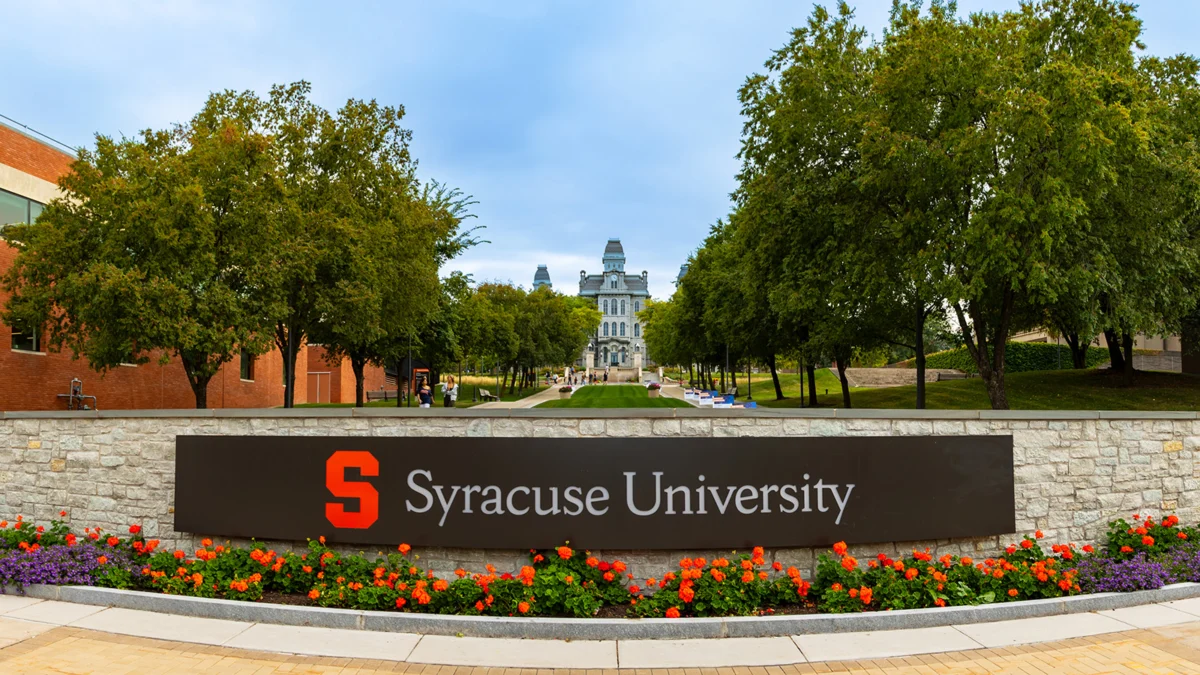
A front-page exposé in The Wall Street Journal has brought to light significant fiscal challenges confronting Syracuse University, primarily stemming from its struggle to attract a sufficient number of prospective students to fill its incoming freshman class. This situation, while particularly spotlighted for a university of Syracuse’s caliber and name recognition, is indicative of a larger, intensifying enrollment crisis affecting numerous private colleges and universities across the United States, particularly those in the mid-tier ranking bracket. The university’s predicament underscores a shifting landscape in higher education, where the traditional value proposition of a private university education, especially at a cost of $80,000 to $90,000 or more annually, is being re-evaluated by a growing segment of families.
The challenges faced by Syracuse are not isolated incidents confined to smaller, lesser-known institutions. For years, many smaller private colleges, particularly those located in the Northeast and Midwest, have grappled with declining enrollment numbers and the subsequent financial strain. However, the recent reporting on Syracuse highlights a critical expansion of this crisis to include mid-tier, established universities that were once considered relatively insulated from such demographic and economic pressures. These institutions, typically ranked between 40 and 120 in national university rankings according to U.S. News & World Report, are now finding themselves compelled to intensify their recruitment efforts and re-examine their financial aid strategies.
The implications of this trend extend beyond the immediate financial health of these universities. For families navigating the complex and often costly process of higher education, this evolving market dynamic presents both challenges and opportunities. The intensified competition for students among these institutions is leading to a significant increase in merit-based scholarship awards, potentially making a private university education more accessible for a broader range of students. However, understanding the nuances of these financial aid packages and institutional aid practices is becoming increasingly crucial for prospective students and their families.
The Shifting Landscape of Higher Education Admissions
The narrative surrounding Syracuse University’s enrollment struggles is a stark illustration of a broader demographic and economic shift impacting higher education. The traditional pipeline of high school graduates, once a reliable source of enrollment for colleges and universities, is facing several pressures. A declining birth rate in recent decades, particularly in certain regions, has led to a smaller pool of college-aged students. Simultaneously, the rising cost of college, coupled with concerns about student loan debt, has prompted many families to scrutinize the return on investment for higher education more closely.
The Wall Street Journal’s report detailed Syracuse’s efforts to bolster its freshman class, a common challenge that has become more pronounced in recent years. This is not a new phenomenon for all private institutions; smaller colleges with less brand recognition have been confronting enrollment shortfalls for an extended period. What distinguishes the situation at Syracuse and similar mid-tier universities is the erosion of their perceived invincibility. These institutions, while not at the very pinnacle of academic prestige like the Ivy League or top-tier research universities, have historically enjoyed a strong reputation and a loyal alumni base, which traditionally translated into consistent enrollment numbers, even at a premium price point.
However, the economic realities for many middle- and upper-middle-class families have become more constrained. The perceived value of a university degree is increasingly being weighed against its substantial financial cost. Families are becoming more discerning, questioning whether the academic programs, career outcomes, and overall college experience offered by a particular institution justify the significant financial outlay, especially when compared to more affordable public university options or alternative pathways to career success. This heightened scrutiny is forcing universities to compete more aggressively for students, moving beyond traditional recruitment strategies to offer more compelling financial incentives.
Mid-Tier Universities Under Pressure: A Growing List
The financial and admissions pressures are not confined to Syracuse alone. A constellation of respected, mid-tier private universities is experiencing similar enrollment challenges. Institutions like Drexel University in Philadelphia, American University in Washington, D.C., Marquette University in Milwaukee, Brandeis University in Waltham, Massachusetts, and DePaul University in Chicago, all consistently ranked within the top 120 national universities by U.S. News & World Report, are reportedly facing increased competition for students and a greater need to offer financial aid to meet enrollment targets.
These universities, while possessing strong academic programs and significant regional or national recognition, find themselves in a challenging middle ground. They are too expensive for many families who might opt for more affordable state institutions, yet they may not possess the global prestige and perceived exclusivity that allows elite universities to command full tuition from affluent families without question. This demographic, often referred to as "full-pay" students, is a crucial revenue source for private institutions, and any decline in their numbers or willingness to pay top dollar has a direct impact on university budgets.
The timeline of this trend suggests a gradual but accelerating decline. While the impact of the 2008 financial crisis may have initially been felt most acutely by smaller institutions, the subsequent decade has seen rising tuition costs outpace wage growth for many families. This, combined with increasing awareness of student loan burdens and alternative career paths, has created a cumulative effect. The COVID-19 pandemic further disrupted higher education, leading to a temporary decline in enrollment nationally. While some institutions have recovered, the underlying demographic and economic shifts continue to shape the admissions landscape.
The Rise of Merit Aid: A Boon for Some Families
The intensified competition for students has a direct and significant implication for college affordability: the proliferation of merit-based scholarships. Colleges and universities that are struggling to meet their freshman enrollment quotas are increasingly incentivized to offer more generous financial aid packages, including merit awards, to attract a diverse and qualified student body. This trend means that a substantial portion of students enrolling in private institutions are now receiving institutional funding, blurring the lines between what was once considered full tuition and a significantly discounted price.
According to the most recent annual survey by the National Association of College and University Business Officers (NACUBO), an impressive 90% of freshmen at private institutions receive some form of institutional money. This aid, which can encompass both need-based grants and merit scholarships, covers an average of 63.3% of published tuition and fees. This statistic is a crucial piece of information for families, revealing that the sticker price of private colleges is often not the amount that most students actually pay.
It is essential to differentiate between various types of institutions when examining these figures. Elite universities such as those in the Ivy League, along with other highly selective research institutions like Stanford, MIT, and the University of Chicago, tend to offer minimal or no merit aid. Their strong brand recognition, highly sought-after programs, and the financial capacity of their applicant pool allow them to maintain full-tuition policies. Similarly, prestigious universities located in prime urban centers on the East and West Coasts, such as New York University, the University of Southern California, Boston College, Northeastern University, and Boston University, also attract a significant number of affluent students who pay the full sticker price. These institutions are less reliant on merit aid to fill their classes.
In contrast, universities like Syracuse, which may have historically relied on a larger influx of full-pay students, are now adjusting their financial aid strategies. Syracuse, for example, reportedly provides institutional funding to approximately 80% of its freshmen. While this figure is slightly lower than the national average for private institutions, it represents a notable increase compared to historical trends and signifies a greater reliance on financial aid to secure its incoming class. This contrasts sharply with institutions like Boston College, which provides institutional aid to only about 40% of its freshmen, indicating that the vast majority of aid offered by such schools is strictly need-based. A low percentage of institutional aid recipients generally suggests that the institution is either highly selective with a large pool of full-pay applicants or that its aid is primarily directed towards students demonstrating financial need.
Navigating Merit Aid: The Role of the Common Data Set
For families seeking to understand the true cost of a private college education and the potential for merit aid, a critical resource is the Common Data Set (CDS). This standardized document, developed to streamline the reporting of institutional data to various college ranking organizations and educational publishers, provides a comprehensive overview of a university’s admissions and financial aid practices. Rather than completing multiple, similar questionnaires for different entities, many institutions complete a single CDS.
The CDS is particularly valuable for families who may not qualify for need-based aid but are seeking merit scholarships. Section H of the CDS is dedicated to financial aid information and offers crucial insights into an institution’s aid distribution. Specifically, H2A details the number of high-income students who receive merit scholarships and the average amount awarded. This section is invaluable for understanding a school’s commitment to rewarding academic achievement irrespective of financial need.
Historically, families had to individually seek out and download the CDS for each college they were interested in. However, a significant development in recent years has been the creation of centralized repositories for these documents. For instance, College Transitions, a national college consulting firm, has established a comprehensive online repository of Common Data Sets for hundreds of institutions. This resource significantly simplifies the research process, allowing families to efficiently compare the merit aid policies and generosity of various universities. By examining these documents, parents and students can gain a clearer picture of the financial landscape and make more informed decisions about where their educational investment will yield the greatest return. The growing availability of such data empowers families to better understand the true cost of college and the potential for scholarships, making the pursuit of higher education more attainable for a wider array of students.
