

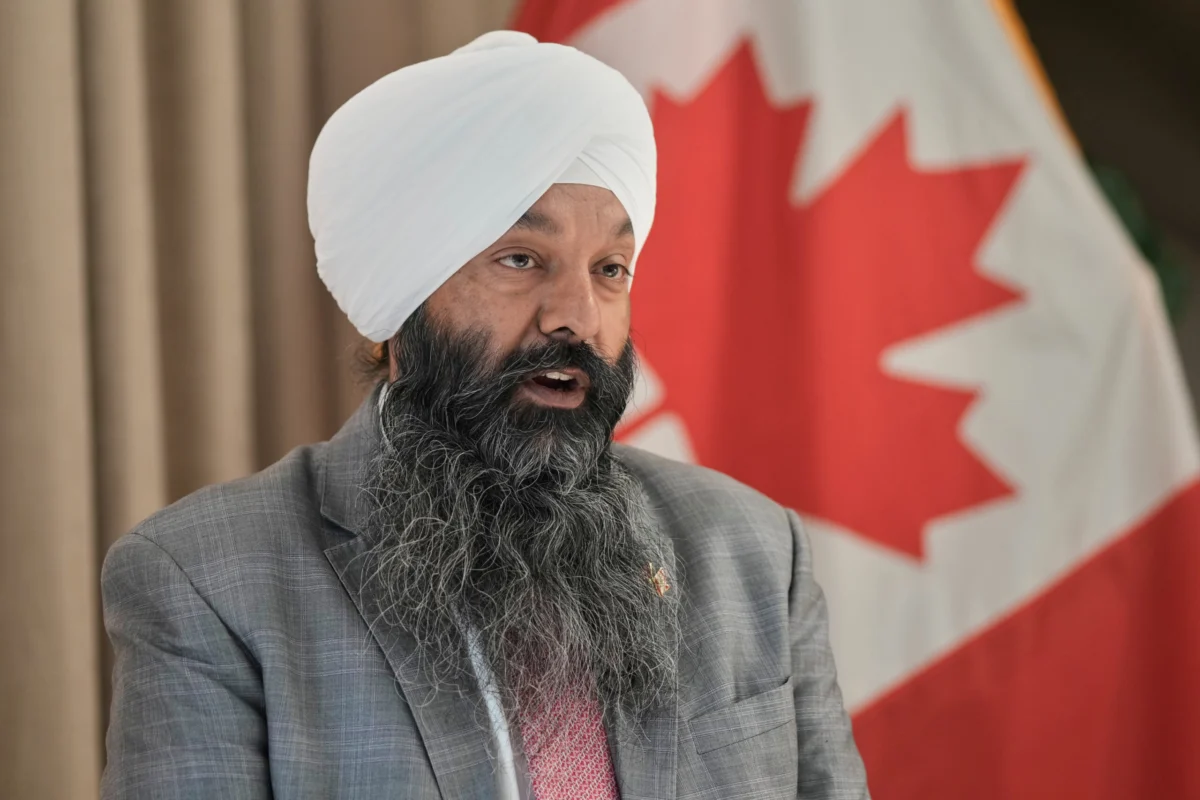
Randeep Sarai, Canada’s Secretary of State for International Development, concluded a pivotal visit to Lebanon, during which he issued a strong condemnation of what he termed Israel’s "unlawful invasion" of the nation. His visit, marked by the announcement of substantial new humanitarian assistance, underscored Canada’s unwavering commitment to Lebanese sovereignty and its people, who are grappling with the devastating consequences of ongoing conflict and profound instability. Speaking from Beirut, Sarai emphasized the critical need for Lebanon to assert full governance over its own territory, a principle he articulated as paramount in the face of persistent external pressures and the country’s complex internal challenges.
A Firm Stance on Sovereignty and a Pledge of Aid
During his extensive engagements with Lebanese officials and communities directly affected by the conflict, Secretary Sarai delivered a clear message, characterizing Israel’s military actions as a blatant violation of international law and Lebanon’s territorial integrity. He unequivocally stated that Beirut must be empowered to "govern its own space," a declaration that resonated deeply within a nation frequently caught in the crosscurrents of regional geopolitical struggles. This robust diplomatic stance was immediately backed by tangible support, as Sarai unveiled new Canadian programs specifically designed to alleviate the suffering of Lebanese families caught in the devastating conflict. These initiatives significantly elevate Canada’s total humanitarian assistance to Lebanon for the current year to more than $50 million, representing a critical injection of aid aimed at addressing the most urgent needs.
"Our commitment is long-term, and we’re there for Lebanon," Sarai affirmed, a declaration intended to reassure a populace enduring immense hardship and uncertainty. His itinerary reflected the gravity of the situation, including visits to shelters housing those displaced by the recent escalation of hostilities, as well as to Syrian refugees who have found precarious sanctuary within Lebanon’s borders. These visits underscored the multifaceted humanitarian crisis confronting the country, which hosts one of the highest per capita concentrations of refugees globally, further straining its already fragile resources.
The Deepening Humanitarian Crisis
The scale of the humanitarian crisis in Lebanon is nothing short of staggering. The latest phase of the conflict has tragically claimed the lives of over 4,000 people, leaving behind a trail of widespread destruction across the nation’s vital infrastructure, residential areas, and essential services. The United Nations reports that approximately 360,000 individuals have been forcibly displaced from their homes as a direct result of the recent conflict, adding to an already vulnerable population that includes hundreds of thousands of Syrian refugees who fled earlier regional conflicts. These displaced communities face acute shortages of fundamental necessities, including food, clean water, adequate shelter, medical care, and essential sanitation supplies. The psychological toll of the violence is also immense, necessitating significant investment in mental health and psychosocial support services.
Canada’s recently announced aid package is meticulously designed to address these critical needs, supporting a range of initiatives that provide emergency relief, facilitate the reconstruction of damaged infrastructure, and offer crucial psychosocial assistance to those traumatized by the incessant violence. Beyond the immediate financial commitment, Secretary Sarai highlighted Canada’s enduring partnership with Lebanon, noting that over the past decade, Canada has provided approximately $575 million in various forms of assistance. This sustained engagement reflects the deep and historic ties between the two nations, significantly fostered by a large and influential Lebanese diaspora residing in Canada, which consistently advocates for robust Canadian support for their ancestral homeland.
A Chronology of Escalation and Diplomatic Maneuvers
Canada’s recent condemnation is not an isolated diplomatic act but rather the culmination of a series of interventions prompted by the escalating tensions between Israel and Lebanon, tracing a complex trajectory of conflict and attempts at de-escalation.

- March 25, 2026: Canada’s Initial Warning. As hostilities between Israel and Lebanon intensified significantly, Ottawa issued a stern and public warning. The Canadian government explicitly stated that Lebanese sovereignty and territorial integrity "must not be violated." This early admonition directly condemned reported plans by Israeli forces to occupy southern Lebanon, signaling Canada’s profound concern over the potential for a wider, more devastating conflict and a blatant disregard for established international norms and laws.
- Late June 2026: US-Mediated Framework Agreement. In a concerted effort to de-escalate the increasingly volatile situation, a US-mediated framework agreement was successfully negotiated. This accord outlined the establishment of "pilot zones" in southern Lebanon, specifically designed to facilitate the phased withdrawal of Israeli forces from small, strategically important areas. These areas were then to be subsequently handed over to the Lebanese Army, with the overarching aim of creating a buffer zone and progressively restoring full Lebanese authority in these contested border regions.
- Late July 2026: Accusations of Obstruction. The implementation of the pilot zone agreement, however, proved fraught with challenges and mistrust. The Lebanese Armed Forces (LAF) publicly accused Israel of actively obstructing their efforts to assume full security control in southern Lebanon. These accusations highlighted the persistent lack of trust and the significant logistical and political hurdles impeding the peace process, suggesting that despite diplomatic agreements, substantial obstacles remained on the ground, threatening the fragile stability.
- August 5, 2026: Visual Evidence of Destruction and Partial Withdrawal. An image dated August 5, 2026, provided a stark visual testament to the conflict’s toll. It depicted the ruins of buildings in Zawtar al-Sharqiyah, viewed from Zawtar al-Gharbiya—one of the designated pilot zones from which Israeli forces had reportedly withdrawn. While offering a glimpse of partial compliance with the agreement, the visual powerfully underscored the profound destruction left in the wake of the conflict and the immense, daunting task of reconstruction that lay ahead for Lebanon.
- Secretary Sarai’s August 2026 Visit: Secretary Sarai’s visit solidified Canada’s position, transforming earlier warnings into a direct, unequivocal condemnation accompanied by concrete humanitarian commitments. This act further signaled growing international pressure on all parties to adhere strictly to international law and respect national sovereignty, emphasizing the global community’s concern over the protracted crisis.
International Law and the Imperative of Sovereignty
The use of the term "unlawful invasion" by Secretary Sarai carries significant weight within the framework of international law and diplomacy. It inherently implies a direct violation of fundamental principles enshrined in the United Nations Charter, particularly Article 2(4), which explicitly prohibits the threat or use of force against the territorial integrity or political independence of any state. Canada’s firm stance aligns with the broader international legal framework that consistently upholds the sovereignty of nations, emphasizing that any military presence on foreign soil without explicit consent or a legitimate UN Security Council mandate is illegitimate and contrary to international law. This position reflects a deep-seated commitment to the rules-based international order, a cornerstone of Canada’s foreign policy.
The call for Beirut to "govern its own space" is more than a mere rhetorical flourish; it underscores the critical imperative for the Lebanese government to extend its legitimate authority throughout its internationally recognized borders. This remains a formidable challenge, complicated by the entrenched presence of powerful non-state armed actors, persistent internal political fragmentation, and ongoing, unresolved border disputes that continue to fuel regional tensions.
Engagement with Lebanese Leadership and Complex Regional Dynamics
During his visit, Secretary Sarai engaged directly with Lebanon’s highest political figures, including President Joseph Aoun and Prime Minister Nawaf Salam. These crucial meetings provided a vital platform for Canada to directly convey its solidarity, express its concerns, and reiterate its unwavering support. President Aoun and Prime Minister Salam reportedly reaffirmed their steadfast commitment to reinstating full state authority across all Lebanese territory and to implementing crucial, long-overdue reforms aimed at combating endemic corruption—a pervasive issue that has historically hobbled the nation’s governance, exacerbated its economic woes, and eroded public trust. The emphasis on internal reform is particularly critical, as Lebanon’s capacity to effectively govern its territory, manage its multiple crises, and rebuild its institutions is often undermined by deep-seated political fragmentation, institutional weaknesses, and a lack of national consensus.
However, the broader regional dynamics present formidable and enduring challenges that extend far beyond internal reforms. Israeli officials have made it unequivocally clear that their forces will not withdraw from Lebanon until Hezbollah, the powerful Shiite political party and armed group, is fully disarmed. Hezbollah’s significant military capabilities and profound political influence within Lebanon are viewed by Israel as a core security concern, perceiving the group as a direct proxy for Iran and an existential threat to its northern border. This condition for withdrawal creates a deeply complex and volatile impasse, as Hezbollah’s disarmament is a highly contentious internal Lebanese issue, intricately intertwined with the country’s delicate sectarian balance, its national resistance narrative, and its very political identity. Any unilateral attempt to disarm Hezbollah without a comprehensive, inclusive political solution risks further destabilizing Lebanon’s already precarious internal situation, potentially plunging the nation into renewed civil strife.
Broader Impact and Implications for Regional Stability
The ongoing conflict and the nuanced international responses to it have profound and far-reaching implications for Lebanon and the wider Middle East.
- Deepening Humanitarian Crisis: The displacement of hundreds of thousands of people, coupled with the widespread destruction of critical infrastructure, profoundly exacerbates an already dire economic crisis in Lebanon. The influx of international aid, while absolutely crucial for immediate relief, serves as only a temporary measure against deeply systemic challenges. Long-term recovery and comprehensive reconstruction efforts will necessitate sustained international commitment and significantly larger financial resources, far exceeding current pledges, to address the immense scale of the damage.
- Erosion of Sovereignty: The repeated incursions and the persistent presence of foreign forces, even if temporary or localized, fundamentally undermine the concept of state sovereignty and severely weaken the Lebanese government’s capacity to effectively control its own territory and determine its own destiny. This perpetual state of vulnerability fosters chronic instability and significantly hinders national development and progress.
- Political Fragility: Lebanon’s delicate political system, already severely strained by deep sectarian divisions, economic collapse, and institutional dysfunction, is further tested by external conflicts and internal pressures. The ability of President Aoun and Prime Minister Salam to deliver on their promises of reform and reassert state authority is paramount but remains exceedingly difficult under the current volatile conditions. The enduring impasse over Hezbollah’s disarmament continues to be a central obstacle to any prospect of lasting peace or internal stability.
- International Role and Responsibility: Canada’s strong condemnation and substantial aid pledge reinforce the vital role of the international community in advocating for strict adherence to international law and providing essential humanitarian assistance. However, the ultimate effectiveness of such diplomatic pressure hinges on broader consensus and coordinated, unified action from major global powers, including the United States, which has historically played a crucial mediating role in the region. The United Nations’ ongoing monitoring efforts and repeated calls for de-escalation are indispensable, but their enforcement power remains limited without the robust political will and unified action of its member states.
- Exacerbation of the Refugee Situation: Lebanon continues to host a disproportionately large number of refugees, particularly from Syria, placing immense strain on its resources and social fabric. The current conflict adds another severe layer of complexity and precarity to their already challenging existence, raising grave concerns about their safety, access to essential services, and the prospects for durable solutions to their displacement.
The Path Forward: Enduring Challenges and Glimmers of Hope
The situation in Lebanon remains exceedingly fraught with challenges, marked by deep-seated historical grievances and ongoing geopolitical tensions. While the US-mediated framework agreement offered a glimmer of hope for localized de-escalation through the establishment of "pilot zones," its implementation has proven arduous and contentious, marred by accusations of obstruction and a persistent lack of trust between the parties. The core issues—the unequivocal respect for Lebanese sovereignty, the future and role of Hezbollah within the Lebanese state, and Israel’s legitimate security concerns—are deeply entrenched and resist easy, simplistic solutions.
For Canada, its sustained engagement signifies a continued and profound commitment to humanitarian principles, international law, and the rules-based international order. By unequivocally condemning the "unlawful invasion" and providing substantial humanitarian aid, Canada positions itself as a principled and responsible actor advocating for peace and stability in a highly volatile region. However, the arduous path to a lasting resolution will undoubtedly require far more than just aid and diplomatic condemnation. It demands sustained, robust diplomatic efforts from all international stakeholders, genuine and demonstrable commitment from all parties to uphold international law, and a concerted, collaborative push towards a comprehensive political solution. Such a solution must effectively address the legitimate security concerns of all actors while simultaneously and unequivocally respecting Lebanon’s sovereignty, enabling its people to rebuild their lives, restore their institutions, and secure a future free from the perpetual cycle of conflict and foreign intervention. The long-term commitment articulated by Secretary Sarai will be absolutely crucial as Lebanon navigates this protracted and multifaceted crisis, striving for a future defined by peace, stability, and national self-determination.
