

The Canada Investment Summit, held last week under the stewardship of high-profile financial figures including Mark Carney, has been characterized by participants as a pivotal moment for the nation’s economic trajectory. Attended by a powerful contingent of foreign bankers, pension fund executives, and global investment managers, the event served as a high-stakes forum for matching international capital with Canadian infrastructure and industrial projects. The summit’s primary achievement was the facilitation of direct dialogue between project proponents and the world’s largest asset owners, many of whom have expressed a renewed interest in Canada’s stable regulatory environment and resource wealth. Prior to the summit’s commencement, Canada’s domestic financial sector signaled its commitment to the national economy with a collective pledge of $500 billion in new lending and investment, setting a bullish tone for the proceedings.
However, beneath the surface of these multi-billion-dollar announcements lies a complex debate regarding the long-term sustainability of the proposed investments. While the summit was lauded for its organizational success and the scale of capital involved, critics and environmental analysts have raised concerns that the event failed to adequately address the pressing realities of the global climate crisis. The gathering took place in the immediate aftermath of a summer defined by record-breaking temperatures across Europe and devastating wildfires that blanketed North American cities in smoke. Furthermore, the emergence of a new El Niño cycle has heightened fears of extreme weather patterns, yet the summit’s official discourse appeared largely insulated from these environmental pressures. As the federal government moves to translate the summit’s momentum into tangible growth, the question remains whether the resulting investments will accelerate Canada’s transition to a low-carbon economy or reinforce a "business-as-usual" model that risks future carbon lock-in.
The Deal Book: A Blueprint for Canada’s Economic Future
Central to the summit’s activities was the release of the federal government’s "deal book," a comprehensive catalog of 167 potential investment projects spanning various sectors of the Canadian economy. This document serves as a roadmap for prospective investors, outlining a total of $465 billion in capital opportunities. To understand the environmental implications of these projects, the Corporate Knights research unit conducted a detailed sustainability analysis of the deal book. Their findings provide a nuanced view of where Canada’s investment priorities currently lie.
According to the analysis, 43 of the 167 listed projects—representing approximately $169 billion, or 36% of the total prospective investment—qualify as "sustainable capital expenditures" (capex). Corporate Knights defines sustainable capex as investments that directly contribute to a low-carbon transition, such as renewable energy, green transportation, and energy efficiency. While 36% may seem modest to some climate advocates, Ralph Torrie, the research director for Corporate Knights, noted that this figure is significantly higher than the global average. For comparison, the All Country World Index (ACWI), a standard benchmark for global equity markets, is estimated to contain only 16% sustainable capex as of 2024. This suggests that the projects presented at the Canada Investment Summit are, at least on paper, twice as focused on sustainability as the general global market.
High-Impact Sustainable Projects and Renewable Ambitions
Among the sustainable highlights in the deal book are several massive infrastructure projects that could redefine Canada’s energy and transportation landscape. The most significant of these is the $44-billion Wind West project in Nova Scotia, which aims to harness the province’s immense offshore wind potential to generate clean electricity for the region. Similarly, the $36-billion Novatron project is designed to facilitate the transmission of Atlantic wind energy to Quebec, creating a more integrated and resilient green grid in Eastern Canada.
In the transportation sector, the deal book features two high-speed rail projects in Western Canada, with a combined estimated cost of over $30 billion. These projects are seen as essential for reducing the carbon footprint of inter-city travel in a region traditionally dominated by aviation and personal vehicles. Analysts suggest that if these projects secure the necessary funding and move toward completion, they could serve as the backbone of a new, electrified Canadian economy.
However, the analysis also identified a significant "grey area" in the deal book. Approximately $95 billion, or 21% of the total prospective investment, consists of projects that might qualify as sustainable but lack the detailed information required for a firm determination. An additional $71 billion, or 15%, is categorized as infrastructure with a neutral sustainability rating, such as general municipal improvements or telecommunications upgrades that do not directly impact carbon emissions.
The Challenge of Carbon Lock-In and Legacy Energy
Despite the promising figures for green investment, the deal book also contains a substantial volume of projects that fall squarely within the "old economy." More than $129 billion, or 28% of the potential new projects, would not qualify as sustainable under the Corporate Knights framework. These projects are primarily concentrated in the oil and gas sector and have drawn sharp criticism from environmental advocacy groups.
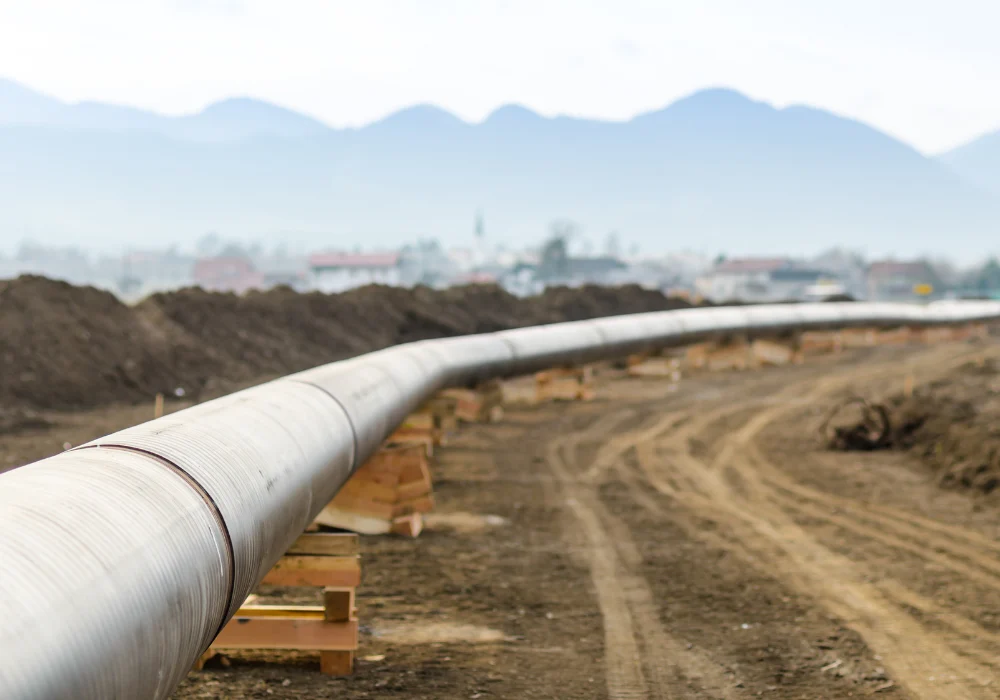
Notable entries in this category include a $35-billion pipeline proposal in Alberta designed to transport oil sands products to the West Coast, as well as several large-scale liquefied natural gas (LNG) projects. These include the $29-billion Ksi Lisims LNG and the $10-billion Woodfibre LNG projects in British Columbia, along with the $23-billion Kino Aski LNG project in Quebec. Critics argue that these investments represent a dangerous "carbon lock-in," where massive capital outlays today commit Canada to fossil fuel production for decades to come, potentially stranded as global demand shifts.
Richard Brooks, the climate finance director at Stand.earth, expressed concern over the prominence of these projects at the summit. He pointed out that the presence of $100 billion in new oil and gas projects contradicts the narrative of a green transition. Brooks argued that by seeking international investment for these ventures, the government and summit organizers are effectively doubling down on a declining industry at a time when global climate targets require a rapid phase-out of fossil fuels.
Geopolitical Realities and Market Volatility
The push for new LNG and pipeline projects is occurring against a backdrop of intense geopolitical volatility. Proponents of Canadian LNG often cite the need for global energy security, particularly following the energy shocks caused by the ongoing war in Iran and the resulting disruption of Middle Eastern supplies. These conflicts have driven up short-term energy prices, making LNG projects appear highly lucrative in the immediate term.
However, financial analysts warn of a "bull trap." Many forecasters project that the current price spikes are temporary and that long-term demand for fossil fuels will decline as renewable energy becomes more cost-competitive and international climate regulations tighten. Kevin Thomas, CEO of the Shareholder Association for Research and Education (SHARE), highlighted this risk during an interview following the summit. He questioned the long-term viability of legacy energy projects once government subsidies are removed.
"The likelihood that a Canadian federal government would put all this together and not have any oil and gas on the table is pretty much nil," Thomas remarked, acknowledging the political reality of Canada’s resource-dependent economy. "But the real question for investors is: How robust is the actual market for these projects? You can get them built with subsidies, but do you really think they’re going to generate revenues long-term in a world moving toward net-zero?"
The Need for a Coherent National Strategy
Beyond the debate over specific projects, some experts have criticized the deal book for lacking a cohesive national strategy. Ralph Torrie described the list as a "hodgepodge" of projects brought forward by various provinces and private interests rather than a curated selection aligned with a clear economic vision. He noted that the sustainable capex is heavily concentrated in a small number of massive projects in Eastern Canada, leaving other regions with a higher proportion of traditional, high-carbon investments.
To address these strategic gaps, Kevin Thomas suggested that the federal government should shift its focus toward coordinating national electrification. This would involve not only funding "headline" mega-projects but also supporting a "minor projects" initiative to get earlier-stage developments, such as critical-minerals mines and local grid upgrades, off the ground. Such a strategy would be essential for supporting the supply chains required for electric vehicles and renewable energy infrastructure.
The federal government’s Major Projects Office currently handles large-scale developments, but Thomas argues that a more granular approach is needed to foster the "dealmaking" that builds a truly sustainable economy. He emphasized that the focus should be on the strategic value of the projects rather than just the "big headline numbers" of billions of dollars in pledged capital.
Conclusion: A Turning Point for Canadian Investment
The Canada Investment Summit has undoubtedly succeeded in putting Canada on the radar of global institutional investors and securing significant preliminary commitments from domestic banks. The $500 billion pledged by the Canadian financial industry represents a massive pool of capital that could, if directed wisely, transform the nation’s infrastructure.
However, the analysis of the $465-billion deal book reveals a nation at a crossroads. While Canada is outperforming the global average in terms of sustainable capital expenditure, the significant investment still flowing toward oil and gas expansion poses a challenge to the country’s climate commitments. As the federal and provincial governments move forward with these projects, they must weigh the short-term economic gains and geopolitical pressures against the long-term risks of stranded assets and environmental degradation.
The success of the summit will ultimately be judged not by the total dollar amount of the deals signed, but by whether those deals build an economy capable of thriving in a lower-carbon world. For now, the "deal book" serves as both a promise of a greener future and a reminder of the persistent ties to the carbon-intensive past.
