

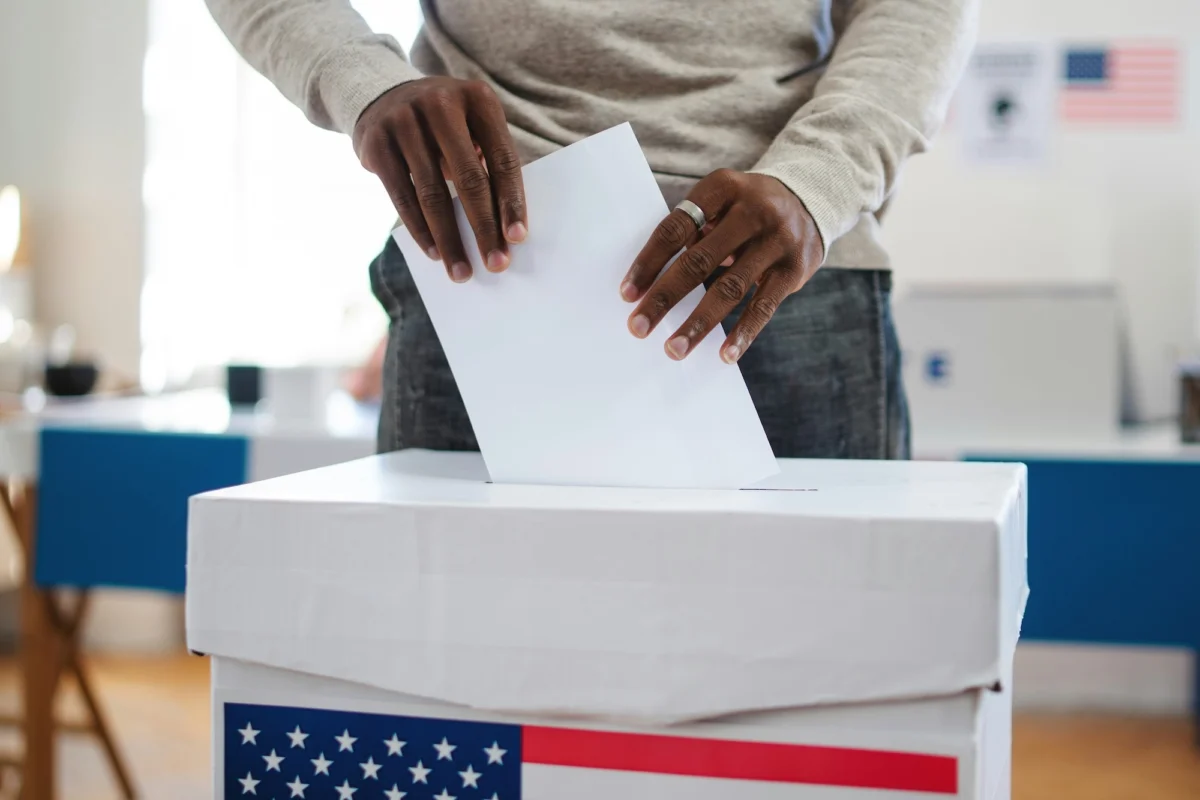
As the United States moves toward a pivotal midterm election cycle, the landscape of voter registration and election administration is undergoing a profound transformation, marked by the emergence of private data-collection platforms and sweeping executive directives. In recent weeks, transparency advocates and investigative journalists have raised alarms over VoteSafe.org, a website that presents itself as a neutral, informational resource for voters. However, deeper scrutiny reveals that the site is a sophisticated data-gathering operation managed by America PAC, the political action committee funded by billionaire Elon Musk. Musk, who emerged as the single largest individual donor to President Donald Trump and the Republican Party during the 2024 election cycle, has leveraged his significant technological and financial resources to influence the electoral process, prompting a national debate over the intersection of private interest and public civic duty.
The VoteSafe.org platform encourages Americans to verify their registration status, request absentee ballots, and sign up for election reminders. While these services appear standard for voter education, investigative reporter Judd Legum of Popular Information has categorized the site as a "digital surveillance machine." According to Legum’s findings, the personal and digital data harvested by VoteSafe is not merely used for administrative reminders but is transmitted to a network of private technology firms, America PAC, and various Republican allies. This data is then utilized to fuel hyper-targeted "get-out-the-vote" operations. Within a single week, America PAC reportedly spent over $180,000 on Meta-owned platforms, such as Facebook and Instagram, to promote the site to millions of potential voters. Fact-checking organizations, including Snopes, have since verified that the site shares user information with third-party political entities, contrasting sharply with the impartial operations of government-run registration portals.
A Chronology of Escalating Tensions and Administrative Shifts
The current atmosphere of distrust and administrative friction is rooted in the aftermath of the 2020 presidential election. Following a loss by more than 7 million votes, followers of the Trump movement launched dozens of federal lawsuits challenging the results. Despite the failure of every suit to provide evidence of widespread fraud, the rhetoric surrounding these challenges culminated in the January 6, 2021, attack on the U.S. Capitol. Over the subsequent four years, the narrative of "stolen elections" remained a central pillar of political discourse, despite exhaustive audits and investigations by both Republican and Democratic officials that found no evidence of systemic irregularities.
Upon returning to the White House in early 2025, the Trump administration began implementing a series of executive measures that critics argue are designed to consolidate control over the electoral process. This timeline of events highlights the rapid shift in federal policy:
- January 2025: Following the inauguration, the administration began a series of appointments aimed at reshaping the Department of Justice (DOJ) and the Department of Homeland Security (DHS).
- February 2025: The "No Kings" movement emerged, staging nationwide "day of action" consumer boycotts and rallies to protest what they termed "authoritarian consolidation."
- Early 2026: The administration formally backed the further gutting of the Voting Rights Act, following a Supreme Court decision that limited federal oversight of state-level voting changes.
- Mid-2026: The Department of Justice issued demands to more than 30 states for their full voter registration rolls, threatening prosecution for election officials who refused to comply.
- September 2026: New U.S. Postal Service (USPS) rules were introduced, altering the handling of absentee ballots. Simultaneously, the administration suggested the deployment of federal immigration agents near polling stations.
Federal Directives and the Push for Polling Place Surveillance
The administration’s focus has increasingly shifted toward the "virtually non-existent" issue of non-citizen voting, a claim that groups like the Cato Institute have repeatedly debunked with empirical data. Nevertheless, this narrative has served as the justification for unprecedented federal involvement in local polling operations. The proposal to deploy federal agents to polling sites has been met with fierce resistance from civil rights groups and municipal leaders. In Denver, city officials filed a lawsuit to block such deployments, citing the "troops at polls" law—a long-standing statute (18 U.S.C. § 592) that prohibits federal military or armed officers from hovering at polling places unless necessary to "repel armed enemies of the United States."
Simultaneously, the administration’s pressure on the U.S. Postal Service has created concerns regarding the timely delivery and processing of mail-in ballots. The First Circuit Court of Appeals recently intervened, issuing a stay against new USPS rules that would have slowed the transit of election mail. The three-judge panel noted that the changes would "likely result in the disenfranchisement of millions of voters" while providing negligible benefits in the stated goal of combating voter fraud. This judicial check highlights the ongoing tension between executive branch initiatives and the federal judiciary’s role in protecting voter access.
The Grassroots Counter-Movement: The Rise of No Kings
In response to these top-down changes, a new brand of grassroots activism has taken hold. The "No Kings" organization, which initially gained traction through consumer boycotts, has evolved into a sophisticated network of hyper-local advocacy groups. Unlike previous movements that relied almost exclusively on social media hashtags, No Kings has focused on in-person community building. Their "day of action" in March 2026 saw block parties, marches, and town halls in every congressional district across the 50 states.
After a six-month period of relative quiet, the No Kings coalition—which includes heavyweights such as Indivisible, Voto Latino, Public Citizen, and various labor unions—has announced a massive mobilization effort for the upcoming early voting period. Ezra Levin, co-founder of Indivisible, emphasized that the movement has shifted from symbolic protest to direct electoral defense. "The time for sending a message is over," Levin stated. "Now we are headed into an important point in a democracy, which is whether the people stand up and refuse to allow an authoritarian to consolidate power."
The coalition’s strategy involves training thousands of volunteers to act as non-partisan poll watchers and "voter protectors." These volunteers are being educated on how to de-escalate attempts at voter intimidation and how to assist citizens who may be challenged by newly emboldened partisan poll observers. The planned "National Get Out the Vote Day" on October 17 is expected to be the largest coordinated grassroots event in the movement’s history.
Analyzing the Impact: Corporate vs. Community Advocacy
A significant development in the current election cycle is the growing skepticism toward corporate-sponsored civic engagement. For years, organizations like the Civic Alliance—which includes partners such as BP, Target, and Meta—have been the primary vehicles for corporate "get-out-the-vote" efforts. However, critics argue that these partnerships often amount to "civics washing," where corporations project a pro-democracy image while their parent companies or executives may simultaneously fund initiatives that restrict voting access or harvest voter data for profit.
The No Kings movement represents a pivot away from this corporate model, favoring a decentralized, community-funded approach. By focusing on "hyper-local" bonds, these groups aim to insulate voters from the influence of billionaire-funded platforms like VoteSafe.org. The message being broadcast by these advocates is one of self-reliance: voters are encouraged to trust their local non-partisan election officials rather than slickly produced websites or corporate brands.
Guidance for Voters: Verifying Registration Safely
In an environment saturated with misinformation and data-mining operations, election integrity experts recommend that voters use only official government channels for registration and ballot requests. While the Election Assistance Commission (EAC) has faced leadership vacancies and political pressure, its primary resource, Vote.gov, remains a reliable portal.
Voters are advised to:
- Use .gov websites: Ensure that any site used for registration ends in a ".gov" suffix, indicating an official U.S. government resource.
- Contact Local Clerks: The most accurate information regarding polling locations, ballot status, and registration remains with county and city clerks.
- Be Wary of Third-Party Ads: Platforms promoted via social media ads, even those appearing neutral, may have underlying data-sharing agreements with political action committees.
As the midterms approach, the struggle over the mechanics of American democracy continues to play out in courtrooms, legislative chambers, and local communities. The outcome of these legal battles and the effectiveness of grassroots mobilization will likely determine the resilience of the U.S. electoral system in the face of unprecedented executive and private-sector intervention. The shift from a reliance on corporate-led initiatives to community-based organizing suggests a new chapter in American civic life—one where the "peaceful transfer of power" is no longer taken for granted but is actively defended by a mobilized electorate.
