

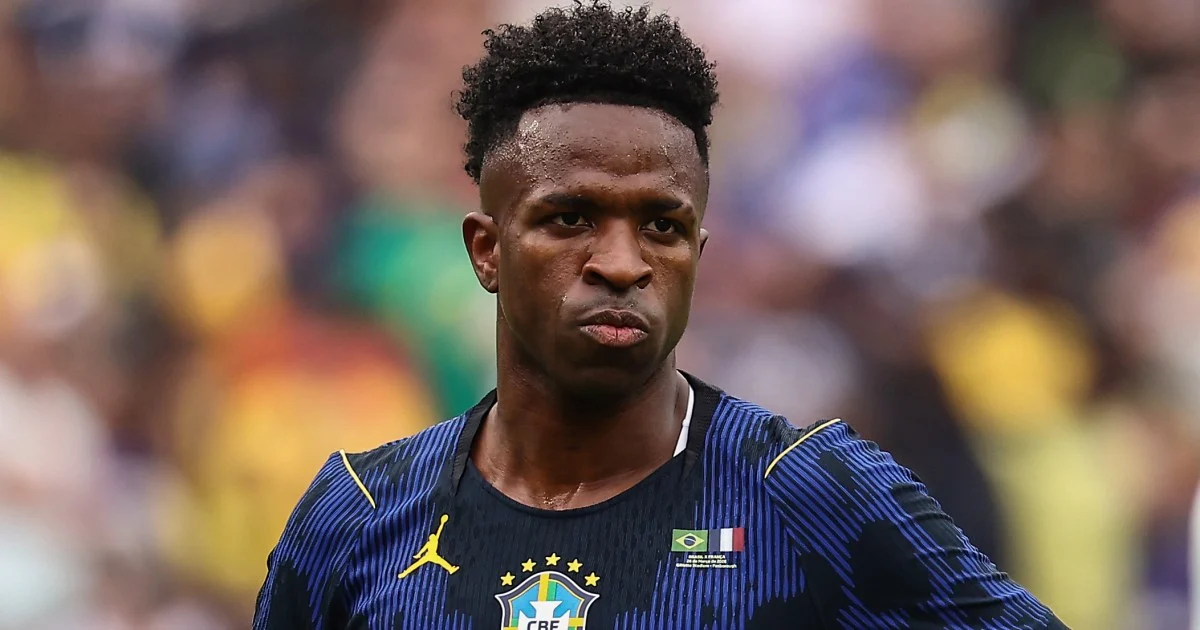
The Brazilian national football team enters the 2026 FIFA World Cup at a historic crossroads, seeking to end a 24-year championship drought that mirrors the gap between their 1970 and 1994 triumphs. As the only nation to have participated in every iteration of the tournament since its inception in 1930, Brazil carries the weight of five stars on its crest and the expectations of a population for whom football is a cultural cornerstone. However, the 2026 campaign represents a radical departure from tradition, marked by the appointment of the team’s first permanent foreign manager and the inclusion of a talismanic yet controversial figure in Neymar, who seeks a final shot at redemption on the global stage.
A Legacy of Excellence and Recent Frustration
Brazil’s history in the World Cup is unparalleled. With titles in 1958, 1962, 1970, 1994, and 2002, "A Seleção" has long been the gold standard of international football. Their journey began in Uruguay in 1930, but it was the emergence of Pelé in 1958 that established the nation as a global powerhouse. Over the decades, legends such as Garrincha, Zico, Romário, and Ronaldo Nazário have defined the "Joga Bonito" style that captivated fans worldwide.
Despite this storied past, the 21st century has been unkind to the Brazilians. Since lifting the trophy in Yokohama in 2002, the team has struggled to navigate the knockout stages effectively. The 2014 tournament, hosted on home soil, remains a traumatic memory for the nation following the 7-1 semi-final capitulation against Germany. More recently, the 2022 tournament in Qatar ended in a "damp squib" exit, as Brazil fell to Croatia on penalties in the quarterfinals despite being heavy favorites. Entering 2026, the team finds itself ranked 6th in the FIFA World Rankings, a position that reflects a period of inconsistency and transition.
The Ancelotti Revolution: A Shift in Philosophy
The most significant change in the Brazilian setup is the presence of Carlo Ancelotti at the helm. The Italian tactician was appointed following the dismissal of Dorival Jr, who was relieved of his duties after a lackluster CONMEBOL qualifying campaign that saw Brazil finish an uncharacteristic fifth in the standings. Ancelotti’s arrival marks a watershed moment in Brazilian football history, as the federation broke its long-standing tradition of hiring domestic coaches for the national post.
Ancelotti brings an unrivaled European pedigree to the role. Having won five UEFA Champions League titles as a manager with Real Madrid and AC Milan, and league titles in all of Europe’s "Big Five" divisions, he is regarded as one of the greatest man-managers in the history of the sport. His ability to balance elite egos while implementing pragmatically astute tactics is seen as the necessary antidote to Brazil’s recent tactical rigidity.
However, the transition has not been without its hurdles. Ancelotti remains unproven on the international stage, where limited training time and the absence of a transfer market make team building more difficult. Early results under his tenure have been a microcosm of this uncertainty: while the team secured friendly victories over South American rivals Chile and Colombia, a -1 defeat to France in March highlighted lingering defensive vulnerabilities.

The Neymar Gamble: Experience vs. Reliability
Perhaps the most debated aspect of Brazil’s 2026 squad is the inclusion of Neymar. At 34 years old, Brazil’s all-time leading scorer with 79 goals is entering the twilight of his career. His path to this World Cup has been marred by a decade of physical setbacks. Statistics indicate that between 2015 and 2025, Neymar suffered at least 33 distinct injuries, resulting in nearly four years of cumulative missed playing time.
After a serious knee injury in October 2023 and a subsequent stint in the Saudi Pro League that was curtailed by fitness issues, Neymar returned to his roots at Santos to rediscover his form. His inclusion in the final squad, at the expense of younger talents like Chelsea’s Joao Pedro, was a decision Ancelotti defended on the grounds of "experience and leadership."
"We evaluated Neymar throughout the year and noticed that recently he has been playing consistently and has improved his physical condition," Ancelotti stated during the squad announcement in Rio de Janeiro. "In some positions, we prioritized experience. He has the same responsibilities as everyone else, but he understands the pressure of this stage."
Neymar’s presence is a double-edged sword. While he aims to emulate Ronaldo’s 2002 comeback story, his recent disciplinary issues—including a training ground altercation and a public dispute over a substitution—have raised concerns about team harmony. Whether he can serve as a stabilizing veteran or will prove to be a distraction remains a central narrative of the tournament.
Vinicius Jr: The New Face of A Seleção
As Neymar’s role shifts toward that of a veteran mentor, the mantle of "star player" has officially passed to Vinicius Jr. The Real Madrid forward arrives in North America as one of the most feared attacking threats in the world, characterized by explosive pace and elite dribbling.
Despite his club success, which included a 16-goal La Liga campaign this past year, Vinicius has often struggled to replicate that form for his country. With only eight goals in 43 appearances for Brazil, there is immense pressure on him to become the clinical finisher the team needs. Ancelotti has experimented with moving Vinicius from his traditional left-wing role to a more central striking position. While this brings him closer to the goal, critics argue it limits his ability to exploit space and forces the midfield—led by Bruno Guimarães and an aging Casemiro—to work harder to cover the flanks.
Supporting Talent and Squad Depth
Beyond the headline names, the Brazilian squad is bolstered by a wealth of talent playing at the highest levels of European football. Raphinha enters the tournament following a standout season at Barcelona, where he proved to be a vital creative outlet. The emergence of young talents like Endrick (Lyon) and Gabriel Martinelli (Arsenal) provides Ancelotti with diverse attacking options, though the team will feel the absence of the injured Rodrygo and Estevao.

In the midfield, Bruno Guimarães has established himself as a premier box-to-box engine at Newcastle United, while Casemiro has found a second wind under Michael Carrick’s tutelage at Manchester United. Defensively, the pairing of Marquinhos and Gabriel Magalhães offers a blend of veteran composure and Premier League physicality, all anchored by Alisson, who remains among the world’s elite goalkeepers.
Chronology of Brazil’s Path to the 2026 World Cup
The road to the 2026 tournament has been one of the most turbulent in recent memory for the CBF (Brazilian Football Confedertion):
- December 2022: Brazil is eliminated from the Qatar World Cup by Croatia. Manager Tite resigns.
- 2023: A period of interim management and poor results in CONMEBOL qualifying, including a historic home loss to Argentina.
- October 2023: Neymar suffers a ruptured ACL during a qualifying match against Uruguay, sidelining him for nearly a year.
- January 2024: Dorival Jr is appointed manager but struggles to stabilize the team’s defensive structure.
- Late 2024: Brazil finishes 5th in qualifying. Dorival Jr is sacked. Carlo Ancelotti is officially confirmed as the new manager.
- March 2025: Mixed results in European friendlies create debate over Ancelotti’s tactical shift.
- May 2026: Ancelotti announces the final World Cup squad, confirming the return of Neymar and the exclusion of several Premier League-based youngsters.
Group C Analysis: A Nostalgic Challenge
Brazil has been drawn into Group C, a group that evokes memories of the 1998 World Cup in France. They will face Morocco, Scotland, and Haiti.
- Morocco: The North African side, who reached the semi-finals in 2022, represents the toughest challenge for Brazil. Their disciplined defensive block and rapid counter-attacks will test Ancelotti’s tactical patience in the opening match.
- Scotland: Making a return to the world stage, Scotland brings a physical, high-pressing style. While Brazil is technically superior, they have historically struggled against teams that disrupt their rhythm with physicality.
- Haiti: Appearing in their first tournament since 1974, Haiti is the clear underdog of the group. Brazil will be expected to use this match to rotate the squad and build goal-difference confidence.
Predictions and Broader Implications
Most analysts, including those at Al Jazeera, predict a quarterfinal finish for Brazil. While the talent is undeniable, the "underdog" status—a rarity for Brazil—suggests a lack of cohesion compared to favorites like France or Argentina.
The implications of this tournament for Brazilian football are profound. A successful run would vindicate the decision to hire a foreign coach and provide a fitting end to the Neymar era. Conversely, an early exit could lead to a fundamental identity crisis within the CBF, questioning whether the nation has lost its unique footballing DNA in favor of a Europeanized model that has yet to deliver results on the grandest stage.
As the tournament kicks off in East Rutherford on June 13, the world will watch to see if the "Samba Boys" can recapture the magic of 1994 on North American soil and finally secure the elusive "Hexa"—their sixth world title.
