

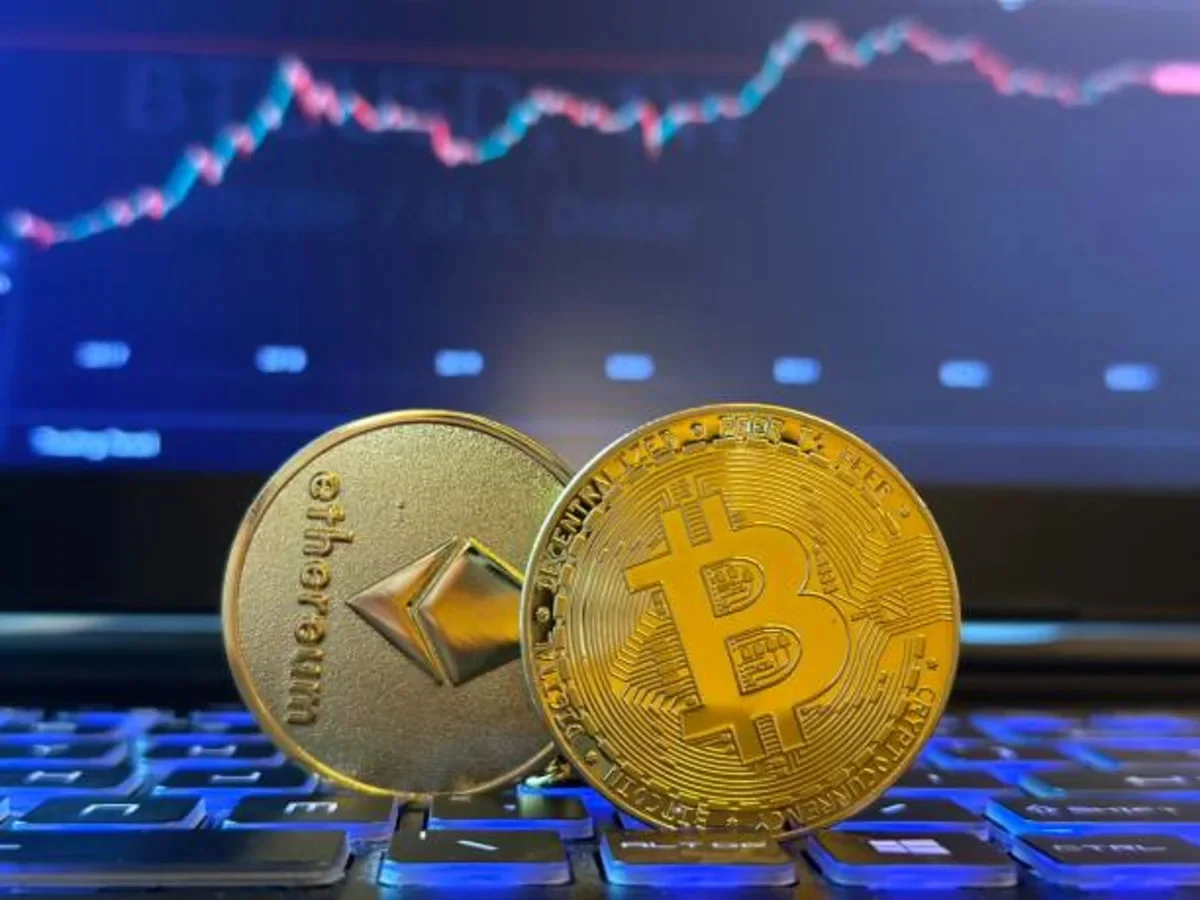
Major cryptocurrencies Bitcoin (BTC-USD) and Ethereum (ETH-USD) initiated Thursday, August 6, 2026, trading with significant upward momentum, marking their highest opening levels of the week. Bitcoin commenced the day at $64,602.32, registering a 0.9% increase over Wednesday’s opening price. Ethereum followed suit, opening at $1,906.96, a robust 2.1% climb from its previous day’s start. While both digital assets experienced slight pullbacks by 9:40 a.m. ET, with Bitcoin dipping to $64,216.91 and Ethereum to $1,901.84, the overall sentiment remained positive, underpinned by substantial month-over-month gains. This resurgence is largely attributed to a confluence of favorable macroeconomic and geopolitical developments, specifically ongoing negotiations concerning the Strait of Hormuz and a recent underwhelming jobs report, both signaling a potentially more accommodative monetary policy from the Federal Reserve.
A Market Resurgence Driven by Geopolitical and Economic Shifts
The crypto market’s renewed vigor on Thursday reflects a broader shift in investor sentiment towards risk-based assets. This pivot is primarily fueled by two significant factors: the progress in diplomatic talks regarding the partial reopening of the Strait of Hormuz and a softer-than-expected July jobs report from the Automatic Data Processing (ADP). Both events are collectively reducing the likelihood of an interest rate hike by the Federal Reserve at its upcoming meeting, injecting optimism across global financial markets, particularly within the more volatile cryptocurrency sector.
The Strait of Hormuz, a critical chokepoint for global oil shipments, has been a source of geopolitical tension and market uncertainty for months leading up to August 2026. Protracted negotiations involving Iran and international powers to partially de-escalate tensions and ensure smoother passage for maritime trade have finally shown signs of yielding positive results. A partial reopening implies a reduction in supply chain risks for crude oil and other commodities, potentially stabilizing energy prices and alleviating inflationary pressures worldwide. For investors, this translates into reduced global economic uncertainty, making riskier assets like cryptocurrencies more appealing. The market perceives this as a decrease in geopolitical premium, allowing capital to flow into growth-oriented investments.
Concurrently, the ADP’s July jobs report, released on Wednesday, painted a picture of a cooling labor market. While specific figures were not detailed, the report was widely characterized as "underwhelming," suggesting slower job creation and potentially decelerating wage growth. Such data is typically interpreted as a signal that the economy may be slowing down, which could ease the Federal Reserve’s concerns about inflation. In response, market participants are increasingly betting on the Fed adopting a more dovish stance, possibly pausing rate hikes or even contemplating future rate cuts. Lower interest rates generally diminish the appeal of safe-haven assets and fixed-income investments, redirecting capital towards equities and, by extension, cryptocurrencies, which tend to thrive in environments of abundant liquidity and lower borrowing costs.
Bitcoin’s Trajectory: Navigating Peaks and Valleys
Bitcoin’s performance on August 6, 2026, at $64,602.32, represents a significant rebound from earlier lows, though still a considerable distance from its all-time high. The cryptocurrency reached an unprecedented peak of $126,198.07 on October 6, 2025, a period marked by heightened institutional adoption, the approval of several spot Bitcoin Exchange-Traded Funds (ETFs) in major jurisdictions, and a wave of corporate treasury allocations to digital assets. This peak also coincided with a speculative fervor driven by the culmination of the latest Bitcoin halving cycle, which had significantly reduced the supply of new bitcoins entering the market.
In the months following its October 2025 peak, Bitcoin experienced a period of consolidation and correction, a natural market cycle often seen after rapid appreciation. This correction was exacerbated by evolving regulatory discussions and intermittent profit-taking by early investors. However, the current price action, showing positive month-over-month gains and holding above key support levels, suggests a resilient underlying demand. Analysts observe that while short-term volatility persists, Bitcoin’s long-term value proposition as a store of value and a hedge against traditional financial system uncertainties continues to attract a diverse investor base. The 0.9% gain from Wednesday’s open, despite being a modest move in crypto terms, underscores a gradual accumulation trend in response to improving macro conditions.
Ethereum’s Ascent: Fueling the Decentralized Economy
Ethereum, the backbone of countless decentralized applications (dApps) and the non-fungible token (NFT) market, also demonstrated robust performance, opening at $1,906.96, a 2.1% increase. This strong showing positions Ethereum at its weekly high, reflecting renewed confidence in the broader decentralized finance (DeFi) ecosystem. Ethereum’s all-time high of $4,953.73, achieved on August 24, 2025, was largely driven by a confluence of factors, including the successful implementation of its "Merge" upgrade (transitioning to Proof-of-Stake), significant growth in staking yields, and an explosion in the utility and popularity of DeFi protocols. The network’s continued dominance in smart contract functionality and its ongoing scalability improvements (via Layer 2 solutions and sharding development) have cemented its role as a foundational layer for Web3.
The current positive sentiment for Ethereum is closely tied to the same macro factors influencing Bitcoin, but also to its intrinsic utility. As investors ease into risk-based assets, the potential for growth within the Ethereum ecosystem – encompassing everything from enterprise blockchain solutions to innovative dApps – becomes more attractive. Ethereum’s lower relative price compared to its all-time high, combined with its strong fundamental developments, positions it as a compelling investment for those seeking exposure to the broader decentralized economy. The 2.1% jump signals that market participants are actively re-engaging with altcoins, particularly those with strong development roadmaps and established network effects.
Chronology of Key Events Leading to Thursday’s Rally:
- Early August 2026: Ongoing, intense diplomatic efforts between global powers and Iran accelerate, focusing on securing a framework for the partial and controlled opening of the Strait of Hormuz. Reports of breakthroughs begin to circulate in financial media.
- Monday, August 3 – Tuesday, August 4, 2026: Bitcoin and Ethereum trade within a relatively tight range, reflecting market apprehension amidst geopolitical uncertainty and anticipation of economic data releases.
- Wednesday, August 5, 2026 (Morning ET): The Automatic Data Processing (ADP) releases its July 2026 National Employment Report, which is widely interpreted by economists as "underwhelming," indicating a slowdown in private sector job creation.
- Wednesday, August 5, 2026 (Afternoon ET): Following the ADP report, market analysts begin to adjust their projections for the Federal Reserve’s upcoming monetary policy meeting, with a growing consensus emerging that a rate hike is now less probable. Geopolitical headlines also suggest increasing optimism regarding the Strait of Hormuz negotiations. Risk-on sentiment begins to build in traditional equity markets.
- Thursday, August 6, 2026 (Market Open ET): Bitcoin and Ethereum open significantly higher, reflecting the overnight shift in investor confidence and the positive news flow. Bitcoin opens at $64,602.32, and Ethereum at $1,906.96, marking their highest weekly openings.
- Thursday, August 6, 2026 (9:40 a.m. ET): A slight consolidation occurs, with prices moderating slightly to $64,216.91 for Bitcoin and $1,901.84 for Ethereum, as traders digest the initial surge and prepare for further market developments.
Broader Implications: Federal Reserve Policy and Global Economic Stability
The current market movements underscore the intricate relationship between geopolitics, macroeconomic indicators, and cryptocurrency valuations. The potential for a partial opening of the Strait of Hormuz is not merely about oil prices; it signifies a broader de-escalation of regional tensions, which can reduce global systemic risk. Such stability encourages investment and long-term planning, fostering an environment where growth assets like cryptocurrencies can flourish.
From a monetary policy perspective, an underwhelming jobs report provides the Federal Reserve with greater flexibility. For months, the Fed has walked a tightrope, attempting to curb inflation without triggering a recession. A cooling labor market, if sustained, suggests that the Fed’s previous rate hikes are having the desired effect, reducing the urgency for further tightening. This pivot, or even a sustained pause, in rate hikes could unleash significant liquidity into the financial system, benefiting assets that are sensitive to interest rate changes. The market’s interpretation that the "chances of a rate increase following the Fed’s meeting next month" are diminished is a powerful catalyst for risk assets. Investors are positioning themselves for a scenario where capital becomes cheaper and more abundant, historically a boon for growth sectors, including technology and digital assets.
The Evolution of Crypto Adoption: The Rise of Crypto Credit Cards
Beyond the immediate price movements, the broader narrative of cryptocurrency adoption continues to evolve, exemplified by the increasing popularity of crypto credit cards. In 2026, these cards have become a tangible bridge between traditional finance and the digital asset world, offering a new avenue for mainstream engagement with cryptocurrencies.
A crypto credit card functions fundamentally like any conventional credit card. Upon approval, users receive a credit limit, enabling them to make purchases wherever standard credit cards are accepted. The standard financial mechanics apply: failure to pay the total balance by the due date results in interest accrual based on the assigned Annual Percentage Rate (APR). The primary distinction, and indeed the allure, lies in the reward structure. Instead of accumulating airline miles, traditional rewards points, or cashback, users earn cryptocurrency.
For instance, a card might offer 3% back on gas purchases or 2% back at restaurants. This percentage, calculated in U.S. dollars, is then converted into a chosen cryptocurrency, typically Bitcoin or Ethereum, at the prevailing market rate and deposited into a linked crypto account. Imagine making a $500 purchase that qualifies for 3% Bitcoin rewards. This translates to $15 in U.S. dollar value. This $15 is then converted into Bitcoin (e.g., approximately 0.00014 BTC, based on a hypothetical October 2025 valuation) and seamlessly credited to the user’s crypto wallet.
The most compelling benefit of these crypto rewards is their potential for appreciation over time. Unlike static cashback or points, the value of earned cryptocurrency can grow with the market. For example, if a user accumulated a Bitcoin rewards balance worth $100 USD by the end of 2024, by early October 2025, that same balance could have increased to approximately $114, even without any further rewards being earned. This growth potential transforms everyday spending into a passive investment strategy, attracting both seasoned crypto enthusiasts and newcomers seeking a low-barrier entry into digital asset ownership.
By 2026, the market for crypto credit cards has matured, with numerous financial institutions and crypto platforms offering a diverse range of products. These cards often come with tiered reward structures, allowing users to earn higher percentages in specific spending categories or based on the amount of crypto they hold in their associated accounts. The integration of these cards into daily financial routines signifies a broader acceptance and utility of cryptocurrencies, moving beyond speculative investment to practical application. Regulatory frameworks surrounding crypto rewards and their taxation have also become clearer by this period, providing greater certainty for users and issuers alike. This mainstream adoption through familiar financial instruments is crucial for the long-term sustainability and growth of the crypto economy.
Outlook: Continued Volatility with Underlying Optimism
While the immediate outlook for Bitcoin and Ethereum appears positive, driven by the current macroeconomic and geopolitical tailwinds, the cryptocurrency market remains inherently volatile. Investors should anticipate continued price fluctuations as market participants react to new information, including further updates on the Strait of Hormuz negotiations, subsequent economic data releases, and, critically, the Federal Reserve’s official statement following its next meeting.
The positive month-over-month gains for both Bitcoin and Ethereum suggest a resilient market that is finding its footing amidst global uncertainties. The increasing institutional interest, coupled with the expanding utility and adoption of cryptocurrencies through innovations like crypto credit cards, paints a picture of a maturing asset class. As the global economy continues to navigate inflationary pressures, geopolitical shifts, and evolving monetary policies, digital assets like Bitcoin and Ethereum are proving to be increasingly significant components of the broader financial landscape, offering both opportunities and challenges for investors worldwide. The convergence of favorable macro trends with ongoing innovation within the crypto space positions these assets for continued attention and potential growth in the latter half of 2026.
