

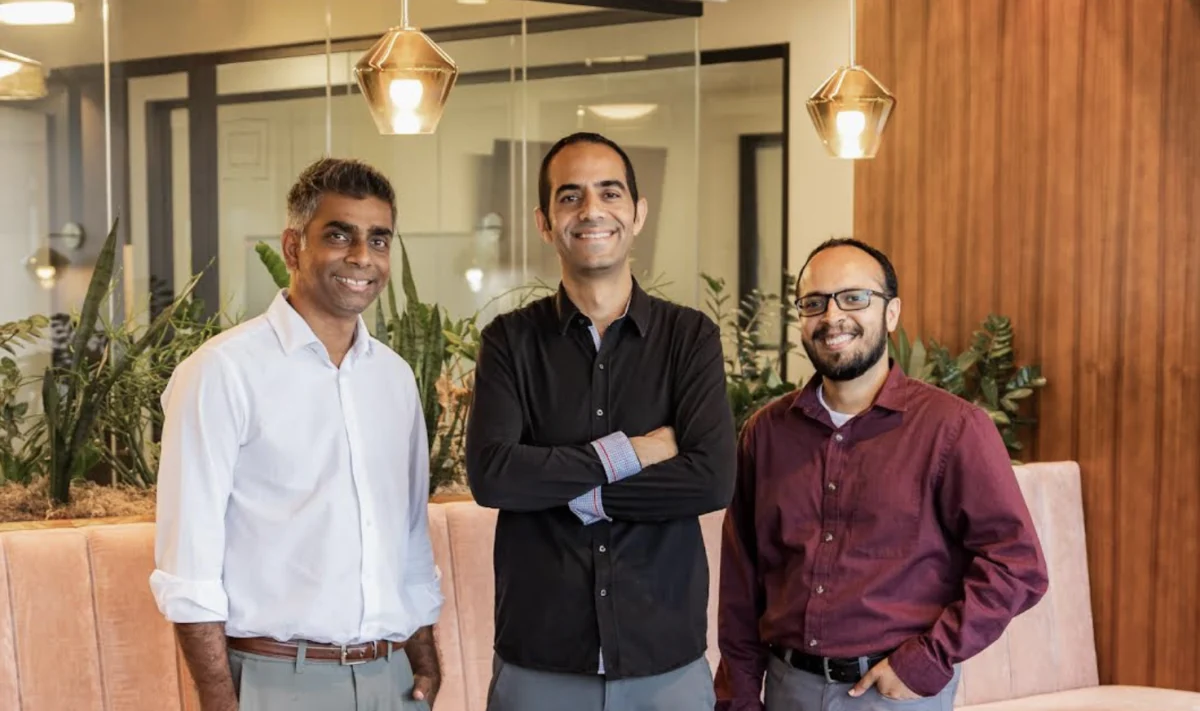
The landscape of artificial intelligence in healthcare is frequently dominated by headlines concerning breakthroughs in robotic surgery, predictive diagnostics, and the discovery of novel pharmaceutical compounds. However, a significant and often overlooked systemic failure occurs long before a patient ever meets a specialist. This "care gap" exists in the administrative friction between a primary care physician’s referral and the actual scheduling of a specialty appointment. To address this bottleneck, Phoenix-based startup Basata has announced a $21 million Series A funding round, bringing its total capital raised to $24.5 million. The investment, led by Basis Set Ventures, signals a growing conviction among venture capitalists that the next frontier of healthcare efficiency lies not just in the doctor’s office, but in the back-office infrastructure that manages patient flow.
The administrative burden in the United States healthcare system is a well-documented crisis. According to studies published in the Journal of the American Medical Association (JAMA), administrative costs account for nearly 25% of total healthcare spending in the U.S., with a significant portion of that labor dedicated to manual data entry and communication between disparate medical practices. Basata’s founders, Kaled Alhanafi and Chetan Patel, argue that the shortage of doctors is exacerbated by an even more acute "paperwork pandemic." While the medical world has moved toward digitalization, the referral process remains stubbornly tethered to 20th-century technology, specifically the fax machine.
The Personal Catalyst for Administrative Reform
Basata was born out of the personal frustrations of its founders, both of whom are veterans of high-stakes industries. Kaled Alhanafi previously served as an executive at Lyft and Cruise, companies defined by their ability to optimize logistics and routing. Chetan Patel spent a decade at Medtronic, a global leader in medical technology, focusing on the development of cardiac devices. Despite their professional proximity to cutting-edge technology, both men found themselves helpless when navigating the administrative labyrinth of the American healthcare system.
For Patel, the urgency of the problem became clear during a family emergency. His wife fainted while on a flight with their young children. Despite Patel’s deep clinical knowledge of cardiology and the specific diagnostic tools required to assess her condition, the process of securing an appointment with a specialist was mired in delays. He noted that while the U.S. possesses world-class physicians and advanced medications, the infrastructure required to connect patients to those resources is fundamentally broken.
Alhanafi experienced a similar systemic failure regarding his father, who had been diagnosed with a serious carotid artery condition. Following the diagnosis, referrals were sent to three separate cardiology groups. The results were a microcosm of the national referral crisis: one group called back after two weeks, another responded only after the surgery had already been performed by a different provider, and the third never contacted the family at all. These anecdotes are representative of a broader trend where specialty practices, overwhelmed by a constant influx of hundreds of referral documents daily, simply cannot keep pace with the manual intake required to onboard new patients.
The Technological Solution: Automating the Intake Workflow
Basata’s platform is designed to function as an end-to-end bridge between the receipt of a referral and the confirmation of an appointment. The process begins when a referral document—typically sent via fax—is received by a specialty practice. Basata’s AI-driven system utilizes optical character recognition (OCR) and natural language processing (NLP) to read the document, extract relevant clinical data, and categorize the urgency of the case.
Once the data is processed, the system triggers an AI voice agent. This agent contacts the patient directly to handle the scheduling process. Unlike traditional automated systems that rely on rigid menu trees, Basata’s AI voice agents are designed to handle natural conversation, answering patient questions regarding the appointment or insurance requirements. The system also allows patients to call the practice at any hour to handle administrative tasks such as prescription renewals or appointment modifications.
The primary objective, according to Alhanafi, is to achieve "real-time scheduling." In an ideal workflow, a patient leaving their primary care doctor’s office would receive a call and have their specialist appointment confirmed before they even reach their car in the parking lot. This level of responsiveness not only improves patient satisfaction but also prevents "leakage," a term used in healthcare to describe patients who drop out of the system or seek care elsewhere because of long wait times or poor communication.
Strategic Growth and Specialized Integration
One of the key differentiators for Basata is its "specialty-first" approach to integration. Rather than attempting to build a generic tool for the entire medical market, the company has focused on deeply integrating with the specific Electronic Medical Record (EMR) systems used by particular specialties. The company launched with a focus on cardiology and has recently expanded into urology.
This deliberate pace is a strategic choice. The founders recently declined a significant deal in a specialty they had not yet fully mapped, citing the need for high-fidelity data extraction. Because different medical specialties prioritize different clinical data points—for instance, a cardiologist needs specific EKG results while a urologist might focus on lab work—Basata’s models must be fine-tuned to the nuances of each field to ensure clinical safety and administrative accuracy.
The company’s revenue model is built on usage rather than seat licenses. Practices pay based on the volume of documents processed and the number of calls handled by the AI agents. This model aligns the company’s success with the practice’s volume and has proven effective; Basata reports having processed referrals for approximately 500,000 patients to date, with 100,000 of those occurring in the last month alone. This rapid acceleration suggests a strong market-fit and an increasing reliance on automated solutions by specialty groups.
The Investment Landscape and Competitive Pressures
The Series A round was led by Lan Xuezhao of Basis Set Ventures. Xuezhao’s background in modeling the human brain as a PhD researcher, combined with her strategic experience at McKinsey and Dropbox, provides a unique perspective on the intersection of AI and human workflows. The round also saw participation from Cowboy Ventures, led by Aileen Lee, and Sofeon, a new firm established by former Felicis Ventures partner Victoria Treyger.
The influx of capital into Basata comes at a time when the healthcare administrative AI space is becoming increasingly crowded. Competitors like Tennr, which recently reached a $605 million valuation after raising over $160 million, are also targeting the document intelligence market. Similarly, Assort Health has raised significant funding to automate patient phone communications.
However, Basata’s investors argue that the founders’ maturity and industry experience provide a competitive edge. Aileen Lee of Cowboy Ventures noted that in the medical field, trust is the primary currency. While many venture capitalists are focused on younger tech disruptors, Lee emphasizes that medical practices prefer to work with seasoned professionals who understand the gravity of patient care and the complexities of healthcare regulations. Basata’s founders argue that their "end-to-end" workflow—combining document processing with voice-based scheduling—offers a more comprehensive solution than competitors who focus on only one side of the administrative equation.
Implications for the Healthcare Labor Force
As with any AI-driven automation, questions arise regarding the future of the human workforce. Basata’s founders maintain that their technology is designed to augment, not replace, administrative staff. In many specialty practices, front-desk employees have held their positions for decades and possess invaluable institutional knowledge. However, these workers are currently "drowning" in a volume of paperwork that no amount of human hiring can reasonably solve.
By offloading the repetitive, manual tasks of data entry and initial patient outreach to AI, Basata aims to free human workers to focus on more complex patient needs and higher-level practice management. The company points to its growth metrics as evidence of this need; 70% of Basata’s new business currently comes from word-of-mouth referrals between practices, suggesting that the staff on the front lines of the administrative crisis are the technology’s strongest advocates.
Future Outlook: The Automated Clinical Backbone
The success of Basata reflects a broader shift in the healthcare industry’s approach to technology. For years, the focus was on the "front end"—the patient-facing portals and the clinical tools used by doctors. But the realization that the system’s "middle-ware" is the primary source of delay is driving a new wave of innovation.
As Basata scales, the challenge will be maintaining its high standard of data accuracy while expanding into more complex medical specialties. The company’s ability to integrate with legacy EMRs and navigate the fragmented landscape of American healthcare will determine its long-term viability. For now, the $21 million infusion of capital provides the runway necessary to continue its expansion into new specialties and refine the AI voice agents that are quickly becoming the new face of medical scheduling.
In a system where a missed fax can result in a delayed diagnosis or a missed surgery, the automation of the referral process is more than a matter of convenience—it is a critical component of modern patient safety and access to care. Basata’s progress suggests that while the "care gap" is wide, the tools to bridge it are finally arriving.
