

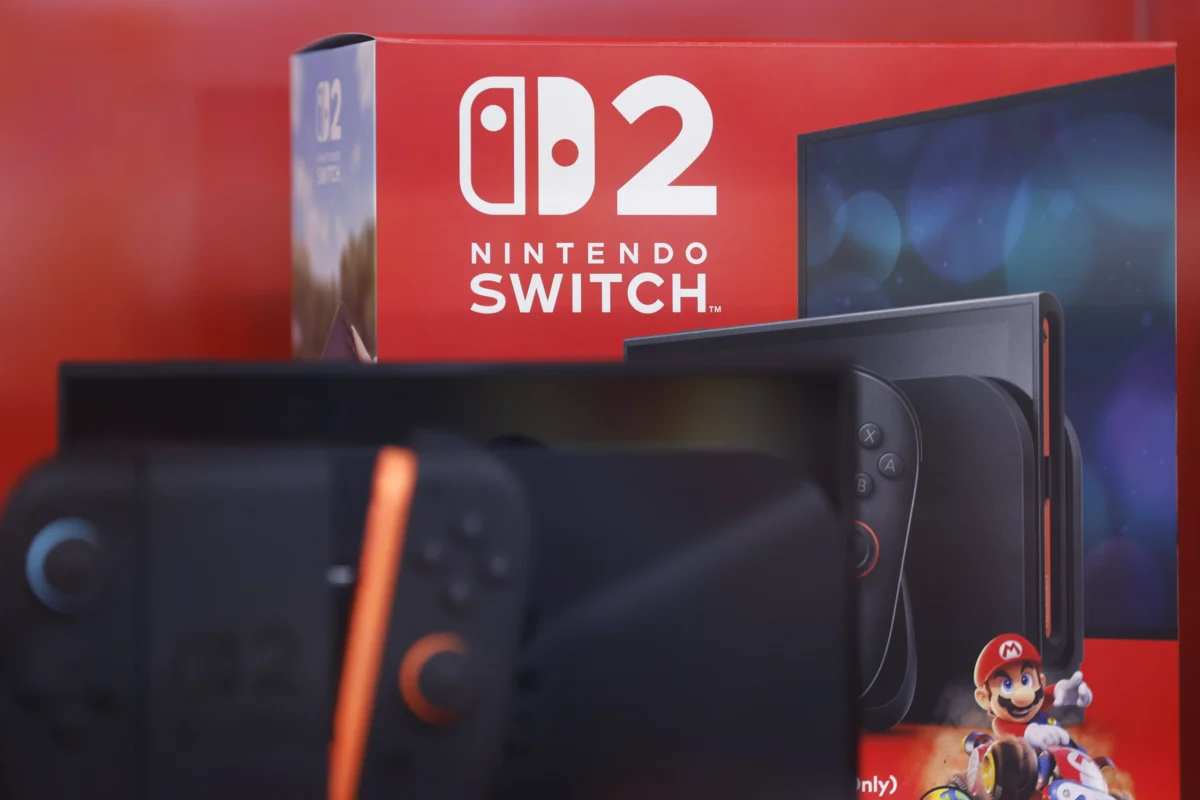
Nintendo Co. has officially adjusted the retail pricing for its highly anticipated Switch 2 console, a move driven by a tightening global supply of memory chips and a conservative outlook for the upcoming fiscal years. The Japanese gaming giant, headquartered in Kyoto, confirmed that the price for its next-generation hardware will see a significant increase in major markets, including the United States and Japan. This announcement comes as the company projects a decline in annual hardware sales, falling short of previous internal milestones and the high expectations set by Wall Street analysts.
The revised pricing structure will see the Switch 2 retail for $499.99 in the United States, a $50 increase from the previously anticipated $449.99 launch price. In Nintendo’s home market of Japan, the price has been adjusted from 49,980 yen to 59,980 yen. These adjustments reflect the growing pressure of component costs on consumer electronics, as Nintendo attempts to protect its profit margins in a volatile macroeconomic environment.
Global Launch and Market Reception
The price hike announcement follows the global debut of the Switch 2 on June 5, 2025. Despite the higher price tag, enthusiasm for the new hardware remained palpable across major metropolitan hubs. At the Bic Camera Inc. electronics store in Tokyo’s Yurakucho district, crowds began forming in the early hours of Thursday morning. Similar scenes were reported at Nintendo’s flagship store in Manhattan’s Rockefeller Center, where fans stood in lines stretching several city blocks.
Industry observers have likened the scale of the Switch 2 launch to the historic iPhone debuts of the late 2000s. The original Nintendo Switch, launched in 2017, became a cultural phenomenon, eventually selling over 140 million units and becoming the second best-selling home console of all time. The pressure to succeed that legacy is immense, yet Nintendo now faces a vastly different supply chain landscape than it did eight years ago.
The Memory Chip Crunch: A Strategic Bottleneck
The primary catalyst for the price adjustment is what industry insiders describe as a "memory chip crunch." While the global semiconductor shortage that plagued the industry during the COVID-19 pandemic has largely subsided for legacy nodes, high-performance memory components—specifically NAND flash and DRAM—have seen a surge in demand and a tightening of supply.
The rapid expansion of artificial intelligence (AI) infrastructure has diverted a significant portion of global chip manufacturing capacity toward data center-grade components. This shift has inadvertently squeezed the supply available for consumer electronics manufacturers like Nintendo. The Switch 2 requires significantly more advanced memory modules than its predecessor to support modern high-definition graphics and faster loading times.
Nintendo’s management noted that the cost of these components has risen beyond initial projections. By raising the retail price, the company aims to offset these production costs rather than absorbing them, a strategy that contrasts with the traditional "loss leader" model often employed in the console industry, where hardware is sold at a loss to drive software sales.
Revised Sales Forecasts and Financial Outlook
In tandem with the pricing update, Nintendo released its financial guidance for the fiscal year ending March 31, 2027. The company expects to sell 16.5 million units of the Switch 2 during that period. This figure represents a notable decline from the 19.86 million units sold in the fiscal year just concluded, which included the final peak of the original Switch’s lifecycle and the initial momentum of the new hardware.
The conservative forecast of 16.5 million units fell well below analyst estimates, which had pegged the figure closer to 22 million units. Analysts had expected a more aggressive "super-cycle" following the launch of the new hardware. However, Nintendo appears to be bracing for a more measured adoption rate, potentially due to the higher entry price and the ongoing transition of its software library.
The company’s current-year forecasts were also described as "far below" expectations, signaling a cautious approach to the 2025-2026 period. This caution reflects the reality of the hardware transition; while the Switch 2 is the primary focus, the original Switch is entering its twilight years, and its sales are expected to taper off rapidly.
Chronology of the Nintendo Switch 2 Development
The journey to the Switch 2 launch has been marked by years of speculation and strategic shifts.
- March 2017: Nintendo launches the original Switch, merging the handheld and home console markets.
- 2021-2022: Amidst the global pandemic, rumors of a "Switch Pro" circulate. Nintendo instead releases the Switch OLED Model, focusing on display quality rather than raw processing power.
- Late 2023: Reports emerge from Gamescom that Nintendo held private demonstrations of next-generation hardware for developers, showcasing tech demos like The Legend of Zelda: Breath of the Wild running at higher resolutions and frame rates.
- Early 2025: Nintendo officially announces the Switch 2, confirming backward compatibility and improved hardware specifications.
- June 5, 2025: The Switch 2 officially hits shelves globally.
- Post-Launch June 2025: Nintendo announces the price hike and revised sales targets due to the memory chip shortage.
Industry and Analyst Reactions
The reaction from the investment community has been one of wary observation. Many analysts believe that while the $499.99 price point is high for Nintendo—a company that typically targets a more family-friendly, budget-conscious demographic—it is a necessary step in the current economic climate.
"Nintendo is in a difficult position," said a lead technology analyst at a Tokyo-based brokerage. "They have a premium product that fans clearly want, but the cost of the silicon inside that box has moved against them. By raising the price now, they are prioritizing the health of their balance sheet over raw volume. The question is whether the casual gaming audience will follow them to a $500 price point, or if this becomes a console primarily for the hardcore enthusiast in its first two years."
Retailers, meanwhile, are managing high demand despite the price increase. "The enthusiasm hasn’t dampened," a representative for a major US electronics retailer stated. "We are seeing high attachment rates for software and accessories. However, the long-term sustainability of these sales will depend on how quickly Nintendo can stabilize its supply chain and whether they can offer more affordable bundles during the holiday season."
Broader Implications for the Gaming Market
Nintendo’s decision to hike prices may have a ripple effect across the gaming industry. Historically, Nintendo has acted as a price anchor, often offering the most affordable entry point into the "big three" console ecosystem (alongside Sony’s PlayStation and Microsoft’s Xbox). With the Switch 2 now priced similarly to the PlayStation 5 and Xbox Series X, the competitive landscape has shifted.
This move also highlights the vulnerability of the gaming industry to the broader semiconductor market. As gaming consoles become more technologically sophisticated, they are increasingly competing for the same high-end components as the automotive, AI, and telecommunications sectors.
Furthermore, the price hike in Japan—a 10,000 yen increase—reflects the continued weakness of the Japanese yen against the US dollar. For many Japanese consumers, the Switch 2 is now a luxury item, a significant shift for a brand that has historically been ubiquitous in Japanese households.
Looking Ahead: Software Strategy and FY2027
To justify the higher hardware cost, Nintendo is expected to lean heavily on its first-party software lineup. The company has historically relied on "evergreen" titles—such as Mario Kart, Pokémon, and The Legend of Zelda—to maintain hardware momentum. For the Switch 2 to meet even its conservative 16.5 million unit target, a consistent cadence of blockbuster releases will be required.
There are also questions regarding how this price hike will affect the "Nintendo Switch Online" ecosystem. As Nintendo transitions its user base to the new hardware, the company will likely focus on high-margin digital services and subscriptions to supplement hardware revenue.
The fiscal year ending March 31, 2027, will be the true litmus test for the Switch 2. It will be the first full year where the console must stand on its own without the novelty of a launch window. If the memory chip crunch persists, Nintendo may be forced to maintain these higher prices indefinitely, or alternatively, find ways to re-engineer the console with more readily available components—a process that could take years.
For now, the gaming world remains focused on the immediate success of the debut. While the price hike and lowered forecasts present a more sober outlook than many had hoped for, the long lines in Tokyo and Manhattan suggest that for many consumers, the value of Nintendo’s unique brand of entertainment still outweighs the rising cost of entry. As the company navigates these "breaking news" developments, the industry will be watching closely to see if the Switch 2 can replicate the record-breaking success of its predecessor in an increasingly expensive and complex global market.
