

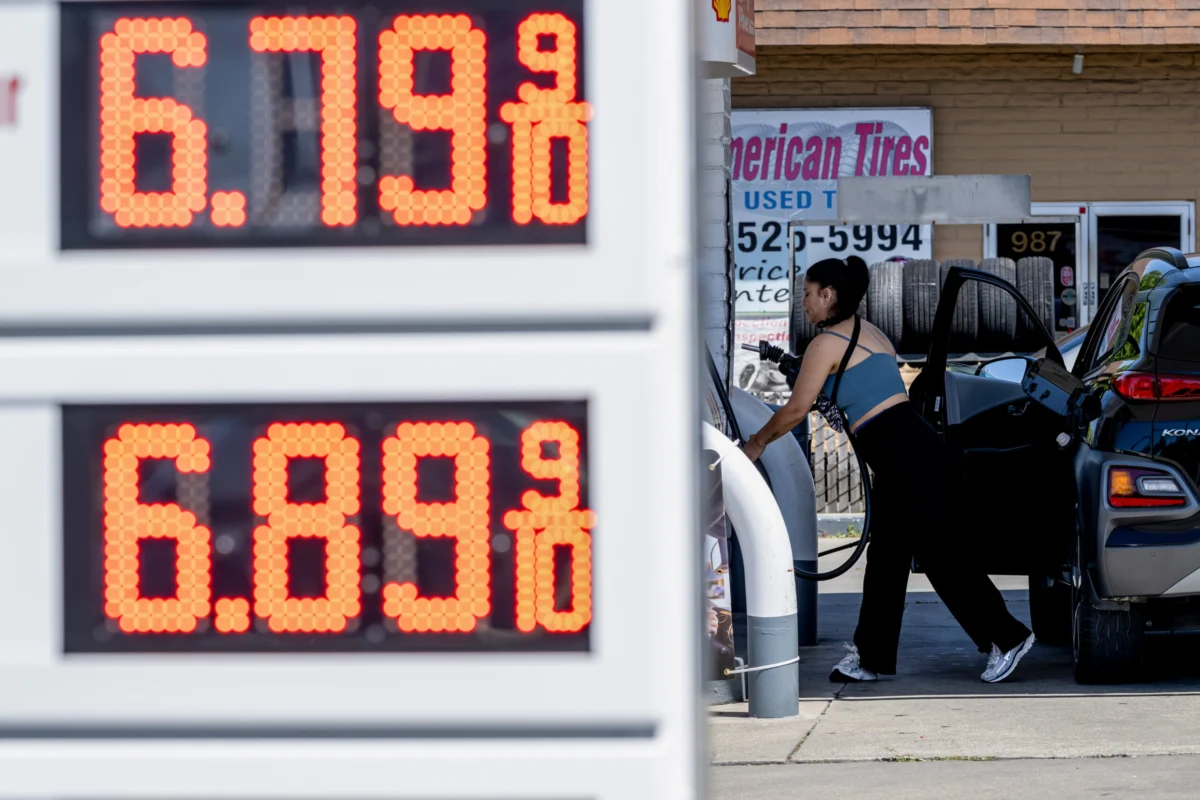
The intensifying conflict between the United States and Iran has inflicted a significant financial burden on American households, with an analysis revealing that consumers have collectively spent nearly $450 more per household on rising energy costs since the war began. This surge in expenses, driven by escalating prices at the pump and for air travel, translates to a cumulative impact of almost $60 billion for American consumers, according to exclusive data shared with CNBC by Moody’s Analytics.
The economic repercussions of the U.S.-Iran war, now in its third month, are becoming increasingly palpable for everyday Americans. As energy prices climb, households are compelled to dip into their savings or rely more heavily on debt to manage their essential expenditures. Mark Zandi, Moody’s chief economist, cautioned that without a swift resolution to the conflict, financially strained consumers will inevitably adopt a more conservative spending approach, potentially jeopardizing an already fragile economy. He projects that if current price levels persist, the average household could face an annual financial hit of nearly $2,000 by the one-year mark of the war.
The primary driver behind this increased energy expenditure is the significant rise in gasoline prices. Data from AAA indicates that the average price for a gallon of unleaded gasoline in the U.S. reached approximately $4.39 on Friday, marking a substantial increase of over 47% since the beginning of March. This surge in fuel costs accounts for roughly half of the additional energy spending observed thus far.
Beyond gasoline, the impact of higher diesel prices is also being felt acutely. Diesel fuel, critical for the operation of delivery trucks, commercial fleets, and various other transportation sectors, has similarly seen its price jump by approximately 47% since March, now averaging around $5.52 per gallon, according to AAA. This increase has resulted in over $20 billion in additional expenses for consumers and businesses reliant on this essential commodity.
The ripple effect of elevated energy prices extends to the airline industry as well. Consumers have already absorbed nearly $10 billion in additional costs due to rising jet fuel prices. Federal government inflation data reveals that airline fares experienced an increase of more than 20% in April compared to the same period last year. This escalation in air travel expenses further squeezes household budgets, particularly for those who travel frequently for business or leisure.
The financial strain imposed by these increased energy costs effectively negates the benefits of recent tax cuts. Moody’s analysis indicates that the average household’s nearly $450 expenditure on higher energy costs has more than wiped out the $384 boost per household received from larger tax returns this year under President Donald Trump’s "big, beautiful bill." Zandi elaborated that the majority of the advantages derived from these tax cuts have already been consumed, leaving households with less disposable income.
Financial institutions are also sounding the alarm about the persistent impact of higher energy prices. Goldman Sachs anticipates that these elevated costs will continue to "erode" consumers’ spending power throughout the remainder of 2026. The bank specifically highlights that lower-income households, who allocate a larger proportion of their budgets to essential goods like food and energy, will be disproportionately affected.

The strain on consumer spending is already evident in corporate reports. Costco reported "record-breaking" gas volumes at the end of its fiscal quarter, as consumers sought out its competitively priced fuel. Similarly, McDonald’s CEO Chris Kempczinski warned earlier this month that consumer spending, particularly among lower-income demographics, "may be getting a little bit worse" as energy prices continue to pinch household budgets.
The Widening Gap: Savings Depleted, Debt Accumulates
While government figures released on Thursday showed a 0.5% rise in consumer spending from March to April, other economic indicators suggest this spending is not being financed by discretionary funds. Income growth remained flat in April, failing to meet economists’ consensus forecast of a 0.4% increase. This disparity between spending and income growth signals a growing reliance on alternative financial resources.
The personal savings rate has plummeted to 2.6% in April, marking one of the lowest levels recorded since the global financial crisis. This figure stands in stark contrast to the highs exceeding 31% observed in 2020, indicating that consumers have progressively drawn down their pandemic-era stimulus funds and emergency savings to maintain their spending habits amidst persistent inflationary pressures.
Adding to these concerns, American credit card debt reached $1.25 trillion in the first quarter of the year, an increase of nearly 6% compared to the previous year, according to data released by the New York Federal Reserve. This figure is approaching the all-time record of over $1.28 trillion set at the end of 2025, underscoring a growing reliance on borrowed funds to bridge the gap between income and expenses.
Gregory Daco, chief economist at EY-Parthenon, observed that consumers are increasingly facing an "income squeeze," which is compelling them to utilize savings, credit, and accumulated wealth to sustain their current spending patterns. He further explained that the current trend reflects consumers drawing upon their savings to compensate for stagnant income growth.
Background and Chronology of the Conflict
The current geopolitical tensions that have led to the escalation of the U.S.-Iran conflict and subsequent energy price spikes can be traced back to a series of escalating events. While the article specifies the war is in its third month, the underlying factors contributing to this prolonged conflict are complex and have developed over time. Key elements include:
- Pre-existing Tensions: A long history of strained relations between the U.S. and Iran, marked by sanctions, proxy conflicts, and nuclear program disputes, has created a volatile environment.
- Triggering Incident: The specific event that initiated the "Iran War" as referenced in the article is not detailed, but it likely involves a significant military or diplomatic confrontation that led to direct or indirect military engagement. This could have stemmed from incidents in the Strait of Hormuz, attacks on U.S. interests, or broader regional destabilization efforts.
- Global Energy Market Sensitivity: The Middle East is a critical region for global oil production. Any disruption, or perceived threat of disruption, to supply from this region, particularly concerning vital chokepoints like the Strait of Hormuz, has an immediate and amplified effect on global energy prices. The conflict’s proximity to these key shipping lanes makes it a significant factor in market volatility.
- Three-Month Duration: The article’s reference to the conflict being in its third month suggests a period of sustained military activity or heightened diplomatic tension that has persisted since approximately March. This timeframe has allowed the initial shock to translate into sustained higher prices, moving beyond short-term market reactions to a more embedded cost increase for consumers.
Broader Economic Implications and Analysis
The financial pressure exerted by rising energy costs has far-reaching implications for the U.S. economy.
- Reduced Consumer Discretionary Spending: As households allocate more of their income to essential energy needs, less money is available for non-essential goods and services. This can lead to a slowdown in sectors such as retail, hospitality, and entertainment.
- Inflationary Pressures: Higher energy costs contribute to broader inflation by increasing the cost of production and transportation for virtually all goods and services. This can erode the purchasing power of all consumers, not just those directly impacted by fuel prices.
- Impact on Monetary Policy: Persistent inflation, fueled in part by energy shocks, can complicate the Federal Reserve’s efforts to manage interest rates. The Fed may be forced to maintain higher interest rates for longer to combat inflation, which can further dampen economic growth.
- Disproportionate Impact on Lower-Income Households: As highlighted by Goldman Sachs and observed by McDonald’s CEO, lower-income families are particularly vulnerable. Their budgets are more heavily weighted towards necessities, meaning energy price increases consume a larger percentage of their income, forcing difficult trade-offs.
- Potential for Economic Slowdown or Recession: Zandi’s warning about a threat to the "already soft economy" underscores the risk that sustained consumer retrenchment due to energy costs could tip the U.S. into a recession.
The analysis from Moody’s Analytics and the observations from corporate leaders paint a clear picture of the economic headwinds Americans are facing. The nearly $450 extra per household spent on energy is not merely an abstract number; it represents tangible sacrifices in savings, increased reliance on debt, and a reduction in discretionary spending, all of which have the potential to significantly impact the broader economic landscape. The duration and intensity of the U.S.-Iran conflict will be a critical factor in determining the extent of these economic consequences in the months ahead.
