

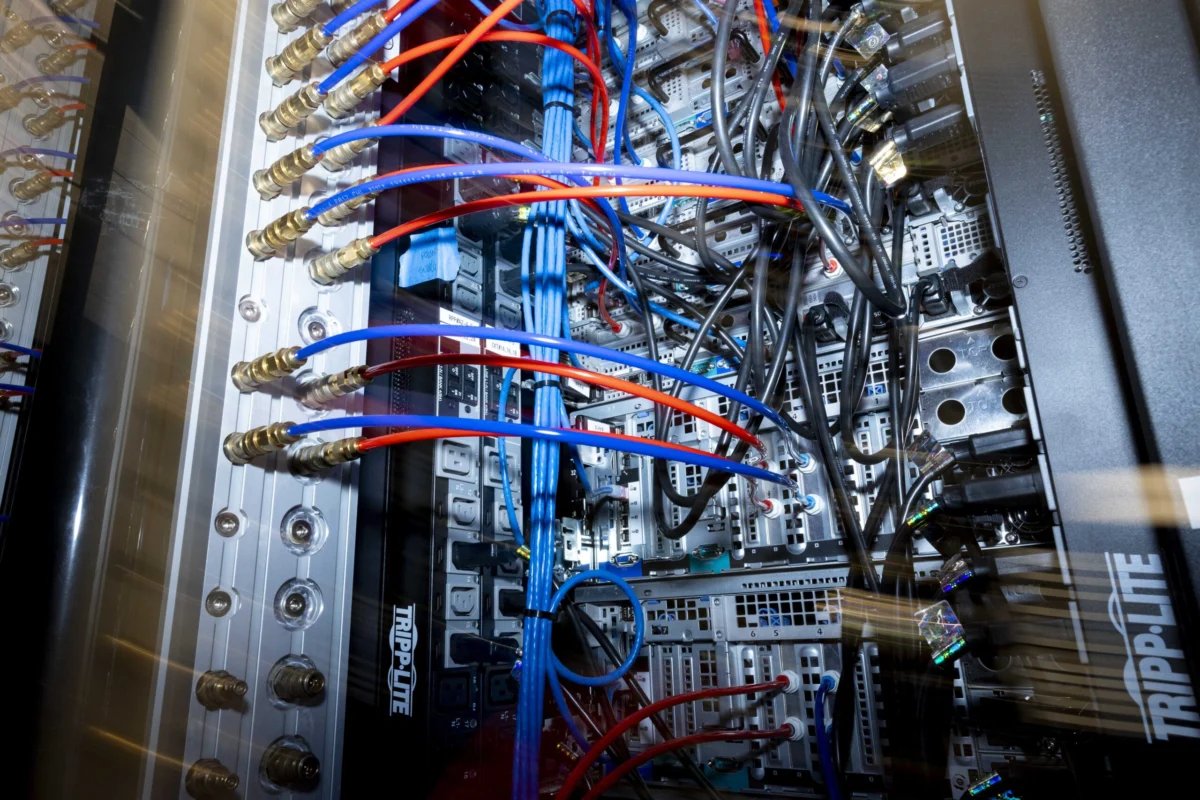
The escalating public and legislative resistance against the proliferation of artificial intelligence data centers is emerging as a surprising catalyst for real estate investment trusts (REITs) specializing in this critical infrastructure. As communities nationwide voice concerns over the environmental and social footprint of these massive facilities, the ensuing regulatory hurdles and construction slowdowns are poised to enhance the value and pricing power of existing data center assets, creating a unique advantage for established REITs.
The AI Data Center Boom and Its Expanding Footprint
The demand for AI-driven computing power has ignited an unprecedented boom in data center construction. These facilities, essential for training and running complex AI models, are being developed at an accelerated pace by "hyperscalers" – major tech companies like Amazon, Apple, and Oracle. However, their rapid expansion has not gone unnoticed. Data centers require immense tracts of land, consume staggering amounts of electricity, and utilize vast quantities of water for cooling, often generating significant noise pollution from their extensive cooling systems.
Globally, the data center market is experiencing exponential growth. PwC projects that annual data center spending will surge from approximately $800 billion in 2026 to an astounding $1.8 trillion by 2050. The United States currently hosts more than 4,700 data centers, a number anticipated to grow substantially in the coming years. This proliferation is driven by the insatiable appetite for data storage, processing, and the specialized computational demands of advanced AI. Training large language models, for instance, requires thousands of high-performance GPUs operating concurrently, demanding megawatts of power and sophisticated cooling solutions. Even the "inference" phase, where AI models are used in real-time applications, requires distributed data center capacity with low latency, often closer to population centers.
Rising Public Opposition and Legislative Hurdles
The environmental and community impact of these facilities has sparked widespread protests. Residents in various regions have expressed strong opposition to new data center projects in their vicinities, citing concerns about noise, visual blight, and the strain on local resources. A recent NBC News poll underscored this sentiment, revealing that a significant 69% of respondents nationwide oppose the construction of AI data centers in their immediate areas.
This public outcry is increasingly translating into legislative action. States and local municipalities are stepping up with measures to restrict or outright ban new data center construction. New York, for instance, has already imposed a moratorium on new data center developments, signaling a growing trend of regulatory caution. Other key data center hubs, such as Loudoun County in Virginia, are experiencing heightened scrutiny and community pushback, prompting local governments to re-evaluate zoning laws and environmental impact assessments. The debate is expected to intensify as the country heads into midterm elections in 2026, with the environmental and economic implications of data center growth becoming a salient political issue. Policymakers are grappling with how to balance technological advancement with local environmental sustainability and community well-being.
Enter the Data Center REITs: A Unique Investment Angle
While hyperscalers often develop their own dedicated facilities, a significant portion of the data center infrastructure market is served by specialized real estate investment trusts (REITs). These entities function as landlords, developing, owning, and then leasing critical data center space to a diverse array of tenants, including hyperscalers, cloud providers, enterprises, and telecommunication companies. The National Association of Real Estate Investment Trusts (Nareit), an industry group, highlights that data center REITs are integral to the digital economy, providing the physical backbone for the internet and cloud services.
Unlike direct investments in tech companies, data center REITs offer a play on the underlying infrastructure, providing a degree of insulation from the volatility of individual tech stocks. Their business model relies on long-term lease agreements, generating stable, recurring contractual revenue. Furthermore, as REITs, they are legally required to distribute at least 90% of their taxable income to shareholders annually in the form of dividends, making them attractive to income-focused investors. Data center REITs currently constitute 13% of the total U.S. REIT market capitalization, which stands at $1.5 trillion. Collectively, public REITs own approximately 275 data centers across the United States, representing a significant, albeit less than 10%, portion of the nation’s owner-operated and leased data centers.
Paradoxical Tailwind: Scarcity Drives Value
The growing resistance to new data center construction, paradoxically, could prove to be a significant tailwind for existing data center REITs. Mizuho analyst Vikram Malhotra articulated this perspective in a September 1 note, stating, "Amid political and community push-back, while new projects could see delay, it could be a positive for existing projects/DC [data center] REITs which have pricing power driven by continuously expanding compute demand."
The logic is straightforward: as it becomes more difficult and time-consuming to secure permits, land, and power for new data center developments, the existing operational capacity becomes increasingly valuable. This creates a supply-demand imbalance, allowing landlords of established facilities to command higher rents and better lease terms. Barriers to entry for new competitors are also elevated, solidifying the market positions of current players. This dynamic is particularly potent in regions where data center demand remains robust but new supply is constrained by regulatory or community opposition.
Key Players in the REIT Landscape
The FTSE Nareit Equity REITs Index includes three prominent data center stocks: Digital Realty Trust (DLR), Equinix (EQIX), and Iron Mountain (IRM). These companies represent the vanguard of data center infrastructure, each demonstrating robust performance and strategic positioning in the evolving digital landscape.
- Equinix (EQIX): The largest of the group, Equinix boasts a market value of roughly $102 billion. It has experienced a significant year-to-date climb of approximately 37% and offers a dividend yield of 1.99%. In July, Equinix reported adjusted funds from operations (AFFO) that surpassed analyst expectations, leading the company to raise its full-year guidance. Recently, in September 2026, Equinix further solidified its position by signing a strategic deal with Nvidia, a leading AI chip manufacturer, underscoring its pivotal role in the AI data center boom. This partnership highlights Equinix’s focus on providing interconnected, low-latency environments crucial for AI inference and distributed workloads.
- Digital Realty Trust (DLR): With a market capitalization of $71 billion, Digital Realty Trust yields 2.59% and has seen its stock rise more than 23% in 2026. Similar to Equinix, Digital Realty reported adjusted FFO above analyst estimates in July and subsequently raised its full-year guidance, reflecting strong operational performance and demand for its enterprise-focused data center solutions.
- Iron Mountain (IRM): Iron Mountain, primarily known for its information management and storage services, has successfully diversified into the data center sector. It sports a market cap of $34.7 billion, a robust 2.96% dividend yield, and has soared an impressive 42% this year. The company also reported second-quarter AFFO that beat expectations and raised its full-year guidance, signaling strong growth in its data center segment.
| Ticker | Company | Div yield | YTD performance |
|---|---|---|---|
| DLR | Digital Realty Trust | 2.59% | 23.3% |
| EQIX | Equinix | 1.99% | 36.9% |
| IRM | Iron Mountain | 2.96% | 42.0% |
Navigating Nuance: Advantages and Challenges
While the narrative largely favors existing REITs, the story is nuanced, as highlighted by Wells Fargo Investment Institute analyst Amanda Martinez. "On one hand, the supply/demand factor favors the REITs because limiting new supply could raise the value of existing capacity," Martinez explained. She further noted that companies with substantial development pipelines and pre-permitted sites with secured power connections will gain a significant competitive advantage if new capacity becomes harder to develop.
However, Martinez also cautioned about potential drawbacks: "On the other hand, permitting restrictions and moratoriums could weigh on future growth by slowing development timelines and pushing up costs." This indicates that while current assets benefit, future expansion plans, even for established players, could face headwinds, potentially impacting long-term growth trajectories and increasing capital expenditures. Navigating these regulatory complexities requires significant expertise and foresight.
Strategic Advantages of Established REITs
Despite the challenges, analysts like David Guarino of real estate analytics firm Green Street remain bullish on industry leaders like Equinix and Digital Realty. Guarino emphasizes that their sheer size provides them with unparalleled agility. "Their size allows them to be nimble," he said. "So if there is restriction or pushback in a certain market, they’ve got big land banks and big development pipelines, where they can pivot to other markets, and thus far, it has not slowed down their growth story in any way." This strategic flexibility allows them to mitigate localized opposition by reallocating resources to more receptive or less constrained markets.
Furthermore, these companies benefit from decades of operational experience and established relationships with local municipalities. "They have an advantage given their track record, their ability to execute, where people want to do business with them," Guarino added. "That helps them to be able to maybe have an advantage over a newer entrant that might not have that skill set." This institutional knowledge and trust are invaluable in navigating complex permitting processes and community engagement.
Guarino expresses a preference for Equinix over Digital Realty, although he acknowledges both are performing "incredibly well." His rationale stems from the evolving nature of AI workloads. "As AI inference begins to accelerate – that’s more of the lower latency, real-life use cases from AI – that would start to benefit companies that are more focused on smaller tenant leasing, that are closer to where the population centers are," he explained. "That’s a lot more of Equinix’s business than Digital Realty’s business." Equinix’s extensive network of interconnected, smaller-footprint data centers positioned strategically at the "edge" is ideally suited for the real-time, low-latency requirements of many AI inference applications.
Long-Term Investment Outlook
Alex Pettee, president and director of research and ETFs at Hoya Capital Real Estate, echoes the bullish sentiment regarding the supply-demand dynamics for data center REITs, with both Equinix and Digital Realty featuring prominently in Hoya’s model portfolios. Pettee acknowledges the immediate negative impact a moratorium can have on a specific project. However, he advises a broader perspective: "But zoom out, and if zoning gets tougher, power gets harder to secure, and communities don’t want new facilities, the data centers that are already there become more valuable." This long-term view reinforces the notion that increased friction in new development ultimately enhances the value of existing, operational assets.
While Pettee concedes that data center REIT stocks may not appear "cheap" when compared to other segments of the broader REIT market, he argues they present an attractive proposition relative to the wider AI technology sector. Investors in these REITs are "getting double-digit earnings growth, tangible real estate and infrastructure, recurring contractual revenue, and a roughly 2%-3% dividend yield," he noted. This combination of robust growth, tangible assets, predictable income streams, and a critical role in the accelerating AI revolution positions data center REITs as a compelling investment avenue amidst the burgeoning digital economy.
Broader Implications and Future Outlook
The unfolding scenario surrounding AI data centers and their associated REITs highlights a critical juncture in technological advancement and societal integration. The tension between the undeniable need for more computational power to fuel AI innovation and the legitimate concerns of communities regarding environmental impact, resource consumption, and quality of life is a defining challenge of the era.
For data center REITs, this environment presents both opportunities and responsibilities. Their ability to navigate regulatory landscapes, engage effectively with communities, and demonstrate commitment to sustainable practices will be paramount. Innovations in energy efficiency, renewable energy sourcing, and advanced cooling technologies will become increasingly crucial not just for operational cost savings but also for public acceptance and regulatory compliance. The demand for AI infrastructure is not abating, and as new construction becomes more challenging, the value proposition of existing, strategically located, and efficiently managed data centers will only strengthen. This positions data center REITs as not merely landlords, but as critical enablers of the AI revolution, poised to benefit from the very headwinds that threaten to slow down their hyperscale tenants’ expansion plans.
