

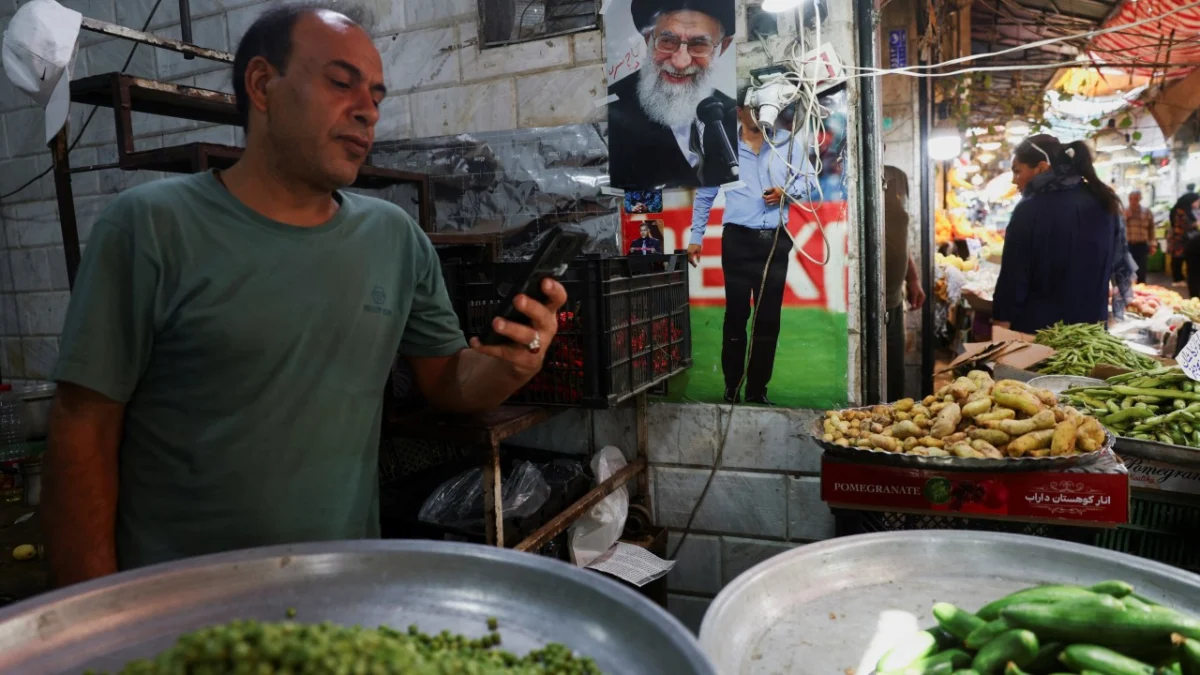
Tehran and Islamabad have confirmed that a historic transition and a potential cessation of hostilities are converging this week, as Iran’s state-run media announced the official funeral schedule for the late Supreme Leader Ayatollah Ali Khamenei while mediators expressed unprecedented optimism regarding a peace agreement. According to a report by the state-run television network IRIB on Saturday, the Islamic Republic will observe a series of high-level funeral, burial, and farewell ceremonies for Khamenei between July 4 and July 9. The announcement marks the formal commencement of a period of national mourning for a leader who sat at the pinnacle of Iranian power for over three decades, even as the nation stands at a critical geopolitical crossroads.
The scheduling of the state funeral follows months of intense regional instability triggered by the death of the Supreme Leader in the opening stages of a conflict initiated by Israel and the United States in late February. Since that time, the internal hierarchy of the Islamic Republic has undergone a swift and consequential transformation. Ayatollah Ali Khamenei has been succeeded by his son, Mojtaba Khamenei, whose ascension to the position of Supreme Leader has been met with significant international scrutiny. Analysts and regional observers describe the younger Khamenei as a figure who is even less compromising than his father, particularly regarding Iran’s strategic defense posture and its relationship with Western powers.
Diplomatic Breakthrough in Islamabad
While Tehran prepares for the final rites of its former leader, Pakistani Prime Minister Shehbaz Sharif provided a significant update on the diplomatic front. Speaking from Islamabad on Saturday, Sharif indicated that a comprehensive deal aimed at ending the devastating war in the Middle East is now closer than "ever before." The Prime Minister’s office suggested that the finalization of the agreement could occur within a 24-hour window, potentially halting a conflict that has threatened to engulf the entire region in a multi-front war.
Pakistan has played a pivotal role as a primary mediator in the negotiations, leveraging its unique diplomatic ties with both Washington and Tehran. Prime Minister Sharif confirmed that his administration is currently preparing for the "electronic signing" of the peace accord. This initial formalization is expected to be followed immediately by technical-level discussions scheduled for the coming week, which will address the granular details of troop withdrawals, ceasefire monitoring, and the de-escalation of maritime tensions in the Persian Gulf.
In a statement released via social media, Sharif expressed gratitude to the principal stakeholders. "We would like to thank the United States of America and the Islamic Republic of Iran for their ongoing commitment during the negotiations, and we extend our sincere appreciation to our brothers in the region for their support," the Prime Minister stated. The involvement of Pakistan as a neutral ground for these high-stakes negotiations underscores the shift in regional diplomacy, where traditional power brokers have stepped in to prevent a total collapse of order.
Chronology of the Conflict and Recent Escalation
The path to the current peace proposal has been marked by extreme volatility. The conflict began in late February with what military analysts described as a massive "opening salvo" launched by Israeli and American forces targeting high-value strategic assets within Iran. It was during these initial precision strikes that Ayatollah Ali Khamenei was killed, an event that sent shockwaves through the global community and initially led to fears of an immediate and uncontrolled escalation.
The timeline of the conflict over the past several months highlights several critical phases:
- Late February: Initial strikes on Tehran and key nuclear and military installations; death of Ali Khamenei confirmed.
- March – April: Rapid mobilization of the Islamic Revolutionary Guard Corps (IRGC) under the direction of Mojtaba Khamenei; retaliatory strikes on regional bases and shipping lanes.
- May: Stagnation of ground and air campaigns as international pressure for a ceasefire mounted; Pakistan emerges as a lead mediator.
- June (Mid-week): A sharp three-day exchange of heavy fire between Iranian forces and US-Israeli assets, involving long-range ballistic missiles and sophisticated drone swarms. This escalation was seen by many as a "final test" of military leverage before returning to the negotiating table.
- Late June: Iranian Foreign Minister Abbas Araghchi and US President Donald Trump signal a nearing consensus.
The exchange of fire earlier this week was particularly alarming for global energy markets and regional security. For 72 hours, the Middle East teetered on the edge of a "total war" scenario as anti-missile systems in several neighboring countries were activated to intercept projectiles. However, the intensity of the clash appears to have acted as a catalyst for the current diplomatic breakthrough, as both sides recognized the unsustainable cost of further escalation.
Official Responses and Domestic Sentiments
The sentiment within the Iranian government appears to have shifted toward a pragmatic acceptance of the peace deal, provided it meets the sovereignty requirements of the new leadership. Iranian Foreign Minister Abbas Araghchi took to social media on Friday to echo the optimism found in Islamabad, stating that an agreement "has never been closer." This sentiment was unexpectedly bolstered by US President Donald Trump. The President, who has consistently claimed that a "grand bargain" was possible under his administration, shared Araghchi’s post on his own social media platform, signaling a rare moment of public alignment between the two adversarial nations.
Domestically, the transition to Mojtaba Khamenei’s leadership remains a point of intense focus. The new Supreme Leader has spent the weeks leading up to the funeral announcement consolidating power within the IRGC and the Assembly of Experts. While his reputation is one of a hardline strategist, the willingness of his administration to engage in the Pakistani-mediated talks suggests a calculated approach to preserving the state’s infrastructure after the heavy losses sustained in February and March.
Economic and Strategic Implications
The potential for a peace deal within the next 24 hours has already begun to impact global markets. Brent crude oil prices, which had spiked to nearly $120 per barrel during the three-day exchange of fire earlier this week, saw a sharp correction on Saturday morning as news of the imminent signing reached trading floors. Market analysts suggest that a formalized ceasefire could lead to a stabilization of energy prices, which is critical for global inflation management.
The strategic implications of the deal are profound. If finalized, the agreement would likely include:
- A Formal Ceasefire: Immediate cessation of all air strikes, drone operations, and naval skirmishes.
- Maritime Security: Guarantees for the safe passage of commercial vessels through the Strait of Hormuz, a vital artery for global oil supplies.
- Succession Recognition: An implicit, if not explicit, international recognition of the new Iranian leadership structure under Mojtaba Khamenei.
- Technical Oversight: A framework for the "technical-level talks" starting next week to ensure that the terms of the agreement are verifiable.
However, challenges remain. The "less compromising" nature of Mojtaba Khamenei suggests that while a hot war may end, the cold war between Tehran and its rivals will likely enter a new, more complex phase. The upcoming funeral ceremonies in July will serve not only as a farewell to the elder Khamenei but as a massive display of the new regime’s strength and continuity.
The Road Ahead: July 4 to July 9
The planned funeral processions for Ali Khamenei are expected to be among the largest in the history of the Middle East, potentially rivaling the 1989 funeral of Ayatollah Ruhollah Khomeini. State television reported that the ceremonies would span multiple cities, including the capital, Tehran, and the holy city of Qom, which serves as the theological heart of the Islamic Republic.
The logistics of managing millions of mourners while simultaneously managing a fragile peace deal will test the administrative capabilities of the Iranian state. Security is expected to be at its highest possible level, with the IRGC taking a lead role in ensuring that the ceremonies are not disrupted by internal dissent or external provocation.
As the 24-hour window for the peace deal approaches, the world remains focused on both the mourning rituals in Tehran and the diplomatic offices in Islamabad. The conclusion of the state funeral on July 9 will likely mark the definitive end of the "Khamenei Era" and the formal beginning of a new, uncertain chapter in Middle Eastern history. Whether the "electronic signing" mentioned by Prime Minister Sharif leads to a lasting peace or merely a temporary pause in hostilities remains the central question for the international community. For now, the prospect of an end to the "February War" offers a glimmer of stability in a region that has seen little of it in recent months.
