

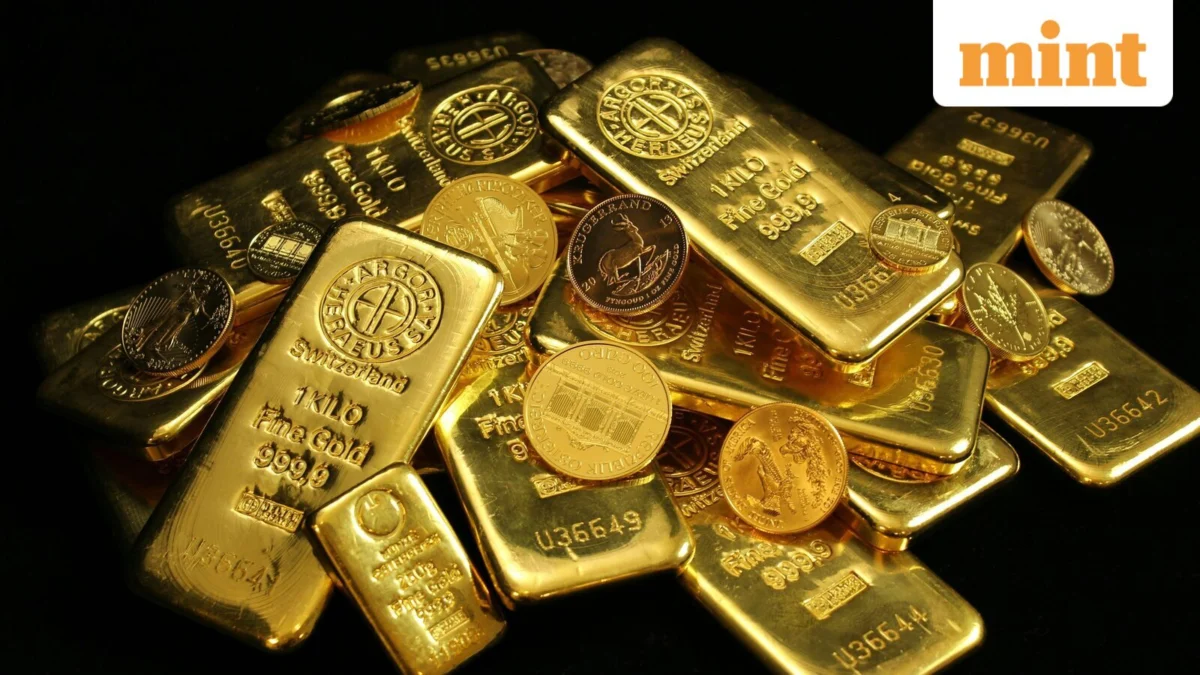
Analysts at JPMorgan Global Research have released a comprehensive outlook for the precious metals market, projecting that gold prices could climb to unprecedented heights of $6,000 per ounce by the end of 2026. This ambitious forecast, which suggests a significant departure from current trading ranges, anticipates further upward momentum in 2027, with potential peaks reaching approximately $6,300 per ounce. The projections come at a time when the gold market has been characterized by a period of relative stagnation and "sideways" trading, leading some investors to question the metal’s immediate trajectory. However, JPMorgan’s analysis suggests that the underlying structural drivers for a massive bull run remain firmly in place, even if short-term sentiment appears muted.
According to the report, gold is expected to average the $6,000 per ounce mark during the fourth quarter of 2026. The research highlights a trajectory where the metal continues its ascent into the following year, potentially hitting $6,300 by the final quarter of 2027. These figures represent a substantial premium over current market levels, indicating that the financial institution views the current lull as a consolidation phase rather than a reversal of the long-term upward trend.
Navigating the Current Market Slump
The bullish long-term outlook stands in stark contrast to the price action observed in the first half of 2026. While spot gold prices experienced a robust rally at the beginning of the year, the momentum began to dissipate in March. Since then, the market has seen a cooling-off period, with gold recently touching an intra-year low of $4,170 per ounce. This volatility has led to a moderation in investor enthusiasm, as the market grapples with conflicting economic signals.
Greg Shearer, Head of Base and Precious Metals at JPMorgan, described the current state of gold as being trapped in a "technical no-man’s land." From a technical analysis perspective, gold is currently struggling to find a clear direction. It is "trudging" above its 200-day moving average, which sits around $4,340 per ounce, but remains capped by its 50-day moving average at approximately $4,730 per ounce. For technical traders, these levels represent significant support and resistance barriers that must be breached before a new trend can be established.
Shearer noted that this "sideways plod" has been exacerbated by fears regarding the Federal Reserve’s response to persistent inflation. With energy prices driving inflationary pressures, there is a growing concern among market participants that the Fed may be forced to implement further interest rate hikes or maintain elevated rates for a longer duration than previously anticipated. In such an environment, gold—which does not yield interest—often finds itself on the "back burner" for institutional and retail investors alike.
The Pillars of the Bullish Thesis
Despite the immediate technical hurdles, JPMorgan maintains that the fundamental factors driving gold demand over the past several years have not vanished. The report identifies several key pillars that support a $6,000 price target:
1. Geopolitical Uncertainty and Fragmentation
Ongoing geopolitical conflicts continue to cast a shadow over global markets. The lack of a clear resolution to major international disputes has reinforced gold’s status as the ultimate safe-haven asset. JPMorgan’s analysts point out that "geopolitical fragmentation"—the breakdown of traditional trade alliances and the emergence of competing economic blocs—is encouraging nations and individual investors to diversify away from traditional fiat currencies.
2. Monetary Policy and the Federal Reserve
The future of gold remains inextricably linked to the actions of the U.S. Federal Reserve. While the current high-rate environment has created headwinds for gold, any pivot toward easing or a failure to contain inflation despite high rates could serve as a massive catalyst for the metal. The report notes that price stability and future demand depend heavily on Fed policy, which remains a source of significant uncertainty in the current economic cycle.
3. Inflation and Purchasing Power
Concerns over the erosion of purchasing power remain a primary driver for physical gold demand. As central banks struggle to bring inflation back to target levels, the "debasement" of paper currency becomes a central theme for wealth preservation. JPMorgan highlights that as long as inflation remains a threat, the intrinsic value of gold will continue to attract those looking to hedge against a devaluing dollar.
4. U.S. Fiscal Pressures
The burgeoning U.S. national debt and fiscal deficit are also cited as long-term supportive factors. As the fiscal burden on the U.S. economy grows, investors increasingly look toward assets that do not carry "counterparty risk" or "sovereign risk," a category where gold stands alone.
The Mystery of Central Bank Activity
One of the most significant revelations in the JPMorgan report concerns the behavior of central banks. While official data from the first quarter of 2026 suggested that central banks were net sellers—offloading 129 tonnes of gold and reporting net purchases of only 16 tonnes—JPMorgan suggests that these figures do not tell the whole story.
Alternative estimates, derived from over-the-counter (OTC) market data and Swiss refinery flows, indicate that actual buying activity was much stronger than what was officially reported to the International Monetary Fund (IMF). Citing World Gold Council estimates, the report suggests that total gold purchases in the first quarter of 2026 may have actually reached 244 tonnes. This would represent a significant increase from the 208 tonnes recorded in the previous quarter, suggesting that central banks are continuing to accumulate gold "under the radar."
The discrepancy between official and estimated data is often attributed to "unreported" purchases by certain central banks that prefer to accumulate reserves quietly to avoid impacting market prices prematurely.
China’s Strategic Accumulation
China has emerged as a dominant force in the global gold market, both as a consumer and a strategic accumulator. According to Greg Shearer, Chinese net imports of gold saw a massive inflection point in the first quarter of 2026, reaching 317 tonnes. This figure is nearly three times higher than the import volume seen in the preceding quarter.
Furthermore, the People’s Bank of China (PBOC) has accelerated its reported purchase pace. After maintaining a steady acquisition of roughly one tonne per month for the six months ending in February, the PBOC ramped up its buying to five tonnes in March and eight tonnes in April. Analysts believe this accumulation is part of a broader, long-term strategy to diversify China’s foreign exchange reserves and reduce reliance on the U.S. dollar. By bolstering its gold holdings, China aims to strengthen the renminbi’s position as a credible alternative reserve currency in a multipolar world.
Implications for Investors and the Global Economy
The forecast of $6,000 gold carries profound implications for the global financial landscape. If JPMorgan’s predictions materialize, it would signal a period of extreme economic transition. A gold price at those levels would likely coincide with a significantly weakened U.S. dollar or a period of hyper-inflation that traditional financial instruments might struggle to outpace.
For retail investors, the current "sideways" market may present a strategic entry point before the anticipated surge. However, the report also serves as a warning about the volatility inherent in the path toward $6,000. The journey from the current "no-man’s land" to record highs is expected to be fraught with fluctuations dictated by the latest CPI prints, Fed meeting minutes, and geopolitical headlines.
Timeline of Recent Gold Price Movements
To understand the scale of JPMorgan’s forecast, it is essential to look at the recent chronology of the gold market:
- Early 2026: Gold experiences a strong rally, fueled by geopolitical tensions and optimistic expectations of a Fed pivot.
- March 2026: Prices begin to cool as inflation data remains "sticky," forcing the Fed to maintain a hawkish stance.
- Mid-2026: Gold hits an intra-year low of $4,170 per ounce, reflecting a period of maximum investor pessimism.
- Current Phase: The metal is range-bound between $4,340 (200-day MA) and $4,730 (50-day MA).
- Q4 2026 Forecast: Prices projected to reach an average of $6,000 per ounce.
- Q4 2027 Forecast: Prices projected to reach an average of $6,300 per ounce.
Conclusion
JPMorgan’s Global Research suggests that the current "back burner" status of gold is a temporary phenomenon. While the market is currently distracted by energy-driven inflation and the technical resistance levels of the moving averages, the underlying "safe-haven" demand remains more robust than official figures suggest. With central banks—particularly in China—aggressively but quietly increasing their holdings, and with geopolitical and fiscal pressures showing no signs of abating, the stage is set for what could be the most significant gold bull market in modern history. As the report concludes, the factors that have driven demand over the past few years remain largely intact, pointing toward a future where gold reasserts its dominance as the ultimate store of value.
