

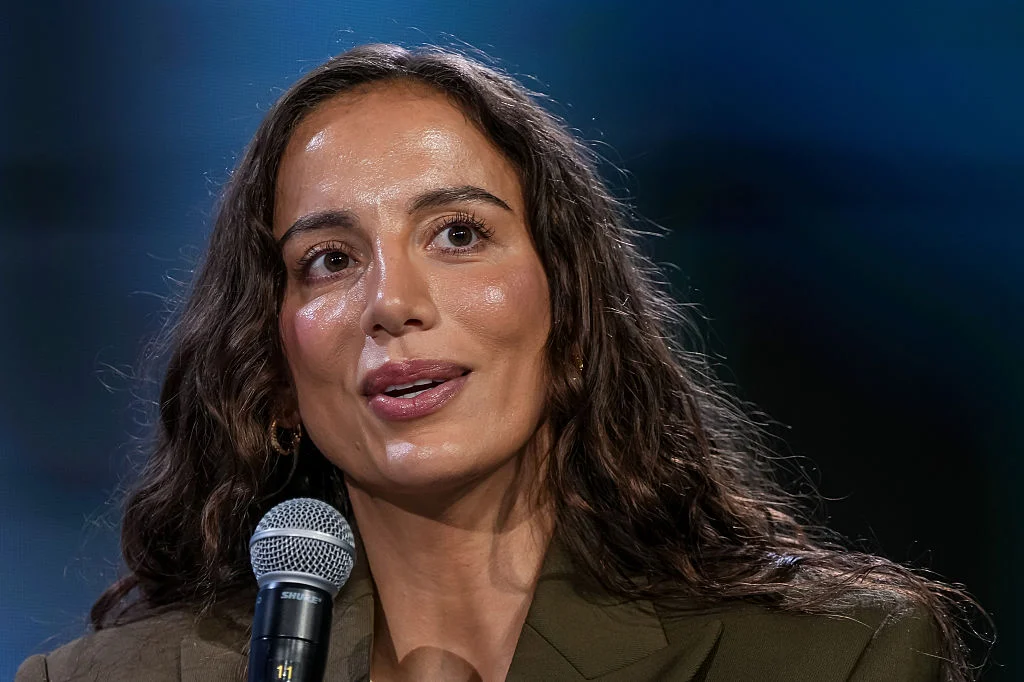
Mira Murati, the former Chief Technology Officer of OpenAI and the current Chief Executive Officer of Thinking Machines Lab, made a rare and highly anticipated public appearance at a Bloomberg event in San Francisco on Thursday. This engagement marked Murati’s first major media appearance in approximately 18 months, a period characterized by her departure from the world’s most prominent artificial intelligence firm and the subsequent founding of her own venture. While Murati remained characteristically measured in her remarks, the interview provided a rare glimpse into the strategic direction of Thinking Machines Lab, her reflections on the internal upheaval at OpenAI in late 2023, and her evolving perspective on the structural risks facing the global AI industry.
The appearance comes at a pivotal moment for Thinking Machines Lab. For nearly a year and a half, the company has operated with a degree of discretion that contrasts sharply with the aggressive public relations cycles of its primary competitors. During this time, the firm has focused on foundational activities, including securing venture capital, recruiting top-tier research talent from rival labs, and launching its initial product, Tinker—an API designed for the fine-tuning of open-source AI models. However, as the AI sector becomes increasingly crowded with incumbents like OpenAI and Google, and well-funded challengers like Anthropic and Elon Musk’s xAI, Murati’s emergence signals a shift from internal development to market engagement.
Technical Innovation: The Shift Toward Interaction Models
A central theme of the discussion was Murati’s vision for the next generation of artificial intelligence, which she termed "interaction models." Current AI paradigms, including the popular ChatGPT and Claude interfaces, are largely defined by a "turn-based" architecture. In this model, a user provides a discrete prompt, the system processes the request, and then generates a response. Murati argued that this dynamic, while effective for information retrieval, does not reflect the nuances of human cognition or communication.
Thinking Machines Lab is developing models designed to process continuous streams of multimodal data—audio, text, and video—in 200-millisecond intervals. This threshold is significant in the field of latency; 200 milliseconds is often cited as the limit at which a computer response feels instantaneous to a human user. By operating at this speed, these interaction models are intended to perceive and react to the "texture" of human dialogue, such as mid-sentence corrections, pauses for thought, and conversational interruptions.
Murati framed this technology not as a refinement of existing Large Language Models (LLMs), but as a fundamental shift in how AI perceives the world. While she declined to provide a specific release date for these advanced models, the technical goal is clear: to move away from static chatbots toward dynamic agents that can participate in real-time environments.
Chronology of the OpenAI Crisis: Reflections on the Blip
The interview inevitably addressed the events of November 2023, a period of unprecedented volatility at OpenAI that has since become a case study in corporate governance failures. On November 17, 2023, the OpenAI board of directors abruptly fired CEO Sam Altman, citing a lack of transparency. Murati was immediately named interim CEO, a position she held during five days of intense negotiation, employee revolts, and pressure from major investors like Microsoft.
Timeline of the OpenAI Leadership Crisis:
- November 17, 2023: The board removes Sam Altman; Mira Murati is appointed interim CEO.
- November 18–19, 2023: Negotiations for Altman’s return stall. Nearly 95% of OpenAI employees sign a letter threatening to quit unless the board resigns and Altman is reinstated.
- November 20, 2023: Emmett Shear is named interim CEO; Murati returns to her CTO role but continues to advocate for organizational stability.
- November 22, 2023: An agreement is reached for Altman to return as CEO with a reconstituted board.
- Late 2024: Murati announces her departure from OpenAI to pursue independent ventures.
Reflecting on what OpenAI insiders dubbed "the blip," Murati defended her actions during the crisis. She asserted that the company would have likely "imploded" had she not prioritized the continuity of the mission and the retention of the research team. However, she expressed regret over the lack of information available at the time, noting that she would have pushed for greater transparency and a more structured transition plan had she known the full extent of the board’s internal deliberations. When asked directly about her current level of trust in Sam Altman, Murati notably sidestepped the question, choosing instead to focus on the broader systemic issues within the industry.
The Concentration of Power and Governance Risks
Murati’s most pointed critiques were reserved for the current state of AI governance. She expressed a growing concern regarding the concentration of decision-making power in the hands of a small number of executives and board members across the tech sector. This concern is particularly relevant as the industry moves toward Artificial General Intelligence (AGI), where the stakes of a "bad call" could have global socioeconomic implications.
Her argument centered on the idea that personal virtue is an insufficient safeguard for powerful technologies. "Good people make bad calls," Murati noted, suggesting that the industry has spent too much time debating the ethics of individual leaders and not enough time building robust, transparent institutional structures. This sentiment echoes a growing chorus of AI researchers who argue that the transition from non-profit-governed entities (like the original OpenAI structure) to profit-driven powerhouses has eroded the checks and balances necessary for safe AI development.
The lack of structural checks is exacerbated by the "arms race" mentality currently pervading Silicon Valley. With companies like xAI being integrated into SpaceX’s infrastructure and Anthropic securing multi-billion dollar investments from Amazon and Google, the pressure to ship products quickly often overrides long-term safety considerations.
Market Context and the War for Talent
The competitive landscape for Thinking Machines Lab is formidable. To understand the environment in which Murati is operating, one must look at the current valuation and talent trends in the AI sector:
- OpenAI: Currently valued at over $150 billion following its most recent funding rounds, it remains the dominant force in the market.
- Anthropic: Often viewed as the primary rival to OpenAI, Anthropic has raised billions and is heavily integrated into the AWS ecosystem.
- xAI: Elon Musk’s venture has leveraged data from the X platform and is now being closely aligned with SpaceX’s computational resources, creating a unique hardware-software vertical.
Murati addressed the "talent war" that has seen senior researchers offered compensation packages in the nine-figure range. While Thinking Machines Lab has experienced some high-profile departures in recent months, Murati downplayed these exits as a natural byproduct of the high-velocity environment of a frontier AI startup. She emphasized that her motivation is not "to kill the competitor" but to solve the specific technical hurdles of real-time interaction, which she believes are being overlooked by larger firms focused on scaling model size.
Societal Impact: Displacement and Safety
The conversation concluded with an analysis of the broader societal risks associated with AI, including mass job displacement and the potential for the technology to be weaponized for the creation of chemical or biological agents. Murati, who was born in Albania and has frequently cited her background as a source of her cautious outlook on centralized power, rejected the binary of "inevitable utopia" or "inevitable dystopia."
She argued that the current era—the next 24 to 36 months—will likely determine the long-term trajectory of human-AI synergy. Murati warned that if humans "take their hands off the wheel" by delegating too much critical decision-making to autonomous systems before adequate governance is in place, the outcome will likely be detrimental. Her measured stance suggests that Thinking Machines Lab intends to position itself as a more "human-centric" alternative to the sheer scaling approach favored by some of its peers.
Implications for the AI Industry
Murati’s return to the public eye serves as a reminder of the ideological schisms that remain within the AI community. Her focus on "interaction models" suggests a strategic bet: that the future of AI lies not just in smarter models, but in more intuitive, real-time integration into human life.
From a business perspective, the success of Thinking Machines Lab will depend on its ability to differentiate its technology from the "commodity" LLMs offered by tech giants. By focusing on low-latency, multimodal interaction, Murati is targeting a niche that is critical for robotics, high-stakes customer service, and real-time collaborative tools.
Furthermore, her calls for improved governance may signal a future where Thinking Machines Lab aligns itself with regulatory efforts in the U.S. and Europe, potentially using safety and transparency as a competitive advantage. As the industry moves past the initial hype of generative AI, the focus is clearly shifting toward the practicalities of how these systems are controlled and who, ultimately, is held accountable for their actions.
