

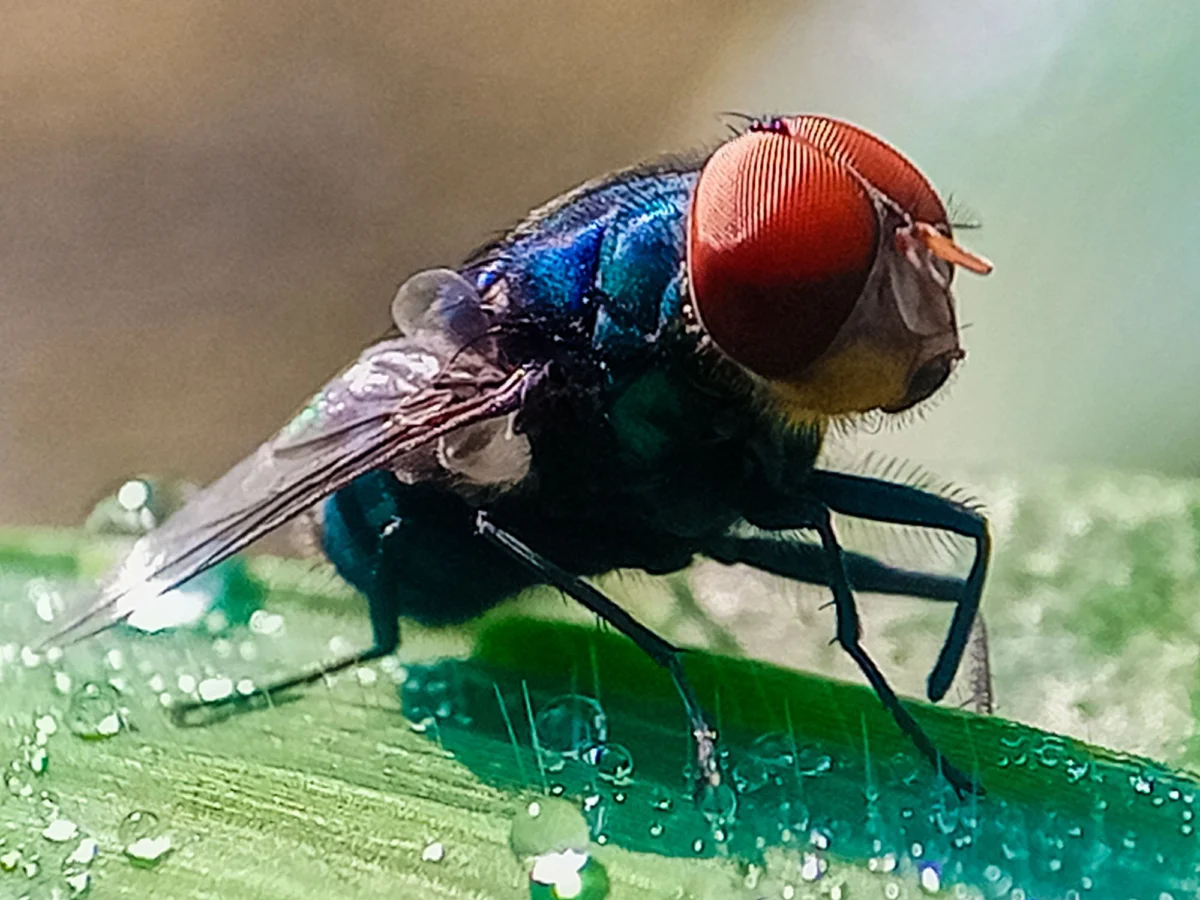
The United States Department of Agriculture (USDA) officially confirmed on Wednesday evening that the New World screwworm, a devastating flesh-eating parasite once eradicated from the country, has been detected in a three-week-old calf in Zavala County, Texas. This announcement marks the first time in decades that the parasite has successfully breached the United States-Mexico border, signaling a high-stakes biological crisis for the American livestock industry. The confirmation follows several years of the parasite’s steady northward migration through Central America and Mexico, overcoming multiple international efforts to maintain a biological barrier.
Agriculture Secretary Brooke Rollins confirmed the findings after samples were analyzed by the National Veterinary Services Laboratories (NVSL) in Ames, Iowa. The detection in Zavala County, located in South Texas, validates growing concerns among local ranchers and state officials who had reported suspicious larvae in livestock earlier in the week. The confirmation has immediately triggered emergency protocols, including the establishment of a rigorous quarantine zone and the mobilization of a joint incident command team involving federal and state authorities.
The Biological Threat: Understanding the New World Screwworm
The New World screwworm (Cochliomyia hominivorax) is not a typical fly. Its taxonomic name, hominivorax, literally translates to "man-eater," a testament to its unique and horrifying life cycle. Unlike most blowflies that feed on dead or decaying tissue, the female screwworm seeks out open wounds on warm-blooded animals—ranging from livestock and wildlife to domestic pets and, in rare cases, humans.
Once a wound is located—which can be as small as a tick bite, a barbed-wire scratch, or the fresh umbilical cord of a newborn animal—the female lays a batch of up to 400 eggs. Within 12 to 24 hours, these eggs hatch into larvae that immediately begin burrowing into the living flesh. Using specialized mandibles, the larvae create deep, pocket-like wounds, feeding on the host’s healthy tissue. If left untreated, the infestation (known as myiasis) can lead to secondary infections, systemic toxicity, and eventually the death of the host. The presence of the larvae often attracts more female flies, leading to a compounding cycle of infestation that can kill a full-grown cow in less than two weeks.
A History of Eradication and the $900 Million Shield
The return of the screwworm is particularly alarming because the United States spent decades and millions of dollars to eliminate the pest. Prior to the mid-20th century, the screwworm was endemic to the southern United States, causing catastrophic losses for the cattle industry. In the 1950s, scientists Edward F. Knipling and Raymond C. Bushland developed the Sterile Insect Technique (SIT), a revolutionary biological control method.
By exposing male screwworm flies to gamma radiation, researchers rendered them sterile. Because female screwworms typically mate only once in their lifetime, the mass release of millions of sterile "dud" males into the wild ensures that most matings result in no offspring. This technique led to the official eradication of the screwworm from the U.S. in 1966. The program was so successful that it was eventually expanded through Mexico and Central America, culminating in a permanent "biological barrier" maintained at the Darién Gap between Panama and Colombia.
The USDA estimates that maintaining this screwworm-free status has saved the U.S. livestock industry approximately $900 million annually in lost animals and veterinary costs. For over half a century, the barrier held, but recent years have seen a breakdown in the containment line, likely due to increased animal movement, environmental changes, and challenges in maintaining the sterile fly release infrastructure in remote jungle regions.
Chronology of the Current Breach
The path to the Texas detection has been marked by a series of escalating warnings. In 2022, the long-standing barrier in the Darién Gap was officially breached, allowing the flies to move into Panama and then northward through Costa Rica, Nicaragua, and Guatemala.
By early 2024, the situation grew dire as cases were reported in southern and central Mexico. On May 28, the USDA reported a confirmed case in a five-year-old goat in Coahuila, Mexico, just 25 miles from the U.S. border. Shortly thereafter, another case was identified in a calf only 39 miles from the border.
In Texas, tensions spiked early this week when State Representative Don McLaughlin claimed that a case had been found within one mile of the border. While Agriculture Secretary Rollins initially dismissed these claims as "false information" that could cause "significant panic," the official confirmation on Wednesday night proved that the parasite had indeed crossed the Rio Grande. The confirmed case in the Zavala County calf, specifically in an umbilical wound, aligns with reports from ranchers in La Pryor who had observed larvae they suspected were screwworms.
Immediate Federal and State Response
In response to the confirmed detection, the USDA’s Animal and Plant Health Inspection Service (APHIS) has launched an aggressive containment strategy. A "unified Incident Command Team" has been formed in partnership with the Texas Animal Health Commission (TAHC).
Key components of the response include:
- Quarantine Zone: A 20-kilometer (approximately 12.4-mile) radius has been established around the site of the detection in Zavala County. Within this zone, the movement of livestock is strictly restricted to prevent the accidental transport of infested animals.
- Intensive Surveillance: Response personnel are conducting door-to-door inspections of livestock and wildlife in the affected area. Fly traps have been deployed to determine the density and spread of the local fly population.
- Sterile Fly Release: The USDA has pivoted to the "aerial bombardment" of the area with sterile male flies. While 4 million flies were already being released by air this week as a precautionary measure, the USDA is now adding ground-release chambers to saturate the environment with sterile males.
- Public Outreach: Authorities are urging ranchers to inspect their herds daily and report any suspicious wounds or larvae. Treatment involves topical applications of pesticides that kill the larvae and protect the wound from further strikes.
Economic and Industry Implications
The U.S. cattle industry, valued at over $100 billion, is the primary target of this biological threat. Beyond the direct loss of livestock, the re-establishment of the screwworm would necessitate a fundamental shift in ranching practices. Before eradication, South Texas ranchers often scheduled calving seasons to avoid peak fly activity and spent significant portions of their operating budgets on "worming" and wound care.
The detection also threatens international trade. If the screwworm is deemed to be established rather than a transient outbreak, other countries may place restrictions on the import of U.S. live animals and animal products. The USDA is currently constructing a $750 million sterile fly production facility in South Texas to bolster long-term defense, but the facility is not yet at full capacity, leaving the current response reliant on existing production in Panama and Mexico.
Market analysts noted that "chatter" of the detection earlier in the week had already caused ripples in cattle futures, as traders weighed the potential for widespread movement restrictions and increased production costs for beef producers.
Scientific and Environmental Factors
Experts are investigating why the containment efforts in Mexico failed to stop the northward advance. Some entomologists suggest that shifting climate patterns, including warmer winters in northern Mexico and South Texas, may be creating more hospitable environments for the flies to survive year-round. Others point to the challenges of managing the SIT program across international borders during periods of high migration and increased cross-border transit of animals.
The 2016 outbreak in the Florida Keys serves as a recent precedent. In that instance, the New World screwworm infested the local population of endangered Key deer. It took several months and the release of 154 million sterile flies to eradicate the pest from the island chain. However, the Texas breach is considered more dangerous because it involves the mainland and threatens the massive ranching hubs of the Great Plains.
Conclusion and Future Outlook
The detection of the New World screwworm in Zavala County is a milestone that U.S. agriculture officials hoped never to see. As Dudley Hoskins, USDA Undersecretary for Marketing and Regulatory Programs, stated, the U.S. has "defeated this pest before," but the modern landscape of global trade and environmental change makes the current fight more complex.
The next 30 days will be critical. If the USDA and TAHC can successfully contain the infestation to the current 20-kilometer zone through aggressive sterile fly saturation and movement controls, the economic damage may be localized. However, if additional cases appear outside the quarantine zone, the U.S. may be facing a multi-year, multi-billion-dollar campaign to push the "flesh-eating" parasite back across the border and re-establish the biological barrier that protected American livestock for over half a century.
