

Lebanon’s Health Ministry has issued a stark report, confirming that 3,516 individuals have been killed as a direct result of Israeli attacks on the country since hostilities significantly intensified in March. The grim figure underscores the devastating human cost of the ongoing cross-border conflict, which has seen a dramatic escalation in recent months, raising fears of a broader regional conflagration. The reported deaths encompass a wide spectrum of the Lebanese population, including civilians, combatants, women, and children, reflecting the pervasive nature of the violence that has gripped the southern regions of Lebanon and occasionally reached deeper into the country. This escalating death toll represents a profound humanitarian crisis, prompting urgent calls from international bodies for de-escalation and the protection of non-combatants. The recent intensification has displaced hundreds of thousands, crippled essential infrastructure, and exacerbated Lebanon’s already precarious economic and political situation.
Escalation Timeline: A Chronology of Conflict
The period since March has marked a significant shift in the intensity and scope of the conflict between Israel and Lebanese armed groups, primarily Hezbollah. While sporadic exchanges of fire have been a persistent feature of the border region for decades, the current surge in violence began to build momentum following broader regional developments. March witnessed a notable increase in the frequency and depth of Israeli airstrikes, often targeting what Israel identifies as Hezbollah military infrastructure, rocket launchers, and operational cells. Concurrently, Hezbollah has escalated its retaliatory rocket and drone attacks against Israeli military positions and civilian communities in northern Israel, citing responses to Israeli aggressions and broader regional solidarity.
Key incidents have punctuated this escalating timeline. Early March saw a series of Israeli strikes deep within Lebanese territory, beyond the immediate border zone, signaling an expanded operational reach. These strikes were often followed by immediate and forceful responses from Hezbollah, indicating a clear pattern of escalation and counter-escalation. By April, the exchanges had become almost daily, with both sides employing more advanced weaponry and tactics. Civilian areas on both sides of the border increasingly bore the brunt of these hostilities. Reports from local Lebanese media and aid organizations detailed widespread damage to homes, agricultural lands, and vital infrastructure in southern Lebanon.
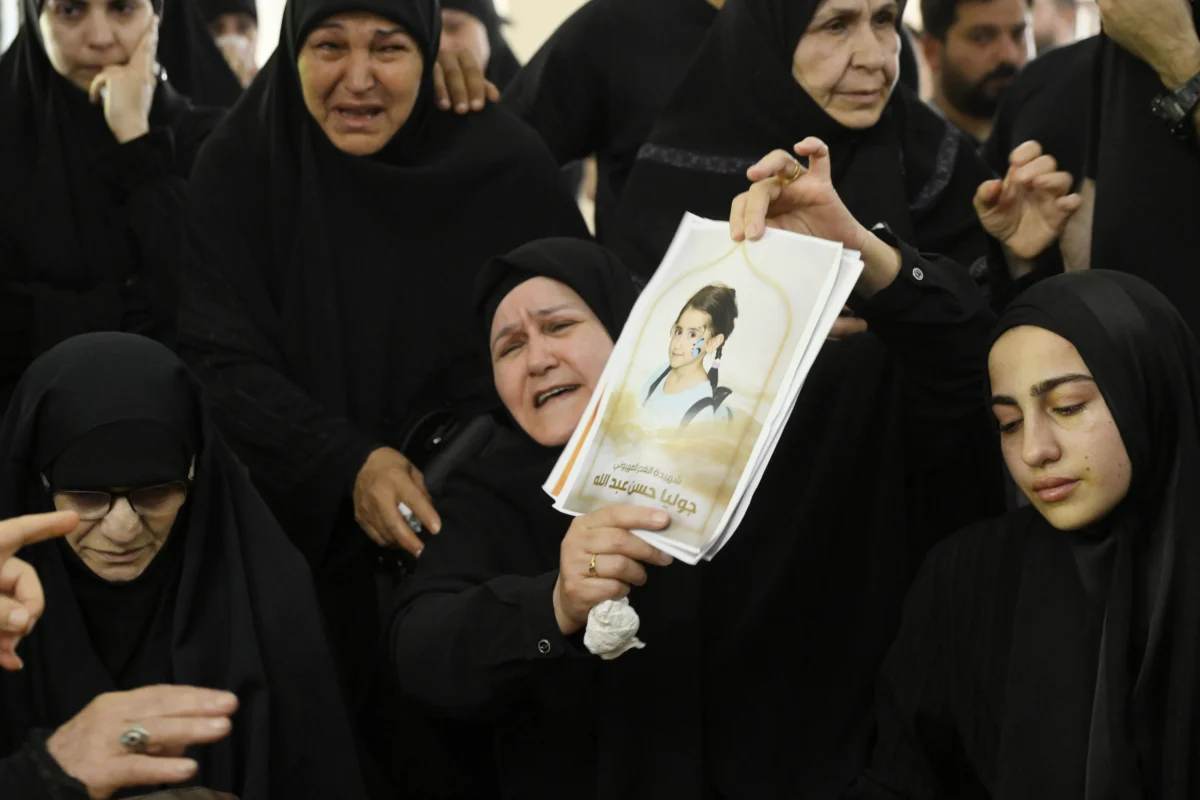
A particularly tragic event occurred on June 3, 2026, when an Israeli strike on the town of Al-Mariwaniyeh, in southern Lebanon, resulted in the deaths of a family of six – a father, mother, and their four children. The funeral ceremony, held in Wardaniyeh, drew a large number of mourners, highlighting the profound grief and anger among the local population. This incident, captured in distressing images of the mass burial, served as a stark reminder of the devastating impact of the conflict on innocent lives and became a flashpoint for renewed condemnation from Lebanese officials and international human rights groups. Such incidents fuel the cycle of retribution, with Hezbollah often vowing a response to civilian casualties, further entrenching the conflict. Throughout May and into June, the pattern of strikes and counter-strikes continued unabated, with each side claiming to be acting in self-defense or in response to previous aggressions, making a clear path to de-escalation increasingly elusive. The sustained nature of these operations suggests a strategic shift by both parties, moving beyond limited engagements to a more sustained, albeit undeclared, conflict.
Humanitarian Toll: Beyond the Numbers
The 3,516 fatalities reported by the Lebanese Health Ministry represent only one dimension of a rapidly unfolding humanitarian catastrophe. Beyond the immediate loss of life, the conflict has inflicted widespread suffering and created a complex web of challenges for Lebanon, a nation already grappling with multiple crises. The majority of the casualties are reported to be civilians, including a significant number of women and children, whose lives have been tragically cut short or irrevocably altered by the violence. Medical facilities in southern Lebanon, already under strain from years of economic hardship and underfunding, are now overwhelmed with treating injuries ranging from shrapnel wounds and burns to severe trauma. Shortages of essential medicines, medical supplies, and trained personnel are acute, making it increasingly difficult for healthcare providers to cope with the influx of casualties.
The conflict has also triggered a massive internal displacement crisis. United Nations agencies estimate that hundreds of thousands of Lebanese citizens, primarily from villages and towns along the southern border, have been forced to abandon their homes and seek refuge in safer areas further north. These displaced populations often live in overcrowded temporary shelters, with host families, or in rented accommodations, facing dire conditions, limited access to food, clean water, sanitation, and education. Children, in particular, are suffering from psychological trauma, disrupted schooling, and increased vulnerability. The destruction of homes, agricultural lands, and critical infrastructure, including roads, power grids, and communication networks, has severely impacted livelihoods and exacerbated food insecurity. Farmers have been unable to access their fields, leading to significant losses in crop production, further straining Lebanon’s fragile economy. International aid organizations are struggling to deliver humanitarian assistance due to security concerns and logistical challenges, emphasizing the urgent need for safe corridors and sustained access.
Official Responses and International Appeals
The escalating conflict has elicited strong reactions from various parties, both domestically and internationally.
- Lebanese Government and Health Ministry: Beyond reporting the grim casualty figures, Lebanese officials have repeatedly condemned the Israeli attacks as violations of Lebanese sovereignty and international law. The Health Ministry, alongside other governmental bodies, has issued urgent appeals for international assistance to address the mounting humanitarian crisis. Prime Minister Najib Mikati and President Michel Aoun (or their respective successors, depending on the precise 2026 political landscape) have called on the United Nations Security Council to intervene, enforce a ceasefire, and prevent the conflict from spiraling further out of control. They have emphasized Lebanon’s commitment to stability but also its right to self-defense.
- Hezbollah: The group has framed its actions as legitimate resistance against Israeli aggression and a defense of Lebanese territory. Statements from Hezbollah leaders have consistently vowed retaliation for Israeli strikes, particularly those resulting in civilian casualties, asserting that their operations are a necessary deterrent. They have reiterated their support for regional causes and linked the Lebanese front to broader dynamics in the Middle East.
- Israeli Government and Military (IDF): Israel maintains that its operations in Lebanon are defensive, aimed at neutralizing threats posed by Hezbollah and preventing attacks on its northern communities. The Israel Defense Forces (IDF) have stated that they target Hezbollah military assets and infrastructure, including rocket launch sites, command centers, and weapons depots, accusing Hezbollah of operating from within civilian areas. Israeli officials have also repeatedly warned Lebanon that it will hold the Lebanese state responsible for Hezbollah’s actions. They often deny or express regret over civilian casualties, attributing them to Hezbollah’s tactics or unintended consequences, while asserting their right to self-defense.
- United Nations: UN Secretary-General António Guterres has expressed grave concern over the escalation, calling for an immediate cessation of hostilities and respect for Resolution 1701, which ended the 2006 Israel-Hezbollah war. UNIFIL (United Nations Interim Force in Lebanon) peacekeepers on the ground have been actively engaged in de-escalation efforts, monitoring the Blue Line, and reporting on violations, often facing their own risks in the volatile environment. UN humanitarian agencies have launched emergency appeals for funding to assist displaced populations and provide essential services.
- International Powers: The United States, European Union, and other major powers have urged both sides to exercise restraint and de-escalate. Diplomatic efforts, often behind the scenes, have focused on preventing a full-scale war, which would have catastrophic regional implications. However, these efforts have largely failed to produce a lasting ceasefire, highlighting the complexity and deep-seated nature of the conflict. Concerns about regional stability and the potential for a wider conflict involving other actors have been repeatedly voiced by international observers.
The Broader Context: A Region on Edge
The current escalation cannot be viewed in isolation. It is intricately linked to broader regional tensions and conflicts, particularly the ongoing situation in the Palestinian territories. Many analysts view the Lebanese front as a spillover of this wider regional instability, with Hezbollah acting in solidarity with other regional actors. The deep-seated historical animosity between Israel and Hezbollah, rooted in decades of conflict, including the 2006 war, provides the immediate backdrop. Hezbollah, a powerful Shiite political party and armed group, views itself as a defender of Lebanon against Israeli aggression and a key player in the "Axis of Resistance" against Israel. Its significant military capabilities, including a vast arsenal of rockets and drones, pose a substantial threat to Israeli security.
For Israel, the presence of Hezbollah’s military infrastructure along its northern border represents a constant and unacceptable security threat. The Israeli government has consistently stated its determination to push Hezbollah forces away from the border and prevent the group from acquiring advanced weaponry that could threaten Israeli cities. The current conflict reflects a strategic gamble by both sides, each attempting to gain an advantage or deter the other, without necessarily seeking an all-out war that neither side can truly afford. However, the risk of miscalculation remains extremely high, with each significant strike or counter-strike bringing the region closer to a devastating wider conflict.
Analysis: Implications for Stability and Future Prospects
The sustained conflict and the rising death toll carry profound implications for Lebanon’s stability, regional security, and international efforts towards peace.
- Political Instability in Lebanon: The conflict has exacerbated Lebanon’s already fragile political landscape. The country has been without a fully functioning government for extended periods, and the current crisis further impedes any progress towards economic reform or political consensus. The internal divisions regarding Hezbollah’s role and its engagement in the conflict are deepening, threatening to unravel the delicate sectarian balance that underpins Lebanese politics. The humanitarian crisis adds immense pressure on state institutions, which are already struggling to provide basic services.
- Economic Devastation: Lebanon’s economy, already in freefall for years, is being pushed further to the brink. The destruction of infrastructure, loss of livelihoods, and mass displacement are imposing an unbearable burden. Tourism, a vital sector, has been decimated, and foreign investment has evaporated. The long-term recovery efforts will require massive international aid and a stable political environment, neither of which appears imminent.
- Regional Conflagration Risk: The most alarming implication is the ever-present danger of the conflict expanding into a full-scale regional war. A significant miscalculation or an especially devastating strike could trigger a cascade of retaliatory actions involving other regional actors, drawing in states like Iran, Syria, and even potentially wider international involvement. This would have catastrophic consequences for the entire Middle East and beyond, impacting global energy markets, trade routes, and international security.
- International Law and Accountability: The high civilian death toll raises serious questions about adherence to international humanitarian law by all parties. Human rights organizations are calling for independent investigations into alleged war crimes and violations of the laws of armed conflict, including targeting civilian infrastructure and disproportionate use of force. The principle of distinction, which requires parties to a conflict to distinguish between civilian objects and military objectives, is under severe strain.
The reported casualty figures serve as a grim testament to the escalating crisis along the Israel-Lebanon border. With over 3,500 lives lost since March, the human cost is unbearable, and the humanitarian situation is deteriorating rapidly. The ongoing cycle of violence, fueled by deep-seated geopolitical tensions and regional conflicts, threatens to plunge an already volatile region into an even deeper abyss. Without concerted international efforts to de-escalate, secure a lasting ceasefire, and address the root causes of the conflict, the prospects for peace and stability in Lebanon and the wider Middle East remain bleak, with innocent lives continuing to pay the ultimate price.
