

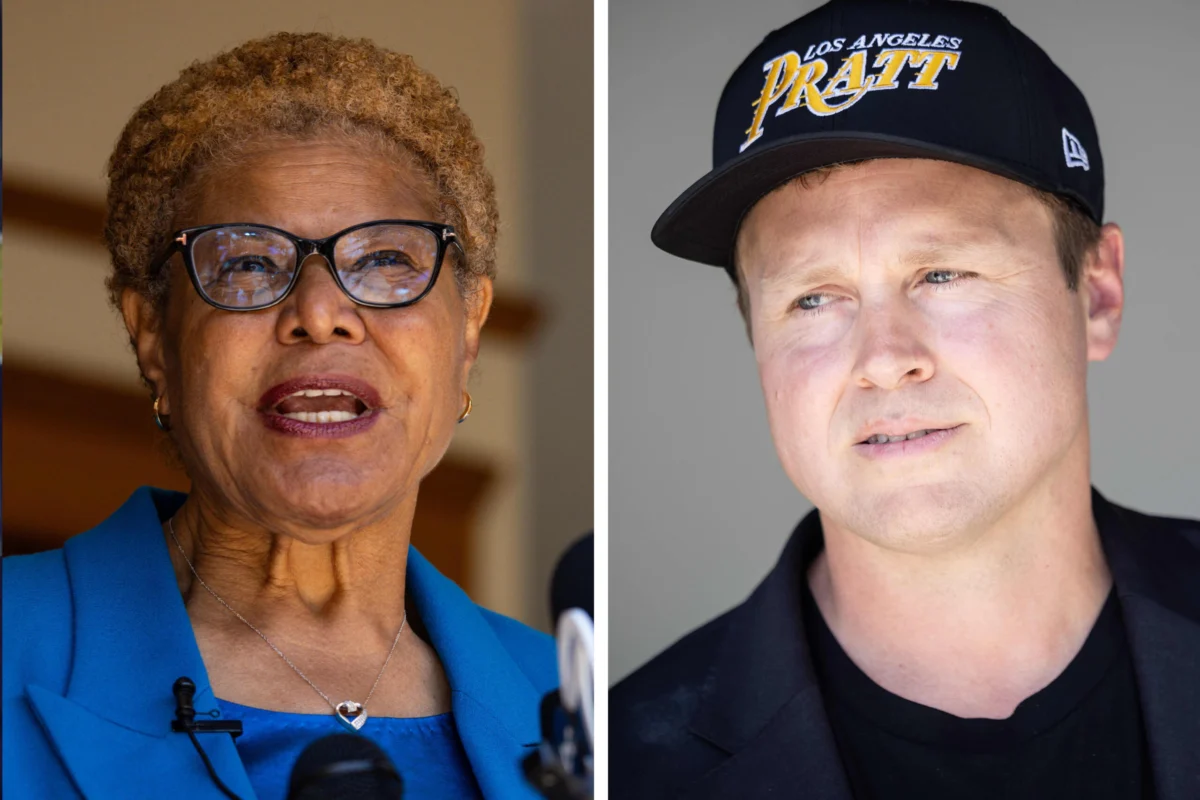
Los Angeles, the nation’s second-largest city and a critical bellwether for urban governance, is at a pivotal moment as its voters head to the polls this Tuesday to determine their next mayor. The primary election, a crucial first step in a contest that could significantly shape the city’s future, features incumbent Mayor Karen Bass, City Councilmember Nithya Raman, and an unexpected insurgent, former reality television star Spencer Pratt. With the city’s unique nonpartisan election system requiring a candidate to secure more than 50% of the vote for an outright win, the likelihood of a November runoff between the top-two vote-getters looms large, drawing intense scrutiny from political observers and prediction markets alike.
The Landscape of the Primary Election
The primary contest is more complex than initially anticipated, with public opinion polls struggling to capture the full dynamic. However, the prediction market platform Kalshi has offered a fascinating, real-time barometer of the race’s perceived trajectory. According to Kalshi traders, Mayor Karen Bass and Spencer Pratt are the two candidates most likely to advance to the second round. Bass, the incumbent, is given a commanding 93% chance of moving forward, reflecting her consistent lead in public polls, though these surveys have indicated she remains well short of the 50% threshold needed to avoid a runoff. Pratt, surprisingly, holds a roughly three-in-four chance of advancing, positioning him as a formidable, if unconventional, challenger. Nithya Raman, despite her significant political experience and initial strong standing, faces a tougher path, with her odds of advancing to the second round currently pegged at 28%.
The nonpartisan nature of Los Angeles mayoral elections, while intended to foster unity and focus on local issues, often masks underlying partisan currents. Mayor Bass and Councilmember Raman are both registered Democrats, aligning with the overwhelmingly progressive political leanings of the city. Spencer Pratt, conversely, is a registered Republican, a political affiliation that presents both a unique appeal to a segment of the electorate and a significant challenge in a city that overwhelmingly favored Democratic candidates in recent national elections. For instance, former Vice President Kamala Harris secured an impressive 70% of Angelenos’ votes in the 2024 presidential election, underscoring the city’s deep blue political identity. This stark partisan divide sets the stage for a potentially ideologically charged runoff should Pratt advance.
Karen Bass: Navigating Incumbency and Public Scrutiny
Mayor Karen Bass’s first term has been marked by significant challenges and legislative efforts aimed at tackling Los Angeles’s most pressing issues. Elected on a platform promising to address the escalating homelessness crisis, improve public safety, and foster economic recovery, Bass has had to contend with unforeseen crises. Her approval ratings, which initially saw a dip, particularly after her administration’s handling of the widespread wildfires that swept through the city and surrounding region in 2025, have shown signs of stabilization. These devastating fires not only caused significant property damage and forced over 100,000 evacuations but also brought into sharp focus the city’s preparedness for climate-related disasters and the efficacy of emergency response. Critics at the time pointed to perceived communication gaps and resource deployment issues, leading to a temporary erosion of public trust.
Despite these hurdles, Bass has worked to consolidate her position by emphasizing her experience and the progress made on key initiatives. Her administration has pushed forward with "Inside Safe," an ambitious program designed to move unhoused individuals from encampments into temporary and permanent housing, a cornerstone of her mayoral agenda. On public safety, she has focused on community-based solutions while also supporting the Los Angeles Police Department in efforts to reduce crime rates. Her campaign for re-election largely centers on continuity, experience, and the need for steady leadership to navigate the complex challenges facing a global metropolis. Her strong odds on Kalshi reflect a perception that voters, despite earlier concerns, are leaning towards stability and proven leadership in a turbulent environment.
Spencer Pratt: The Insurgent Challenger
Spencer Pratt’s emergence as a serious contender in the mayoral race has been one of the most surprising developments of this election cycle. Known primarily for his role in the reality television series "The Hills," Pratt’s pivot to serious politics, initially viewed with skepticism by many, has gained unexpected traction. His "insurgent" campaign style often leverages his celebrity platform, allowing him to bypass traditional media gatekeepers and connect directly with voters through social media and podcasts. His appearance on Bill Maher’s "Club Random" podcast, where he candidly discussed the race and his opponents, exemplifies this strategy. Pratt’s campaign narrative often positions him as an outsider, unburdened by the conventional political machinery, offering a fresh perspective on the city’s entrenched problems.
However, Pratt’s conservative-leaning politics pose a significant barrier in the heavily Democratic city of Los Angeles. While his appeal to a segment of voters might stem from a desire for radical change or a disillusionment with established political figures, winning a majority in a general election would require him to significantly broaden his base. His campaign has focused on issues like government accountability, fiscal responsibility, and a critical stance on some of the city’s current policies, particularly those related to homelessness, where he advocates for different approaches. His ability to mobilize voters who feel unheard by the mainstream political establishment, combined with his high public profile, has undeniably contributed to his surprising strength in the primary.
Nithya Raman: The Progressive Underdog’s Shifting Fortunes
City Councilmember Nithya Raman entered the mayoral race with a strong progressive platform and a reputation as a thoughtful, policy-oriented leader. Her background in urban planning and her advocacy for housing justice, tenant protections, and environmental sustainability resonated with a significant portion of the city’s progressive electorate. Early in the campaign, Kalshi traders once viewed Raman as a formidable candidate, even positioning her as the favorite to win the mayor’s office, with nearly a 60% chance of victory at one point. This initial surge reflected a belief in her ability to galvanize the city’s left-leaning base and potentially offer a compelling alternative to the incumbent.
However, Raman’s fortunes dramatically shifted following a pivotal debate in May. After this event, her odds on Kalshi experienced a precipitous collapse, plummeting to just 11% for winning the entire race, and her chances of advancing to the second round significantly diminished. The exact reasons for such a dramatic and sudden shift are often multifaceted, ranging from perceived debate performance, missteps in messaging, or a consolidation of support around other candidates. Spencer Pratt notably capitalized on this perceived weakness, publicly commenting on Raman’s fall from grace on his campaign stops, stating, "She went from 64% on Kalshi, to 8%. So she got bombed, she’s done." While such pronouncements are part of campaign rhetoric, they underscore the impact of critical moments in an election cycle and the unforgiving nature of political perception. For Raman, the challenge now is to regain momentum and convince voters that her progressive vision still offers the best path forward for Los Angeles.
The Role and Insights of Prediction Markets
The Los Angeles mayoral race offers a compelling case study for the growing influence and analytical power of prediction markets like Kalshi. These platforms allow individuals to trade contracts based on the outcome of future events, with prices reflecting the collective probability assigned to each outcome by market participants. Unlike traditional polls, which survey a static group of respondents, prediction markets aggregate the beliefs of a diverse group of "traders" who are often incentivized by financial gain to be accurate. This dynamic can sometimes offer a more agile and predictive measure of public sentiment, as demonstrated by the dramatic shifts in odds for Nithya Raman.
Kalshi’s current predictions suggest a strong probability of a Bass-Pratt runoff, with Bass favored to win the overall election with 65% odds, while Pratt lags at 25%. This disparity highlights the challenge Pratt would face in a head-to-head contest in a city as politically liberal as Los Angeles. The market’s confidence in Bass, despite her earlier vulnerabilities regarding approval ratings after the 2025 wildfires, indicates a belief that her incumbency, established political network, and alignment with the city’s dominant political ideology will ultimately prevail. The disclosure of a commercial relationship between CNBC and Kalshi, including customer acquisition and a minority investment, underscores the increasing integration of these predictive tools into mainstream financial and political analysis.
Campaign Dynamics and Key Issues
The campaigns have largely revolved around a few critical issues that dominate public discourse in Los Angeles. The homelessness crisis remains paramount, with all candidates proposing different strategies. Bass champions her "Inside Safe" initiative, emphasizing rapid rehousing and outreach. Pratt advocates for a more streamlined, possibly more punitive, approach to encampments, while Raman pushes for systemic solutions rooted in affordable housing development and robust social services.
Public safety is another top concern. While crime rates have seen fluctuations, residents continue to demand effective strategies to ensure community safety. Bass has balanced support for law enforcement with investments in community violence prevention. Pratt often critiques the perceived leniency of current policies, advocating for stronger enforcement. Raman, while supporting policing reforms, also stresses addressing the root causes of crime through social investment.
Housing affordability and the cost of living in Los Angeles continue to push many residents to the brink. Candidates are grappling with how to increase housing stock, protect tenants, and prevent further displacement. The city’s economic recovery post-pandemic, coupled with ongoing concerns about inflation and job security, also features prominently in campaign rhetoric. Furthermore, climate resilience and environmental issues, amplified by the 2025 wildfires, are increasingly central, demanding robust strategies for adaptation and mitigation.
Chronology of a Contentious Race
The path to this primary election has been a dynamic one. Mayor Bass, elected in the previous cycle, began her term with a mandate to address the city’s most pressing challenges. The 2025 wildfires, occurring mid-term, served as a significant stress test for her administration, leading to public scrutiny and a temporary dip in approval ratings. As the 2026 primary cycle approached, candidates began to declare their intentions. Nithya Raman, with her progressive base, emerged early as a strong challenger. Spencer Pratt’s entry into the race, initially dismissed by many, gradually gained attention, fueled by his celebrity and unconventional campaign. The May debate proved to be a critical turning point, particularly for Raman, as her strong position on prediction markets dramatically reversed. Leading up to Tuesday’s primary, the focus has intensified on voter turnout and whether any candidate can defy the odds and secure an outright victory, thereby avoiding a costly and potentially divisive runoff in November.
Broader Implications and The Road Ahead
The outcome of the Los Angeles mayoral election will have significant implications not just for the city but for urban politics nationally. A Bass re-election would signal a desire for continuity and a reinforcement of mainstream Democratic urban governance in one of America’s largest cities. It would also be seen as a validation of her approach to tackling complex issues like homelessness and public safety.
Should Spencer Pratt advance to a runoff, it would represent a remarkable triumph for a celebrity-turned-insurgent candidate, reflecting a potential yearning for change and an anti-establishment sentiment among a segment of the Los Angeles electorate. A Bass-Pratt runoff would present a stark ideological contrast, forcing voters to choose between an experienced Democratic leader and a Republican celebrity outsider, a dynamic that could energize both bases. The significant challenge for Pratt in such a scenario would be bridging the ideological gap in a city that overwhelmingly votes Democratic in national elections, as evidenced by the 70% vote share for Kamala Harris in 2024.
Regardless of who advances, the election underscores the persistent challenges facing major American cities: managing rapid growth, addressing social inequities, ensuring public safety, and building resilience against environmental threats. Los Angeles, with its diverse population and sprawling geography, serves as a microcosm of these broader urban struggles. The results of this primary will set the stage for a crucial November election, determining the leadership that will steer the city through its next critical chapter.
