

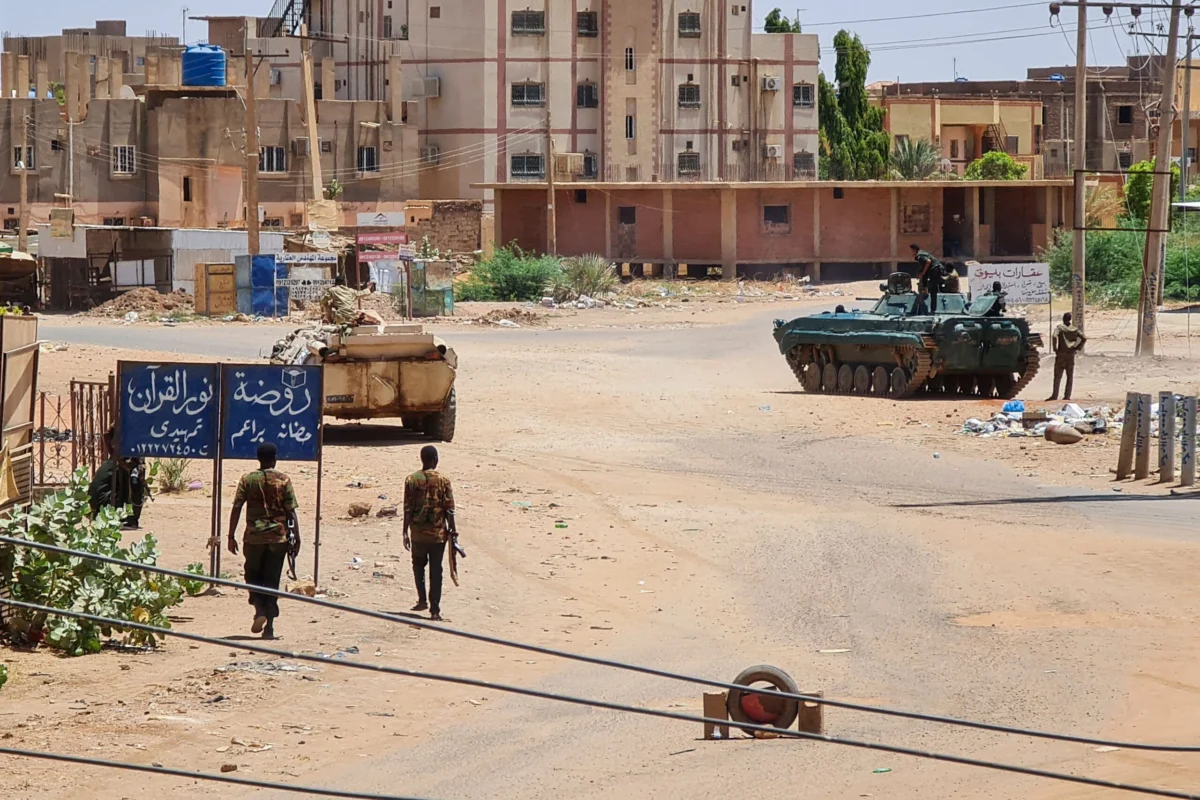
One month after the eruption of full-scale hostilities between Sudan’s primary military factions, the capital city of Khartoum remains a theater of devastating urban warfare, while internationally brokered peace talks in Saudi Arabia have failed to produce a sustainable cessation of violence. The conflict, which pitted the Sudanese Armed Forces (SAF) under General Abdel Fattah al-Burhan against the paramilitary Rapid Support Forces (RSF) led by Mohamed Hamdan Dagalo, known as Hemedti, has fundamentally destabilized the Horn of Africa. Despite a series of nominal ceasefires, airstrikes and heavy artillery continue to batter residential neighborhoods, forcing a mass exodus of civilians and pushing the nation toward the brink of total state collapse.
The humanitarian toll of the first thirty days of fighting has been staggering. According to the International Rescue Committee (IRC), the confirmed death toll has exceeded 600 individuals, with more than 5,000 injured. However, medical professionals on the ground and international observers warn that these figures are likely significant undercounts, as many casualties remain unrecorded due to the inability of emergency services to reach active combat zones. The violence has not been contained to the capital; it has reignited long-standing ethnic and political tensions in the Darfur region, where reports of scorched-earth tactics and targeted killings have raised alarms of a return to the genocidal violence that plagued the area in the early 2000s.
The Humanitarian Crisis: Displacement and Deprivation
The scale of the displacement triggered by the conflict is unprecedented in Sudan’s recent history. Nearly one million people have been uprooted from their homes in just four weeks. Internal displacement has seen hundreds of thousands flee to relatively stable states like Al Jazirah or the Red Sea coast, while hundreds of thousands more have crossed international borders into Egypt, Chad, Ethiopia, and South Sudan. These neighboring nations, many of which are already grappling with their own economic and security challenges, are now facing the burden of a secondary humanitarian crisis as they struggle to accommodate the influx of refugees.
For those who remain in Khartoum and other conflict zones, daily life has become a struggle for survival. Despite public commitments from both the SAF and the RSF to protect civilian infrastructure and allow humanitarian access, the reality on the ground is one of systematic deprivation. Major hospitals have been occupied by military forces or destroyed by shelling, leaving the wounded with nowhere to turn. The collapse of the power grid and water supply networks has left millions without basic utilities. Furthermore, the local economy has cratered; the prices of essential goods, including flour, oil, and fuel, have increased by 200% to 300% in some areas. This hyperinflation, coupled with the looting of warehouses and markets, has exacerbated acute malnutrition, particularly among children and the elderly.
Chronology of the Conflict: From Transition to Turmoil
The current war is the violent culmination of a power struggle that has been simmering since the 2019 popular uprising that ousted long-time dictator Omar al-Bashir. The transition toward democracy, initially managed by a joint civilian-military Sovereign Council, was derailed in October 2021 when General Burhan and Hemedti joined forces to lead a military coup. This move ousted the civilian government of Prime Minister Abdalla Hamdok and led to a suspension of international aid from the World Bank and other global donors.
The alliance between the SAF and the RSF was always one of convenience rather than ideological alignment. Tensions began to escalate in early 2023 during negotiations for a new "Framework Agreement" intended to restore civilian rule. The primary sticking point was the integration of the RSF—a paramilitary force evolved from the Janjaweed militias—into the regular army. Disagreements over the timeline for integration (SAF demanded two years, while RSF wanted ten) and the future chain of command led to a military buildup in Khartoum. On April 15, 2023, the first shots were fired, transforming a political dispute into a nationwide conflagration.
Diplomatic Stagnation and the Jeddah Talks
The international response has been characterized by a flurry of diplomatic activity that has yet to yield a breakthrough. The United States, Saudi Arabia, and the United Nations have spearheaded negotiations in Jeddah, aiming to establish a permanent ceasefire and secure humanitarian corridors. While both factions sent representatives to the talks, the negotiations have been criticized for lacking a "substantial civilian voice."
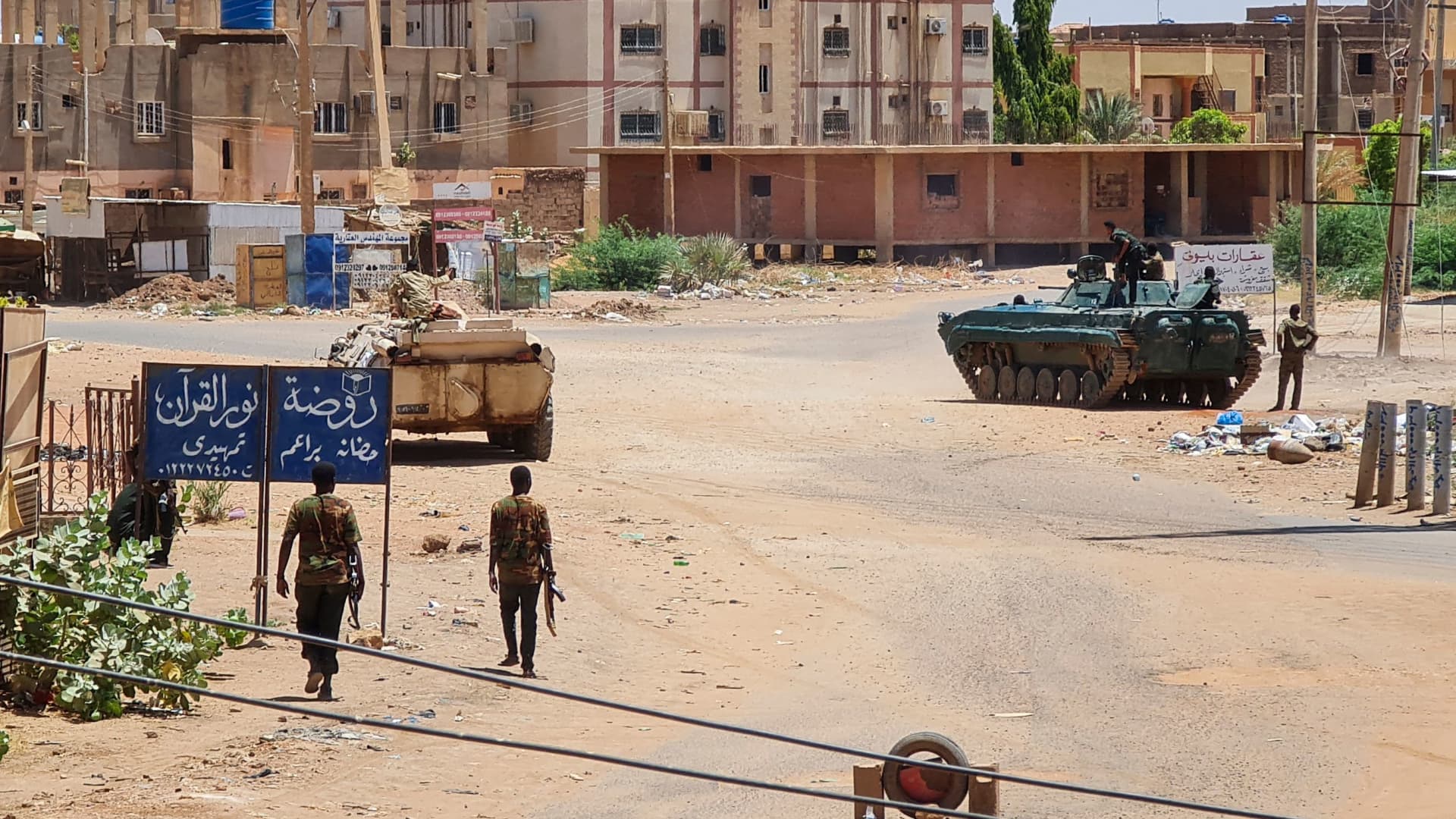
Critics argue that by negotiating exclusively with the two generals, the international community is inadvertently legitimizing the very figures responsible for the violence. Sudanese-Australian writer and activist Yassmin Abdel-Magied noted that the Jeddah process risks rewarding "belligerence" rather than empowering the Sudanese people. Furthermore, the "cycle of impunity" in Sudan remains unbroken; without the threat of harsh international sanctions against the generals and their financial networks, there is little incentive for either side to lay down their arms while they believe a total military victory is still possible.
The Role of Foreign Interests and Proxy Dynamics
The conflict in Sudan is not merely an internal power struggle; it is deeply entwined with the interests of regional and global powers. Various actors have historically provided financial, military, or political support to the rival factions, complicating the path to peace.
- Egypt: Cairo has traditionally supported the SAF and General Burhan, viewing a stable, traditional military leadership in Khartoum as essential for its own national security and its interests regarding the Nile waters and the Grand Ethiopian Renaissance Dam (GERD).
- The United Arab Emirates and Saudi Arabia: Both nations have had complex relationships with Hemedti, whose RSF forces were deployed to support the Saudi-led coalition in the war in Yemen. The RSF also controls significant gold mining operations in Sudan, with much of the gold being exported through Dubai.
- The Wagner Group: The Russian paramilitary organization has been linked to Sudan’s gold industry and has reportedly provided equipment to the RSF, though the extent of their current involvement remains a subject of intense intelligence scrutiny.
Sharath Srinivasan, an Associate Professor at the University of Cambridge, suggests that these external linkages make an imminent resolution difficult. As long as the generals have access to foreign resources and political backing, they can afford to ignore the pleas of their own citizens and the international community.
Economic Implications and State Failure
The economic fallout of the war threatens to undo decades of development. Sudan was already one of the world’s poorest nations, and the destruction of its industrial heartland in Khartoum has halted production and trade. The banking system has largely collapsed, leaving citizens unable to access their savings. If the fighting continues, experts warn of "state failure," where the central government loses all capacity to provide services, leading to a fragmented territory controlled by warlords.
Andrew Mitchell, the U.K. Minister for International Development and Africa, emphasized during a UN Human Rights Council session that the international community must send a "united message of horror" to prevent this outcome. He stressed that the only way forward is to revert Sudan to a "political track" that excludes the military from long-term governance.
The Path Forward: Elevating Civil Society
Amidst the chaos, the most effective humanitarian and political resistance has come from within Sudan’s civil society. Neighborhood "resistance committees"—informal networks that led the pro-democracy protests in 2019—have transformed into frontline emergency responders. These groups have coordinated evacuations, repaired damaged infrastructure, and managed the distribution of food and medicine when international NGOs were unable to operate.
Activists like Abdel-Magied argue that these committees should be given a seat at the negotiating table. "The framework is already there to raise the voice of the Sudanese people," she stated, suggesting that a small selection of delegates from these grassroots groups could represent collective civilian interests at peace talks. By shifting the focus from the two generals to the broader aspirations of the Sudanese people, the international community might find the leverage needed to break the stalemate.
As Sudan enters its second month of war, the window for a peaceful resolution is closing. The "worst-case scenario"—a prolonged, multi-sided civil war that draws in neighboring countries—is no longer a distant possibility but a looming reality. Preventing this will require more than just tentative ceasefires; it will require a fundamental restructuring of Sudan’s political and military architecture, driven by accountability and the long-delayed transition to civilian rule. The needs of the 46 million inhabitants of Sudan are immediate and immense, and as the IRC warns, the longer the conflict persists, the more vulnerable the population becomes to the compounding threats of disease, hunger, and state collapse.
