

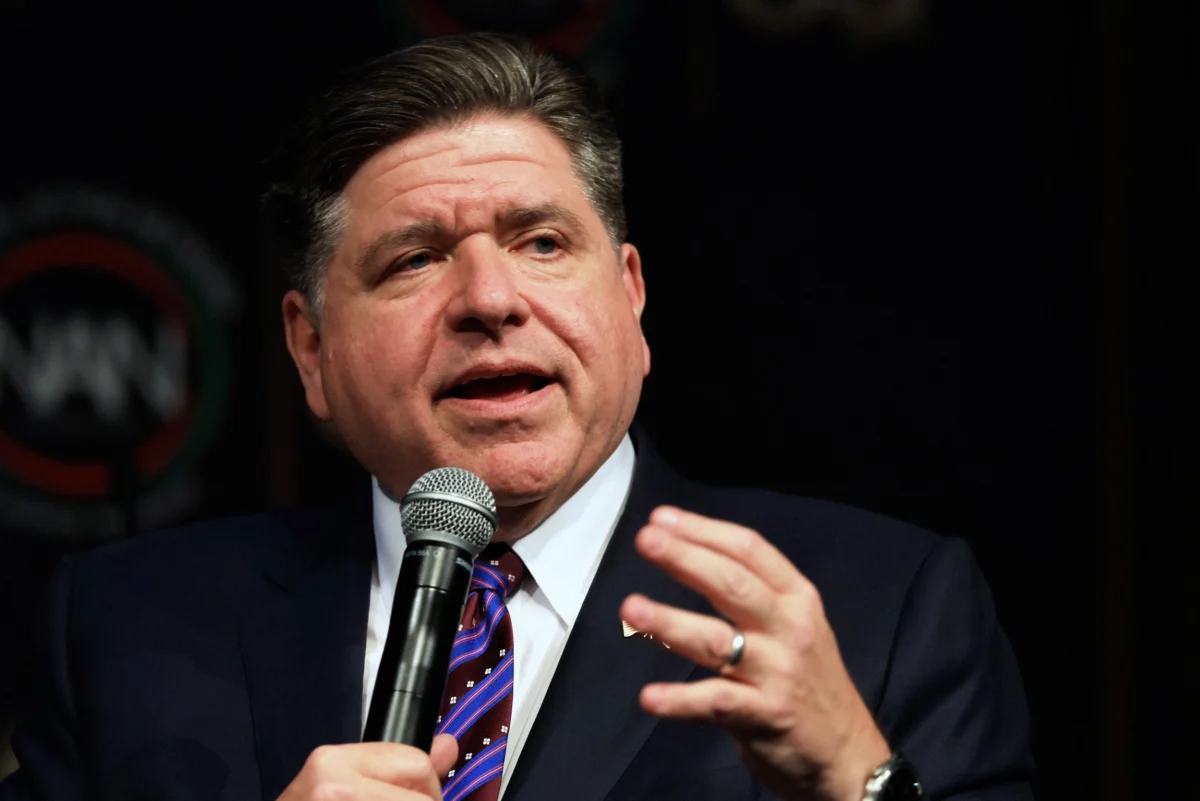
The Illinois House of Representatives has passed a landmark piece of legislation that establishes the most stringent oversight of artificial intelligence development in the United States to date. Senate Bill 315, which received final approval on Wednesday, requires "frontier" AI laboratories—specifically major industry players such as OpenAI, Anthropic, and Google DeepMind—to submit their internal safety protocols to rigorous third-party audits. The bill now moves to the desk of Governor JB Pritzker, who has publicly signaled his intent to sign the measure into law, characterizing it as a necessary step toward holding "Big Tech" accountable for the societal risks posed by rapidly advancing generative technologies.
The passage of SB 315 represents a pivotal moment in the domestic regulation of artificial intelligence. While federal lawmakers in Washington, D.C., have struggled to reach a consensus on comprehensive AI safety legislation, individual states have become the primary laboratories for policy innovation. Illinois, in particular, has positioned itself at the forefront of this movement, moving beyond the transparency requirements seen in other tech-heavy states to mandate external verification of corporate safety claims.
A Shift from Self-Regulation to Independent Verification
At the heart of SB 315 is the requirement for independent auditing. Under the current regulatory landscape, most AI companies operate under a model of self-governance. They develop their own safety "guardrails," perform internal "red-teaming" to identify vulnerabilities, and release safety reports at their own discretion. Safety advocates have long argued that this system is inherently flawed, often using the analogy that AI companies are currently being allowed to "grade their own homework."
If signed, the Illinois law would change this dynamic by requiring an objective, third-party body to verify whether these labs are actually adhering to the safety commitments they have made to the public and to regulators. This includes checking the efficacy of safeguards meant to prevent AI models from assisting in the creation of biological weapons, facilitating large-scale cyberattacks, or generating harmful misinformation.
Scott Wisor, the policy director at the Secure AI Project, a nonprofit that was instrumental in supporting the bill, emphasized that the legislation provides a mechanism for accountability that has been missing from the industry. According to Wisor, the bill ensures that safety claims are not merely marketing tools but are backed by verifiable technical practices. The expectation is that AI labs will engage with established professional services firms, such as the "Big Four" accounting firms—Deloitte, EY, KPMG, and PwC—to conduct these audits. Additionally, specialized research organizations within the AI Evaluator Forum, including METR (Model Evaluation and Threat Research) and AVERI, are expected to play a critical role in assessing the highly technical aspects of model behavior.
The Legislative Context and the Federal Vacuum
The push for SB 315 comes at a time of increasing public anxiety regarding the pace of AI development. Recent polling from the Annenberg Public Policy Center suggests that a significant majority of Americans are pessimistic about the long-term impact of AI and are actively seeking stronger government intervention. This public sentiment has created a sense of urgency among state legislators who feel that the federal government is moving too slowly to keep pace with Silicon Valley’s rapid innovation cycles.
Illinois State Representative Daniel Didech, one of the primary sponsors of the bill, noted that state-level action is essential to create a "testing ground" for future federal policy. Didech argues that by establishing a successful regulatory framework in Illinois, the state can provide a blueprint for Congress to follow, potentially breaking the legislative deadlock in Washington. This "bottom-up" approach to regulation has been seen in other sectors, such as data privacy, where California’s Consumer Privacy Act (CCPA) eventually set a de facto national standard.
However, the path to passing SB 315 was not without significant political maneuvering. Illinois has become a central battleground for AI policy, with major tech firms and advocacy groups lobbying heavily to shape the final language of the bill. Initially, the legislative environment was fraught with tension; OpenAI had previously been linked to a controversial proposal in the state that would have shielded AI developers from liability for catastrophic harms caused by their models. The company later clarified that its support for such a shield was an oversight, and it has since pivoted to support the safety-focused SB 315.
Corporate Responses and the "Patchwork" Concern
The reaction from the technology sector has been sharply divided. Some of the most prominent AI labs have embraced the Illinois bill as a way to establish a standardized baseline for the industry. Chris Lehane, OpenAI’s chief of global affairs, praised the Illinois General Assembly for its bipartisan leadership, stating that clear expectations around safety and transparency are vital as AI systems become more capable. Similarly, Anthropic, which claims to be the first major lab to support the bill, viewed the legislation as a necessary step toward establishing industry-wide safety norms.
Conversely, trade groups representing other segments of the tech industry have expressed deep reservations. The Chamber of Progress, a trade organization whose partners include Google, Apple, and Amazon, has been a vocal opponent of SB 315. Adam Kovacevich, the group’s founder and CEO, argued that the bill imposes "broad and ambiguous" obligations on developers. He expressed concern that the mandate would force companies to expose sensitive, proprietary systems to "untested auditors" in a regime that focuses on liability without providing clear technical standards.
A recurring criticism from the industry is the fear of a "patchwork" of conflicting state laws. Tech companies argue that complying with 50 different sets of regulations would be prohibitively expensive and could stifle innovation. This argument has found a sympathetic ear in the executive branch. During his current term, President Donald Trump has taken steps to unwind various AI regulations, including some imposed by the previous administration. The Trump administration has frequently cited the need to avoid regulatory fragmentation to ensure that the United States remains competitive in the global AI race against adversaries like China. Just last week, the President canceled a planned executive order on AI, citing concerns that over-regulation could "dull America’s competitive edge."
Implications for the Future of AI Governance
The signing of SB 315 will likely have immediate and far-reaching implications for the AI industry. First, it establishes Illinois as a premier jurisdiction for AI safety enforcement, potentially influencing where companies choose to deploy their most advanced models. If the auditing process proves successful and transparent, it could bolster public trust in AI technologies, which many experts believe is necessary for the long-term adoption of the tools.
Furthermore, the bill’s focus on "frontier" models—those that represent the cutting edge of computational power and capability—sets a precedent for tiered regulation. Rather than applying burdensome rules to every small-scale developer or academic researcher, the law targets the organizations with the most resources and the greatest potential to cause systemic harm. This targeted approach is seen by many safety experts as a more sophisticated way to manage risk without crushing the broader startup ecosystem.
The role of the auditors themselves will also be a point of intense scrutiny. As the "Big Four" and specialized nonprofits step into this new role, they will need to develop standardized metrics for what constitutes "safe" AI. This will involve defining acceptable levels of bias, toxicity, and risk of misuse. The development of these standards in Illinois could eventually influence international norms, contributing to a global framework for AI safety.
Chronology of AI Safety Legislation in Illinois
The journey of SB 315 through the Illinois legislature followed a complex timeline of negotiation and amendment:
- Early 2024: Initial discussions began in the Illinois Senate regarding the need for AI oversight following the viral spread of AI-generated deepfakes and concerns over algorithmic bias in hiring.
- March 2024: A preliminary bill surfaced that included liability protections for AI firms. This sparked immediate backlash from consumer advocacy groups and led to a re-evaluation of the legislative strategy.
- April 2024: The focus shifted toward a transparency and auditing framework. Proponents began consulting with technical experts from the Secure AI Project and the AI Evaluator Forum to ensure the bill’s requirements were technically feasible.
- May 2024: OpenAI and Anthropic officially voiced support for the revised version of the bill (SB 315), while trade groups like the Chamber of Progress intensified their opposition.
- Late May 2024: The bill passed the Illinois Senate with a strong bipartisan majority.
- Wednesday: The Illinois House of Representatives held a final vote, passing the bill and sending it to Governor Pritzker’s desk.
Conclusion
As Governor Pritzker prepares to sign SB 315, the eyes of the tech world are on Illinois. The state has effectively challenged the status quo of tech self-regulation, asserting that the risks associated with frontier AI are too great to be managed behind closed doors. Whether this law serves as a catalyst for federal action or remains a standout state-level initiative, it marks a definitive end to the era of unchecked autonomy for the world’s most powerful AI laboratories. The move signals that in the race to develop artificial intelligence, the government is no longer content to remain a spectator, but will instead demand a seat at the table to ensure that progress does not come at the expense of public safety.
