

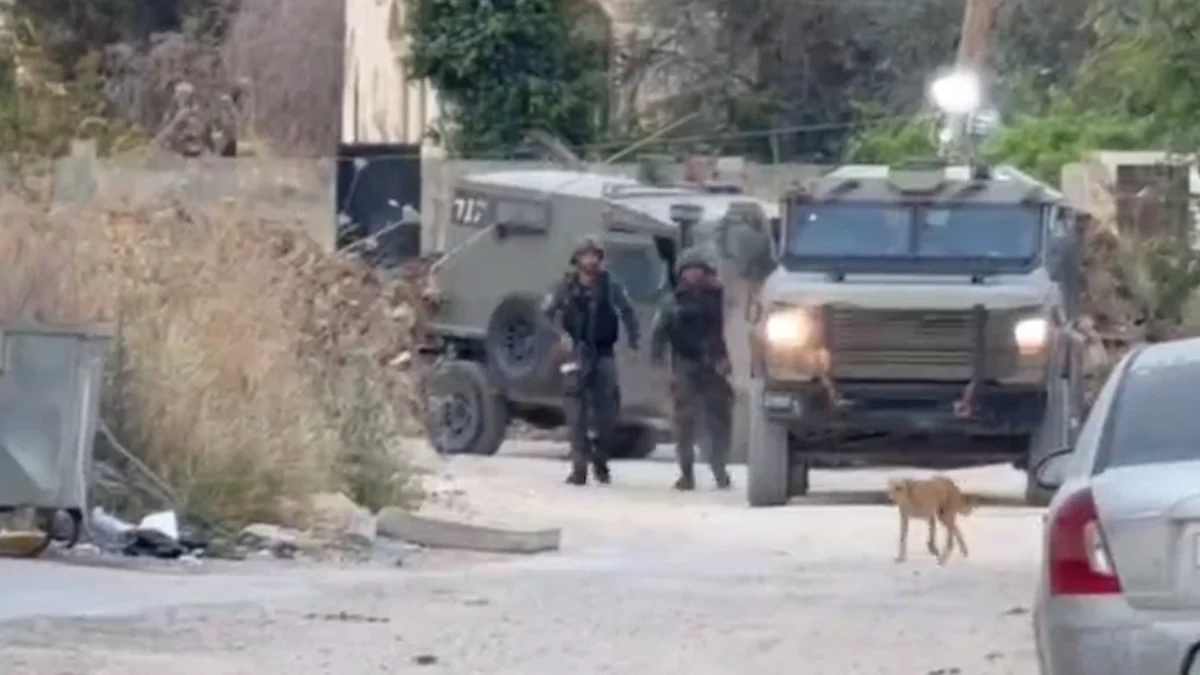
The observance of Eid al-Adha, one of the most significant holidays in the Islamic calendar, has been overshadowed by reports of aggressive conduct by Israeli security forces against Palestinian civilians in the West Bank and East Jerusalem. On a day traditionally defined by prayer, sacrifice, and the visitation of ancestral graves, footage emerged showing high-tension encounters that have drawn condemnation from human rights advocates and local community leaders. Two specific incidents have become the focal point of international scrutiny: the use of tear gas against families at a cemetery in Jenin and the physical manhandling of a woman near the Al-Aqsa Mosque compound, which resulted in the removal of her headscarf. These events occur against a backdrop of heightened regional instability and long-standing disputes over religious freedom and administrative control in the occupied territories.
The Incidents in Focus: Jenin and East Jerusalem
In the northern West Bank city of Jenin, a location that has seen frequent military activity over the past year, the first day of Eid al-Adha was marked by a confrontation at a local cemetery. It is a deeply rooted Palestinian tradition to visit the graves of deceased relatives on the morning of the holiday to offer prayers and distribute alms. According to eyewitness accounts and verified video footage, Israeli troops deployed tear gas canisters into the vicinity of the cemetery while families, including children and the elderly, were present. The sudden dispersal caused panic among the mourners, many of whom were forced to flee the area to avoid respiratory distress.
Simultaneously, in the Old City of occupied East Jerusalem, tensions flared near the gates of the Al-Aqsa Mosque. As thousands of worshippers attempted to access the site for the Eid prayer, security protocols led to bottlenecks and friction between the public and the Israeli police. In one widely circulated video, security forces are seen engaging in a physical altercation with a Palestinian woman. During the struggle, the woman’s headscarf (hijab) was forcibly removed. In Islamic culture, the forced removal of a woman’s headscarf is viewed as a profound violation of personal dignity and religious privacy. This incident, occurring at the doorstep of the third-holiest site in Islam, served to further inflame an already volatile atmosphere.
Chronology of the Holiday Period
The lead-up to the 2024-2026 period of religious observances has been characterized by a tightening of security measures across the Palestinian territories. To understand the context of the Eid incidents, a timeline of the preceding weeks is essential:
- Two Weeks Prior to Eid: Israeli authorities announced a series of "security assessments," resulting in the revocation of several thousand entry permits for West Bank Palestinians who had planned to pray at Al-Aqsa during the holiday.
- Three Days Prior to Eid: Military checkpoints surrounding Jenin, Nablus, and Hebron were reinforced. Residents reported increased wait times and more frequent vehicle searches, hindering holiday preparations and commerce.
- Eid Morning (05:00 – 07:00): Tens of thousands of Palestinians gathered for early morning prayers. While the prayer inside Al-Aqsa was largely completed without incident, heavy police presence at the gates led to the first reports of pushing and verbal altercations.
- Eid Morning (08:30 – 10:00): The incident at the Al-Aqsa gate involving the removal of the woman’s headscarf occurred. Almost simultaneously, military units in Jenin began patrolling near the cemetery areas, leading to the deployment of tear gas.
- Eid Afternoon: Reports of scattered clashes emerged from various villages in the West Bank as news of the morning’s events spread via social media.
Statistical Overview and Movement Restrictions
The events of this year’s Eid al-Adha are not isolated but are part of a broader trend of restricted movement and increased military presence. According to data from the United Nations Office for the Coordination of Humanitarian Affairs (OCHA), the number of movement obstacles in the West Bank—including checkpoints, roadblocks, and earth mounds—has increased by over 20% in the last two years.
During the current holiday season, it is estimated that less than 15% of the requested permits for Palestinians from the West Bank to enter Jerusalem were granted. This represents a significant decrease from pre-2023 levels, where holiday quotas were generally higher to facilitate religious tourism and family reunification. Furthermore, the Palestinian Red Crescent Society reported treating dozens of individuals for tear gas inhalation and minor physical injuries sustained during the first two days of the holiday. These statistics highlight the physical and psychological barriers that define the daily lives of those living under occupation, particularly during periods that are meant to be celebratory.
Background and Context: Jenin and Al-Aqsa
To comprehend the gravity of these incidents, one must look at the symbolic importance of the locations involved. Jenin, and specifically its refugee camp, has long been a symbol of Palestinian resistance. The local cemetery holds the remains of many who have died in recent conflicts, making it a site of both personal grief and national identity. Military intervention in such a space is perceived by the local population not merely as a security measure, but as a direct affront to the sanctity of the dead and the rights of the bereaved.
Al-Aqsa Mosque, meanwhile, remains one of the most sensitive "red lines" in the Israeli-Palestinian conflict. Under the "status quo" arrangement, Israel is responsible for security, while the Jordanian-led Waqf manages the site’s religious affairs. However, Palestinians frequently accuse the Israeli police of overstepping their bounds and infringing upon the rights of worshippers. The removal of a headscarf in this context is interpreted as a symbolic act of dominance that resonates far beyond the individual involved, touching on issues of religious freedom and gender-based violence in conflict zones.
Official Responses and Reactions
The reactions to the footage have been swift and divided along predictable political lines.
Palestinian Authority (PA): The Palestinian Ministry of Foreign Affairs issued a statement condemning the "barbaric" actions of the occupation forces. They called upon the international community to provide protection for Palestinian civilians and holy sites, arguing that the targeting of women and mourners constitutes a violation of international humanitarian law.
Israeli Security Forces: Spokespersons for the Israeli Police and the IDF (Israel Defense Forces) have generally defended their actions as necessary for maintaining public order. Regarding the Jenin incident, military sources claimed that "suspicious activity" or "incitement" near the cemetery necessitated a response, though they did not provide specific evidence of an immediate threat. Regarding the Al-Aqsa incident, police stated that the use of force was a reaction to "non-compliance with instructions" and that any disrespect to religious attire was unintentional during the course of a physical detention.
International Human Rights Organizations: Groups such as Amnesty International and Human Rights Watch have pointed to these incidents as evidence of "systemic institutionalized discrimination." They argue that the use of crowd-control weapons like tear gas in non-violent settings, such as a cemetery visit, is a disproportionate use of force. Legal experts have also noted that Article 27 of the Fourth Geneva Convention mandates that protected persons are entitled, in all circumstances, to respect for their persons, their honor, and their family rights, as well as their religious convictions and practices.
Broader Impact and Implications
The psychological impact of these incidents on the Palestinian youth is a major concern for sociologists and political analysts. When religious holidays—traditionally a time of respite—are marked by violence and humiliation, it often leads to deep-seated resentment and a loss of faith in diplomatic solutions. The "Headscarf Incident" at Al-Aqsa, in particular, has the potential to serve as a catalyst for further unrest, as it combines religious, cultural, and gender-based grievances.
Furthermore, these events complicate the geopolitical landscape. For regional neighbors like Jordan and Egypt, who act as mediators, such incidents at holy sites make it increasingly difficult to maintain domestic support for continued security coordination with Israel. The imagery of tear gas at a cemetery and the manhandling of a woman during prayer hours provides powerful rhetorical ammunition for those calling for an end to normalization agreements.
Analysis of International Legal Frameworks
From a legal standpoint, the actions of the security forces are scrutinized under the lens of International Humanitarian Law (IHL) and International Human Rights Law (IHRL). The West Bank and East Jerusalem are recognized as occupied territories by the majority of the international community and the International Court of Justice. Under the Hague Regulations of 1907, an occupying power must respect the "honor and rights of the family" and "religious convictions and practice."
The use of tear gas in a crowded cemetery, where there is no clear combatant threat, challenges the principle of "distinction" and "proportionality." Similarly, the right to freedom of religion and the right to dignity are protected under the Universal Declaration of Human Rights. When these rights are perceived to be violated during a major religious festival, the legal discourse shifts from "security management" to "human rights violations," putting pressure on international bodies to take more decisive action.
Conclusion
The events of Eid al-Adha in Jenin and Jerusalem serve as a stark reminder of the persistent friction that defines life in the occupied Palestinian territories. While Israeli authorities maintain that their actions are governed by security necessity, the visual evidence of force used against mourners and worshippers suggests a disconnect between security protocols and the protection of civilian dignity. As the holiday concludes, the images of tear gas drifting over gravestones and the struggle at the gates of Al-Aqsa remain, likely to influence the political and social discourse in the region for months to come. The international community continues to monitor the situation, with many calling for an independent investigation into the conduct of security forces to ensure that religious freedom and human rights are upheld, even in the most contested environments.
