

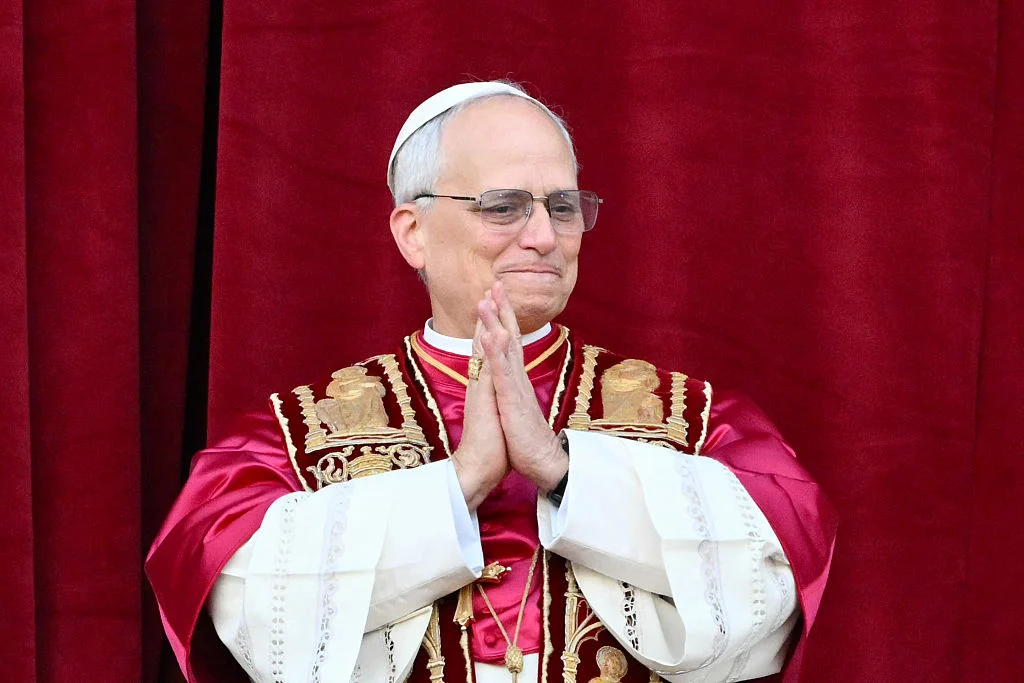
Pope Leo XIV released his first encyclical on Monday, a comprehensive 200-page document titled Magnifica Humanitas, which establishes a formal Vatican doctrine on the ethical governance and societal integration of artificial intelligence. While the primary subject of the letter is the rapid advancement of algorithmic technologies, the Pontiff uses the platform to address deeper, systemic issues that have plagued human society for centuries: the concentration of wealth, the erosion of democratic institutions, the persistence of global conflict, and a growing disconnect between technological progress and the common good.
Presented at the Vatican alongside Chris Olah, the co-founder of the artificial intelligence safety company Anthropic, the encyclical marks a historic intersection between ancient religious tradition and cutting-edge Silicon Valley enterprise. In his address, Pope Leo XIV argues that technology developed and controlled by a narrow elite cannot, by its very nature, serve the entirety of the human family. The document serves as both a theological reflection on what it means to be human in a digital age and a sharp political critique of the current trajectory of the global tech industry.
The Concentration of Power and the Technocratic Paradigm
Central to Magnifica Humanitas is the warning that the concentration of computational power and data ownership in the hands of a few private entities poses a fundamental threat to human dignity. Pope Leo XIV writes that when such immense power remains opaque and evades public oversight, it inevitably leads to "distorted forms of development." This, he argues, creates new dependencies and exclusions that further marginalize the vulnerable.
The encyclical posits that artificial intelligence, much like the steam engine or the printing press before it, is not a neutral tool. Instead, it tends to amplify the influence of those who already possess significant economic resources, specialized expertise, and vast access to data. The Pope expresses concern that this imbalance allows a small group of "technological elites" to shape global information flows, manipulate consumption patterns, and influence democratic processes to suit their own commercial or geopolitical interests.
By framing AI development as a matter of social justice, the Pope aligns the Church with advocates for "open" or "democratic" AI, though he goes further by suggesting that even open-source models require a framework of moral responsibility that transcends mere accessibility.
A Chronology of Vatican Engagement with Technology
The release of Magnifica Humanitas is the culmination of a decade-long effort by the Holy See to engage with the digital revolution. To understand the significance of this encyclical, one must look at the timeline of the Church’s evolving stance on technology:
- 1891: Pope Leo XIII publishes Rerum Novarum, the foundational document of modern Catholic social teaching, addressing the exploitation of labor during the Industrial Revolution.
- 2015: Pope Francis publishes Laudato si’, focusing on ecology and the "technocratic paradigm" that prioritizes profit over the planet.
- 2020: The Vatican sponsors the "Rome Call for AI Ethics," signed by executives from Microsoft and IBM, introducing the concept of "algor-ethics."
- 2023: Pope Francis issues a message for the World Day of Peace specifically focused on AI, calling for an international treaty to regulate its development.
- 2026 (May 15): Pope Leo XIV signs Magnifica Humanitas, elevating the Church’s concerns from general messages to the highest level of papal teaching (an encyclical).
- 2026 (May 18): The official presentation of the encyclical occurs in Rome, notably featuring leaders from the AI safety community.
This chronology demonstrates that the Church views the rise of AI not as a fleeting trend, but as a civilizational shift comparable to the Industrial Revolution. By titling the document in honor of "Magnificent Humanity," Leo XIV seeks to reclaim the narrative of progress, moving it away from machine efficiency and back toward human flourishing.
Geopolitical Friction and the Regulatory Landscape
The timing of the encyclical is particularly poignant, arriving just days after a significant shift in United States technology policy. President Donald Trump recently delayed the signing of a highly anticipated executive order on AI security. The proposed order would have mandated government oversight for new, large-scale AI models before their public release. Reports suggest the delay was influenced by prominent venture capitalists and former White House advisors, including David Sacks, who have argued that such regulations would stifle innovation and allow international competitors to take the lead.
Pope Leo XIV’s document appears to be a direct rebuttal to the "move fast and break things" philosophy often championed in Silicon Valley. He calls for AI to be guided by "clear criteria and effective oversight" that includes the participation of the communities most likely to be affected by the technology—specifically those in the Global South and working-class populations in developed nations.
The Pope specifically targets the "AI arms race," characterized by the relentless pursuit of larger datasets and more powerful algorithms. He notes that many countries and corporations view this race as a means to secure "geopolitical or commercial dominance." In one of the document’s most striking passages, Leo XIV writes, "To disarm means discrediting the assumption that technical power automatically confers the right to govern."
Supporting Data: The Cost of Influence and Information Control
The Pope’s concerns regarding the influence of tech elites are supported by recent trends in political spending and market concentration. According to lobbying disclosure reports, the tech industry’s spending on AI-related policy reached record highs in 2025 and early 2026. Hundreds of millions of dollars have flowed from Silicon Valley executives into super PACs and lobbying groups aimed at blocking or softening AI regulations in Washington and Brussels.
Furthermore, the concentration of the "compute" necessary to train state-of-the-art models has created a high barrier to entry. Currently, a handful of companies control the vast majority of the specialized hardware (GPUs) and cloud infrastructure required for advanced AI. This "compute divide" mirrors the wealth gaps of previous eras, a point the encyclical emphasizes as a driver of global inequality.
The document also addresses the "harvesting and manipulation" of human data. Professor Paolo Carozza of Notre Dame Law School, who also serves as the chair of the Meta Oversight Board and is a member of the Pontifical Academy of Social Sciences, noted that the tech industry’s current business models pose "fundamental challenges to cognitive freedom." The ability of algorithms to predict and nudge human behavior, Carozza argues, erodes the capacity for the "free and informed consent" that is the bedrock of both Catholic ethics and democratic governance.
Official Responses and Global Implications
The reaction to Magnifica Humanitas has been divided along predictable lines. Chris Olah of Anthropic praised the Pope’s focus on safety and the "common good," suggesting that the industry needs a "moral North Star" to avoid catastrophic outcomes. "The Pope is identifying the same risks we see in the lab," Olah stated during the presentation, "but he is placing them in a much broader human context."
Conversely, some industry advocates have expressed concern that the Pope’s call for "effective oversight" could lead to a bureaucratic slowdown that might hinder the development of beneficial AI applications in medicine and climate science. Critics from the "accelerationist" school of thought argue that the risks of AI are speculative, while the benefits of rapid development are tangible and immediate.
From a diplomatic perspective, the encyclical is expected to influence policy discussions at the United Nations and within the European Union. The Holy See holds permanent observer status at the UN and has been increasingly active in international forums regarding lethal autonomous weapons systems and digital rights. By framing AI oversight as a "disarmament" issue, Leo XIV is signaling that the Vatican will likely throw its moral weight behind international treaties that limit the use of AI in warfare and surveillance.
Analysis: The Future of "Algor-ethics"
Magnifica Humanitas represents a significant evolution in the Church’s social doctrine. It suggests that in the 21st century, the "means of production" are no longer just land and factories, but data and algorithms. The Pope’s insistence that technical power does not grant a "right to govern" challenges the prevailing meritocracy of the tech world, where expertise is often equated with moral authority.
The encyclical’s focus on "cognitive freedom" and the "corrosion of truth" also highlights a growing concern about the stability of the social fabric. As deepfakes and AI-driven misinformation become more sophisticated, the Vatican argues that the very concept of a "shared reality" is under threat. Without a shared reality, the Pope warns, democratic politics becomes impossible, replaced by a "permanent state of manipulation."
As the global community grapples with the rapid integration of AI into every facet of life, Magnifica Humanitas offers a framework that prioritizes the "magnificence" of the human person over the efficiency of the machine. Whether this moral appeal can compete with the immense financial and political incentives driving the AI arms race remains to be seen, but the Vatican has now firmly planted its flag in the center of the most consequential debate of the modern era.
