

The annual Memorial Day weekend has long served as a critical pivot point for the American retail sector, marking the unofficial start of summer and a period of significant discounting for high-ticket household appliances. Among the most anticipated price reductions are those from Dyson, the British technology company that has come to dominate the premium floor care market. For consumers navigating the intersection of home hygiene and sophisticated engineering, this holiday window represents a strategic opportunity to acquire industry-leading hardware at a reduced capital outlay. As the floor care industry continues its aggressive shift toward cordless, sensor-driven, and multi-functional devices, the current sales landscape offers a comprehensive look at the evolution of domestic maintenance technology.
The Strategic Context of Memorial Day Retail
Memorial Day sales are more than a tradition; they are a calculated retail maneuver designed to clear inventory ahead of mid-year product launches and to capitalize on the "spring cleaning" momentum that persists through late May. For a brand like Dyson, which maintains a premium pricing strategy and rarely engages in deep discounting throughout the fiscal year, holiday weekends like Memorial Day are essential for capturing a broader demographic. Market analysts note that while Dyson’s "entry-level" products often hover around the $400 mark, the flagship models frequently exceed $900. Consequently, price drops of $150 to $300 during these periods trigger significant spikes in consumer volume, particularly through major distribution channels such as Amazon, Best Buy, and Dyson’s own direct-to-consumer platform.
A Chronology of Dyson’s Technological Evolution
To understand the significance of the current sale models, one must look at the trajectory of Dyson’s engineering milestones. The company, founded by Sir James Dyson, rose to prominence on the back of cyclonic separation technology, which eliminated the need for vacuum bags and maintained suction power.
- The Corded Era (1990s – 2010s): Dyson established its reputation with upright and canister vacuums like the DC01 and the Ball series, focusing on maneuverability and filtration.
- The Cordless Revolution (2010 – 2018): With the introduction of the V-series (V6, V8, V10), Dyson began prioritizing the "stick" vacuum format, eventually announcing in 2018 that it would cease development of new corded models to focus entirely on battery-operated technology.
- The Sensor and Laser Integration (2021 – Present): The debut of the V15 Detect marked a shift toward "intelligent" cleaning, utilizing acoustic piezo sensors to count dust particles and green lasers to reveal microscopic debris.
- The Hybrid and Robotic Expansion (2023 – 2024): The most recent era has seen Dyson branch into wet-dry technology (the Submarine) and advanced robotics (the Spot+Scrub Ai), aiming to provide a fully autonomous or all-in-one floor care solution.
Flagship Analysis: The V15 Detect and Gen5Detect
At the center of the Memorial Day discounts are the V15 Detect and the Gen5Detect, which represent the current "gold standard" for cordless stick vacuums. The V15 Detect is frequently cited by industry experts as the most balanced offering in the lineup. It features a Hyperdymium motor spinning at up to 125,000 rpm and a sophisticated HEPA filtration system designed to trap 99.99% of particles as small as 0.3 microns. The inclusion of the Fluffy Optic cleaner head—a tool that uses a precisely angled light to make invisible dust visible on hard floors—has become a hallmark of the Dyson experience.
Stepping up in the hierarchy, the Gen5Detect offers a glimpse into the future of suction power. Equipped with a motor that is smaller, faster, and more powerful than its predecessors, the Gen5Detect is specifically engineered for households with pets or high-traffic carpeting. A critical distinction in this model is the transition from a trigger-based power system to a single-button operation, a response to consumer feedback regarding hand fatigue during extended cleaning sessions. Furthermore, the Gen5Detect features a built-in dusting and crevice tool hidden within the wand, reflecting a design philosophy centered on integrated utility and space-saving.
Specialized Solutions: The PencilVac and the Submarine
Dyson’s current sales inventory also highlights the company’s efforts to diversify into niche cleaning categories. The "PencilVac," technically known in some markets as the Dyson Omni-glide or specialized Slim models, addresses the needs of urban dwellers with primarily hard-surface flooring. Its unique feature is an omnidirectional Fluffy cleaner head that moves in all directions, allowing it to navigate around tight corners and under low furniture with unprecedented ease. While its battery life and bin capacity are significantly lower than the flagship V-series, its lightweight profile makes it a preferred choice for "spot cleaning" and daily maintenance.
Parallel to this is the V15s Detect Submarine, Dyson’s first significant foray into the wet-dry vacuum market. Unlike traditional mops, the Submarine uses a motorized wet roller head to tackle spills and stains while simultaneously removing dry debris. Engineering this required a delicate balance: providing enough water to clean without oversaturating floors. The Submarine head features an eight-point hydration system and a waste-water extraction plate, ensuring that the user is always cleaning with fresh water. However, retail data suggests that this model remains a premium investment, and holiday discounts are often the primary driver for its adoption among consumers who previously relied on separate vacuuming and mopping appliances.
The Frontier of Automation: The Spot+Scrub Ai
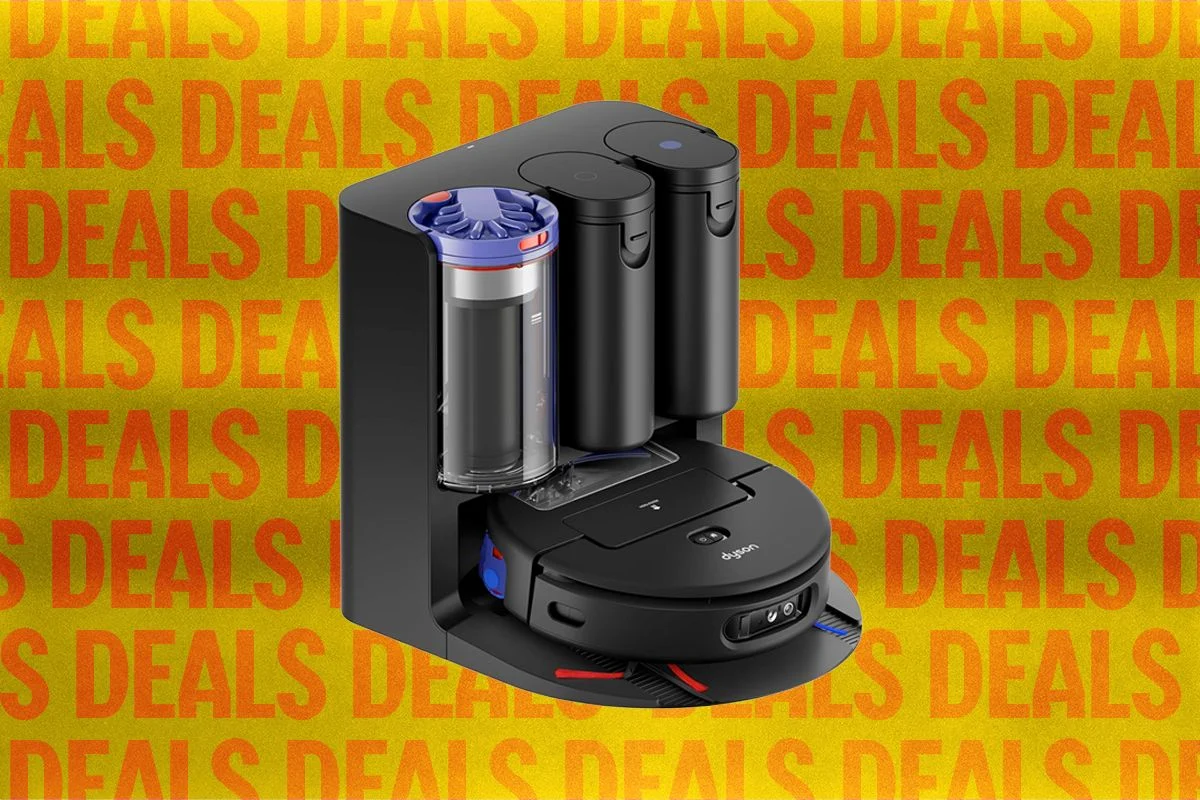
Perhaps the most technologically ambitious item on sale this weekend is the Spot+Scrub Ai, Dyson’s latest entry into the competitive robot vacuum sector. The robotic vacuum market has been dominated by brands like iRobot and Roborock, but Dyson has attempted to differentiate itself through sheer suction power and its signature aesthetic. The Spot+Scrub Ai utilizes 360-degree vision and SLAM (Simultaneous Localization and Mapping) technology to navigate the home.
While earlier iterations of Dyson robots faced criticism for their height—preventing them from cleaning under certain furniture—the newer models have improved their obstacle avoidance and mapping efficiency. The Spot+Scrub Ai also integrates mopping capabilities, aligning it with the industry trend toward "all-in-one" docking stations that can empty dustbins and manage water reservoirs autonomously.
Supporting Data and Market Trends
The shift toward high-end vacuums is supported by broader economic data within the home goods sector. According to market research, the global household vacuum cleaner market size was valued at approximately USD 12.5 billion in 2022 and is expected to expand at a compound annual growth rate (CAGR) of 4.7% through 2030. Within this growth, the "cordless" segment is the fastest-growing category, driven by advancements in lithium-ion battery density and brushless motor efficiency.
Data from consumer advocacy groups indicates that while the "Dyson Tax"—the premium price paid for the brand name—remains high, the longevity and secondary market value of these machines often justify the initial cost. Dyson vacuums are noted for having a higher-than-average resale value on platforms like eBay and Facebook Marketplace, a factor that many consumers consider when deciding to purchase during a sale.
Industry and Consumer Reactions
While Dyson typically remains tight-lipped regarding specific sales figures, retail partners have indicated that holiday promotions are vital for maintaining market share against aggressive competitors like SharkNinja and Samsung. A spokesperson for a major national retailer, speaking on the condition of anonymity, noted, "Dyson remains the ‘aspirational’ brand in floor care. When the V15 or the Gen5 drops in price, we see a massive migration of customers who were previously looking at mid-tier brands deciding to make the jump to premium."
Consumer sentiment, as reflected in verified purchase reviews, suggests that the "laser detection" feature is no longer viewed as a gimmick but as a psychological driver for cleanliness. "It changes the way you clean because you can actually see the progress," is a common refrain in user feedback forums. However, some technical reviewers have pointed out that the requirement to hand-rinse mop heads on models like the Submarine remains a point of friction for users seeking total automation.
Broader Implications for Household Hygiene
The proliferation of these advanced cleaning tools reflects a broader societal shift toward "wellness" in the home. Since 2020, there has been a heightened awareness of indoor air quality and allergen management. Dyson’s commitment to HEPA (High-Efficiency Particulate Air) filtration across its sale models addresses this concern, positioning a vacuum cleaner not just as a tool for aesthetic tidiness, but as a medical-grade device for environmental control.
As Memorial Day weekend progresses, the sales of these units will likely serve as a bellwether for consumer confidence in the luxury appliance sector. With inflation impacting discretionary spending, the success of Dyson’s holiday strategy will depend on whether consumers view these discounted prices as a necessary investment in their home’s infrastructure.
For those in the market, the current window offers a rare alignment of technological peak and price trough. Whether it is the versatility of the Car+Boat handheld for mobile maintenance or the sheer power of the Gen5Detect for whole-home deep cleaning, the current Dyson lineup represents the culmination of decades of fluid dynamics research, now made more accessible by the seasonal rhythms of the American marketplace.
