

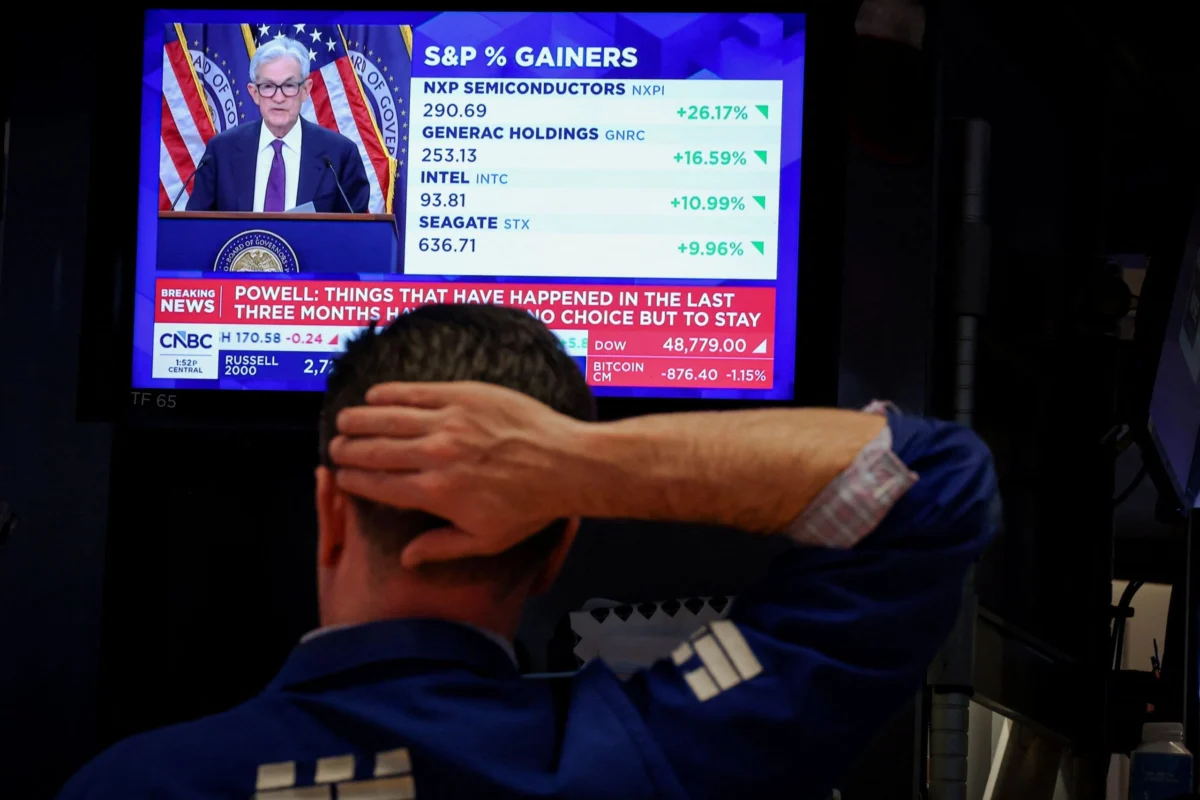
Bond market investors are increasingly signaling that the Federal Reserve must pivot aggressively to combat inflation, especially as a new leader prepares to take the helm of the central bank. This sentiment, articulated by Ed Yardeni, president of Yardeni Research, suggests a growing divergence between market expectations and the current monetary policy stance of the Federal Open Market Committee (FOMC). Wall Street anticipates a shift away from the Fed’s long-standing bias toward easing interest rates, with a strong preference for a tighter monetary policy to address persistent inflationary pressures.
The crux of this market concern, according to Yardeni, is evident in the yield curve. Specifically, the yield on the 2-year U.S. Treasury note has risen above the federal funds rate (FFR). This inversion, where short-term Treasury yields exceed the FFR, is a significant indicator. Historically, it suggests that investors believe the current benchmark interest rate set by the Fed is insufficient to curb inflationary pressures. When investors are willing to accept a lower return on short-term government debt than the prevailing FFR, it implies they foresee higher interest rates in the future, driven by the central bank’s need to rein in rising prices.
"The market is signaling that the current FFR is too low to curb inflation and may have to be hiked," Yardeni stated in a recent note to clients, underscoring the urgency perceived by market participants. The implication is that the Fed, under its new leadership, may be compelled to demonstrate a more robust commitment to its 2% annual inflation target, a goal that has been consistently exceeded for the past five years.
The Shadow of Persistent Inflation and the Iran War
Yardeni’s assessment comes at a critical juncture, following a series of inflation reports that have revealed a concerning reacceleration in price increases. This resurgence in inflation is occurring in the wake of the recent Iran War, an event that has disrupted global supply chains and exacerbated inflationary pressures worldwide. The conflict’s impact on oil prices, shipping costs, and the availability of key commodities has created a complex economic landscape, posing significant challenges for policymakers.
The latest data paints a stark picture: April’s Consumer Price Index (CPI) showed an annual increase of 3.8%, the highest rate observed since early 2023. This figure indicates that the cost of goods and services for consumers has continued to climb at an accelerated pace. Simultaneously, wholesale inflation, as measured by the Producer Price Index (PPI), jumped by 6% over a 12-month period in April, marking its fastest pace since 2022. This surge in wholesale prices often foreshadows higher consumer prices in the months to come, as businesses pass on their increased costs to customers.
A New Era at the Federal Reserve: Kevin Warsh Takes the Reins
These inflation concerns are amplified by the impending transition at the top of the Federal Reserve. Kevin Warsh, President Donald Trump’s nominee, has officially been confirmed by the Senate to succeed Fed Chair Jerome Powell. Warsh, a former Fed governor, has publicly promised a "regime change" at the central bank. This phrase suggests a departure from the policies and approaches adopted under Powell’s tenure, potentially signaling a more hawkish stance on inflation.
President Trump has historically been a vocal critic of the Federal Reserve, frequently pressuring the central bank to lower interest rates. His administration’s rationale has been that lower borrowing costs would stimulate economic growth and make American businesses more competitive. However, the current inflationary environment appears to be shifting the market’s calculus, even among those who might have previously aligned with the President’s calls for lower rates.
Market Expectations Diverge from Fed’s Stance
The divergence between market expectations and the Fed’s potential policy path is further illuminated by the CME Group’s FedWatch tool. This widely monitored indicator, which tracks the probabilities of future interest rate movements, shows that Fed funds futures traders are currently pricing in no rate cuts for the remainder of the year. More significantly, the market’s expectation of a potential rate hike has been steadily increasing in recent days, a direct response to the hotter-than-expected inflation reports.
This market sentiment stands in contrast to the Fed’s recent communications, which have often emphasized patience and a data-dependent approach to monetary policy. While the Fed has acknowledged the rise in inflation, its forward guidance has generally suggested a cautious approach to tightening, aiming to avoid derailing the economic recovery. However, the bond market’s current pricing suggests a growing impatience with this approach, signaling a belief that the Fed may be lagging behind the curve in its response to escalating price pressures.
Historical Context: The Fed’s Inflation Mandate and Past Challenges
The Federal Reserve operates under a dual mandate from Congress: to promote maximum employment and stable prices. For many years, the primary concern of central bankers was combating deflation or insufficient inflation. However, the economic landscape has shifted dramatically in recent years. The COVID-19 pandemic, coupled with massive fiscal stimulus and supply chain disruptions, created a potent mix that fueled a significant surge in inflation.
The Fed’s response to the initial inflation spike involved a series of aggressive interest rate hikes, beginning in March 2022. These hikes were intended to cool down an overheating economy and bring inflation back towards the 2% target. However, the persistent nature of the recent inflationary pressures, exacerbated by geopolitical events like the Iran War, has made the task of taming inflation more challenging than initially anticipated.
The inversion of the 2-year Treasury yield above the federal funds rate is not merely a technical anomaly; it reflects a deep-seated concern among sophisticated investors. They are essentially betting that the Fed will be forced to raise rates further than currently signaled, or at least maintain them at restrictive levels for a longer period, to achieve its price stability objective. This market signal suggests a lack of confidence in the current policy settings to effectively combat inflation.
Broader Economic Implications
The implications of a Fed that is perceived as "behind the curve" on inflation are far-reaching. Persistently high inflation erodes the purchasing power of consumers, disproportionately affecting lower-income households. It can also create uncertainty for businesses, making it difficult to plan investments and manage costs. Furthermore, if inflation expectations become unanchored – meaning people begin to expect prices to rise indefinitely – it can create a self-fulfilling prophecy, leading to even higher inflation.
For the incoming Fed Chair, Kevin Warsh, this presents an immediate and formidable challenge. He will need to navigate the delicate balance between controlling inflation and avoiding a sharp economic downturn. His promise of "regime change" suggests he may be more inclined to prioritize inflation control, potentially at the expense of short-term economic growth. This could lead to increased market volatility and a period of adjustment for businesses and consumers.
The market’s current pricing for rate hikes, even if not fully materialized, indicates a heightened level of alert. If the Fed does not act decisively, it risks further eroding its credibility and making the task of controlling inflation even more difficult in the future. The bond market’s message is clear: the era of easy money may be over, and the Federal Reserve, under its new leadership, must be prepared to take decisive action to ensure price stability. The coming months will be crucial in determining whether the Fed can effectively navigate these turbulent economic waters and restore confidence in its ability to manage inflation. The performance of the 2-year Treasury yield relative to the federal funds rate will undoubtedly remain a key barometer of market sentiment and a closely watched indicator of the Fed’s policy trajectory.
