

In a significant legal setback for the Trump administration’s immigration enforcement strategy, a federal judge in Massachusetts ruled on Wednesday that the Department of Homeland Security (DHS) violated a standing court order by deporting migrants to South Sudan without providing them a meaningful opportunity to contest the move. U.S. District Court Judge Brian Murphy found that the administration failed to adhere to a preliminary injunction issued in March, which was designed to protect individuals from being sent to third countries where they might face persecution, torture, or extreme violence without due process.
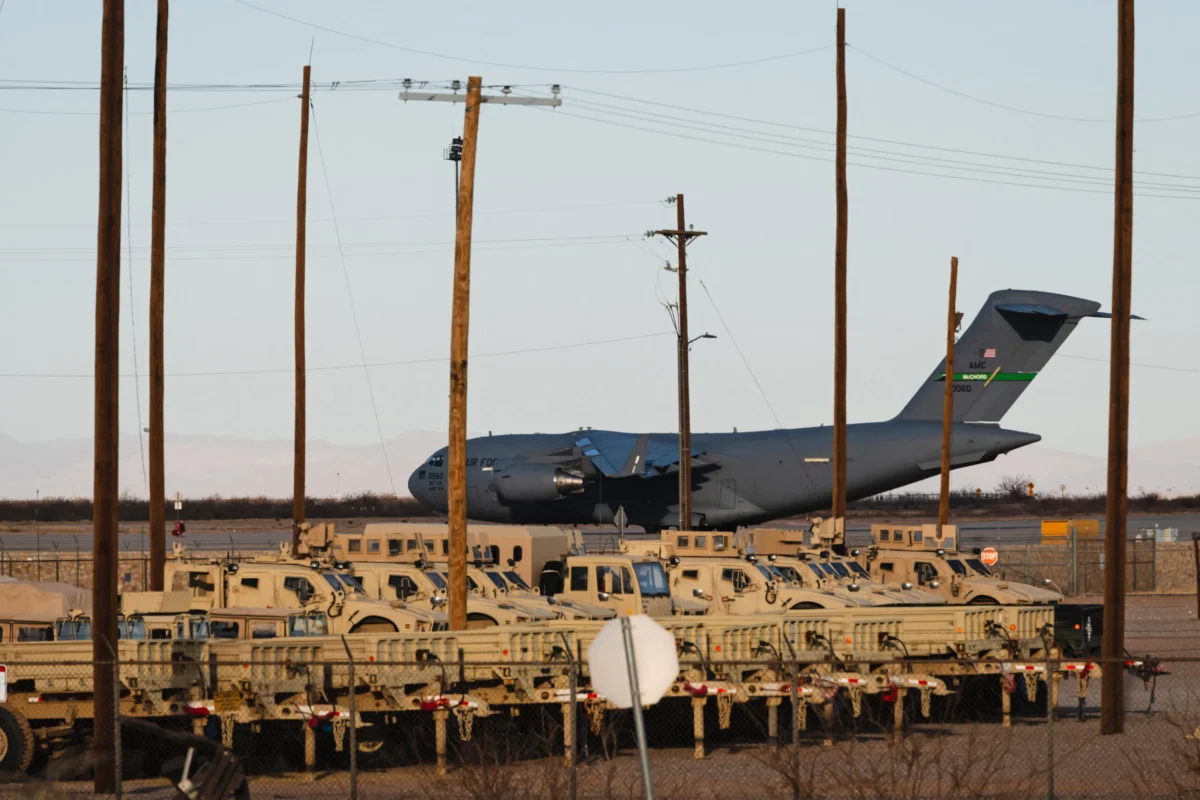
The ruling follows the departure of a high-profile deportation flight from Biggs Army Airfield in Fort Bliss, El Paso, Texas, on Tuesday morning. The flight, which utilized a United States Air Force Boeing C-17, reportedly carried eight individuals of various nationalities. While South Sudan was the intended destination for the group, only one of the individuals was actually a citizen of that nation. The others hailed from Myanmar, Laos, Vietnam, Cuba, and Mexico. The administration’s decision to send these individuals to a conflict-prone region in East Africa has ignited a firestorm of legal and humanitarian criticism.
The Judicial Ruling and the Violation of Due Process
Judge Brian Murphy’s ruling centered on the administration’s alleged circumvention of a judicial injunction established earlier this year. In March, Murphy issued an order preventing the government from deporting individuals to any country other than their nation of origin unless the individuals were first given a fair window of time to raise "fears of persecution or torture" associated with that specific third country.
During Wednesday’s hearing, Judge Murphy expressed blunt frustration with the government’s actions. After spending more than 30 minutes in a sealed proceeding to review the classified or sensitive details of the flight, Murphy returned to the public bench to declare the department’s actions "unquestionably violative" of the court’s order.
The crux of the violation rests on the timeline of the deportation. According to the court’s findings, the eight individuals were only notified of their final destination—South Sudan—late Monday evening, well outside of standard business hours. By the following morning, between 9:00 a.m. and 10:00 a.m., they were already being processed and loaded onto the aircraft. Judge Murphy noted that this narrow window made it "impossible" for the migrants to consult with legal counsel, contact their families, or file the necessary emergency motions to stay their removal based on the dangers present in South Sudan.
"The department’s actions," Murphy stated, "are unquestionably violative of this court’s order." He emphasized that the right to raise a claim of asylum or protection from torture is a cornerstone of both U.S. and international law, which cannot be bypassed by expedited logistics.
Profiles of the Deportees and Government Justification
The Department of Homeland Security confirmed the deportation during a press briefing on Wednesday morning, shortly before the judge’s ruling. The group consisted of eight men: Enrique Arias-Hierro, Jose Manuel Rodriguez-Quinones, Thongxay Nilakout, Jesus Munoz-Gutierrez, Dian Peter Domach, Kyaw Mya, Tuan Thanh Phan, and Nyo Myint.
DHS officials defended the move by highlighting the criminal histories of the individuals involved. According to the department, many of those on the flight had been convicted of violent crimes, including murder and sexual assault. The administration has frequently used the presence of criminal records as a primary justification for expedited removals, arguing that public safety necessitates the swift expulsion of "unpopular" or "dangerous" non-citizens.
However, immigration attorneys argue that criminal status does not negate a person’s right to due process. Jonathan Ryan, a San Antonio-based attorney representing Nyo Myint, a migrant from Myanmar, expressed deep concern over the lack of transparency. Ryan stated that his client has essentially been "disappeared" by the federal government.
"I have not heard from my client," Ryan said following the hearing. "How am I supposed to take their word that they sent him to Burma [Myanmar]? We stop doing due process for unpopular people, and that is a problem for the entire system."
The Crisis in South Sudan: A Dangerous Destination
The choice of South Sudan as a deportation hub for non-citizens has drawn sharp rebukes from human rights organizations and the State Department itself. South Sudan is currently classified by the U.S. State Department under a "Level 4: Do Not Travel" advisory—the highest level of danger. The advisory warns of rampant crime, kidnapping, and ongoing armed conflict.
In March of this year, the State Department ordered the departure of all non-emergency U.S. government employees from South Sudan due to the deteriorating security situation on the ground. The country, which gained independence in 2011, has been plagued by instability for much of its existence. While a 2018 power-sharing agreement between President Salva Kiir and Vice President Riek Machar officially ended a five-year civil war that killed hundreds of thousands, that peace has become increasingly fragile.
Recent reports suggest that South Sudan could be headed for another full-scale civil war. Violent clashes between factions loyal to Kiir and Machar have ramped up significantly in recent months, leading to mass displacement and humanitarian crises. For migrants from countries like Vietnam or Mexico, being dropped into such an environment without any ties or protection is viewed by advocates as a "death sentence."
Chronology of the Legal Battle
The conflict between Judge Murphy and the Trump administration has been escalating throughout the month. This week’s ruling is the latest in a series of judicial interventions aimed at curbing the use of "third-country" deportations.
- March 2025: Judge Murphy issues an injunction requiring DHS to provide migrants with a meaningful opportunity to raise protection claims before being sent to a third country.
- Early April 2025: The administration attempts to deport individuals from the Philippines, Vietnam, and Laos to Libya. Libya, like South Sudan, is considered a high-risk conflict zone. Judge Murphy blocks the move and reaffirms his injunction.
- Monday, April 14, 2025 (Evening): Eight migrants in ICE custody are notified they will be sent to South Sudan.
- Tuesday, April 15, 2025 (Morning): The migrants are flown out of Biggs Army Airfield in Texas on a Boeing C-17.
- Wednesday, April 16, 2025: DHS confirms the deportation in a press briefing. Judge Murphy holds an emergency hearing, declaring the government in violation of his order.
Government attorneys confirmed during the Wednesday hearing that the plane has since landed, and the migrants remain in the custody of Immigration and Customs Enforcement (ICE). However, the government declined to share the exact location of the plane’s final destination or the current status of the individuals, citing security concerns.
Broader Implications and the "Third-Country" Strategy
The use of third countries for deportation is a controversial pillar of the current administration’s "maximum pressure" immigration policy. By sending migrants to nations other than their own, the government seeks to bypass the diplomatic hurdles of countries that refuse to accept their own citizens back—such as Vietnam or Cuba.
This strategy, however, faces significant legal hurdles. Under the principle of non-refoulement, a fundamental concept in international law, states are prohibited from returning individuals to a country where they would face a high likelihood of persecution or torture. U.S. law codifies this through the Convention Against Torture (CAT) and various asylum statutes.
The ruling by Judge Murphy suggests that the judiciary is prepared to serve as a check on executive overreach regarding these "expedited" logistics. If the administration continues to ignore the notice requirements established by the courts, it may face contempt of court charges or further restrictive injunctions that could ground deportation flights nationwide.
Furthermore, the "disappearance" of individuals like Nyo Myint raises questions about the accountability of ICE operations. If an attorney cannot locate their client and the government refuses to provide a location, the legal system’s ability to provide oversight is effectively neutralized.
Conclusion and Future Outlook
As of Wednesday evening, the fate of the eight men remains uncertain. While the government claims the migrants are still in custody, the lack of communication with their legal representatives has created a vacuum of information. Judge Murphy’s ruling may lead to an order requiring the government to return the individuals to the United States or to provide immediate access to counsel, though such a reversal would be logistically complex given the flight has already landed abroad.
The legal battle over third-country deportations is far from over. With the administration signaled to continue its aggressive removal campaign and the judiciary insisting on the preservation of due process, the standoff is likely to head to the appellate courts. For now, the ruling serves as a stark reminder that even in the pursuit of border security and the removal of criminal aliens, the executive branch must operate within the boundaries of existing judicial orders and constitutional protections.
