

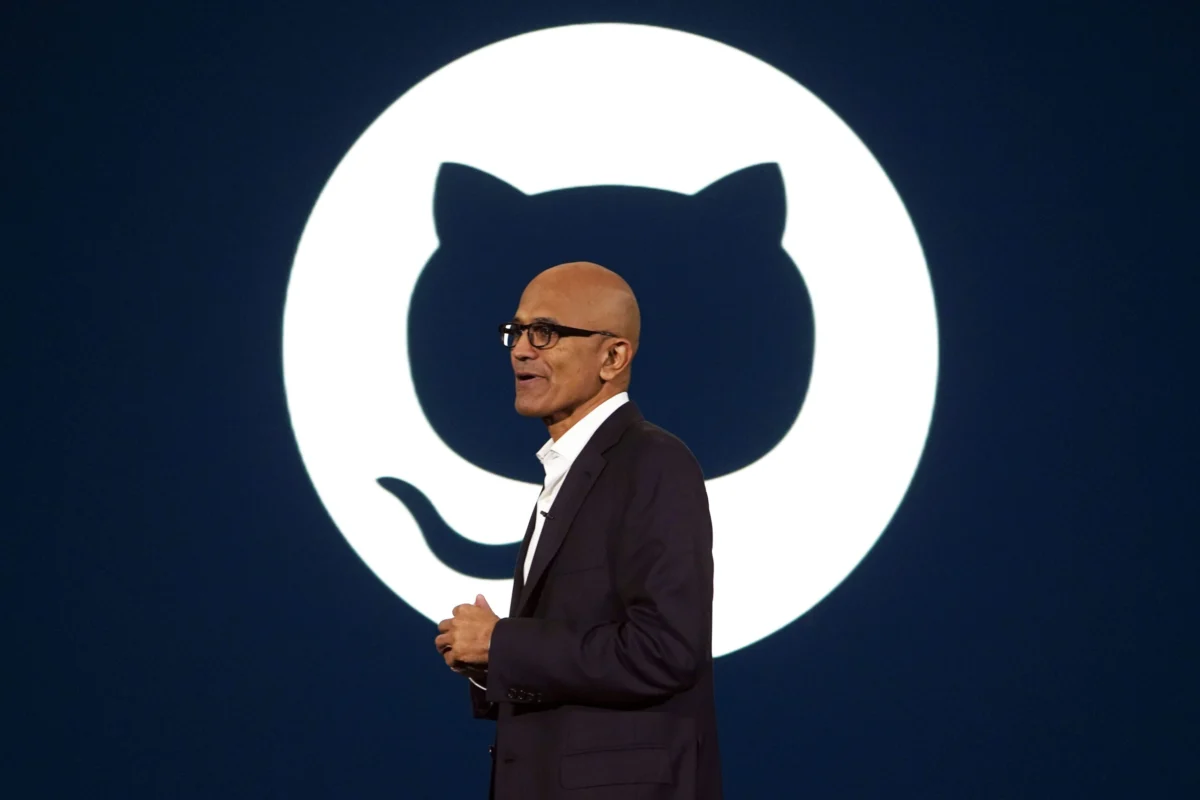
The technological dominance Microsoft established through its $7.5 billion acquisition of GitHub in 2018 is facing its most significant challenge to date as a combination of persistent service outages, high-level executive turnover, and a surge in agile competitors threatens its lead in the generative artificial intelligence sector. While Microsoft CEO Satya Nadella has spent the last decade repositioning the software giant as a cloud and AI powerhouse, the recent instability at GitHub—the world’s most critical repository for software development—is creating a narrative of vulnerability at a time when "vibe coding" and agentic AI are reshaping the industry.
For years, GitHub appeared to be the crown jewel of Microsoft’s developer strategy. By integrating AI-assisted coding tools like GitHub Copilot early in the generative AI boom, Microsoft held a distinct "homecourt advantage" with the global developer community. However, the platform’s recent reliability struggles have become so pronounced that major enterprise clients and influential software architects are publicly questioning its viability for professional workloads. This internal friction comes as Microsoft’s stock has lagged behind its megacap peers, dropping 13% this year while competitors capitalize on more specialized, high-performance AI coding tools.
The Infrastructure Strain and Reliability Crisis
The primary catalyst for the current wave of dissatisfaction is a series of service disruptions that have paralyzed development teams globally. According to GitHub’s own status logs, the platform has suffered more than a dozen significant incidents lasting over an hour since March 2024. These outages have affected organizations of all sizes, including networking giant Cisco, which has had to implement "fail-safe" measures and rely on self-hosted enterprise versions of the software to maintain operations.
The root of these technical failures appears to be a bottleneck in GitHub’s transition to Microsoft’s Azure cloud infrastructure. For years, GitHub relied on a legacy data center footprint in Northern Virginia. As the demand for AI-driven "agentic" coding increased—where AI agents perform complex, multi-step tasks rather than simple code completion—GitHub’s dedicated infrastructure reached its capacity limits. Internal reports suggest that plans to migrate fully to Azure have been repeatedly delayed due to complex negotiations over capacity and resource allocation within Microsoft.
Vlad Fedorov, GitHub’s Chief Technology Officer, admitted in a recent technical update that the service had failed to meet its own availability standards. At one point, only 12.5% of GitHub’s traffic was being routed through Azure’s Iowa data centers, with a target of reaching 50% by mid-2024. The strain of this transition was further highlighted by a high-profile security incident in early May 2024, in which an employee’s device was compromised, allowing an attacker to access approximately 3,800 of GitHub’s internal code libraries.
A Leadership Vacuum at the Peak of the AI Revolution
Compounding the technical failures is a notable exodus of leadership within GitHub and Microsoft’s developer division. Thomas Dohmke, who served as GitHub’s CEO for four years and was a vocal proponent of the platform’s AI future, announced his departure in August 2023. Nearly a year later, a permanent successor has yet to be named, leaving the organization without a clear singular voice at a pivotal moment.

The turnover extends beyond the CEO’s office. Julia Liuson, a 34-year Microsoft veteran and the head of the company’s developer division, retired in April 2024. Furthermore, Asha Sharma, the former president of product for GitHub’s CoreAI group, recently transitioned to a leadership role within the Microsoft Xbox division, taking key vice presidents Tim Allen and Jared Palmer with her.
Industry analysts suggest that this leadership vacuum has slowed GitHub’s ability to iterate on its core products. Armin Ronacher, the creator of the Flask web framework, recently noted that the platform feels as though it is no longer designed primarily for the community that made it valuable, citing a lack of clear direction and an over-emphasis on "Copilot noise" over platform stability.
The Rise of Agentic Coding and the "Vibe Coding" Shift
The market for AI coding tools has shifted from simple autocomplete features to "agentic coding," a paradigm where AI models act as autonomous collaborators. This shift, often referred to as "vibe coding" due to the high-level, natural language instructions used to prompt AI, has allowed newer, more nimble players to gain traction.
While GitHub was a first mover with Copilot in 2021, data from engineering analytics firms like Jellyfish suggest it is losing ground. A survey of over 600 software professionals revealed that tools such as Anthropic’s Claude Code and Google’s Gemini Code Assist are seeing wider adoption in certain high-growth segments.
Perhaps the most significant threat comes from Cursor, an AI-native code editor that has seen a meteoric rise in market share. Cursor recently made headlines by forging a strategic partnership with Elon Musk’s SpaceX, which included a provision giving SpaceX the right to acquire the startup for $60 billion—a valuation that underscores the immense perceived value of specialized AI coding environments. According to corporate spending data from Ramp, Cursor has already overtaken GitHub Copilot in market share among its client base, highlighting a rapid shift in developer preference toward tools that offer more seamless AI integration.
Competitive Responses and Market Fragmentation
As GitHub struggles, its primary competitors are moving aggressively to capture disgruntled users. GitLab, GitHub’s closest rival in the DevOps market, has launched a campaign specifically targeting GitHub customers. GitLab CEO Bill Staples publicly offered a free year of service to any GitHub user willing to sign a three-year agreement, emphasizing that platforms not built for "machine scale" are beginning to break under the weight of AI-generated workloads.
The competitive landscape is further crowded by offerings from Amazon, Atlassian, and Oracle. Even startups in the software delivery space, such as Harness, are exploring the launch of their own code storage features to provide a more reliable alternative for enterprise customers. Jyoti Bansal, CEO of Harness, noted that enterprise concerns regarding GitHub’s reliability have reached a level where "active exploration of alternatives" has become a standard boardroom discussion.

Financial Realignment and the Shift to Usage-Based Billing
In an effort to manage the immense computational costs of agentic AI and improve the economics of its developer tools, GitHub announced a significant change to its pricing model. Starting in June 2024, the company will move away from flat-rate subscriptions for its advanced features toward a usage-based billing system.
While Microsoft executives, including Vice President Joe Binder, argue that this move is necessary to maintain service quality and prevent "usage limits" from degrading the experience for all users, the reaction from the developer community has been mixed. Early cost calculators provided by GitHub suggest that for high-intensity users, the cost of maintaining a Pro account could increase substantially. This has already led some developers to downgrade to free accounts or abandon the platform entirely in favor of open-source or cheaper alternatives.
Timeline of Key Events: GitHub’s Turbulent Year
To understand the current crisis, it is essential to look at the chronology of events over the past 14 months:
- June 2023: GitHub announces its intention to move a majority of its traffic to Azure to handle the load of new AI features.
- August 2023: CEO Thomas Dohmke announces his resignation; a leadership vacuum begins.
- January 2024: Satya Nadella reports that GitHub Copilot has 4.7 million paid subscribers, but internal concerns about infrastructure capacity grow.
- March 2024: A series of major outages begins, prompting a public apology from CTO Vlad Fedorov.
- April 2024: Julia Liuson retires; GitHub begins temporarily turning away new individual Copilot subscribers to preserve stability.
- May 2024: A security breach results in the compromise of 3,800 internal code libraries.
- June 2024: Usage-based billing is scheduled to take effect, marking a major shift in the platform’s economic strategy.
Broader Implications for Microsoft’s AI Narrative
The challenges facing GitHub represent a microcosm of the broader difficulties Microsoft faces in the "second act" of the generative AI era. While the company’s early investment in OpenAI gave it a head start, the operational reality of scaling these technologies is proving more difficult than the initial hype suggested.
For Satya Nadella, the stakes are high. GitHub is not just a repository; it is the gateway through which millions of developers interact with Microsoft’s ecosystem. If GitHub loses its status as the "industry standard" for serious software development, the downstream effects on Azure adoption and the broader Copilot ecosystem could be severe.
The current situation suggests that being a "first mover" in AI is no longer enough. As the industry moves toward more complex, agent-based workflows, the winners will be those who can provide not just the smartest models, but the most reliable and scalable infrastructure to support them. For now, Microsoft is in a defensive crouch, working to repair its infrastructure and stabilize its leadership while a new generation of AI-native startups attempts to redefine the very nature of coding.
