

May 21, 2026
By Lawrence Douglas
America’s war on Iran is widely considered an illegal act of aggression in clear violation of the United Nations Charter. But assessing whether the war’s planners should face prosecution raises difficult questions, largely owing to ongoing uncertainties about the meaning and scope of criminal aggression.
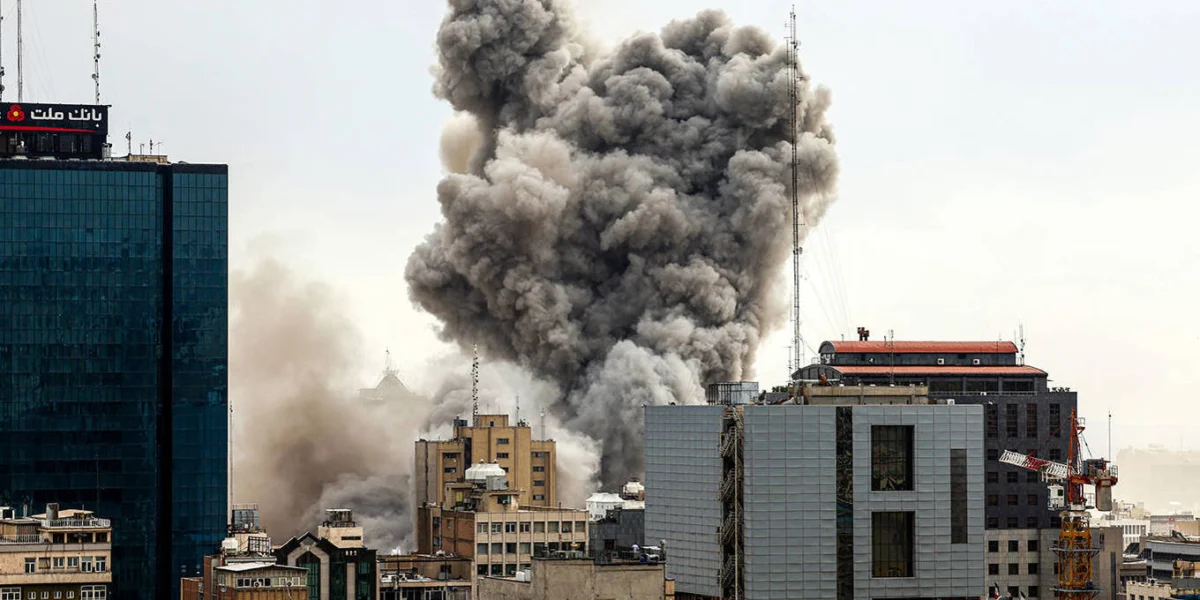
AMHERST – The military campaign launched against Iran, codenamed "Operation Epic Fury" by the Trump administration, has been widely decried by a spectrum of commentators, including some on the political right, as a catastrophic misadventure. Critics have branded it "Operation Epic Fail," highlighting what they perceive as an extravagant squandering of financial resources, advanced military hardware, and invaluable human lives. This assessment stems from the war’s perceived ill-conceived nature and its continually shifting strategic objectives. Simultaneously, a significant consensus among legal scholars and international law observers posits that the operation constitutes a flagrant violation of the United Nations Charter, specifically its core prohibition against the use of military force, except in instances of legitimate self-defense or when explicitly authorized by the UN Security Council. This fundamental divergence between military and political objectives and established international legal norms has ignited a contentious debate regarding accountability for the war’s architects.
The Genesis of Conflict: A Pre-War Landscape
The path to "Operation Epic Fury" was paved with escalating geopolitical tensions and a series of provocative actions and counter-actions between the United States and Iran. For years, diplomatic channels had been strained, marked by mutual accusations of destabilizing activities in the Middle East. The Iran nuclear deal, officially known as the Joint Comprehensive Plan of Action (JCPOA), had been a focal point of contention, with the Trump administration withdrawing the United States from the agreement in May 2018, reimposing stringent sanctions on Tehran. This move was met with widespread international criticism and significantly escalated tensions.
In the subsequent years, a series of incidents further inflamed the situation. These included attacks on oil tankers in the Persian Gulf, the downing of a US drone, and the assassination of Qasem Soleimani, a high-ranking Iranian military official, in a US airstrike in January 2020. Iran’s retaliatory missile strikes on US bases in Iraq, while causing no fatalities, signaled a dangerous escalation. The rationale presented for "Operation Epic Fury," as articulated by the administration, centered on preventing Iran from developing nuclear weapons and curbing its regional influence, which the US characterized as a threat to international peace and security. However, critics argued that these justifications lacked concrete evidence and were pretexts for a broader agenda.
Operation Epic Fury: A Chronology of Escalation and Controversy
The precise timeline of "Operation Epic Fury’s" initiation remains a subject of intense scrutiny. However, publicly available information and intelligence leaks suggest a phased approach, beginning with a series of covert operations and cyberattacks aimed at degrading Iran’s military and economic capabilities. This was followed by a more overt, large-scale deployment of US forces and allied assets in late 2025 and early 2026.
- Late 2025: Reports emerge of increased US military posture in the Persian Gulf and heightened intelligence gathering operations targeting Iran’s defense infrastructure. Unconfirmed reports suggest limited kinetic engagements in the region.
- Early 2026: The Trump administration officially announces "Operation Epic Fury," framing it as a necessary response to ongoing Iranian provocations and a measure to safeguard regional stability. Initial military objectives are vaguely defined, focusing on "degrading Iran’s capacity to threaten its neighbors and international shipping lanes."
- March-April 2026: The scale of the operation expands, with reports of significant airstrikes on Iranian military facilities and alleged WMD sites. Casualties, both military and civilian, begin to be reported, although exact figures remain disputed. The stated objectives of the operation shift, with increasing emphasis on regime change and the dismantling of Iran’s ballistic missile program.
- May 2026: The war enters a more protracted phase, with mounting international condemnation and growing internal dissent within the United States regarding the war’s legality, cost, and efficacy. The initial justifications for the war are increasingly questioned as its objectives appear to become more ambitious and less clearly defined.
Legal Ramifications: The UN Charter and the Crime of Aggression
The legal framework governing the use of force between states is primarily enshrined in the United Nations Charter. Article 2(4) unequivocally states that "All Members shall refrain in their international relations from the threat or use of force against the territorial integrity or political independence of any state, or in any other manner inconsistent with the Purposes of the United Nations." The exceptions to this prohibition are limited: Article 51 permits self-defense in the face of an armed attack, and Chapter VII of the Charter allows for the Security Council to authorize the use of force to maintain or restore international peace and security.
Legal scholars overwhelmingly argue that "Operation Epic Fury" does not meet the stringent criteria for legitimate use of force under the UN Charter. The US administration’s justifications—preventing future threats and countering regional influence—are widely viewed as insufficient grounds for initiating hostilities under international law. The absence of a direct armed attack on the United States or its allies, and crucially, the lack of any authorization from the UN Security Council, place the war firmly in the category of aggressive war.
The concept of "criminal aggression" is a relatively recent development in international law, gaining prominence following the Nuremberg Trials after World War II. The International Criminal Court (ICC) has jurisdiction over the crime of aggression, defined as "the planning, preparation, initiation or execution, by a person in a position effectively to exercise control over or to direct the political or military action of a State, of an act of aggression which, by its character, gravity and scale, constitutes a manifest violation of the Charter of the United Nations."
Challenges to Prosecution: Evidentiary Hurdles and Jurisdictional Debates
Despite the widespread consensus on the illegality of "Operation Epic Fury," prosecuting those responsible presents significant legal and practical challenges.
- Jurisdiction: The United States, while a signatory to the Rome Statute of the ICC, has not ratified it and has historically expressed strong reservations about the Court’s jurisdiction over its nationals. This creates a jurisdictional hurdle, as the ICC’s ability to prosecute US officials is severely hampered unless they are physically present in a state party to the Rome Statute or the Security Council refers the situation to the Court.
- Defining "Manifest Violation": While the violation of the UN Charter appears clear to many, the threshold of "manifest violation" required for the crime of aggression can be subject to interpretation. Proving that the planners knew their actions constituted a manifest violation can be a complex evidentiary challenge.
- Command Responsibility: Establishing individual criminal responsibility requires proving that specific individuals, particularly those in positions of leadership, planned, ordered, or committed acts of aggression. This involves demonstrating their intent and their role in the decision-making process.
- Political Will: Ultimately, any prosecution would require significant political will, both domestically within the US and internationally. Without a clear referral from the UN Security Council or the cooperation of the US government, pursuing legal action against high-ranking officials becomes exceedingly difficult.
Supporting Data and Expert Analysis
Data emerging from the conflict paints a grim picture of its human and economic toll. Reports from independent watchdog organizations indicate that civilian casualties in Iran have reached tens of thousands, with many more injured. The destruction of infrastructure, including hospitals and residential areas, has been substantial. Economically, the war has had a destabilizing effect on global energy markets, leading to price spikes and supply chain disruptions. The estimated financial cost of "Operation Epic Fury" has already surpassed hundreds of billions of dollars, with projections indicating further escalation.
Dr. Evelyn Reed, a professor of international law at the University of Geneva, stated in a recent interview, "The case for aggression is strong. The UN Charter is explicit. The question is not whether it was illegal, but whether the international legal system has the mechanisms and the political will to hold those responsible accountable. The US’s non-ratification of the Rome Statute is a significant impediment, but not an insurmountable one if the political conditions align."
Reactions from Key Parties
- United States Administration: The US administration has consistently defended "Operation Epic Fury" as a necessary and lawful measure to protect national security interests and promote global stability. Official statements have characterized criticisms as politically motivated and lacking in understanding of the complex security challenges in the Middle East.
- Iranian Government: Iran has vehemently condemned the US action as an unprovoked act of aggression and a violation of its sovereignty. Tehran has called for international condemnation and accountability for the perpetrators.
- United Nations: UN Secretary-General António Guterres has repeatedly called for de-escalation and adherence to international law, expressing deep concern over the humanitarian impact of the conflict. However, the Security Council has been largely paralyzed by geopolitical divisions, preventing any decisive action.
- International Legal Community: A broad consensus among international law experts and organizations has emerged, with many issuing statements and reports detailing the likely violations of the UN Charter and international humanitarian law.
Broader Impact and Implications
The ongoing conflict and the debate surrounding its legality have far-reaching implications.
- Erosion of International Law: If powerful states can engage in acts of aggression with impunity, it risks significantly undermining the international legal order and the principles upon which the United Nations was founded. This could embolden other states to disregard international norms.
- Humanitarian Crisis: The immediate and devastating impact on the civilian population of Iran is a stark reminder of the human cost of armed conflict. The displacement of populations, destruction of livelihoods, and long-term health consequences are profound.
- Regional Instability: The war has further destabilized an already volatile region, with potential for broader conflict and the rise of extremist ideologies. The long-term geopolitical consequences are likely to be felt for decades.
- Future of Accountability: The difficulty in holding individuals accountable for the crime of aggression sets a precedent that could hinder future efforts to ensure justice for victims of such conflicts. It highlights the need for stronger international mechanisms and greater political cooperation.
The war in Iran, irrespective of its ultimate outcome, has already left an indelible mark on international relations and the evolution of international law. The legal and moral questions surrounding its initiation and execution will continue to be debated, shaping the discourse on state sovereignty, the responsibility to protect, and the enduring quest for global peace and justice. The challenge now lies in navigating the complex legal landscape to ensure that the principles of international law are upheld, and that accountability, however difficult, remains a tangible pursuit.
