

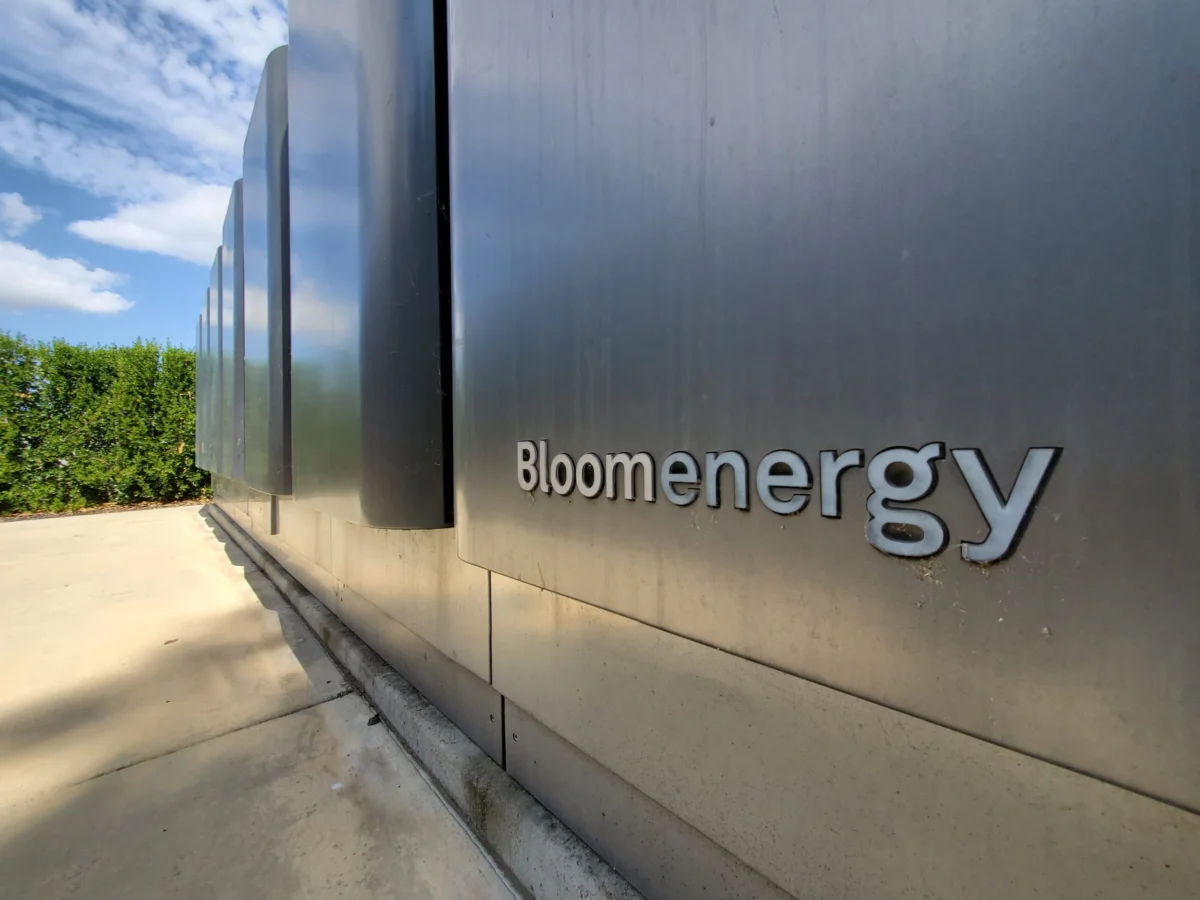
In a landmark move for the burgeoning artificial intelligence sector in Europe, Bloom Energy and the AI cloud provider Nebius have entered into a strategic partnership aimed at solving one of the most significant hurdles in the technology industry: the power constraint. The agreement, valued at up to $2.6 billion in service fees over its lifetime, marks a pivotal shift in how data centers are energized as the demand for high-performance computing (HPC) continues to outpace the capacity of traditional electrical grids. Under the terms of the deal, Bloom Energy will deploy its proprietary fuel-cell technology to provide onsite power for Nebius’s expanding network of data centers, ensuring that the infrastructure necessary for modern AI workloads can be scaled rapidly and sustainably.
The partnership comes at a time when the global "AI arms race" has moved beyond software development and into the physical realm of hardware and energy. As companies like Nebius race to build the "AI factories" of the future, the ability to secure reliable, high-capacity electricity has become a competitive differentiator. The agreement between the San Ramon-based Bloom Energy and the Amsterdam-headquartered Nebius is designed to bypass the lengthy delays often associated with grid connections, which in some European regions can take several years to finalize.
Strategic Framework and Financial Terms
The financial and operational scope of the agreement is substantial, reflecting the high stakes of the AI infrastructure buildout. According to a filing with the U.S. Securities and Exchange Commission (SEC), Nebius will pay Bloom Energy up to $2.6 billion in service fees over the duration of the contract, contingent upon the fulfillment of specific conditions and performance milestones. This "Power-as-a-Service" model allows Nebius to focus on its core competency—providing AI compute capacity—while Bloom Energy handles the complexities of energy generation and management.
The project is structured to roll out in three distinct phases over a 10-year term. The roadmap is designed to scale alongside Nebius’s customer demand, eventually providing approximately 250 megawatts (MW) of guaranteed power capacity. The total installed capacity is expected to reach 328 MW. This tiered approach allows for immediate deployment of power in initial phases while planning for the massive energy requirements of future GPU clusters.
Market reaction to the announcement was immediate and positive. In premarket trading following the news, Bloom Energy’s shares (NYSE: BE) rose by 1.6%, while Nebius’s stock (NASDAQ: NBIS) saw a significant surge of over 7%. Investors view the deal as a validation of Bloom Energy’s solid oxide fuel cell (SOFC) technology as a viable solution for the energy-intensive data center market, and as a sign of Nebius’s aggressive growth trajectory in the European market.
Addressing the AI Power Bottleneck
The primary motivation behind this partnership is the critical shortage of power available to data centers. Andrey Korolenko, Chief Product and Infrastructure Officer at Nebius, emphasized that power remains the "key constraint" for AI infrastructure. Modern AI models, particularly those involved in Large Language Model (LLM) training and generative AI, require specialized chips like Nvidia’s H100 and B200 GPUs. These chips consume significantly more electricity than traditional server CPUs, leading to a surge in power density requirements within data centers.

"We chose Bloom because their fuel cells solve that directly," Korolenko stated. "Clean power with virtually no pollutants is deployed onsite, on the timelines our customers need, with the availability AI workloads require."
By utilizing onsite fuel cells, Nebius can circumvent the "gridlock" currently plaguing European energy markets. In many major data center hubs, such as Frankfurt, London, Amsterdam, and Dublin, the local electrical grids are at or near capacity. New projects often face wait times of five to ten years for a high-voltage grid connection. Bloom’s technology allows for power to be generated at the point of consumption using an electrochemical process that converts fuel—such as natural gas or hydrogen—into electricity without combustion, significantly reducing the time to market for new data center capacity.
Technological Overview: Solid Oxide Fuel Cells
Bloom Energy’s technology centers on its Energy Server platform, which utilizes solid oxide fuel cell technology. Unlike traditional backup generators that rely on diesel combustion, Bloom’s fuel cells generate power through an electrochemical reaction. This process is not only more efficient but also results in significantly lower emissions of nitrogen oxides (NOx), sulfur oxides (SOx), and particulate matter.
For data center operators like Nebius, the reliability of these systems is a major draw. AI workloads are highly sensitive to power fluctuations; even a momentary outage can disrupt a training run that has been ongoing for weeks, costing millions of dollars in compute time. Bloom’s systems provide "always-on" power that can operate independently of the utility grid, offering a level of resiliency that is difficult to achieve with traditional infrastructure alone. Furthermore, as the industry moves toward greener energy sources, Bloom’s technology is "hydrogen-ready," meaning the same equipment can eventually be transitioned to run on 100% green hydrogen as it becomes more widely available.
Chronology of Nebius’s Expansion
The partnership with Bloom Energy is the latest in a series of high-profile moves by Nebius to establish itself as a dominant player in the European AI ecosystem. Formerly part of the Yandex group before a complex divestiture of its Russian assets, Nebius has re-emerged as a pure-play AI infrastructure provider with strong ties to Silicon Valley and European capital.
- March 2024: Nebius secured a $27 billion infrastructure deal with Meta, highlighting its capacity to handle large-scale compute requirements for social media and AI giants.
- Mid-2024: The company announced a $2 billion investment partnership with Nvidia, ensuring a steady supply of the latest Blackwell-architecture GPUs.
- Early 2025: Nebius announced plans to construct the region’s largest AI data center in Finland. This "AI Factory" is expected to have a capacity of 310 MW and is scheduled to begin supplying customers by 2027.
- Present: The Bloom Energy partnership provides the energy backbone for these ambitious expansion plans, ensuring that the physical infrastructure can keep pace with the hardware procurement.
The European Context: Energy Prices and Regulation
Europe presents a unique set of challenges for AI companies compared to the United States. Energy prices in the Eurozone remain significantly higher and more volatile than in North America, driven by geopolitical tensions and the transition away from fossil fuels. Additionally, the European Union’s stringent environmental regulations, including the European Green Deal, place pressure on data centers to prove their sustainability credentials.
The Bloom-Nebius deal addresses these challenges by offering a more predictable cost structure through the 10-year service agreement. While the upfront costs of fuel cell technology can be higher than traditional grid connections, the avoidance of grid-related delays and the potential for higher efficiency provide a compelling total cost of ownership (TCO) for high-end AI providers.

Furthermore, several European municipalities have begun to limit the construction of new data centers due to their strain on local resources. By generating power onsite and maintaining a smaller physical footprint than traditional power substations, Nebius and Bloom may find it easier to navigate local zoning and environmental hurdles.
Broader Implications for the Data Center Industry
This $2.6 billion agreement is likely to serve as a bellwether for the broader data center industry. As the "AI gold rush" continues, other cloud providers and colocation giants—such as Equinix, Digital Realty, and Microsoft—are also exploring alternative energy solutions. The shift toward onsite generation represents a fundamental change in the relationship between tech companies and public utilities.
Industry analysts suggest that we are entering an era of "sovereign power," where tech companies take direct control over their energy supply chains to ensure stability. This trend is not limited to fuel cells; it also includes investments in small modular reactors (SMRs), large-scale battery storage, and direct power purchase agreements (PPAs) with renewable energy developers.
However, the Bloom-Nebius partnership is particularly notable for its scale. A 328 MW deployment is one of the largest single fuel-cell installations in history, signaling that the technology has moved from the pilot phase into large-scale commercial reality. It also positions Bloom Energy as a critical infrastructure partner for the AI age, moving the company beyond its traditional base of retail and commercial customers into the high-growth hyperscale market.
Conclusion and Future Outlook
The collaboration between Bloom Energy and Nebius is more than just a financial transaction; it is a strategic response to the physical limitations of the digital age. By integrating advanced energy generation directly into the heart of AI infrastructure, the two companies are attempting to build a more resilient and scalable foundation for the next generation of technological innovation.
As Nebius continues to scale its capacity across Europe, including its flagship project in Finland, the success of this fuel-cell deployment will be closely watched by competitors and regulators alike. If successful, it could provide a blueprint for how the AI industry can continue its exponential growth while navigating the constraints of a strained global energy grid. For Bloom Energy, the deal provides a long-term revenue stream and a high-profile validation of its technology, potentially opening the door to further multi-billion dollar agreements as the global demand for AI compute shows no signs of slowing down.
