

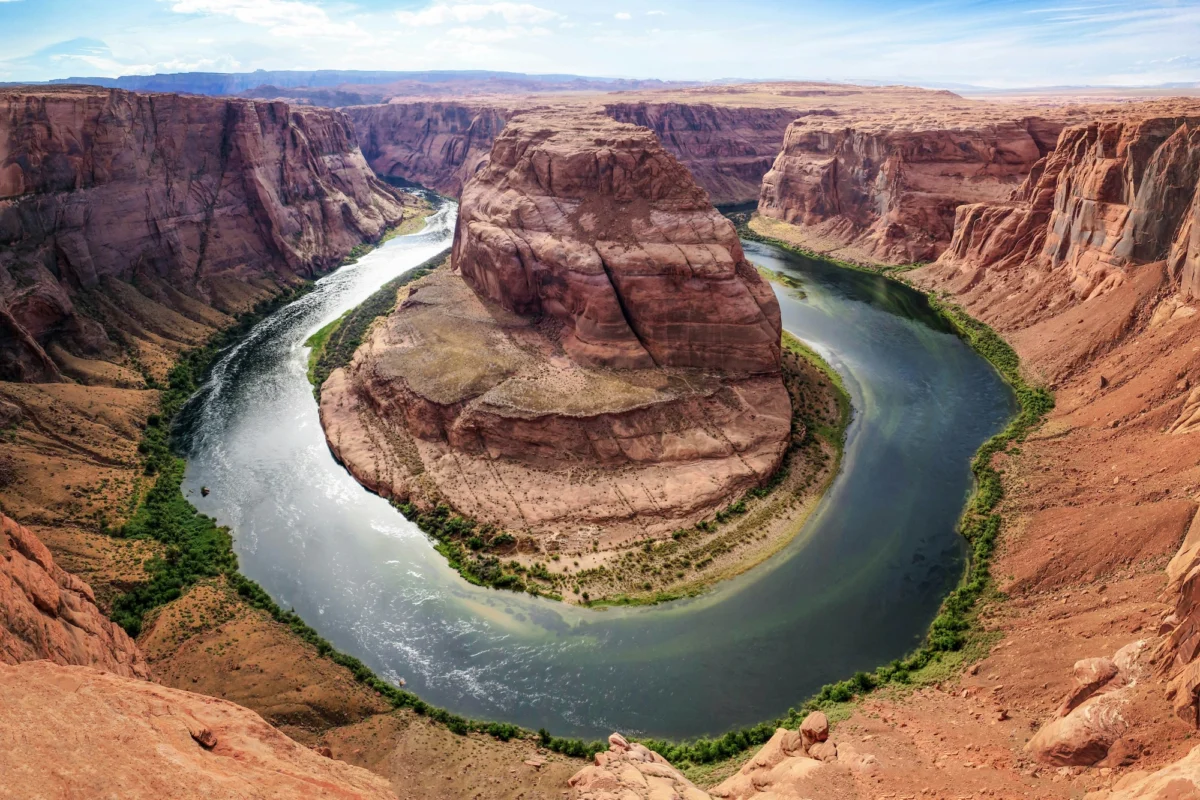
The Colorado River Basin, a vital lifeline for the American Southwest, is currently the site of a high-stakes race between human ingenuity and environmental transformation. As urban centers like Phoenix, Las Vegas, and Denver implement increasingly sophisticated water conservation strategies, a new body of research suggests that these efforts, while successful in the short term, may be insufficient to combat the long-term effects of climate change. The "aridification" of the region—a permanent shift toward a drier climate rather than a temporary drought—is moving at a pace that threatens to overwhelm traditional demand management techniques.
For decades, the primary tool for municipal water managers has been demand management: a suite of policies designed to reduce the amount of water consumed by residents and businesses. These measures include restricting lawn watering, offering rebates for low-flow appliances, and implementing tiered pricing structures that penalize excessive use. However, according to researchers Renee Obringer and Dave White, whose recent study integrated survey data with climate modeling, the reliability of these methods is being eroded by rising temperatures and dwindling river flows.

The Foundation of the Crisis: A Century of Over-Allocation
To understand the current predicament, it is necessary to look back at the legal framework governing the Colorado River. The 1922 Colorado River Compact divided the river’s water among seven states: the Upper Basin (Colorado, New Mexico, Utah, and Wyoming) and the Lower Basin (Arizona, California, and Nevada). At the time, the river’s annual flow was estimated based on an unusually wet period. This "structural deficit" meant that more water was legally promised to stakeholders than the river could realistically provide over the long term.
Over the last century, this deficit has been exacerbated by explosive population growth and the "Millennium Drought," which began in 2000 and has become the driest 22-year period in the region in at least 1,200 years. The Bureau of Reclamation has been forced to issue unprecedented shortage declarations, triggering mandatory cuts in water deliveries to states like Arizona and Nevada. As the 2026 deadline for renegotiating the "Law of the River" approaches, the pressure on urban centers to justify their water use has never been higher.
Chronology of the Colorado River’s Decline
The trajectory of the river’s management reflects a shifting reality from abundance to extreme scarcity:

- 1922: The Colorado River Compact is signed, allocating 15 million acre-feet of water annually, a figure now known to be based on inflated flow data.
- 1944: A treaty with Mexico guarantees the country 1.5 million acre-feet of water annually.
- 1963: The Supreme Court ruling in Arizona v. California confirms the Lower Basin allocations and the Secretary of the Interior’s role as water master.
- 2000: The start of the current megadrought.
- 2019: States sign the Drought Contingency Plan (DCP) to voluntarily reduce use and keep Lake Mead and Lake Powell from reaching "dead pool" levels.
- 2021: The U.S. federal government declares the first-ever official water shortage on the Colorado River.
- 2023: A temporary agreement is reached between Arizona, California, and Nevada to conserve 3 million acre-feet through 2026 in exchange for federal funding.
- 2026: The expiration of current operating guidelines, requiring a total overhaul of how the river is shared in an era of permanent aridification.
Case Studies in Conservation: Las Vegas and Phoenix
Despite the grim outlook, Southwestern cities have become global leaders in water efficiency. Las Vegas, often criticized for its perceived excess, has arguably become the "gold standard" for desert water management. Since 2002, the Southern Nevada Water Authority (SNWA) has reduced per-capita water use by nearly 60%, even as the city’s population surged by over 50%. This was achieved through aggressive policies, including the "cash for grass" program, which pays residents to replace turf with desert landscaping, and the implementation of a system that captures, treats, and returns nearly every drop of indoor water back to Lake Mead.
Phoenix has followed a similar trajectory. The city has achieved a 20% reduction in total water use over the last two decades while accommodating a 40% increase in population. By incentivizing smart irrigation controllers and leak detection, Phoenix has decoupled economic and population growth from water consumption.
However, the new research indicates a "ceiling" to these successes. While these cities have successfully managed "demand," they have no control over "supply." As the atmosphere warms, it becomes "thirstier," evaporating more water from reservoirs and soil before it ever reaches the river. This means that even if every resident in Phoenix reduced their water use by another 25%, the net gain could be entirely cancelled out by upstream flow reductions caused by climate change.

Data Analysis: The Limits of Individual Action
The study by Obringer and White utilized a computer model to simulate future water availability under various emissions scenarios. The findings suggest that under a "moderately high" emissions scenario, the available surface water for Phoenix could drop below historical averages by 2060. Critically, the model showed that even with high participation in conservation programs, the savings were often neutralized by the sheer scale of climate-driven losses.
A significant hurdle identified in the research is the "rebound effect." Often, when cities implement emergency water restrictions during a drought, consumption levels bounce back to previous highs once the immediate crisis passes. To combat this, researchers emphasize the need for "participatory demand management"—changing the fundamental cultural attitude toward water so that conservation becomes a permanent lifestyle rather than a temporary sacrifice. However, even a culture of conservation has physical limits; there is a minimum amount of water required for human health, sanitation, and basic economic function.
Stakeholder Reactions and Economic Implications
The looming shortfall has sparked a range of reactions from different sectors. Agricultural interests, which consume roughly 70% to 80% of the Colorado River’s water, are under intense pressure to fallow land or switch to less water-intensive crops. Farmers in Arizona’s Pinal County have already seen their Colorado River supplies slashed, forcing a return to groundwater pumping, which is unsustainable in the long term.

In the energy sector, the "water-energy nexus" presents a complex challenge. Traditional power plants, including nuclear and coal-fired facilities, require massive amounts of water for cooling. While the transition to solar and wind energy is beneficial for carbon reduction, the transition itself requires careful water planning.
Official responses from state water agencies have been cautious but firm. The Southern Nevada Water Authority has advocated for more aggressive regional cuts, noting that municipal conservation alone cannot save the river. Meanwhile, California, which holds the most senior water rights on the river, has faced criticism from other states for its historical reluctance to take major cuts, though recent agreements suggest a move toward more collaborative sacrifice.
Future Solutions: The Cost of Survival
If demand management is not enough, cities must look toward more expensive and technologically complex "supply-side" solutions. These include:

- Large-Scale Water Reuse: Expanding systems that treat wastewater to potable standards. While effective, these systems require significant infrastructure investment.
- Desalination: This involves removing salt from seawater or brackish groundwater. The Carlsbad Desalination Plant in California serves as a cautionary tale; it cost $1 billion to build—four times the original estimate—and is highly energy-intensive.
- Augmentation and Transfers: Proposals to move water from the Mississippi River or other basins have been largely dismissed as pipe dreams due to astronomical costs and legal hurdles.
- Agricultural Innovation: Investing in drip irrigation and hydroponics for desert farming to reduce the 80% of water currently diverted for crops like alfalfa, much of which is exported as cattle feed.
Broader Impact and Policy Implications for 2026
The research serves as a stark warning for policymakers heading into the 2026 renegotiations. The current strategy of "tinkering at the edges" with municipal conservation may provide a false sense of security. The implications extend beyond the Southwest; the Colorado River Basin produces a significant portion of the nation’s winter vegetables and supports a massive regional economy. A failure to manage the river effectively could lead to "water wars" between states, economic destabilization, and a potential exodus from major desert metropolises.
The study concludes that while demand management is an essential tool, it is not a panacea. The future of the American West will likely require a total reimagining of the relationship between urban development, industrial output, and the natural environment. As climate change continues to outpace policy, the window for a managed transition is closing, leaving only the prospect of more radical, and far more expensive, interventions. The lessons learned in Phoenix, Denver, and Las Vegas will ultimately serve as a blueprint—or a warning—for arid regions around the globe facing a similar reckoning.
