

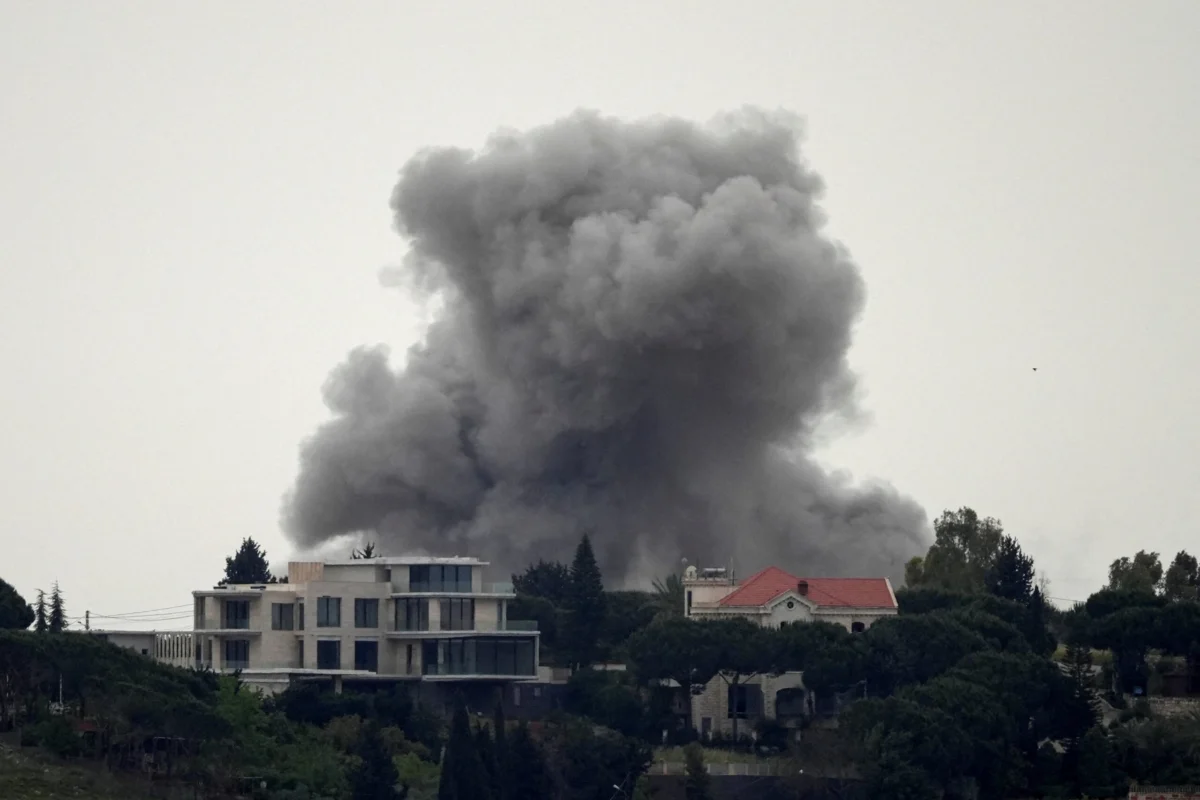
Tehran’s leadership is reportedly projecting an unwavering stance of defiance, vehemently rejecting any public pressure emanating from the United States, as the intricate geopolitical landscape of the Middle East continues to teeter on the brink of wider conflict. This assertion, relayed by Al Jazeera’s correspondent in Tehran, underscores a deepening chasm between the Islamic Republic and Washington, occurring against a backdrop of heightened regional volatility, exemplified by an Israeli strike in Zebdin, Lebanon, on May 18, 2026. The incident in southern Lebanon serves as a stark reminder of the interwoven nature of the region’s conflicts, where Iranian foreign policy, US strategic objectives, and the security imperatives of Israel and its neighbors frequently collide.
The pronouncements from Tehran indicate a regime resolute in its commitment to its established foreign and domestic policies, impervious to external coercion. This defiance is not merely rhetorical; it reflects deeply ingrained ideological convictions and a strategic calculation that capitulation to US demands would undermine the Islamic Republic’s revolutionary principles and its standing as a regional power. For Iranian leaders, US pressure, often manifested through economic sanctions, diplomatic isolation, and military posturing, is perceived as an affront to national sovereignty and an attempt to destabilize the government. This posture has historical roots, dating back to the 1979 Islamic Revolution and the subsequent four decades of often adversarial relations with the West, particularly the United States.
The Standoff in Tehran: Iranian Defiance and US Pressure
The concept of "projecting defiance" in the Iranian context encompasses several dimensions. Firstly, it involves a robust public narrative emphasizing self-reliance, resistance against perceived imperialism, and the legitimacy of Iran’s regional influence. State media and official statements frequently portray the US as an aggressor seeking to undermine the stability of the region and subjugate independent nations. Secondly, defiance translates into tangible actions, such as continued advancements in its ballistic missile program, support for regional proxy groups, and, critically, the ongoing development of its nuclear program beyond the limits set by the Joint Comprehensive Plan of Action (JCPOA), or the 2015 nuclear deal.
US pressure, on the other hand, has primarily revolved around a strategy of "maximum pressure," which has seen the reimposition and expansion of stringent economic sanctions targeting Iran’s oil exports, financial sector, and key industries. The stated goal of this pressure campaign is to compel Iran to negotiate a new, more comprehensive agreement that addresses not only its nuclear activities but also its ballistic missile program and its regional behavior. However, from Tehran’s perspective, this pressure is viewed as an illegitimate attempt to impose a sovereign nation’s foreign policy and is therefore met with staunch resistance. Iranian officials have consistently maintained that dialogue can only occur on equal terms, without preconditions or threats. The current stalemate suggests that neither side has been willing to significantly alter its fundamental approach, leading to a dangerous escalation cycle.
Historical Context: A Legacy of Mistrust and Confrontation
To fully comprehend the current dynamics, it is essential to delve into the historical tapestry of US-Iran relations. The overthrow of the US-backed Shah in 1979 and the subsequent hostage crisis at the US embassy in Tehran fundamentally reshaped the relationship, establishing a foundation of deep mistrust. For Iran, the US became the "Great Satan," a symbol of Western interventionism. For the US, Iran transformed into a revolutionary state challenging regional order and American interests.
The 1980-1988 Iran-Iraq War, during which the US covertly supported Iraq, further solidified Iranian grievances. Decades of sanctions, beginning in the 1980s and intensifying in the 2000s over Iran’s nuclear ambitions, have profoundly impacted the Iranian economy and society. The negotiation of the JCPOA in 2015 offered a brief reprieve, with Iran agreeing to curb its nuclear program in exchange for sanctions relief. However, the unilateral withdrawal of the United States from the agreement in 2018 under a new administration, followed by the re-imposition of sanctions, was perceived by Tehran as a profound betrayal and reinforced the hardliner narrative that the US cannot be trusted. This historical context directly informs the current Iranian leadership’s reluctance to yield to US demands, viewing any concession as a betrayal of national pride and revolutionary ideals.
The Regional Nexus: Israel, Lebanon, and Iran’s "Axis of Resistance"
The Israeli strike in Zebdin, Lebanon, on May 18, 2026, is not an isolated incident but rather a component of a much larger, interconnected regional struggle. Zebdin, a village in southern Lebanon, lies within an area frequently associated with Hezbollah, the powerful Lebanese Shia political party and militant group. Hezbollah, formed in the 1980s with Iranian backing, serves as a cornerstone of Iran’s "Axis of Resistance," a network of allies and proxies aimed at countering US and Israeli influence in the Middle East.
Iran provides Hezbollah with significant financial, military, and logistical support, enabling the group to maintain a formidable military wing, including a vast arsenal of rockets and missiles capable of striking deep into Israel. For Israel, Hezbollah represents a direct and existential threat along its northern border. The two entities have engaged in numerous conflicts, most notably the 2006 Lebanon War, and maintain a constant state of readiness, frequently engaging in cross-border skirmishes, drone incursions, and targeted strikes.
The May 18, 2026 strike in Zebdin likely represents an Israeli response to a perceived threat or a pre-emptive action to degrade Hezbollah’s capabilities. Such operations are typically justified by Israel as necessary measures to protect its citizens from terrorist organizations and to prevent the transfer of advanced weaponry that could alter the regional balance of power. From the Israeli perspective, Iran’s support for Hezbollah directly fuels instability and poses a continuous threat, making Iranian regional behavior an inseparable part of the broader security challenge.
A Chronology of Escalation: Leading to May 2026
The specific date of May 18, 2026, for the Israeli strike in Zebdin suggests a culmination of preceding events. A plausible chronology leading to this incident, inferred from current regional trends and historical patterns, might look like this:
- Late 2024: Diplomatic efforts to revive the JCPOA reach an impasse, with both the US and Iran unable to bridge their fundamental differences regarding sanctions relief and nuclear concessions. Iran announces further reductions in its cooperation with international nuclear inspectors and accelerates uranium enrichment activities to higher purities.
- Early 2025: Increased naval tensions in the Persian Gulf, with incidents involving Iranian Revolutionary Guard Corps (IRGC) vessels and international shipping. Simultaneously, proxy groups aligned with Iran intensify rocket attacks on US bases in Iraq and Syria, leading to retaliatory US airstrikes.
- Mid-2025: Significant cyber-attacks targeting critical infrastructure are reported in both Iran and Israel, attributed by intelligence agencies to state-sponsored actors. Regional rhetoric sharpens, with Iranian leaders reiterating their defiance and Israeli officials warning of impending action against perceived threats.
- Late 2025: Cross-border shelling and drone exchanges between Israel and Hezbollah escalate significantly. A major Hezbollah drone infiltration into northern Israel causes minor damage but signals an alarming increase in capability and intent. Israel responds with targeted strikes against Hezbollah positions within Lebanese territory, but avoids widespread conflict.
- Early 2026: A series of precision missile attacks, attributed by Israel to Hezbollah with Iranian logistical support, targets a sensitive military installation in northern Israel. While casualties are limited, the political pressure on the Israeli government to deliver a decisive response mounts.
- May 17, 2026: Israeli intelligence gathers critical information suggesting an imminent, large-scale operation being prepared by Hezbollah from a specific location in Zebdin, potentially involving advanced weaponry or personnel.
- May 18, 2026: Acting on this intelligence, the Israeli Air Force launches a targeted strike on the identified site in Zebdin, Lebanon, resulting in smoke rising from the area, as captured by news agencies. This strike is presented by Israel as a necessary pre-emptive measure to neutralize an immediate threat.
This sequence of events illustrates a pattern of escalating tit-for-tat actions, diplomatic failures, and increasing militarization, characteristic of the broader regional conflict.
International Reactions and Diplomatic Stalemate
The Israeli strike in Zebdin and the ongoing US-Iran standoff would inevitably trigger a cascade of international reactions, further complicating efforts towards de-escalation.
- Iran: Would vehemently condemn the Israeli strike as an act of state terrorism and a violation of Lebanese sovereignty, blaming the United States for emboldening its regional allies. Iranian officials would likely reiterate their unwavering support for the "resistance" movements in the region and warn of severe consequences for any further aggression. Domestically, this would bolster the narrative of external threats, reinforcing the leadership’s defiant stance.
- United States: While likely affirming Israel’s right to self-defense, the US would express concern over regional escalation and urge all parties to exercise restraint. US officials would likely reiterate calls for Iran to cease its destabilizing activities, including support for proxy groups and advancements in its nuclear program, while also subtly signalling that US patience for a diplomatic solution is wearing thin.
- Israel: Would formally justify the strike as a defensive measure against a clear and present threat from a terrorist organization operating under Iranian influence. Israeli officials would provide intelligence assessments (perhaps partially declassified) to demonstrate the necessity of the action, emphasizing their commitment to protecting Israeli citizens and deterring future attacks.
- Lebanon: The Lebanese government would likely issue a strong condemnation of the Israeli violation of its airspace and sovereignty, appealing to the United Nations and the international community for protection and intervention. Internally, the strike would exacerbate political divisions, with Hezbollah’s allies condemning Israel and the US, while other factions might express frustration over Lebanon being caught in regional power struggles.
- United Nations & European Union: International bodies and European nations would issue calls for immediate de-escalation, renewed diplomatic efforts, and adherence to international law. Concerns would be raised about the humanitarian impact of escalating conflict and the potential for a wider regional conflagration that could destabilize global energy markets and exacerbate refugee crises.
The Broader Implications: A Precarious Regional Balance
The confluence of Iranian defiance, sustained US pressure, and the active conflict between Israel and Hezbollah creates an exceedingly precarious regional balance with profound implications.
- Risk of Wider Conflict: The most immediate concern is the potential for these localized skirmishes and political standoffs to spiral into a full-scale regional war. A significant miscalculation by any party, or an attack with high casualties, could trigger a chain reaction, drawing in multiple state and non-state actors across the Levant and the Persian Gulf.
- Nuclear Proliferation: Iran’s continued advancement of its nuclear program, coupled with its defiant posture, raises serious concerns about nuclear proliferation in the Middle East. Should Iran eventually develop nuclear weapons capability, it could prompt other regional powers to pursue similar programs, leading to an arms race with catastrophic potential.
- Humanitarian Crisis: Any large-scale conflict would inevitably lead to immense human suffering, including civilian casualties, massive displacement, and a severe humanitarian crisis. Lebanon, already grappling with profound economic and political challenges, would be particularly vulnerable.
- Economic Impact: The Middle East is a critical artery for global energy supplies. Any significant conflict in the Persian Gulf or wider region would disrupt oil and gas flows, leading to a sharp increase in global energy prices and potentially triggering a worldwide economic downturn.
- International Diplomacy: The current impasse severely tests the efficacy of international diplomacy. The inability of major powers to find common ground or effectively de-escalate tensions underscores the fragmentation of the global political order and the challenges of multilateral cooperation in addressing complex geopolitical crises.
Future Outlook and Expert Analysis
Analysts generally agree that the current trajectory is unsustainable and carries immense risks. The Iranian leadership, deeply entrenched in its revolutionary ideology, views its defiance as a matter of national survival and dignity. Retreating under pressure is perceived as a sign of weakness that would undermine the regime’s legitimacy both domestically and regionally. Conversely, the US and its allies view Iran’s actions as a fundamental threat to regional stability and international security, particularly its nuclear program and support for proxies.
The path forward is fraught with challenges. A breakthrough would likely require significant concessions from both sides, a scenario that appears increasingly unlikely given the current hardened positions. Some experts suggest that a more robust international diplomatic effort, potentially involving new intermediaries and a revised framework for negotiations that addresses broader regional security concerns, might offer a slim chance for de-escalation. Others contend that only sustained pressure, possibly coupled with a credible military threat, could alter Iran’s calculations, though this approach carries a much higher risk of direct confrontation.
Ultimately, the events of May 18, 2026, in Zebdin, Lebanon, and the ongoing defiance from Tehran against US pressure, serve as potent reminders of the volatile and interconnected nature of the Middle East. The region remains a tinderbox, where historical grievances, ideological clashes, and strategic rivalries intersect, creating a complex web of challenges that demand nuanced understanding and urgent, coordinated international engagement to avert a catastrophic wider conflict. The stakes are profoundly high, not just for the immediate actors involved, but for global stability and prosperity.
