

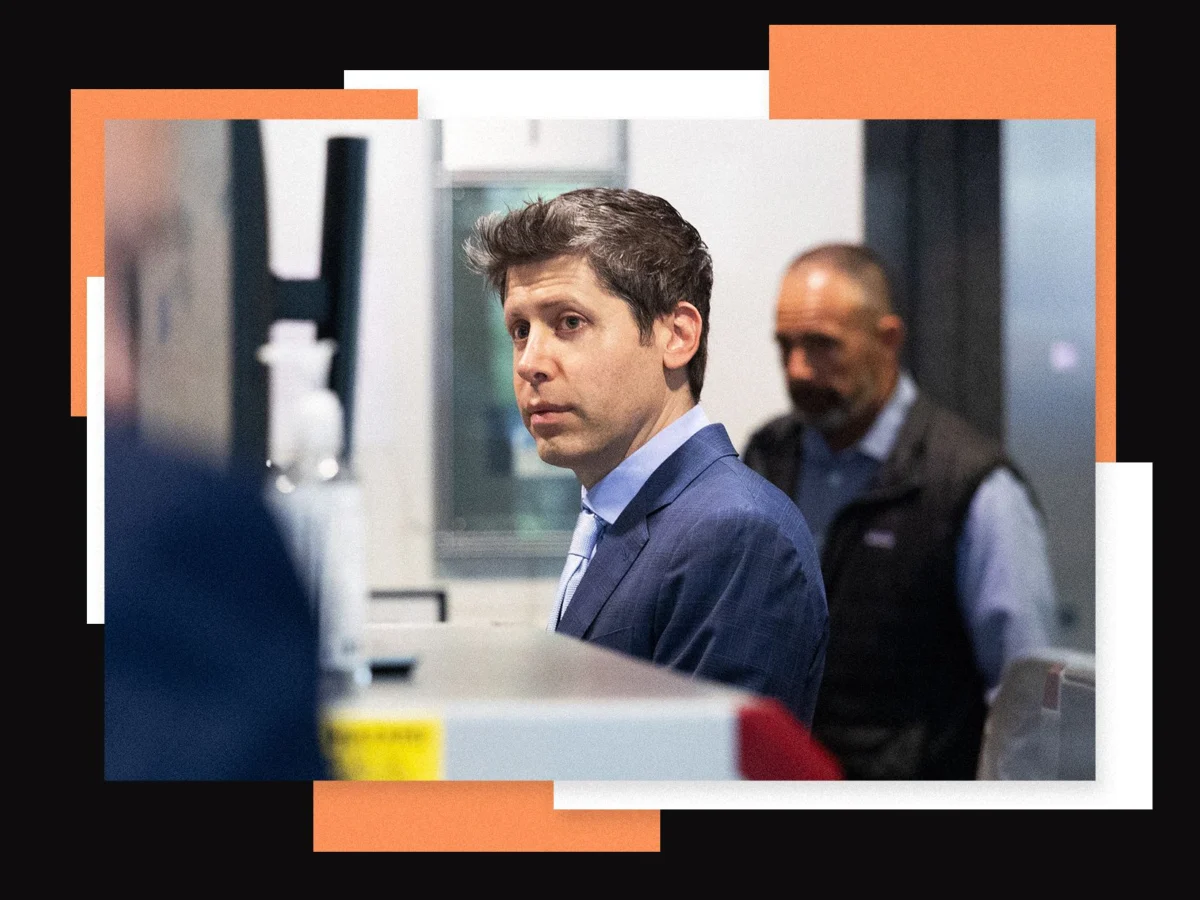
Sam Altman took to the witness stand on Tuesday to defend his professional integrity and the founding mission of OpenAI as the high-stakes legal battle between the organization and its former co-founder, Elon Musk, reached a critical juncture. During several hours of grueling cross-examination, Musk’s legal team sought to portray Altman as a deceptive leader who prioritized commercial gain over the humanitarian goals originally outlined for the artificial intelligence research laboratory. The trial, officially titled Musk v. Altman, represents a defining moment for the AI industry, pitting two of its most influential figures against one another in a dispute over the soul and ownership of what has become one of the world’s most valuable private entities.
The courtroom atmosphere was reportedly tense as Steven Molo, lead counsel for Elon Musk, opened his cross-examination with a direct challenge to Altman’s character. The proceedings served as a vital opportunity for Musk’s side to gain momentum after a series of procedural hurdles. While the legal merits of the case remain centered on contractual and fiduciary obligations, the Tuesday testimony focused heavily on the "court of public opinion," where both sides are fighting to define the narrative of OpenAI’s transition from a small non-profit to a global powerhouse.
The Core Allegations: Charity vs. Commercial Giant
The central thesis of Elon Musk’s lawsuit is that Sam Altman and Greg Brockman, OpenAI’s president, committed a "betrayal" of the organization’s founding principles. Musk’s legal team argues that Altman effectively "stole" the OpenAI charity, leveraging the $38 million in donations provided by Musk during the company’s infancy to build a for-profit business now valued at more than $850 billion. According to Musk, this transition breached a "founding agreement" that mandated OpenAI’s technology remain open-source and dedicated to the benefit of humanity rather than the enrichment of private shareholders and Microsoft, the company’s primary backer.
However, the defense has consistently maintained that no such formal "founding agreement" exists in writing. During Tuesday’s testimony, Altman and Sam Teller, Musk’s former chief of staff, both testified that they had no recollection of Musk ever attaching specific, legally binding conditions to his initial donations. This lack of documentary evidence remains a significant hurdle for Musk’s legal team, even as they attempt to use Altman’s history and communications to suggest a pattern of deceptive behavior.
A Chronology of the OpenAI Conflict
To understand the weight of Tuesday’s testimony, it is necessary to examine the timeline of the relationship between Musk, Altman, and OpenAI. The friction between these parties did not emerge overnight but is the result of nearly a decade of shifting alliances and strategic pivots.
- 2015: OpenAI is founded as a non-profit research lab with the goal of developing artificial general intelligence (AGI) that is safe and beneficial. Elon Musk, Sam Altman, Greg Brockman, and Ilya Sutskever are among the key founders. Musk pledges $1 billion in funding.
- 2018: Musk departs the OpenAI board. Altman testified that this departure followed a power struggle in which Musk allegedly attempted to take control of the organization. Musk’s lawyers argue he left because he saw OpenAI falling behind Google and believed the non-profit structure was no longer viable for the required computing costs.
- 2019: OpenAI creates a "capped-profit" subsidiary, OpenAI Global LLC, to attract the massive capital investment required for large-scale AI models. Microsoft invests its first $1 billion.
- 2022: The release of ChatGPT brings OpenAI into the global spotlight, sparking a massive surge in valuation and a shift toward aggressive commercialization.
- November 2023: The OpenAI non-profit board abruptly fires Sam Altman, citing a lack of "candid" communication. After a chaotic five days and an employee revolt, Altman is reinstated, and the board is largely replaced.
- Early 2024: Elon Musk files his lawsuit, alleging breach of contract and breach of fiduciary duty.
The "Trustworthiness" Interrogation
The most dramatic moments of Tuesday’s trial occurred during Steven Molo’s direct questioning of Altman. Molo’s strategy focused on eroding Altman’s credibility by bringing up past grievances from former colleagues and business partners. The exchange began with a blunt inquiry into Altman’s honesty. When asked if he was "completely trustworthy," Altman replied in the affirmative but acknowledged that, like anyone, there may have been times in his life when he was not perfectly truthful.
Molo pushed further, asking if Altman lied to advance business interests. Altman denied this, even as Molo listed several high-profile figures who have reportedly characterized Altman as untrustworthy. These names included former OpenAI chief scientist Ilya Sutskever, former CTO Mira Murati, and former board member Tasha McCauley. Molo even reached back fifteen years to Altman’s first startup, Loopt, alleging that Altman had misled stakeholders regarding daily active user counts.
Altman remained composed, often evading the most pointed questions by asking for specific citations or claiming he was unaware of the particular allegations. This back-and-forth highlighted the personal nature of the litigation, as Musk’s team seeks to prove that the shift in OpenAI’s mission was driven by Altman’s personal ambition rather than technical or financial necessity.
Financial Conflicts and Congressional Scrutiny
Beyond character assessments, the trial delved into Altman’s extensive web of personal investments and how they intersect with OpenAI’s operations. This line of questioning coincided with news that a U.S. House Oversight Committee has sent a letter to Altman requesting information on potential financial conflicts of interest.
Altman’s testimony confirmed several significant holdings:
- Helion Energy: Altman owns a nearly $2 billion equity stake in this nuclear fusion startup. In 2024, OpenAI struck a deal to purchase energy from Helion, a move that critics argue could personally enrich Altman using OpenAI’s resources.
- Stripe: Altman confirmed a $600 million stake in the payments processor, which handles transactions for OpenAI.
- Reddit and Cerebras: Altman is an investor in both companies, both of which have established commercial agreements with OpenAI.
Altman defended these arrangements, stating that he has been a "great steward" of the organization. He pointed out that the OpenAI non-profit remains one of the most well-funded charities in history, claiming its equity stake in the for-profit arm is worth more than $200 billion. "I do not believe I could have taken any other actions to get $200 billion into a nonprofit," Altman testified, framing the commercial success of the company as the ultimate benefit to the non-profit’s mission.
Musk’s Absence and the "Most Hated Men" Text
Notably, Elon Musk was not present for Altman’s testimony. Flight records indicated that Musk was traveling toward China, reportedly in the company of President Donald Trump. His absence was a sharp contrast to Altman and Brockman’s presence during Musk’s earlier time on the stand.
The trial also brought to light a prophetic text message Musk sent to Greg Brockman just days before the legal proceedings began. In the message, Musk reportedly told Brockman that both he and Altman would soon "be the most hated men in America." This suggests that Musk is well aware of the reputational damage the trial could inflict on all parties involved, regardless of the legal outcome.
Analysis of Legal Implications and Statute of Limitations
Legal experts observing the trial have noted that Musk faces a significant uphill battle. One of the primary defenses raised by OpenAI is the statute of limitations. Musk stopped his donations to OpenAI several years ago and reportedly expressed suspicions about the organization’s direction as early as 2018 or 2019. If the court determines that Musk waited too long to file his claim after becoming aware of the alleged breach, the case could be dismissed regardless of the evidence presented.
Furthermore, the "charitable trust" argument is a complex area of law. Musk’s lawyers must prove that his donations were given under a specific trust that was later violated. Without a signed contract, they are relying on public statements and emails to reconstruct an "implied" contract. OpenAI’s defense has successfully argued so far that the organization’s evolution was a necessary response to the extreme costs of AI development, which were not fully understood in 2015.
Broader Impact on the AI Industry
The outcome of Musk v. Altman will have profound implications for the future of AI governance. If Musk prevails, it could force OpenAI to open-source its most advanced models, such as GPT-4, and potentially restructure its relationship with Microsoft. This would disrupt the current competitive landscape of the AI industry, where proprietary models are the primary source of value.
Conversely, a win for Altman would solidify the "capped-profit" model as a legitimate path for non-profits to scale into global tech leaders. It would also reinforce the power of executives to pivot organizational missions in response to market realities.
As the trial continues, the industry remains focused on the question of whether AGI—a theoretical AI that matches or exceeds human intelligence—can truly be developed within a for-profit framework without compromising safety and public benefit. Sam Altman’s testimony suggests he believes the two are compatible; Elon Musk’s lawsuit argues they are fundamentally at odds.
Altman is expected to return to the stand on Wednesday to face further questioning regarding the 2023 board crisis and his communications with Microsoft CEO Satya Nadella. With billions of dollars and the future of AI at stake, the legal drama in the Musk v. Altman trial is far from over.
