

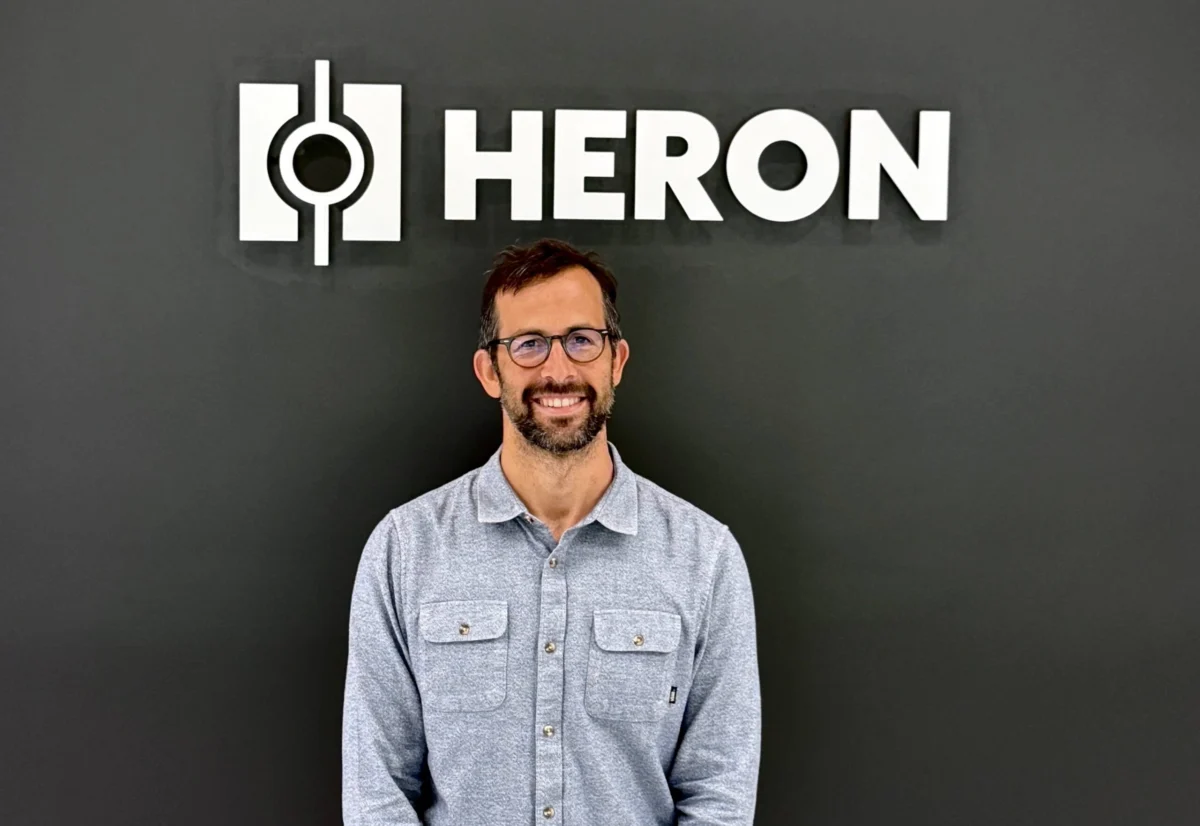
In a move that signals a significant new chapter in the electrification of the home, Drew Baglino, the former Senior Vice President of Powertrain and Energy Engineering at Tesla, has quietly established a new venture focused on heat pump technology. The startup, named Sadi Thermal Machines, represents Baglino’s second major entrepreneurial endeavor since his departure from the electric vehicle giant in early 2024. According to corporate filings in Delaware and California, Sadi Thermal Machines was officially incorporated in June 2025, operating out of the same Scotts Valley, California, headquarters as Baglino’s other recent venture, Heron Power.
The emergence of Sadi Thermal Machines comes at a pivotal moment for the global HVAC (heating, ventilation, and air conditioning) industry, which is currently undergoing a massive transition from fossil-fuel-based heating to high-efficiency, electric-powered heat pumps. By leveraging his nearly two decades of experience at the forefront of battery and thermal management technology, Baglino appears poised to address one of the most significant hurdles in the global energy transition: the decarbonization of residential and commercial buildings.
The Genesis of Sadi Thermal Machines
While specific details regarding Sadi’s product roadmap remain confidential, the company’s name offers a clear indication of its intellectual heritage. Nicolas Léonard Sadi Carnot, the 19th-century French physicist often referred to as the "father of thermodynamics," provides the namesake for the startup. Carnot’s pioneering work on the heat engine and the "Carnot cycle" established the theoretical limits for the efficiency of any thermodynamic system, principles that are directly applicable to the modern heat pump.
Sadi Thermal Machines is not a solitary effort. A review of professional networks and industry sources indicates that Baglino has begun assembling a team of high-level engineering talent, many of whom are alumni of Tesla’s energy and vehicle engineering divisions. This "Tesla Diaspora" effect has historically been a catalyst for innovation in the climate tech sector, as former employees take the rigorous, first-principles engineering approach honed under Elon Musk and apply it to new industrial challenges.
The startup shares its physical footprint with Heron Power, a company Baglino founded to revolutionize the electrical grid through solid-state transformers. In February 2026, Heron Power successfully closed a $140 million funding round intended to scale production. The proximity of these two companies suggests a potential synergy between grid-level power electronics and building-level thermal efficiency, both of which are critical components of a fully electrified economy.
A Legacy of Thermal Innovation at Tesla
To understand the potential impact of Sadi Thermal Machines, one must look at Baglino’s extensive history at Tesla. Joining the company in 2006 as a junior engineer, Baglino rose through the ranks to become one of the most influential figures in the organization. He was a central architect of Tesla’s core technologies, including the original Roadster’s powertrain, the Model S battery architecture, and the large-scale energy storage systems known as Powerwall and Powerpack.
However, it was his work on the Model Y’s thermal management system that most directly foreshadows his current venture. Baglino is credited as a primary inventor on several patents related to advanced heat pump design. Most notably, he led the development of the "Octovalve" system. This innovation was a radical departure from traditional automotive cooling. Instead of using separate systems for the cabin, the battery, and the drivetrain, the Octovalve integrated them into a single, highly sophisticated thermal manifold.
This system allowed the vehicle to "harvest" waste heat from the motors and power electronics to warm the battery or the cabin, significantly increasing efficiency in cold climates. At the time of its release, industry analysts and teardown experts, such as Sandy Munro, hailed the Octovalve as being years ahead of anything produced by legacy automakers. Baglino’s experience in miniaturizing complex thermal systems and making them reliable in the harsh environment of a moving vehicle provides a formidable foundation for reinventing stationary home heating.
The Strategic Shift to Residential HVAC
The concept of a Tesla-branded home HVAC system was a topic of intense speculation for years. During a 2022 earnings call, both Elon Musk and Baglino spoke enthusiastically about the possibility. Baglino noted at the time that the engineering challenges of a residential heat pump were, in many ways, less daunting than those faced in automotive applications. In a car, engineers are severely constrained by weight, volume, and the need to operate across a massive range of ambient temperatures while moving at high speeds. A stationary home unit, by contrast, offers more freedom in terms of physical size and mass.
"From a mission perspective, it’s very aligned," Baglino stated during that 2022 call. "We have learned a lot about how to make capable and reliable heat pumps that work in all environmental conditions… it’s definitely aligned with our mission to accelerate the transition to sustainable energy."
Despite the executive team’s stated interest, Tesla never brought a residential HVAC product to market, focusing instead on scaling the Model 3 and Model Y and launching the Cybertruck. Baglino’s decision to launch Sadi Thermal Machines suggests that he saw an opportunity to fulfill this mission outside the corporate structure of Tesla, potentially moving faster and with more specialized focus than a large automotive company could allow.
The Market Opportunity and Policy Tailwinds
Sadi Thermal Machines enters a market that is ripe for disruption. The global residential heat pump market is projected to reach over $150 billion by 2030, driven by a combination of consumer demand for lower energy bills and aggressive government subsidies. In the United States, the Inflation Reduction Act (IRA) provides significant tax credits and rebates for homeowners who switch to heat pumps, often covering a substantial portion of the installation costs.
The technical challenge in the current market is twofold: efficiency in extreme cold and ease of installation. Traditional heat pumps often struggle when temperatures drop below freezing, requiring expensive "backup" resistive heating elements that consume vast amounts of electricity. Furthermore, the installation of high-efficiency systems often requires specialized labor and significant modifications to existing ductwork or electrical panels.
If Baglino can apply the "software-defined hardware" approach he pioneered at Tesla—using advanced sensors, predictive algorithms, and superior power electronics—Sadi Thermal Machines could produce a unit that maintains high performance in sub-zero temperatures while being simpler to install and maintain than current offerings from incumbents like Daikin, Carrier, or Mitsubishi.
Broader Implications for the Energy Transition
The launch of Sadi Thermal Machines is more than just a new business venture; it is a critical piece of the broader "electrify everything" movement. Buildings currently account for approximately 40% of global energy consumption and a significant portion of greenhouse gas emissions, largely due to space and water heating. Replacing natural gas furnaces and boilers with electric heat pumps is widely considered the most effective way to reduce the carbon footprint of the built environment.
Furthermore, the integration of smart heat pumps into the electrical grid can provide valuable "demand response" capabilities. A fleet of intelligent Sadi heat pumps could theoretically communicate with the grid (perhaps via Heron Power’s transformers) to shift their energy consumption to times when renewable energy is abundant, such as midday when solar production peaks. This would help stabilize the grid and reduce the need for fossil-fuel-burning "peaker" plants.
Timeline of Baglino’s Recent Ventures
- April 2024: Drew Baglino departs Tesla after 18 years, having served as Senior Vice President of Powertrain and Energy Engineering.
- Late 2024: Baglino founds Heron Power, focusing on solid-state transformer technology to modernize the electrical grid.
- June 2025: Sadi Thermal Machines is officially incorporated in Delaware and California.
- February 2026: Heron Power raises $140 million in a major funding round to ramp up production of its grid-altering technology.
- Present: Sadi Thermal Machines continues to operate in "stealth mode," recruiting specialized engineering talent and leveraging the infrastructure shared with Heron Power in Scotts Valley.
Conclusion
While Sadi Thermal Machines has yet to publicly unveil its first product, the pedigree of its founder and the strategic importance of the heat pump market suggest that the company will be a major player to watch in the coming years. By moving from the world of high-performance electric vehicles to the fundamental infrastructure of the home, Drew Baglino is taking his experience in thermal management to its logical conclusion.
The success of Sadi could accelerate the obsolescence of residential gas heating and set a new standard for how we manage temperature in our living spaces. For an industry that has seen relatively incremental improvements over the last several decades, the arrival of a "Tesla-style" innovator could be the catalyst for a radical shift in efficiency, design, and grid integration. As the world moves closer to its net-zero targets, the work being done in the quiet offices of Scotts Valley may soon be felt in homes across the globe.
