

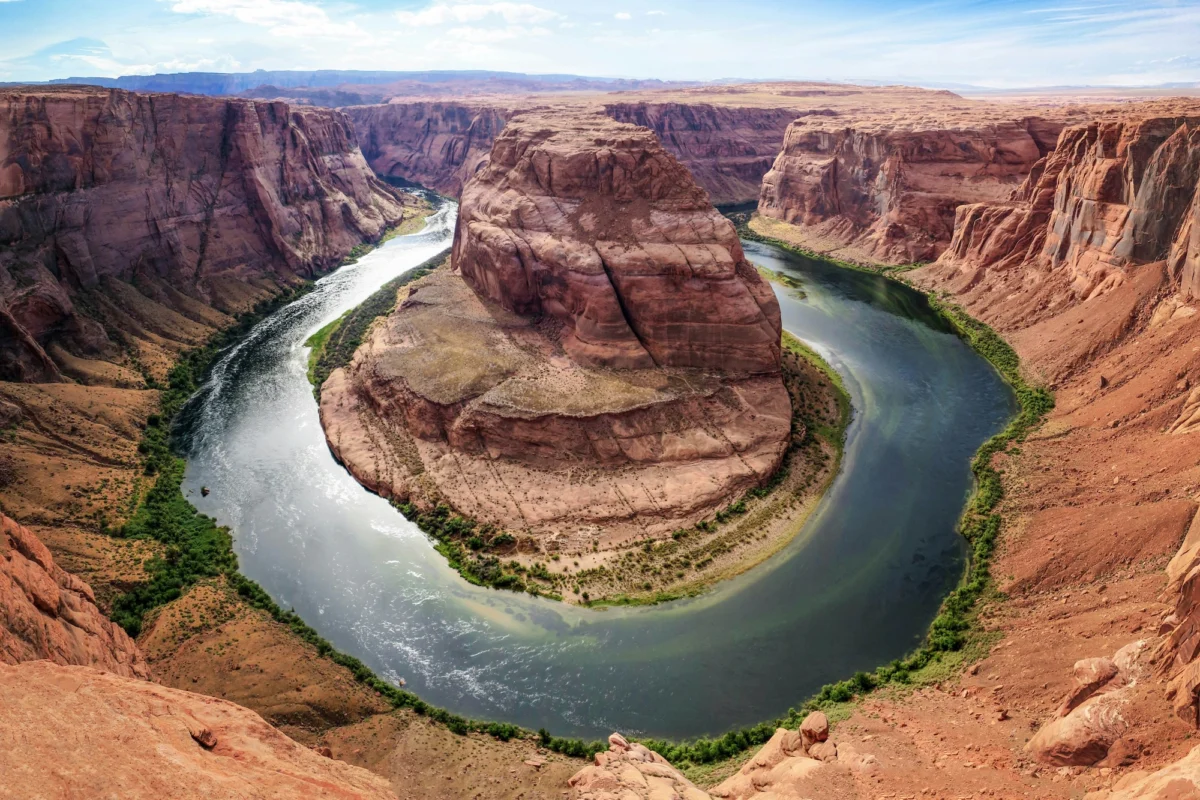
The Colorado River Basin, a critical lifeline for the American Southwest, is facing a transformative crisis that municipal conservation efforts may no longer be able to mitigate. For decades, cities such as Phoenix, Las Vegas, and Denver have been hailed as global leaders in water efficiency, implementing aggressive "demand management" strategies to sustain growing populations on a shrinking resource. However, new peer-reviewed research suggests that the intensifying effects of climate change are now outpacing these behavioral and technological savings. As the region approaches a pivotal renegotiation of the "Law of the River" in 2026, experts warn that the era of relying solely on low-flow toilets and xeriscaping is coming to an end, necessitating a shift toward massive, multi-billion-dollar infrastructure investments and systemic economic realignments.
The Limits of Demand Management in a Warming World
Demand management—the practice of reducing water consumption through policy, technology, and public outreach—has long been the primary tool for urban water managers. In cities like Las Vegas, these efforts have been remarkably successful. Since 2002, the Southern Nevada Water Authority has overseen a nearly 60 percent reduction in per-capita water use, even as the metropolitan population surged by over 500,000 residents. Phoenix has mirrored this success, achieving a 20 percent reduction in total water use over two decades despite a 40 percent increase in population.
These gains were achieved through a combination of "reactive" and "proactive" policies. Reactive policies, such as temporary bans on lawn watering during drought emergencies, provide immediate relief but often suffer from a "rebound effect," where consumption returns to previous levels once restrictions are lifted. Proactive measures, including the permanent replacement of ornamental turf with drought-tolerant landscaping and the implementation of advanced wastewater recycling systems, have proven more resilient.

Despite these achievements, a recent study published in Water Resources Research by a team of climate and infrastructure scientists indicates that these methods are hitting a ceiling. Using sophisticated computer modeling integrated with social survey data, researchers examined the future of Phoenix, Las Vegas, and Denver under various climate scenarios. The results were sobering: under a "moderately high" emissions scenario, even if these cities achieve 100 percent participation in conservation programs, the sheer reduction in river flow due to rising temperatures would cancel out the savings. By 2060, Phoenix’s available surface water supply is projected to drop below historical averages regardless of how much residents conserve.
A Century of Management: The Chronology of the Colorado River
To understand the current crisis, one must look at the legal and historical framework that governs the river. The "Law of the River" is a complex web of compacts, federal laws, and court decrees that began over a century ago.

- 1922: The Colorado River Compact. Representatives from seven states—divided into the Upper Basin (Colorado, New Mexico, Utah, and Wyoming) and the Lower Basin (Arizona, California, and Nevada)—met to divide the river’s water. Crucially, the compact was based on flow data from an unusually wet period, overestimating the river’s annual yield at 17.5 million acre-feet.
- 1944: The Mexican Water Treaty. The U.S. committed to delivering 1.5 million acre-feet of water annually to Mexico, further straining the already over-allocated system.
- 1963: Arizona v. California. A landmark Supreme Court decision settled a long-standing dispute over Lower Basin allocations, paving the way for the construction of the Central Arizona Project (CAP).
- 2000–Present: The Long Megadrought. The basin entered its driest 23-year period in over 1,200 years. Reservoir levels at Lake Mead and Lake Powell plummeted to historic lows, threatening the ability to generate hydroelectric power.
- 2007: Interim Guidelines. The Bureau of Reclamation established formal "shortage triggers," defining when states must take mandatory cuts based on Lake Mead’s elevation.
- 2019: Drought Contingency Plans (DCP). States agreed to deeper, voluntary cuts to prevent the reservoirs from reaching "dead pool" levels, where water can no longer flow through the dams.
- 2023: The Lower Basin Plan. Following a winter of record snowpack, Arizona, California, and Nevada agreed to conserve an additional 3 million acre-feet through 2026 in exchange for federal compensation.
- 2026: The Great Renegotiation. The current operating guidelines expire, forcing the states to draft a new, long-term framework for the river that accounts for a permanently drier future.
Supporting Data: The Scale of the Crisis
The Colorado River is often called the "American Nile." It supports a $1.4 trillion economy and provides drinking water to roughly 40 million people. However, the data shows a system in structural deficit.
The river’s average annual flow in the 20th century was approximately 15 million acre-feet. In the 21st century, that average has dropped to roughly 12 million acre-feet. Meanwhile, the total legal allocations remain at 16.5 million acre-feet. This "structural deficit" means that even in years of average precipitation, the reservoirs lose water.

Furthermore, the agricultural sector accounts for approximately 70 to 80 percent of the water used in the basin. While cities have become more efficient, the vast majority of the water is dedicated to thirsty crops like alfalfa and hay, much of which is exported as cattle feed. In Arizona, for example, municipal use accounts for only about 22 percent of the state’s total water consumption, meaning that even if every resident stopped using water entirely, the state would still face a significant shortage if agricultural use remained unchanged.
Official Responses and the "Conservation Paradox"
Water managers are increasingly vocal about the "conservation paradox," also known as demand hardening. As cities become more efficient, the "easy" water savings disappear. When a city has already replaced all its lawns and installed low-flow fixtures everywhere, it has very little flexibility left to respond to a sudden, acute shortage.

"We have reached a point where behavioral change is a prerequisite for survival, but it is no longer a solution for growth," noted a representative from a regional water planning agency during a recent policy summit. The Bureau of Reclamation has echoed this sentiment, emphasizing that while the $4 billion in funding from the Inflation Reduction Act for Western water resilience is a significant start, it primarily addresses short-term stabilization rather than long-term security.
Environmental groups and tribal nations, who hold senior water rights that were ignored for decades, are also demanding a seat at the table for the 2026 negotiations. "The next iteration of the Law of the River must be based on hydrologic reality, not political fantasy," said a spokesperson for a prominent Western environmental non-profit.

Broader Impact: The Shift to "Supply-Side" Solutions
As demand management reaches its limits, the conversation is shifting toward expensive, supply-side solutions and industrial-scale changes.
- Direct Potable Reuse (DPR): While many cities already use "indirect" reuse (discharging treated wastewater into a river or aquifer before pulling it back out), cities like Phoenix are moving toward DPR. This involves treating wastewater to such a high standard that it can be sent directly back into the drinking water system. This requires massive investments in advanced filtration and reverse osmosis plants.
- Desalination: Long considered a last resort due to its cost and environmental impact, desalination is back on the table. Arizona has explored a multi-billion-dollar proposal to build a desalination plant in Mexico’s Sea of Cortez and trade that water for Mexico’s share of the Colorado River. However, with the Carlsbad plant in California costing $1 billion—four times its initial estimate—the economic feasibility remains a hurdle.
- Agricultural Realignment: There is growing pressure to move away from flood irrigation and water-intensive crops in the desert. This would involve "crop switching" or "fallowing" (paying farmers not to plant), which has profound implications for food security and rural economies.
- The Water-Energy Nexus: Traditional power plants (coal, gas, and nuclear) require enormous amounts of water for cooling. Shifting the region’s energy grid to wind and solar—which use virtually no water—is now being framed as a water conservation strategy as much as a climate strategy.
Fact-Based Analysis of Implications
The implications of these findings are clear: the American Southwest is entering a period of managed retreat from its historical water use patterns. The 2026 renegotiation will likely be the most contentious in history, as Upper Basin states argue they should not be forced to cut use for the benefit of Lower Basin "desert cities," while Lower Basin states point to their senior legal rights and economic output.

The transition from managing a temporary drought to adapting to permanent aridification will require a fundamental rethink of urban development. If conservation can no longer offset the loss of river flow, cities may be forced to implement "water neutral" growth policies, where new developments are only permitted if they can prove they will not increase the city’s total water footprint.
Ultimately, the Colorado River crisis serves as a global bellwether. If some of the most water-efficient cities in the world cannot conserve their way out of a climate-driven shortage, it suggests that the global approach to water security must move beyond the tap and toward the very foundations of how we build, eat, and power our civilization. The coming decade will determine whether the Southwest remains a viable hub of American life or becomes a cautionary tale of the limits of human ingenuity in the face of a changing climate.
