

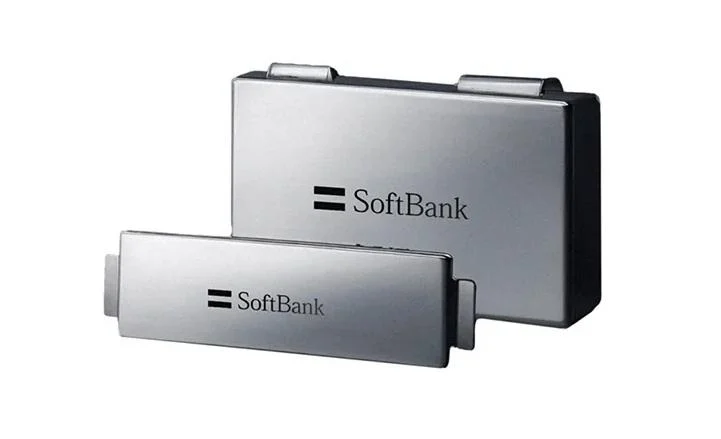
SoftBank Group, the Japanese investment behemoth led by Masayoshi Son, has officially announced the launch of a dedicated battery business subsidiary designed to manufacture advanced battery cells and large-scale energy storage systems (ESS). This strategic pivot aims to address the critical power constraints currently facing the global artificial intelligence (AI) sector, specifically focusing on the massive electricity requirements of next-generation data centers. By integrating hardware manufacturing with its existing digital infrastructure, SoftBank intends to secure a foundational role in the AI value chain, transitioning from a pure-play investment firm into an integrated industrial powerhouse.
The initiative represents a multi-billion dollar commitment to Japan’s domestic manufacturing capabilities. SoftBank has outlined an ambitious roadmap that targets the achievement of mass production on a gigawatt-hour (GWh) scale by the 2028 fiscal year. Furthermore, the company has set a bold financial benchmark, aiming for annual revenues exceeding ¥100 billion (approximately $635 million) from its domestic battery operations by the fiscal year ending in March 2031.
The Osaka Hub: Repurposing Industrial Legacy for the AI Age
Central to SoftBank’s strategy is the transformation of the former Sharp Corporation factory site in Sakai, Osaka. Once a symbol of Japan’s dominance in the liquid crystal display (LCD) and television markets, the facility is being repurposed into a state-of-the-art industrial complex consisting of two primary components: the AX Factory and the GX Factory.
The "AX Factory" (AI Transformation) will serve as the primary operational hub for SoftBank’s AI data centers and related hardware manufacturing. This facility will house the massive compute clusters required for training large language models (LLMs) and running complex inference tasks. By co-locating data centers with manufacturing units, SoftBank aims to minimize logistical overhead and create a closed-loop system where energy production and consumption are tightly integrated.
The "GX Factory" (Green Transformation) will be the dedicated site for the production of next-generation batteries, solar panels, and ancillary energy products. SoftBank expects the GX Factory to begin pilot manufacturing of battery cells and storage systems in the fiscal year ending March 31, 2028. The site is strategically located to leverage existing industrial infrastructure and a skilled local workforce, facilitating a faster transition to high-volume production.
Breaking the Lithium Monopoly: Zinc-Halogen Technology
A cornerstone of SoftBank’s new venture is its partnership with South Korea-based battery innovator Cosmos Lab. Together, the companies are developing zinc-halogen battery cells, a technology that SoftBank believes will outperform traditional lithium-ion batteries in stationary storage applications.
Unlike lithium-ion batteries, which rely on volatile organic electrolytes and rare metals like cobalt and nickel, zinc-halogen batteries utilize pure water as an electrolyte. This fundamental difference eliminates the risk of thermal runaway—the chemical fire hazard that has plagued lithium-ion installations. For data center operators, safety is a paramount concern, as a single fire in a battery array could compromise billions of dollars in computing hardware and disrupt critical digital services.
According to technical specifications released by the partnership, these zinc-halogen batteries are non-flammable and highly stable, yet they achieve energy efficiency levels equal to or greater than current lithium-ion technologies. Furthermore, the use of zinc—a globally abundant and relatively inexpensive material—reduces the supply chain vulnerabilities associated with lithium and cobalt mining. SoftBank and Cosmos Lab aim to establish mass production technology for these cells by 2027, with the goal of becoming the global standard for data center energy storage.
Strategic Collaboration with DeltaX
While Cosmos Lab focuses on the chemistry of the cells, SoftBank has partnered with AI firm DeltaX to design the energy storage systems (ESS) that will house these cells. DeltaX will provide the sophisticated software and power management systems required to balance the intermittent nature of renewable energy with the constant, high-intensity load of an AI data center.
The collaboration with DeltaX is intended to produce high-energy-density storage solutions that are specifically optimized for "AI loads." Data centers housing thousands of GPUs, such as Nvidia’s H100 or Blackwell chips, experience sudden and massive spikes in power demand. Traditional storage systems are often unable to discharge power quickly enough to compensate for these surges without degradation. The SoftBank-DeltaX systems are being engineered to handle these specific performance profiles, ensuring that the "brains" of the AI infrastructure never face a brownout.
The AI Power Crisis: Context and Necessity
SoftBank’s move into the energy sector is a response to an looming energy crisis in the technology world. As AI adoption accelerates, the demand for electricity is reaching unprecedented levels. According to recent estimates by the International Energy Agency (IEA), the electricity consumption of data centers globally could double by 2026, reaching over 1,000 terawatt-hours (TWh)—an amount roughly equivalent to the total electricity consumption of Japan.
The surge in demand is driven by the energy intensity of AI chips. A single AI query can require ten times the electricity of a standard Google search. As companies like SoftBank, Microsoft, and Google build out massive "sovereign AI" clusters, the existing power grids in many regions are proving inadequate. In Japan, where energy security has been a persistent challenge since the 2011 Fukushima disaster, the need for domestic, stable, and clean energy solutions is particularly acute.
SoftBank’s statement emphasized this broader mission: “Through this business, SoftBank will actively promote initiatives to ensure a stable supply of electricity and enable efficient energy utilization while contributing to the development of next-generation power infrastructure in Japan.”
Financial and Economic Implications
The ¥100 billion revenue target by 2030 underscores SoftBank’s belief that energy storage will become as lucrative as the data services themselves. For SoftBank Group, which has faced volatility in its Vision Fund investments over the past several years, this move into hard infrastructure and manufacturing represents a shift toward more tangible, asset-backed growth.
Analysts suggest that by controlling the energy supply, SoftBank can offer "AI-as-a-Service" at a more competitive price point. If SoftBank can lower the cost of power through domestic manufacturing and advanced battery chemistry, it can significantly reduce the operational expenses of its data centers, which currently spend up to 40% of their budgets on electricity.
The project also aligns with the Japanese government’s "Green Transformation" (GX) policy, which provides subsidies and tax incentives for companies investing in decarbonization and domestic semiconductor supply chains. SoftBank’s GX Factory is expected to be a major beneficiary of these national initiatives, potentially securing government backing to offset initial capital expenditures.
Timeline of Development
The rollout of SoftBank’s battery business follows a structured timeline designed to scale alongside the growth of the AI market:
- 2024-2025: Research and development phase for zinc-halogen cell chemistry and ESS architecture in collaboration with Cosmos Lab and DeltaX.
- 2026: Finalization of the AX and GX Factory layouts at the Sakai site.
- FY2027: Commencement of pilot production for zinc-halogen battery cells and energy storage systems.
- FY2028: Achievement of mass production on a GWh-per-year scale; integration of storage systems into SoftBank’s domestic data center network.
- FY2030: Expansion of the business to external clients and reaching the ¥100 billion annual revenue milestone.
Industry Reaction and Broader Impact
The announcement has sent ripples through both the tech and energy sectors. Industry experts view SoftBank’s entry into battery manufacturing as a direct challenge to established players like Tesla (with its Megapack) and Chinese giants like CATL and BYD. However, by focusing on zinc-halogen technology rather than lithium-ion, SoftBank is carving out a niche that prioritizes safety and domestic supply chain security over the high energy density required for electric vehicles.
Environmental advocacy groups have cautiously welcomed the move, noting that zinc-based batteries are significantly easier to recycle and have a lower environmental footprint than lithium-based alternatives. However, some market observers remain skeptical about the speed at which SoftBank can scale a hardware manufacturing business from scratch, given its historical focus on software and platform investments.
Conclusion: A New Chapter for SoftBank
SoftBank’s foray into the battery business marks a definitive end to its era as a mere "gatekeeper" of capital. By building the factories that will power the AI revolution, Masayoshi Son is positioning his firm to control the literal and figurative current of the digital age. As the AX and GX Factories rise in Osaka, they will serve as a litmus test for whether a software-focused conglomerate can successfully master the complexities of heavy industrial manufacturing. If successful, SoftBank may not only solve its own energy needs but also provide the blueprint for the sustainable, AI-driven infrastructure of the 21st century.
