

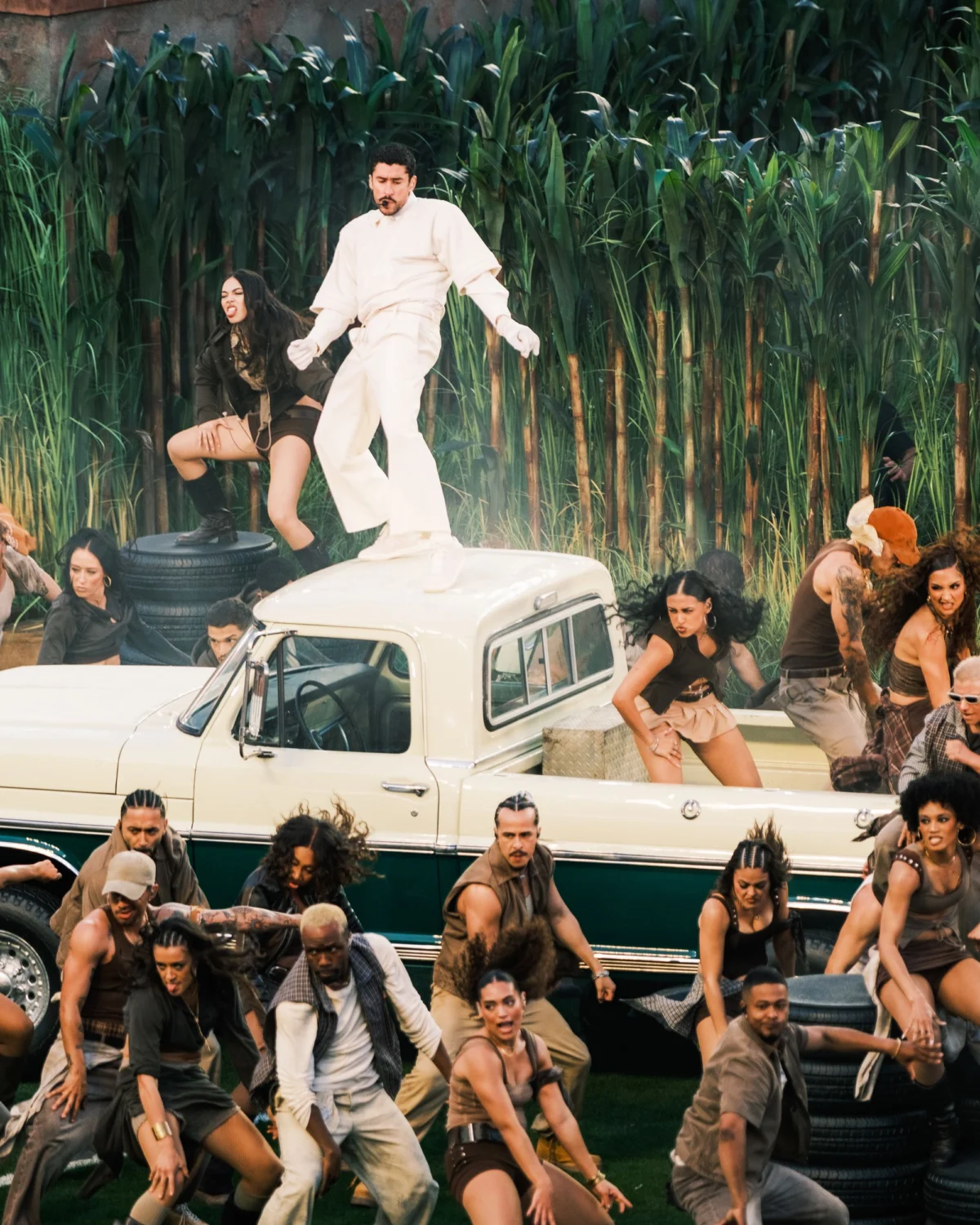
The Super Bowl halftime show has historically served as a high-stakes stage where pop culture, commercial interests, and national identity converge. However, the most recent performance headlined by Puerto Rican global superstar Bad Bunny has sparked a level of domestic controversy that mirrors the deepening cultural and political divisions within the United States. While the performance shattered viewership records, drawing an unprecedented global audience, it also triggered a wave of formal complaints to the Federal Communications Commission (FCC). According to documents obtained via a Freedom of Information Act (FOIA) request by WIRED, the agency received 2,155 complaints from viewers across the country, many of whom cited concerns ranging from the use of the Spanish language to perceived indecency in choreography and lyrics.
The scale of the backlash, while significant in tone, exists in stark contrast to the massive commercial success of the event. Data released by the NFL, Apple Music, and Roc Nation—the production company led by Shawn "Jay-Z" Carter—indicates that the performance was watched more than 4 billion times across broadcast television, YouTube, and various social media platforms. On the primary broadcast alone, more than 128 million people tuned in, making it one of the most-watched musical events in television history. The show featured a high-concept tribute to Caribbean culture, including a cameo from Maria Antonia Cay, the proprietor of Brooklyn’s iconic Caribbean Social Club, and a surprise appearance by Lady Gaga. Despite this global acclaim, a vocal segment of the domestic audience found the performance’s cultural and political assertions to be a bridge too far.
The Anatomy of the FCC Complaints
The FCC, which is tasked with regulating interstate and international communications by radio, television, wire, satellite, and cable, serves as the primary repository for viewer grievances regarding broadcast standards. An analysis of the 2,155 complaints filed in the wake of the Super Bowl reveals a concentrated geographic and thematic pattern. The highest volume of complaints originated from Texas, Florida, and California—states with significant Hispanic populations and high-stakes political discourse regarding immigration and cultural integration.
The complaints were largely categorized into three primary themes: linguistic frustration, moral objections to "vulgarity," and political grievances. According to the data, 919 complaints specifically named Bad Bunny, while 735 mentioned the use of the Spanish language. Furthermore, 497 complaints utilized the word "vulgar" to describe the performance. The linguistic aspect proved to be a major flashpoint; many viewers expressed frustration that a quintessentially American sporting event featured a halftime show primarily performed in a language other than English. Some complainants admitted they did not understand the lyrics in real-time but sought out translations later, leading to retroactive outrage over the content of the songs.
One viewer from Indiana noted that while they were initially confused by the performance, their subsequent research into the translated lyrics led them to file a formal complaint regarding what they perceived as explicit content. This sentiment was echoed by parents who claimed their children, who are fluent in Spanish, were exposed to "inappropriate" themes that non-Spanish speakers might have missed during the live broadcast.
Choreography and the Debate Over Indecency
Beyond the linguistic divide, a significant portion of the grievances focused on the physical nature of the performance. Bad Bunny, known for his embrace of "perreo"—a style of dance deeply rooted in reggaeton culture characterized by grinding and rhythmic pelvic movements—was accused by some viewers of simulating sexual acts on live television.
A complainant from Leighton, Alabama, provided a detailed critique, stating that the dancers engaged in "intense grinding, hip thrusting, and twerking" that mirrored the suggestive nature of the lyrics. The viewer argued that the camera work exacerbated the issue, capturing "close-ups of suggestive contact and pelvic motions" that were unsuitable for a general audience. The presence of same-sex dancers also drew specific ire; approximately 30 complaints highlighted two men dancing together, with one viewer from Winstead, Connecticut, labeling the depiction as "inappropriate sexual innuendo" and "not okay when there are children watching."
The debate over what constitutes "indecency" on broadcast television is a long-standing one in American law. Under current FCC guidelines, "indecent" content is defined as material that, in context, depicts or describes sexual or excretory organs or activities in terms patently offensive as measured by contemporary community standards for the broadcast medium. However, the threshold for a violation is notoriously high, especially during live events where broadcasters are granted some leeway for "fleeting" occurrences.
Political Polarization and Immigration Rhetoric
The controversy surrounding Bad Bunny’s performance was not limited to the aesthetic or the auditory; it was deeply entangled with the current American political climate. Even before the singer took the stage, MAGA influencers and conservative commentators voiced opposition based on Bad Bunny’s previous public statements criticizing U.S. Immigration and Customs Enforcement (ICE).
This political tension manifested clearly in the FCC filings. One viewer from Yakima, Washington, characterized the broadcast as an "illegal immigrant takeover to taunt ICE." Another viewer from Raleigh, North Carolina, erroneously claimed there were "illegals" on the screen, despite the fact that Bad Bunny (Benito Antonio Martínez Ocasio) was born in Puerto Rico and is, by law, a natural-born U.S. citizen.
The influence of organized political rhetoric was also evident in the formatting of the complaints. At least 30 of the filings concluded with the phrase, "Thank you for your attention to this matter," a sign-off frequently associated with templates provided by political action groups or social media influencers. This suggests that a portion of the "outrage" was a coordinated effort to pressure the FCC and the NFL into a defensive posture regarding their choice of talent.
Official Responses and Regulatory Findings
In the days following the February event, the rhetoric moved from social media to the halls of government. Several Republican lawmakers publicly called for the FCC to launch a formal investigation into the NFL and NBC, the network responsible for the broadcast. These officials argued that the broadcast violated federal decency standards and failed to protect younger viewers from explicit content.
In response to these demands, FCC Commissioner Anna Gomez took the step of reviewing the transcripts and footage of the performance. Her conclusion, however, was a definitive rejection of the claims of illegality. Speaking to Reuters, Gomez stated, "I reviewed them carefully, and I found no violation of our rules and no justification for harassing broadcasters over a standard live performance."
This regulatory dismissal highlights the gap between public perception of "offensiveness" and the legal definition of "obscenity" or "indecency." While thousands of viewers found the performance distasteful, the FCC determined that it did not cross the legal line that would warrant fines or sanctions. Neither NBC nor representatives for Bad Bunny provided formal comments in response to the volume of complaints, though the artist has historically been vocal about his refusal to compromise his cultural identity or language for the sake of mainstream American comfort.
Historical Context and Broader Implications
To understand the magnitude of the Bad Bunny controversy, it is helpful to compare it to previous halftime shows. In the preceding year, Kendrick Lamar’s performance drew 125 complaints, a fraction of the number received for Bad Bunny. The complaints against Lamar were largely centered on right-wing criticisms regarding Diversity, Equity, and Inclusion (DEI) initiatives, with some viewers alleging a "lack of white people" in the performance.
The jump from 125 complaints for Lamar to over 2,000 for Bad Bunny suggests that the combination of language, immigration politics, and overt Latin Caribbean expression strikes a particularly sensitive nerve in the current American zeitgeist. It also reflects a broader shift in the NFL’s strategy. Since partnering with Roc Nation in 2019 to oversee the league’s musical entertainment, there has been a concerted effort to diversify the halftime show lineup to reflect a more global and multicultural audience.
This strategy has proven to be a commercial juggernaut. By tapping into the massive global fanbase of artists like Bad Bunny, the NFL has expanded its reach far beyond the traditional American football demographic. The 4 billion total views reported for the show indicate that while 2,155 Americans felt strongly enough to complain to the government, hundreds of millions of others embraced the performance as a landmark cultural moment.
As the United States continues to grapple with its changing demographics and the "culture wars" that dominate its media landscape, the Super Bowl halftime show will likely remain a primary site of friction. The Bad Bunny incident underscores a fundamental tension in American broadcasting: the struggle to balance the demands of a diverse, globalized entertainment market with the traditionalist expectations of a segment of the domestic audience. For now, the FCC’s ruling stands as a testament to the legal protections afforded to artistic expression on the national stage, even when that expression challenges the linguistic and cultural status quo.
