

The romanticized vision of global exploration, often summarized by Hans Christian Andersen’s famous adage, "To travel is to live," frequently overlooks the logistical friction of linguistic barriers. For the modern traveler, the reality of navigating a foreign landscape often involves high-stakes communication in environments where English is not the primary tongue, such as a midnight taxi ride through the winding streets of Gyeongju, South Korea. While basic smartphone applications have significantly lowered the barrier to entry for cross-cultural communication, a new generation of dedicated handheld and wearable translation hardware is redefining the boundaries of international travel and professional interaction.
The Evolution of Translation Technology: From Phrasebooks to Real-Time AI
The trajectory of travel communication has undergone a radical transformation over the last century. For decades, the gold standard was the printed phrasebook—a static, often cumbersome tool that required travelers to hunt for specific sentences while local speakers waited with varying degrees of patience. The digital revolution of the early 2000s introduced electronic pocket dictionaries, but these remained limited by pre-programmed databases and a lack of syntax comprehension.
The true paradigm shift occurred with the advent of Neural Machine Translation (NMT). Unlike older statistical models that translated word-for-word, NMT uses deep learning to understand the context and nuance of entire sentences. Today, the ubiquity of smartphones allows travelers to access platforms like Google Translate, Apple Translate, and DeepL, which offer instant text and voice translation for hundreds of languages, ranging from Abkhaz to Zulu. However, as travel becomes more immersive, the limitations of smartphone-based translation—such as battery drain, the need for a constant internet connection, and the social awkwardness of passing an expensive device back and forth—have paved the way for specialized hardware.
The Rise of Dedicated Handheld Translators
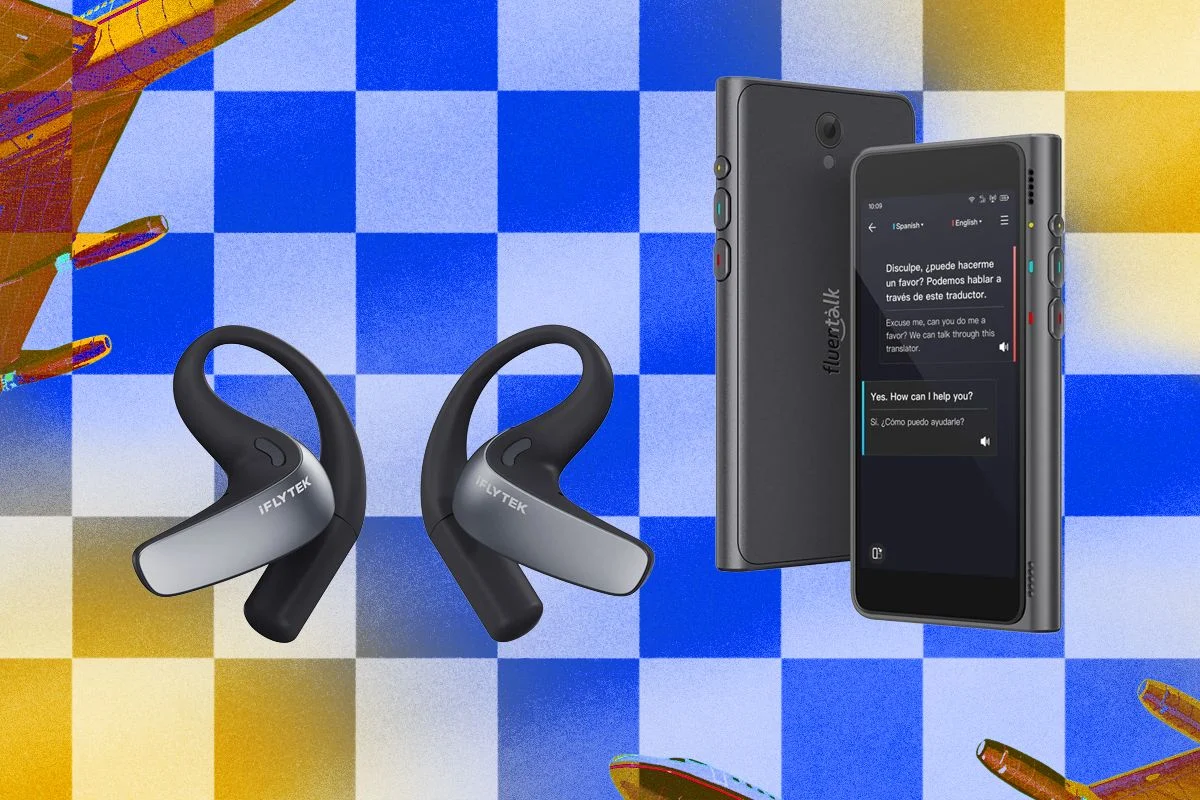
Handheld translators are stand-alone devices engineered specifically for sustained, voice-based conversations. Unlike a smartphone, which serves a multitude of distracting purposes, these devices are optimized for audio clarity, microphone sensitivity, and dual-user interfaces. Many modern units feature split-screen displays, allowing two people to see their respective translations simultaneously without rotating the hardware.
The value proposition of a dedicated device extends beyond simple convenience. Utilizing separate hardware preserves a smartphone’s battery for navigation and photography. Furthermore, these devices often offer superior security; a traveler may feel more comfortable handing a specialized $250 translator to a stranger than a $1,000 smartphone containing sensitive personal data.

Connectivity remains a critical factor in the efficacy of these tools. While smartphone apps often struggle in "dead zones," many handheld translators come equipped with global eSIMs, providing pre-loaded data plans that function in dozens of countries without additional roaming fees. For off-the-grid adventures, high-end translators support extensive offline language packs, ensuring that communication remains possible even in the most remote regions.
Comparative Analysis of Leading Translation Hardware
The current market for translation hardware is divided into three primary categories: stand-alone handhelds, wearable earbuds, and AI-driven companion devices. Based on five years of rigorous testing by industry experts, three models have emerged as the benchmarks for performance and reliability.
1. The Stand-Alone Standard: Timekettle T1
The Timekettle T1 represents the pinnacle of the stand-alone handheld category. Designed for portability, it features a 4-inch touchscreen and a dual-button interface that facilitates two-way dialogue. Its primary innovation is the split-screen UI, which allows two users to view translations in their native scripts in real-time.
Technical Specifications and Performance:
- Connectivity: Includes a global eSIM with two years of free service, followed by a $50 annual subscription.
- Offline Capabilities: Supports 31 offline language pairs, including 10 involving English.
- Imaging: Features an 8-megapixel camera for translating menus and signs.
- Limitations: The compact screen can make reading long passages of text difficult, and cellular signal gaps can occur in indoor environments, though Wi-Fi serves as a reliable backup.
2. The Immersive Experience: iFLYTEK AI Translation Earbuds
Earbud-based translators represent the industry’s shift toward "naturalistic" communication. These devices, such as the 12-gram on-ear models from iFLYTEK, allow users to maintain eye contact and engage in hands-free dialogue. One earbud is worn by the traveler and the other by the interlocutor, with an intermediary smartphone app handling the processing.
Technical Specifications and Performance:

- Operation: Fully hands-free; the AI detects when a user is speaking and delivers the translation directly into the other person’s ear.
- Speed: Translations are delivered with near-zero latency, mimicking the experience of having a professional interpreter present.
- Limitations: These devices currently lack an offline mode, requiring a consistent internet connection via a paired smartphone.
3. The Hybrid Utility: InnAIO T10
The InnAIO T10 serves as a bridge between a translation device and a professional productivity tool. This screenless, disc-shaped device utilizes MagSafe technology to clip onto the back of a phone, serving as both an AI notetaker and a translator.
Technical Specifications and Performance:
- Functionality: Records, transcribes, and summarizes meetings while providing real-time translation.
- Cost Structure: Retails for approximately $189, but requires a $179 annual subscription for unlimited real-time translation (the free tier is limited to 120 minutes per month).
- Innovation: Recently updated to include an offline mode, making it more versatile for international business travelers.
Supporting Data: The Global Translation Market
The demand for these devices is supported by a burgeoning global translation market. According to industry data, the machine translation market was valued at approximately $800 million in 2022 and is projected to exceed $1.5 billion by 2030, growing at a CAGR of 7.1%. This growth is driven by the recovery of international tourism and the increasing globalization of the workforce.
Furthermore, accuracy studies indicate that NMT engines now achieve "human-parity" scores in common language pairs like English-Spanish or English-French, though they still face challenges with high-context languages or regional dialects. The integration of Large Language Models (LLMs) into these devices is expected to further improve the handling of slang, idioms, and technical jargon.
Official Responses and Professional Applications
While leisure travelers are the primary demographic, professional sectors are increasingly adopting handheld translators. First responders and medical professionals have noted that these devices are invaluable in emergency situations where a human interpreter is not immediately available. "In a trauma situation, every second counts. Having a device that can accurately relay symptoms and medical history in a language the patient understands is a game-changer," noted one emergency medical technician in a recent field report.
Educational institutions and international corporations are also integrating these tools into workshops and family reunions, where multi-lingual participants must collaborate over extended periods. For these users, the ability of a device to provide "sustained" translation—rather than the "one-and-done" nature of a phone app—is the deciding factor.

Broader Impact and Ethical Implications
The proliferation of real-time translation hardware has profound implications for global culture. On one hand, it democratizes travel, allowing individuals to visit regions they might have previously avoided due to language anxiety. It fosters empathy and connection between strangers who would otherwise remain silent.
However, some sociologists warn of a "digital crutch" effect. As translation becomes effortless, the motivation to learn foreign languages may diminish, potentially leading to a loss of the deep cultural insights that only come through linguistic study. There are also privacy considerations; as these devices record and process audio in the cloud, the security of the data and the consent of the parties involved remain topics of ongoing debate among tech ethicists.
Future Outlook
The direction of the industry points toward even more seamless integration. Industry analysts predict that translation technology will eventually migrate from handhelds and earbuds into Augmented Reality (AR) glasses, where translated text will appear as subtitles in the user’s field of vision. Until then, the current generation of handheld and wearable translators remains the most effective tool for bridging the gap between "traveling" and truly "living" in a foreign land. For the frequent traveler, the investment in a dedicated translator is no longer a luxury, but a fundamental component of the modern travel kit.
