

The fragile ceasefire between the United States and Iran remains in effect as of May 10, 2026, despite a surge of regional volatility that has seen a significant escalation of Israeli military activity in Lebanon and a stern diplomatic warning from Tehran regarding maritime security. While direct hostilities between Washington and Tehran have paused under the terms of a recently negotiated truce, the underlying tensions continue to simmer, exacerbated by an Israeli airstrike in the Lebanese village of Saksakieh that claimed the lives of at least 24 people. The dual developments—a precarious peace in the Persian Gulf and intensifying carnage in the Levant—highlight the complex and interconnected nature of Middle Eastern security dynamics in the second quarter of 2026.
Intensifying Conflict in Southern Lebanon
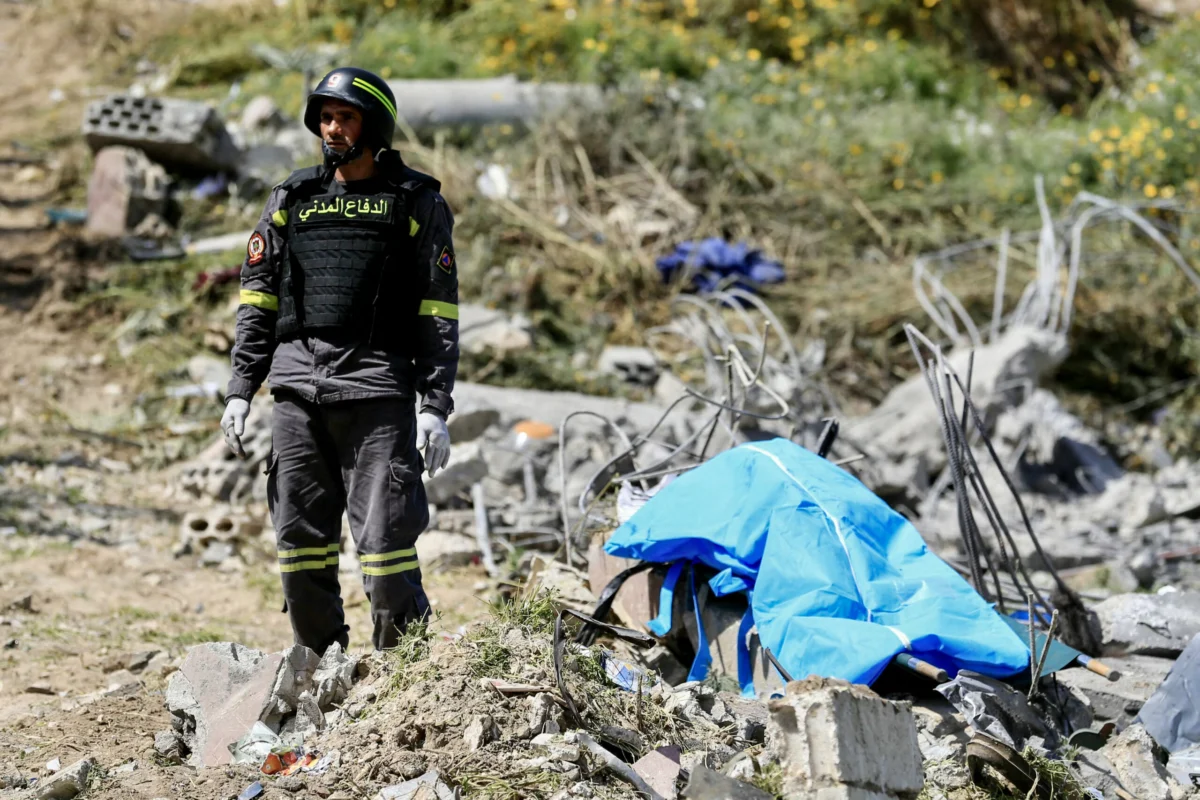
The humanitarian situation in Lebanon took a catastrophic turn on May 9 and into the early hours of May 10, as Israeli Defense Forces (IDF) conducted a series of high-intensity airstrikes across the southern part of the country. The most lethal of these strikes occurred in Saksakieh, a coastal village located in the Sidon District. According to Lebanese health officials and first responders on the scene, the strike targeted a residential cluster, resulting in the immediate death of 24 individuals, many of whom were reported to be women and children.
Rescuers spent the night of May 9 clawing through the concrete rubble of collapsed apartment buildings. Images from the scene depicted civil defense workers placing remains into body bags as neighbors looked on in a state of shock. The Lebanese Ministry of Public Health characterized the incident as a "massacre of civilians," noting that the area was densely populated with families who had recently fled from villages further south near the border.
The IDF, in a brief statement, maintained that its operations are directed at "terrorist infrastructure and operational hubs" utilized by armed groups to launch projectiles into northern Israel. However, the high civilian toll in Saksakieh has drawn sharp condemnation from regional actors and international human rights organizations, who argue that the frequency of strikes in residential areas constitutes a violation of international humanitarian law. This latest incident brings the total number of casualties in Lebanon over the past week to over 150, as the conflict shows no signs of transitioning toward a diplomatic resolution.
The State of the US-Iran Ceasefire
In contrast to the active theater of war in Lebanon, the direct military standoff between the United States and Iran has entered a phase of uneasy quiet. The ceasefire, brokered in late April 2026 following a series of high-stakes skirmishes in the Persian Gulf and drone strikes on regional bases, appears to be holding at the tactical level. There have been no reported exchanges of fire between U.S. Navy assets and Iranian Revolutionary Guard Corps (IRGC) fast-attack craft for twelve consecutive days.
However, the diplomatic rhetoric emanating from Tehran suggests that this "negative peace" is highly conditional. On May 10, the Iranian Ministry of Foreign Affairs issued a formal communiqué warning Washington against any interference with Iranian oil tankers or commercial shipping vessels. The warning follows intelligence reports suggesting that the U.S. Department of Justice might seek to seize Iranian petroleum shipments deemed to be in violation of standing international sanctions.
Tehran’s statement was explicit: "Any act of piracy or unlawful aggression against the sovereign assets of the Islamic Republic of Iran, including our commercial fleet in international waters, will be met with a decisive and reciprocal response. The ceasefire is not a license for economic warfare." This development underscores the reality that while the missiles have stopped flying, the economic and maritime dimensions of the confrontation remain unresolved.
Chronology of Regional Escalation: 2025–2026
The current state of affairs is the culmination of a protracted period of regional destabilization that began in mid-2025. To understand the gravity of the May 10 situation, a review of the timeline is essential:
- October 2025: Tensions spiked following the breakdown of back-channel nuclear negotiations in Oman. Iran announced an acceleration of its uranium enrichment program, leading to increased U.S. naval presence in the Sea of Oman.
- January 2026: A series of "shadow war" incidents occurred, including cyberattacks on regional energy grids and the mysterious limpet mine targeting of three commercial tankers near the Strait of Hormuz.
- March 2026: Israel expanded its northern campaign against Lebanese-based militants, citing an "existential threat" from precision-guided missile stockpiles. This led to a massive displacement of civilians in Southern Lebanon.
- April 15, 2026: A direct confrontation occurred between U.S. MQ-9 Reaper drones and Iranian air defense systems over the Persian Gulf, leading to a 48-hour window of kinetic exchanges.
- April 28, 2026: Through the mediation of Swiss and Qatari diplomats, a "De-escalation Framework" (the current ceasefire) was signed between Washington and Tehran to prevent a full-scale regional war.
- May 9-10, 2026: The Saksakieh strike in Lebanon kills 24, while Iran issues its "tanker warning," threatening the stability of the April 28 agreement.
Economic Data and Maritime Implications
The threat to tankers has immediate and tangible effects on global markets. Following Tehran’s warning on May 10, Brent Crude futures saw a 2.4% uptick, trading at $94.15 per barrel, as traders priced in the risk of renewed disruptions in the Strait of Hormuz—a chokepoint through which approximately 20% of the world’s total oil consumption passes.
Shipping insurance premiums for vessels transiting the Persian Gulf have remained at "war risk" levels, which are approximately 15% higher than the 2024 average. Maritime security firms have advised commercial operators to maintain "heightened vigilance" and have reported an increase in GPS jamming incidents in the region, a tactic frequently attributed to electronic warfare units operating along the Iranian coastline.
In Lebanon, the economic toll is equally devastating. The United Nations Development Programme (UNDP) estimates that the ongoing strikes have caused over $4.2 billion in infrastructure damage since the start of the year. The destruction of agricultural land in the south and the displacement of over 1.2 million people have pushed the Lebanese economy, already fragile, toward a state of total collapse.
Official Responses and Diplomatic Maneuvering
The international community has reacted with a mix of caution and alarm to the weekend’s events.
United States: A spokesperson for the National Security Council stated that the U.S. remains committed to the de-escalation framework but emphasized that "maritime security and the enforcement of international sanctions are non-negotiable." The White House has avoided direct comment on the Saksakieh strike, instead reiterating Israel’s "right to defend itself against proxy threats."
Iran: Iranian President Ebrahim Raisi, speaking at a televised event in Tehran, lauded the "resilience of the resistance" in Lebanon and warned that the "patience of the Islamic Republic should not be miscalculated." He linked the security of the Persian Gulf directly to the cessation of "Zionist aggression" in Lebanon and Gaza.
Lebanon: The caretaker Prime Minister of Lebanon called for an emergency session of the UN Security Council, describing the Saksakieh strike as a "war crime." He urged the international community to decouple the Lebanon conflict from the broader US-Iran standoff to prevent the country from being used as a "geopolitical chessboard."
United Nations: Secretary-General António Guterres issued a statement through his spokesperson expressing "deep concern" over the high civilian casualties in Lebanon and the "bellicose rhetoric" regarding maritime routes. He called on all parties to exercise maximum restraint to prevent a "total regional conflagration."
Analysis: The Interconnected Risks of a Brittle Peace
The events of May 10, 2026, illustrate a dangerous paradox: while the primary actors (the U.S. and Iran) have recognized that a direct war would be mutually assured destruction, they remain locked in a cycle of indirect confrontation. The "tanker warning" serves as a reminder that Iran views its maritime leverage as its most potent counter-sanction tool. If the U.S. moves to seize Iranian oil, the ceasefire in the Gulf will likely evaporate within hours.
Simultaneously, the violence in Lebanon acts as a constant "spoiler" for diplomatic efforts. As long as Israel continues to conduct high-casualty strikes like the one in Saksakieh, the domestic pressure on Tehran to authorize its regional allies to escalate will increase. This creates a feedback loop where local tragedies in Lebanese villages have the potential to trigger global energy crises.
The "De-escalation Framework" of April 28 was intended to be a stepping stone toward a broader regional grand bargain. However, without a mechanism to address the conflict in Lebanon or the economic grievances of Tehran, the ceasefire remains a temporary tactical pause rather than a sustainable peace. The coming days will be critical; if another tanker is intercepted or if another high-casualty strike occurs in Lebanon, the progress made in late April may be entirely undone, pushing the Middle East back to the precipice of a multi-front war.
As of Sunday evening, the skies over Beirut remain filled with the sound of surveillance drones, and the waters of the Gulf are patrolled by wary navies, both sides waiting to see who will make the next move in this high-stakes game of regional brinkmanship.
