

Among the more common arguments against robust enforcement of the Foreign Corrupt Practices Act (FCPA) – or even against its very existence – is that it puts American corporations operating abroad at a disadvantage. This perspective, often voiced by industry leaders and echoed in some political circles, suggests that compliance with stringent anti-bribery laws hinders American businesses’ ability to compete effectively in markets where corruption is prevalent. However, Martin J. Weinstein of Cadwalader, Wickersham & Taft LLP, posits a compelling counterargument: playing by the rules, as mandated by the FCPA, actually provides U.S. companies with a superior and more sustainable foundation for competing on their merits. This perspective challenges the notion that bribery is an effective or even viable competitive strategy, arguing instead that adherence to ethical business practices fostered by the FCPA ultimately strengthens American enterprise on the global stage.
The ongoing debate surrounding the FCPA’s impact on American business competitiveness gained renewed attention following a recent speech by the U.S. Attorney for the Southern District of New York. This prosecutor criticized the premise of the FCPA, articulating a familiar complaint: aggressive U.S. anti-bribery enforcement, it is argued, places American companies at a disadvantage overseas. This sentiment saw a notable surge in traction following a February 2025 executive order from President Donald Trump, which directed the Department of Justice (DOJ) to pause FCPA prosecutions. While enforcement has since resumed, the underlying concern articulated in the executive order and amplified by various stakeholders continues to resonate within certain business and political factions.
This critique, however, often treats bribery as a workable competitive strategy, a notion that, in practice, proves to be far more of an unpredictable impediment than an advantage. Bribery frequently inflates project costs, distorts fair competition, and can transform a seemingly "cheap" deal into a significantly more expensive and precarious undertaking over time. More fundamentally, this viewpoint misses a crucial aspect of the FCPA’s impact: the law has often served American businesses well, not in spite of its constraints, but precisely because of them. By rewarding companies that compete on quality and reliability, the FCPA strengthens trust in U.S. brands, safeguards workers and shareholders from the fallout of corruption-driven enterprises, and reinforces a fundamental expectation that deals are secured through legitimate merit rather than illicit payoffs.
Genesis of the FCPA: Globalization and a Crisis of Trust
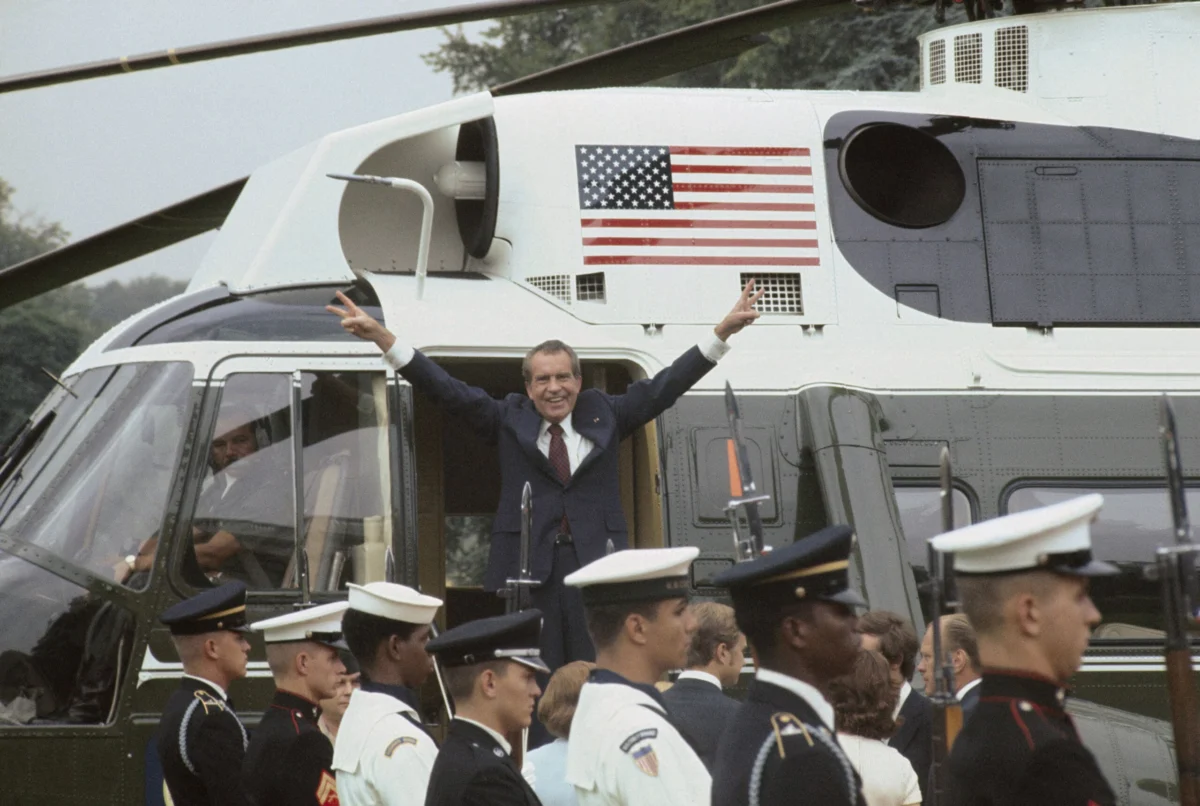
The Foreign Corrupt Practices Act was enacted by Congress in 1977, emerging in the wake of a series of high-profile bribery scandals involving U.S. companies operating internationally. These revelations came to light in the turbulent aftermath of the Watergate scandal, a period that exposed a broader pattern of corporate malfeasance. What began as an investigation into illegal domestic political contributions connected to President Richard Nixon’s reelection campaign quickly unearthed a more extensive corporate practice: the use of slush funds and off-the-books accounts to move money without proper oversight.
The Securities and Exchange Commission’s (SEC) subsequent investigations revealed the staggering scope of this problem. Nearly 400 U.S. companies had employed these clandestine financial mechanisms not only for questionable domestic political activities but also for illicit foreign payments, including bribes to overseas officials. At the time, bribery was a disturbingly common practice. In some countries, including Germany and France, companies were even permitted to treat certain overseas bribes as tax-deductible business expenses. However, the primary concern for Congress transcended the mere existence of bribery; it was the deliberate concealment of these activities through falsified accounting, the disguise of payments via intermediaries, and the deliberate withholding of crucial information from investors. Lawmakers feared that this pervasive blend of corruption and obfuscation would erode confidence in corporate disclosures and create significant foreign policy complications for the United States.
Following considerable debate, Congress passed the FCPA, a landmark piece of legislation significant for two primary reasons. Firstly, it became the inaugural statute to explicitly prohibit the bribing of foreign officials to secure or retain business. Secondly, it imposed stringent accounting and internal control requirements on publicly traded companies, compelling them to maintain accurate financial records and implement robust controls designed to prevent and detect illegal payments.
In many respects, the FCPA was a direct product of an increasingly interconnected global economy. By the 1970s, a growing number of American companies were expanding their operations abroad, engaging with a complex web of agents, distributors, and joint ventures. Supply chains were becoming longer and significantly more challenging to monitor. As cross-border business activities expanded, so did the opportunities to conceal improper payments through opaque transactions and the use of intermediaries. This made bribery both harder to prevent and detect, and amplified its consequences. The risk was no longer confined to the company making the payment; it extended to investors relying on accurate financial reporting, employees working within compromised systems, and the broader public’s confidence in the legitimacy of major U.S. business operations.
The law also reflected the broader socio-political climate of its era. Emerging in the shadow of Watergate, the FCPA represented Congress’s response not only to corporate corruption but also to a profound crisis of trust in American institutions. It was shaped by deep-seated concerns about corporate morality and the perception of American businesses and markets on the global stage. At a time when the United States sought to project an image of stability and leadership, Congress was keen to ensure that U.S. companies were not associated with bribery overseas. In this context, the FCPA served as a powerful statement about the type of economic power the United States aspired to wield.
This proactive stance is a key reason why the FCPA has become so influential globally. For many years, it stood as the sole law of its kind. However, what began as a domestic response to corporate bribery eventually set the standard for anti-corruption enforcement far beyond U.S. borders, inspiring other nations to adopt similar legislation and contributing to the development of international anti-corruption frameworks. While the FCPA has been a source of controversy since its inception, its core premise remains powerful: for the United States to lead in global markets, its businesses must operate credibly, with discipline, and be worthy of trust.
The Hidden Costs of Corruption: A Drag on Global Business
A significant flaw in the argument that the FCPA diminishes U.S. competitiveness lies in its flawed assumption that bribery is an efficient and profitable business practice. In reality, the opposite is frequently true. While bribery might appear to secure a contract in the short term, it invariably introduces a cascade of downstream costs. These include project delays, inflated pricing, weak oversight, substandard workmanship, increased political exposure, and, inevitably, severe legal and reputational repercussions. This inherent inefficiency is a primary reason why anti-corruption advocates consistently characterize bribery as a significant drag on economic growth.
The economic toll of corruption is staggering. The United Nations has estimated that the global cost of corruption drains over $2.6 trillion annually, with bribes alone accounting for nearly $1 trillion. This combined figure represents approximately 5% of global Gross Domestic Product (GDP). For businesses, the message is unequivocal: corruption does not eliminate obstacles or reduce costs; it merely postpones them, often with amplified repercussions.
A deal secured through improper payments is inherently laden with unpriced risk from its inception. Changes in leadership, increased regulatory scrutiny, or counterparties demanding further concessions can quickly destabilize and ultimately dismantle such arrangements. Even when a project proceeds, bribery fundamentally distorts the market’s quality-assessment mechanisms. Contracts are awarded not to the most reliable or capable bidder, but to the party most willing to engage in illicit payments. Consequently, projects initiated on the basis of personal connections rather than demonstrable capability are far more prone to underperformance. What might appear as a competitive advantage on paper can, over time, morph into an exceptionally costly failure. Indeed, estimates suggest that corruption can increase the cost of doing business globally by as much as 10%.
China’s Belt and Road Initiative (BRI) offers a compelling real-world illustration of these hidden costs. Launched by President Xi Jinping in 2013, the BRI was presented as a monumental development and connectivity project, financed by substantial Chinese lending and investment across Asia, Africa, and Latin America. However, many BRI projects have come to exemplify the significant downsides of prioritizing scale and speed over transparency and accountability. A considerable number of BRI infrastructure projects have been implicated in a range of problems, from corruption allegations to labor rights violations.
A pertinent example is Ecuador’s Coca Codo Sinclair Dam. Constructed by the Chinese company Sinohydro and financed by billions of dollars in Chinese loans, this hydroelectric dam was intended to address Ecuador’s energy needs. Yet, within two years of its completion, thousands of cracks were reported, raising serious concerns about the dam’s structural integrity. The project was also subsequently entangled in multiple bribery investigations involving officials linked to the deal, including the former anti-corruption official tasked with overseeing the project, who was reportedly recorded discussing Chinese bribes. This project underscores the central point: what may have initially appeared as a more economical or expedited deal ultimately resulted in poor construction quality and costs that resurfaced later in the form of expensive repairs and ongoing structural issues.
Corruption’s Destructive Impact on Local Economies
Another critical aspect often overlooked in the critique of the FCPA is that the costs of corruption do not solely burden the companies involved. In many instances, these costs fall even more heavily on the host countries where these deals are consummated, particularly in resource-rich nations that may lack robust institutions or effective checks against abuse. This phenomenon is intrinsically linked to what economists refer to as the "resource curse"—a situation where a country possessing valuable natural resources fails to translate those assets into lasting economic benefits due to significant value being siphoned off through corruption and weak governance.
There is emerging evidence suggesting that foreign anti-bribery enforcement can play a role in disrupting this detrimental cycle. One academic study found that following an increase in FCPA enforcement in the mid-2000s, economic activity rose in the vicinity of African extraction sites operated by firms subject to the FCPA. Concurrently, local perceptions of corruption declined. The intent here is not to suggest that the FCPA can unilaterally rectify weak governance abroad; it cannot. However, it can make it more challenging for foreign companies to participate in corrupt arrangements that ultimately leave host countries worse off and their markets more fragile. Over the long term, markets that are more stable and less susceptible to corruption are not only more beneficial for local communities but also more conducive to companies seeking to establish and sustain business operations.
The Persistence of Critique: Misconceptions and Realities
The enduring nature of the criticism leveled against the FCPA is understandable. In markets where corruption is deeply ingrained, the FCPA can indeed appear as a significant constraint, effectively removing a readily available shortcut for securing business. If a competitor is willing to pay bribes while a U.S. company adheres to the law, the FCPA can seem to create a short-term competitive disadvantage. However, this framing conflates a mere shortcut with a genuine competitive advantage. The fact that bribery might secure a deal in the immediate moment does not guarantee better projects or more durable profits; in many cases, it leads to the opposite outcome.
Furthermore, this critique often overlooks the practical realities of FCPA enforcement. The law has never been exclusively applied to American companies. In fact, some of the most substantial FCPA resolutions have involved foreign corporations. Data indicates that approximately nine out of ten of the largest FCPA enforcement actions have been brought against foreign companies. The average cost of resolving an FCPA enforcement action for foreign companies stands at $72 million, a stark contrast to the $18 million for domestic companies. This suggests that the statute has frequently functioned not only as a restraint on U.S. firms but also as a crucial check on their overseas rivals. In this regard, the FCPA has been instrumental in compelling more foreign competitors to operate within a similar compliance framework, rather than leaving U.S. companies to bear the compliance burden in isolation.
The broader economic context is also vital. The United States has reaped substantial benefits from its participation in global markets. One study estimated that in 2022, America’s cumulative gains from engagement with the world economy since 1950 had increased annual U.S. GDP by approximately 10%, or roughly $2.6 trillion. If globalization has, on average, been a significant driver of American economic strength, then it is counterintuitive to view one of the primary regulatory frameworks governing how U.S. companies compete within that system as inherently anti-business.
Ultimately, the most robust defense of the FCPA is not solely moral, though ethical considerations are undeniably a part of it. Its strength lies in its economic efficacy. The law has been instrumental in safeguarding the very type of competition in which U.S. companies are best positioned to excel: competition grounded in quality, reliability, and long-term value, rather than in payoffs and political favors. It has made it more difficult for rivals to gain an unfair advantage through illicit means, has helped to prevent corruption from distorting markets, and has thereby made it easier for American companies to compete on the tangible merits of their products and services. Far from harming U.S. business, the FCPA is one of the foundational reasons why U.S. business has remained a trusted and reliable entity on the global stage.
