

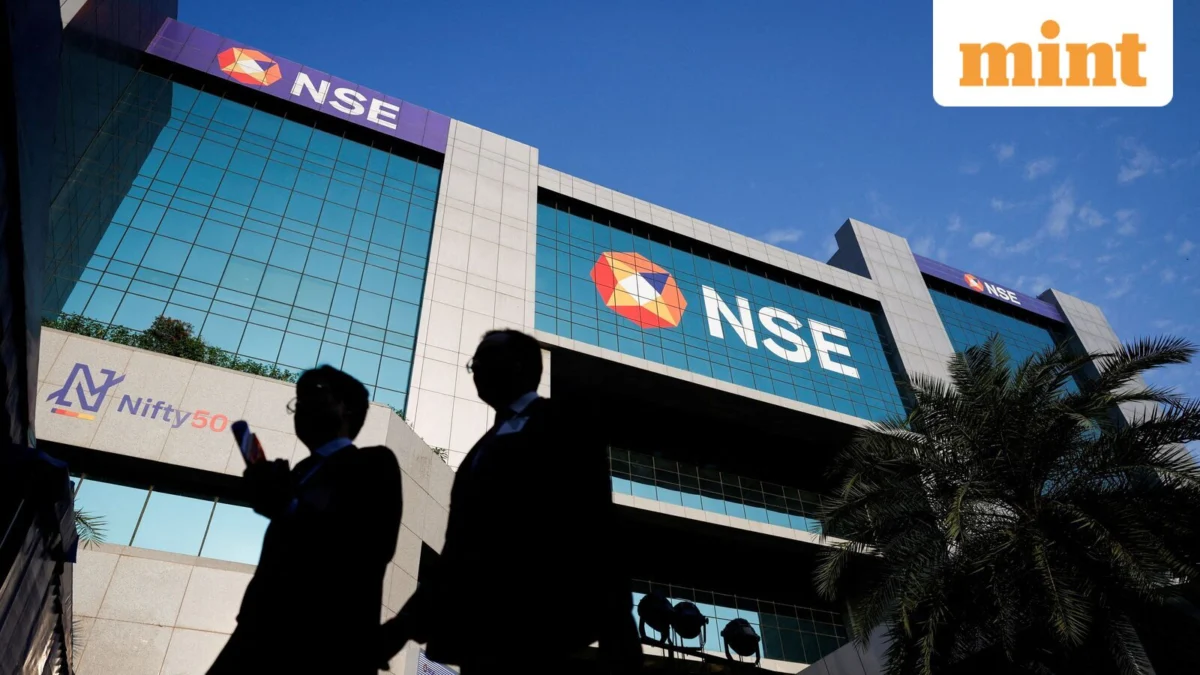
Indian equity markets witnessed an extraordinary week of recovery, concluding on April 10, 2026, with the benchmark indices logging their most significant weekly gains in over five years. The surge, which saw the Nifty 50 and the S&P BSE Sensex rise by approximately 6%, was fueled by a dramatic de-escalation in geopolitical tensions between the United States and Iran. A ceasefire agreement announced earlier in the week acted as a primary catalyst, triggering a "risk-on" sentiment across global financial hubs, stabilizing volatile energy markets, and encouraging a massive influx of capital back into emerging market equities.
On the final trading day of the week, the Nifty 50 climbed 1.16% to settle at 24,050.60, while the 30-stock Sensex gained 1.2% to close at 77,550.25. This weekly performance marks the sharpest rally since the first week of February 2021, a period characterized by a post-budget surge and the easing of the second wave of the COVID-19 pandemic. The current rally reflects a similar sense of relief, as investors pivot from a defensive stance back toward growth-oriented sectors.
Geopolitical De-escalation: The Islamabad Peace Talks and Crude Stability
The primary driver behind the market’s exuberant performance was the announcement of a ceasefire between Washington and Tehran on April 8, 2026. The two nations had been locked in a period of heightened military posturing that threatened to disrupt global shipping lanes and energy supplies. Following the ceasefire, diplomatic efforts moved to Islamabad, Pakistan, where high-level peace talks are scheduled for Saturday. This shift from military confrontation to diplomatic dialogue has significantly lowered the "war premium" previously embedded in asset prices.
The immediate impact of this diplomatic breakthrough was felt in the energy sector. Crude oil prices, which are a critical determinant of India’s fiscal health given the country’s status as a major net importer, saw a much-needed correction. India’s crude basket, which had spiked to $120.28 per barrel earlier in the week, retreated to $115.52 by Thursday. In the international markets, Brent crude hovered near $95.82 per barrel, while West Texas Intermediate (WTI) remained steady at $97.93. For the Indian economy, lower oil prices translate directly into reduced imported inflation and a narrower current account deficit, providing the Reserve Bank of India (RBI) with more breathing room regarding interest rate policy.
Volatility Crumbles as Investor Confidence Returns
A defining feature of the week’s trading was the collapse of the India VIX, often referred to as the "fear gauge." The index, which measures the market’s expectation of volatility over the next 30 days, plummeted from a high of 25.5 to 18.85. Crucially, the VIX fell below the psychologically important 20-mark, suggesting that the extreme anxiety surrounding global uncertainties has begun to dissipate.
Market strategists note that the cooling of the VIX allows for more structured, fundamental-based investing rather than the panic-driven selling seen in previous weeks. Anand James, Chief Market Strategist at Geojit Investments, observed that the easing of the VIX signifies that global macro shocks are losing their grip on domestic sentiment. According to James, the market is transitioning into a phase where stock-specific triggers and corporate earnings will dictate price action, rather than broad-based global fear.
Sectoral Performance: Rate Sensitives Lead the Charge
The rally was notably lopsided, with domestic-facing, rate-sensitive sectors outperforming the broader market. The BSE Realty index emerged as the week’s star performer, surging by over 12%. This was followed closely by the Auto sector, which gained more than 10%, and the Consumer Durables and Bankex indices, both of which advanced by approximately 9%.
The strength in these sectors underscores a growing optimism regarding the domestic economy. Real estate and automotive sectors are highly sensitive to interest rate cycles and consumer confidence. With the easing of global tensions and the stabilization of oil, investors are betting that the domestic consumption story remains intact and that the interest rate environment may become more favorable in the second half of the fiscal year.

In contrast, the Information Technology (IT) sector remained the laggard of the week, rising only 2%. The sector continues to grapple with headwinds from weak global demand, particularly in its primary markets of the United States and Europe. While the IT sector accounts for roughly 9.4% of the Nifty 50, its underperformance was offset by the combined weight of metals, autos, and financials. Financials alone account for approximately 35% of the index, and their strong showing provided the necessary "heavy lifting" to push the benchmarks to near-record levels.
Technical Analysis: Breaking Resistance and Looking Ahead
From a technical perspective, the week’s gains have fundamentally altered the market structure. Mehul Kothari, DVP of Technical Research at Anand Rathi Share & Stock Brokers, noted that the 5.9% surge in the Nifty 50 was not merely a "dead cat bounce" or a short-term correction. The index successfully breached the critical resistance zone of 23,100–23,400, which had acted as a ceiling for several weeks.
By holding above the 24,000 level, the Nifty has established a new base for further gains. Technical indicators suggest that the index is now positioned to test the 24,500–24,800 range in the coming sessions. While Kothari warned of potential intermittent corrections toward the 23,600–23,200 support levels, he emphasized that such dips should be viewed as buying opportunities for long-term investors. The improving momentum and the shift in leadership toward domestic cyclicals suggest a robust underlying trend.
India in the Asian Context: A Comparative Underperformance
While the 6% weekly gain was historic for Indian standards, it is noteworthy that the Indian markets actually underperformed several of their Asian peers during the same period. The global "risk-on" rally was even more pronounced in East Asian markets:
- South Korea: The KRX 100 index surged by 10%, while the KOSPI rose 8.9%.
- Taiwan: The TAIEX index gained 8.7%.
- Japan: The Nikkei 225 recorded a 7.1% increase.
- Indonesia: The Jakarta Composite index edged past India with a 6.1% gain.
This relative underperformance suggests that while Indian markets are benefiting from the global relief rally, they are also contending with domestic-specific challenges, such as the initial lukewarm start to the corporate earnings season and the lingering impact of high energy prices compared to the previous year.
Corporate Earnings: The New Market Anchor
As the geopolitical noise fades into the background, the focus of the investment community is shifting squarely toward the fourth-quarter earnings for the 2025-26 fiscal year (FY26). Tata Consultancy Services (TCS), the country’s largest software exporter, kicked off the season with results that painted a mixed picture. While TCS reported a modest sequential improvement in quarterly performance, it concluded FY26 with its first full-year revenue decline in dollar terms since its listing. This data point served as a stark reminder of the persistent pressure on the IT sector due to delayed client spending and a cautious global macroeconomic environment.
The market is now looking toward upcoming results from other major players, including Wipro, ICICI Prudential AMC, and HDFC AMC. These reports will be crucial in determining whether the current rally has the fundamental backing to sustain itself. Investors are particularly keen to see if the growth in the financial and consumer sectors can compensate for the sluggishness in the technology space.
Implications for the Near Term
The events of the week ending April 10, 2026, represent a significant pivot point for Indian equities. The transition from a market dominated by geopolitical fear to one driven by domestic fundamentals is a positive development for stability. However, several factors remain on the radar for the coming weeks:
- Sustainment of the Ceasefire: Any breakdown in the US-Iran diplomatic process or a resurgence of skirmishes in the Middle East, particularly involving Lebanon and Israel, could quickly reignite volatility.
- Monetary Policy Outlook: With crude oil prices softening, the market will be looking for signals from the RBI regarding its stance on inflation and potential rate cuts later in the year.
- Foreign Portfolio Investment (FPI) Flows: The "risk-on" environment typically favors emerging markets. Analysts will be watching to see if FPIs, who were net sellers during the period of high tension, return as aggressive buyers in the Indian market.
- Earnings Trajectory: If the upcoming corporate results from the banking and auto sectors surprise on the upside, it could provide the necessary impetus for the Nifty to reach the 25,000 milestone.
In summary, the Indian markets have emerged from a period of intense uncertainty with renewed vigor. While the IT sector remains a point of concern, the broad-based participation from realty, autos, and financials suggests a healthy rotation of capital. As the Islamabad peace talks progress and more companies report their financial health, the path forward for Dalal Street will be defined by a delicate balance between global diplomatic stability and domestic corporate resilience. For now, the "sharpest gain in five years" serves as a testament to the market’s underlying strength and its ability to rebound swiftly when the clouds of geopolitical conflict begin to part.
