

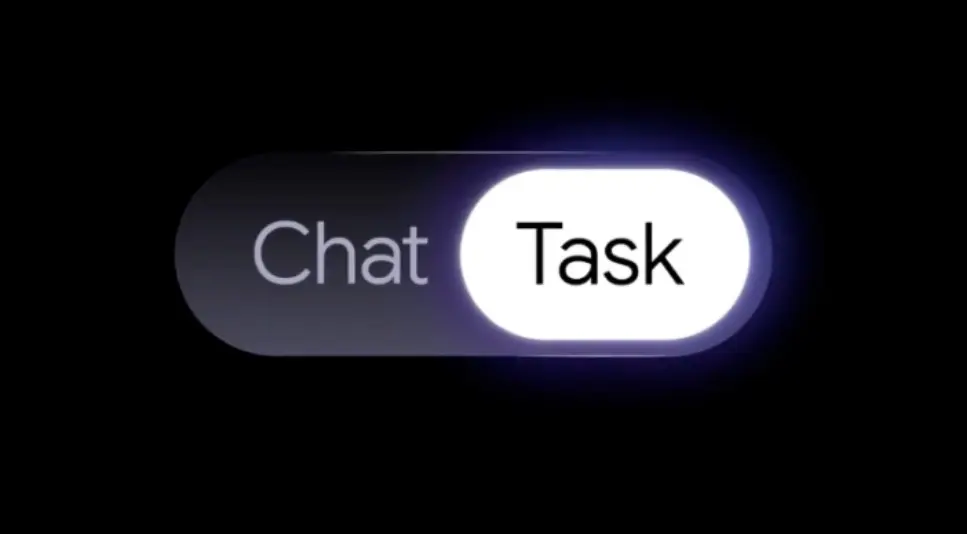
In a significant strategic shift aimed at democratizing access to "agentic" artificial intelligence, Google has officially rebranded its Spark AI agent as "Tasks" and transitioned the service from a paid beta feature to a free offering within the Gemini ecosystem. This move, which began rolling out in mid-October 2024, represents Google’s latest attempt to capture market share from competitors like OpenAI and Anthropic, whose high-end AI agents remain largely locked behind premium subscription tiers. By integrating Tasks directly into the standard Gemini Chat interface, Google is positioning itself as a leader in the race to provide functional, autonomous AI assistants to the general public without the steep entry costs that have defined the sector’s early stages.
The transition from Spark to Tasks is more than a simple name change; it marks a pivotal moment in Google’s broader AI roadmap. Previously accessible through the Google AI Pro plan, the agentic capabilities of the platform are now available to free users, albeit with certain session-based limitations. This evolution follows a period of rapid iteration for Google’s AI division, which only recently retired its "Gems" feature—customizable AI personas—and converted them into "Skills." The consolidation of these features under the Tasks moniker suggests a move toward a more unified, action-oriented user experience where the AI is expected to do work rather than just provide information.
The Evolution of the Google AI Ecosystem: From Spark to Tasks
The trajectory of Google’s AI agents has been swift. Just months after the initial release of Spark, the company decided to pivot toward a branding strategy that emphasizes utility. The name "Tasks" is intentionally familiar, echoing the existing Google Tasks application that integrates with Gmail, Docs, and Calendar to manage to-do lists. However, the AI-driven Tasks agent is a far more sophisticated tool, designed to operate with a level of autonomy that traditional productivity software cannot match.
The rebranding effort was first spotted by industry analysts in mid-October when users noticed a new toggle within the Gemini interface. This toggle allows users to switch from standard conversational mode to the agentic "Tasks" mode. While the core architecture remains rooted in Google’s advanced Large Language Models (LLMs), specifically the newest Gemini 4 Hydrogen model, the Tasks interface is optimized for multi-step execution and external tool integration.
Industry observers note that the retirement of "Gems" just twenty-four hours prior to the Tasks announcement was a clear signal of Google’s intent to streamline its offerings. While Gems allowed for personality-based customization, the new "Skills" framework—and by extension, the Tasks agent—focuses on specific outcomes, such as financial analysis, scheduling, and logistical planning.
Competitive Landscape: The Battle for the Personal AI Agent Market
The decision to make Tasks free is a direct challenge to the pricing structures of Google’s primary rivals. Currently, the landscape for personal AI agents is divided between high-cost professional tools and free, ad-supported alternatives.
- OpenAI: The company’s "Dots" agents are bundled within the ChatGPT Pro tier, which carries a substantial price tag of $100 per month. This high barrier to entry targets enterprise users and power users who require high-frequency autonomous operations.
- Anthropic: The "Claude Duet" agent is available to users on paid plans starting at $20 per month. While more affordable than OpenAI’s offering, it still requires a financial commitment that many casual users are hesitant to make.
- Meta: Mark Zuckerberg’s company offers "Muse," an agent that is free to use for up to 100 million tokens per week. However, Muse has faced significant criticism regarding privacy, with some analysts labeling it one of the most intrusive agents on the market due to its deep integration with Meta’s social data.
By offering Tasks for free, Google is positioning itself as the middle ground: more accessible than OpenAI and Anthropic, but potentially perceived as more professional and privacy-conscious than Meta. For free users, Google provides a context window of 32,000 tokens, which is sufficient for most personal administrative tasks. While users are limited to five hours of continuous access at a time before requiring a reset or a paid upgrade, this window is ample for the "chronically overwhelmed" demographic Google is targeting.
Technical Capabilities and Real-World Applications
The Tasks agent, powered by the Gemini 4 Hydrogen model, is built to handle complex, multi-step workflows that involve interacting with both Google services and third-party applications. Unlike a standard chatbot that provides a recipe when asked, an agent like Tasks is designed to find the ingredients, check the user’s digital grocery list, compare prices at local stores, and—with permission—place an order for delivery.

Key use cases highlighted in the new Tasks landing page include:
- Personal Finance Management: The agent can be instructed to "go on the hunt" for savings by identifying recurring subscriptions that are no longer being used or by setting alerts for specific retail deals.
- Logistical Planning: Tasks can analyze complex documents, such as heating bills or insurance policies, to find discrepancies or suggest more cost-effective alternatives.
- Administrative Autonomy: In the United States, users can utilize the agent to call businesses to book appointments or inquire about services. This feature is particularly advanced, utilizing natural language processing to conduct phone conversations on the user’s behalf.
- Cross-Platform Integration: Users can initiate a task via email or text message, allowing the agent to function as a background processor that doesn’t require the user to stay within the Gemini app interface.
Privacy, Security, and Ethical Considerations
The rise of agentic AI brings with it a host of privacy concerns that Google is attempting to address through transparency features. Because an agent must have access to sensitive data—such as emails, calendars, and financial statements—to be effective, the potential for data misuse is high.
Google has introduced a "Memory" summary feature for Gemini, which allows users to view, edit, or delete the personal information the chatbot has stored. Furthermore, the company emphasizes that users can disconnect third-party apps at any time. However, the autonomous nature of these agents remains a point of contention. When an AI is authorized to place orders or review private files, the liability for errors becomes a complex legal issue.
The broader industry is already seeing legal pushback regarding how these AI models are trained and operated. For example, Ziff Davis, the parent company of ZDNET, filed a lawsuit in April 2025 against OpenAI, alleging copyright infringement in the training of its AI systems. As Google expands Tasks, it will likely face similar scrutiny regarding the provenance of the data its agents use to navigate the web and make decisions for users.
Regional Availability and Regulatory Hurdles
While Google is aggressive in its rollout, the Tasks agent is not yet a global product. Currently, the free version is available in the United States, Canada, Korea, Japan, Australia, and India. Even within the United States, certain features are restricted due to local regulations. The business-calling feature, for instance, is unavailable in Indiana, Louisiana, Minnesota, Montana, and Nebraska, likely due to state-specific laws regarding automated calls and two-party consent for recording.
These regional discrepancies highlight the difficulty of deploying autonomous agents in a fragmented regulatory environment. As AI agents move from "chatting" to "acting," they enter the realm of telecommunications, commerce, and financial services—sectors that are far more heavily regulated than general software.
Analysis of Implications: The Shift Toward an Agentic Economy
The rebranding of Spark to Tasks and its subsequent move to a free model suggests that Big Tech companies believe the future of AI lies in utility rather than just conversation. We are moving toward an "agentic economy" where the value of an AI is measured by the time it saves the user, not just the quality of the text it generates.
For Google, this is a defensive and offensive play. Defensively, it prevents users from migrating to Meta’s free Muse agent. Offensively, it lowers the floor for entry, hoping that users who start with the free version of Tasks will eventually upgrade to the full Google AI Pro suite as they become more reliant on the agent to manage their daily lives.
However, the success of Tasks will ultimately depend on its reliability. Early testing of the Spark beta showed that while the technology was promising, it often struggled with complex nuances. By exiting beta and rebranding as Tasks, Google is signaling that the technology is ready for mainstream adoption. Whether a "chronically overwhelmed society" will trust an autonomous agent to handle their bills and appointments remains to be seen, but by making the tool free, Google has ensured that millions of users will at least be given the opportunity to try.
