

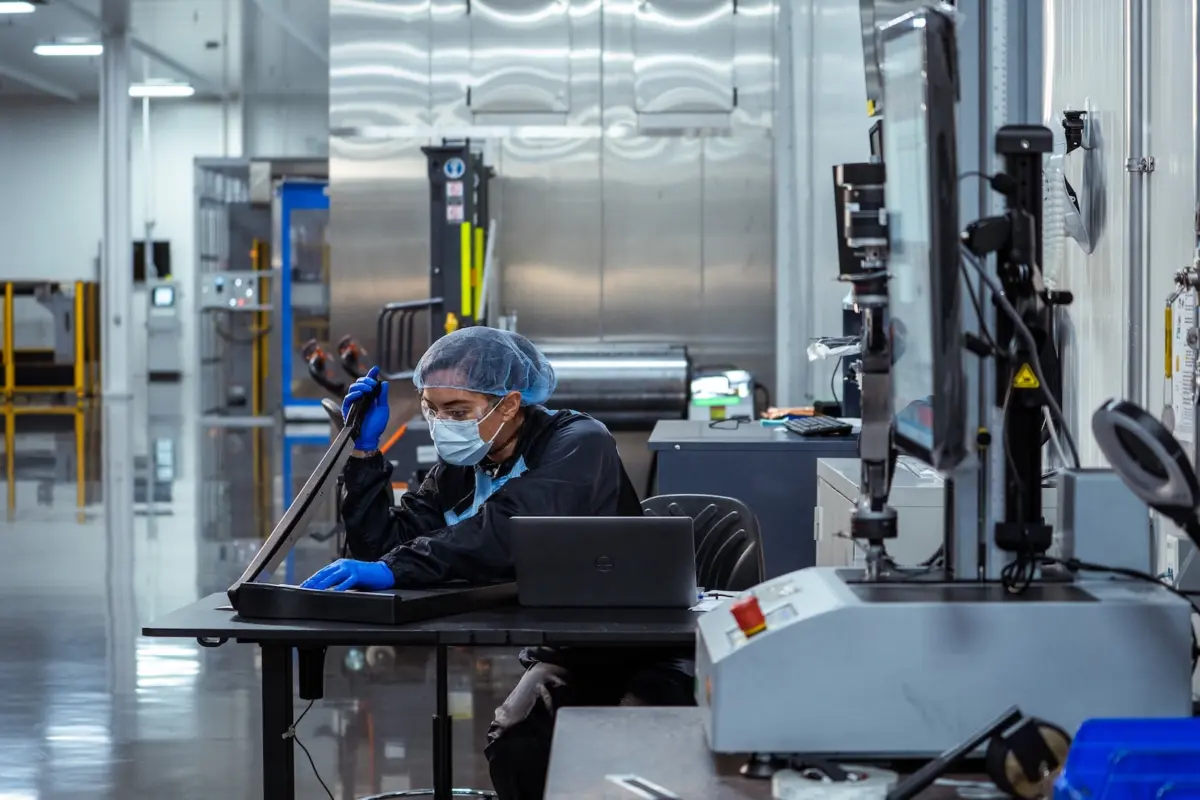
The Ford Motor Company has officially transitioned from a vehicle assembler to a high-volume battery manufacturer, marking a pivotal shift in the American automotive landscape. This week, the first lithium iron phosphate (LFP) prismatic battery cells began rolling off the production lines at the BlueOval Battery Park Michigan. These initial units are being shipped to the Louisville Assembly Plant, where they will be integrated into prototypes for the "Ford Fathom," a highly anticipated project aimed at delivering a next-generation, affordable electric vehicle (EV) platform. This milestone positions Ford as the first domestic automaker to produce LFP batteries in the United States for mainstream consumer automotive applications, utilizing technology licensed from Contemporary Amperex Technology Co. Limited (CATL), the world’s largest battery manufacturer.
The commencement of production represents the culmination of a multi-year strategic initiative to insulate Ford’s supply chain from global volatility and reduce the retail price of electric vehicles. By manufacturing these cells in-house at a facility it owns and operates, Ford is seeking to master the complexities of electrochemical production, a domain historically dominated by East Asian firms. The move is seen as a direct response to the increasing pressure from Chinese automakers, who have utilized LFP chemistry to capture significant global market share in the budget and mid-range EV segments.
High-Speed Manufacturing and the Drive for Efficiency
The BlueOval Battery Park Michigan facility is designed for extreme throughput, a necessity for achieving the economies of scale required to make EVs price-competitive with internal combustion engine (ICE) vehicles. According to Charles Poon, Ford’s Vice President of Hardware Engineering, the assembly lines at the Michigan plant are capable of delivering 40 cells every minute. This rate makes it one of the fastest LFP prismatic battery assembly lines currently operating outside of China.

The emphasis on speed is not merely a matter of volume but a critical component of Ford’s cost-reduction strategy. In the battery industry, "throughput efficiency" directly correlates to lower overhead costs per kilowatt-hour (kWh). However, Ford executives have emphasized that this speed is balanced by rigorous quality control protocols. The prismatic form factor—a rectangular, rigid-cased cell—was selected specifically for its space efficiency and structural integrity within a vehicle’s battery pack.
Alan Clarke, Ford’s Vice President of Advanced Development Projects, has been a vocal advocate for the transition to LFP. Clarke, who previously led high-profile engineering projects at Tesla, was tasked with developing the "Universal Electric Vehicle Platform." His mandate was to move away from the "excess" of oversized, expensive battery packs and toward a philosophy of "efficiency over excess." The Fathom project is the first tangible result of this directive, utilizing LFP cells to minimize weight and cost without sacrificing the durability required for daily consumer use.

The Strategic Choice of LFP Chemistry
The decision to pivot toward Lithium Iron Phosphate (LFP) chemistry, as opposed to the Nickel Cobalt Manganese (NCM) chemistry used in the standard Mustang Mach-E or F-150 Lightning, is rooted in three primary factors: cost, longevity, and ethical sourcing.
First, LFP batteries do not require nickel or cobalt, two minerals that are not only expensive but also subject to extreme price volatility and significant environmental and ethical concerns regarding their extraction. By removing these materials from the equation, Ford can significantly lower the bill of materials for its entry-level EVs.

Second, LFP cells are renowned for their chemical stability and cycle life. They can be charged to 100% capacity daily with minimal degradation compared to NCM batteries, which are typically recommended to be charged to 80% for daily use to preserve longevity. This makes LFP an ideal candidate for bidirectional charging applications. Ford’s "AC bidirectional power" system allows the vehicle to act as a mobile power source, capable of receiving electricity from a home and supplying it back during peak hours or outages. The inherent durability of LFP ensures that using the car as a home battery does not prematurely wear out the vehicle’s primary power source.
Third, the safety profile of LFP is superior. The chemistry is less prone to thermal runaway, providing an extra layer of security for the "mainstream consumer" demographic Ford is targeting with the Fathom and its future compact EV lineup.

Economic Context and the Inflation Reduction Act
Ford’s investment in Michigan is inextricably linked to the United States’ broader industrial policy, specifically the Inflation Reduction Act (IRA). The IRA provides significant tax incentives for EVs that are assembled in North America and utilize batteries with a specific percentage of domestic content. By manufacturing the cells in Michigan, Ford is positioning its future vehicles to qualify for the full $7,500 federal clean vehicle tax credit, a crucial factor in making EVs affordable for the average American household.
The partnership with CATL, while technically a licensing agreement, allows Ford to retain 100% ownership of the facility and the workforce. This structure was designed to navigate the complex geopolitical landscape, ensuring that the intellectual property for manufacturing remains on U.S. soil while leveraging the proven technical expertise of the world’s leading battery firm. CATL’s technology currently powers over 30 million vehicles globally, providing Ford with a "field-proven" blueprint that reduces the risks associated with scaling a new chemical production line from scratch.

Chronology of Ford’s Battery Evolution
The road to the Michigan production milestone has been marked by several key phases:
- February 2023: Ford announces plans for BlueOval Battery Park Michigan, a $3.5 billion investment intended to produce LFP batteries.
- Late 2023: Amidst changing market conditions and labor negotiations, Ford scales back the initial capacity of the plant to approximately 20 GWh per year but maintains the commitment to LFP technology.
- Early 2024: Ford’s "Skunkworks" team in California, led by Alan Clarke, intensifies work on a low-cost EV platform designed specifically to house the Michigan-made LFP cells.
- November 2024: The first production-grade cells are completed and shipped for prototype testing.
- 2025-2026 (Projected): Commercial launch of the Ford Fathom and integration of Michigan-made LFP batteries into existing models like the Mustang Mach-E.
Broader Implications for Ford Energy and the Industry
The implications of this milestone extend beyond the automotive sector. Ford has signaled that the expertise gained in Michigan will support "Ford Energy," a burgeoning business unit focused on battery energy storage systems (BESS). The company plans to leverage its battery manufacturing capabilities to support energy storage projects in Kentucky and other regions, creating an integrated ecosystem where vehicle batteries and grid-scale storage share the same technological foundation.

Industry analysts suggest that Ford’s move could trigger a "domino effect" among other domestic OEMs. While General Motors and Stellantis have focused heavily on Ultium and other high-nickel chemistries through joint ventures (such as LG Energy Solution), Ford’s aggressive pursuit of LFP highlights a growing recognition that the "mass market" for EVs requires a different chemical approach than the "luxury market."
Furthermore, the "40 cells per minute" benchmark sets a new standard for American manufacturing. If Ford can maintain this pace while ensuring the quality levels required for automotive warranties, it will have successfully bridged the "manufacturing gap" that has previously given Chinese manufacturers a significant pricing advantage.

Conclusion and Future Outlook
As the first LFP prismatic cells make their way to Louisville for the Fathom prototypes, Ford is entering a new era of industrial self-reliance. The success of this venture will be measured by the retail price of the vehicles these batteries eventually power. If Ford can deliver a sub-$30,000 electric vehicle with a 250-mile range and a battery that lasts for a decade of daily 100% charging, it will have fundamentally changed the trajectory of the American EV transition.
For now, the Michigan facility stands as a testament to the "efficiency over excess" philosophy. By focusing on proven technology, domestic manufacturing, and high-speed automation, Ford is attempting to prove that the "Blue Oval" can compete with the world’s most advanced battery producers on its own terms. The automotive world will be watching closely as the Fathom prototypes begin road testing, marking the next chapter in the electrification of the American road.
