

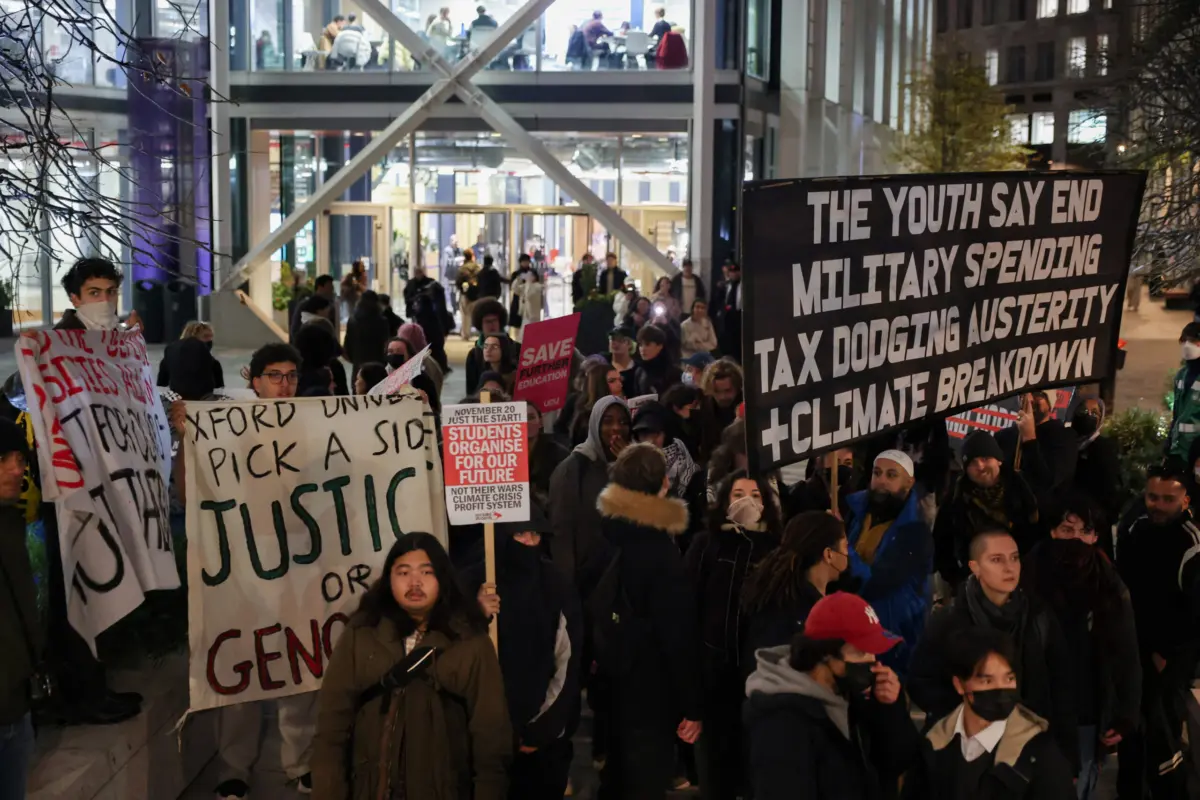
The streets of the United Kingdom on Friday witnessed a powerful eruption of youth-driven demonstrations, signalling the potential commencement of a new wave of popular mobilisation mirroring widespread unrest already engulfing continental Europe. Thousands of students, from the historic spires of Aberdeen to the vibrant coastal city of Brighton, and from the industrial heartlands of Swansea to the academic hubs of Nottingham, staged coordinated walkouts from hundreds of schools and universities. This extensive mobilisation marked one of the most significant student actions since the contentious tripling of tuition fees in 2010, underscoring a deep-seated frustration with government policies and a future perceived as increasingly bleak.
A Continent in Flux: The European Precedent
Across Europe, from the boulevards of Paris to the piazzas of Rome, and through the streets of Madrid, Belgrade, and Berlin, mass movements have been challenging the tenets of austerity, government perceived failures, and the socio-economic status quo. These protests represent a new level of public engagement, distinct in their scope and interconnectedness from many historical precedents. The grievances are diverse yet interconnected, ranging from economic stagnation and high unemployment to the erosion of public services and a pervasive sense of political disenfranchisement.
The UK protests were not isolated but rather emerged from a pan-European initiative: the International Conference Against War. This coalition seeks to coordinate movements against militarism and advocate for alternative policy priorities across the continent. Its call to action resonated deeply within the UK’s academic and labour sectors. The University and College Union (UCU) was among the first and most vocal supporters, endorsing a National Day of Action and urging its members across the university sector to join students in rallies and demonstrations. The swift backing from other major trade unions, including Unison, Unite, the National Education Union (NEU), GMB, and the Educational Institute of Scotland (EIS), highlighted the broad potential for cross-sector solidarity and underscored the depth of discontent that transcends student bodies alone.
London’s Convergence: A Unified Voice
In the nation’s capital, streams of demonstrators from various universities and colleges converged on the iconic Trafalgar Square. The air vibrated with chants of "fight for our future, not their wars," a powerful slogan encapsulating the prevailing sentiment that government priorities are misaligned with the needs of its youth. The procession then moved towards Downing Street, the symbolic seat of power, where student activists and trade union leaders delivered impassioned speeches. They lambasted the government for what they described as a stark prioritisation of defence spending over crucial investments in education and vital public services, echoing a core grievance reverberating across the European protest landscape.
The Genesis of Discontent in the UK: A Confluence of Crises
Indeed, British youth have ample cause for anger. Mirroring their European counterparts, young people in the UK are grappling with a punishing convergence of economic and social challenges. High inflation, which has seen consumer prices surge by an average of 8-10% annually over the past two years, has drastically eroded purchasing power. This is compounded by persistent youth unemployment, which, while fluctuating, remains stubbornly high, disproportionately affecting recent graduates and those entering the job market. Economic stagnation, characterized by sluggish GDP growth rates hovering below 1% for several consecutive quarters, offers little hope for upward mobility.
The gutting of public services, a consequence of over a decade of austerity measures initiated in the wake of the 2008 financial crisis, has left significant sectors like healthcare, social care, and public transport underfunded and overstretched. This translates directly into deteriorating living standards, exacerbated by a severe housing crisis. Fueled by decades of property speculation, inadequate housing supply, and a relaxed regulatory environment, average rents in major cities have soared by 15-20% year-on-year, making homeownership an increasingly distant dream and even rental accommodation unaffordable for many young people.
Beyond economic hardships, a palpable sense of injustice permeates the youth demographic. Incidents of police brutality, particularly in the context of solidarity protests for Palestine, have ignited widespread outrage, raising questions about civil liberties and state power. Unrestrained racism and sexism continue to be systemic issues, eroding trust in institutions and fostering a sense of alienation. Furthermore, the looming spectres of environmental degradation and climate catastrophe add an existential layer of anxiety, contributing to a predictable surge in mass protest.
Education Under Siege and the "NEET" Crisis
The precarious position of young people is starkly illustrated by government statistics. Close to one million individuals aged 16 to 24 are classified as "NEETs" – Not in Education, Employment, or Training. This figure represents over 13% of that crucial demographic, a significant human capital drain. Alarmingly, young people constitute more than 40% of the total unemployed population in the country. This challenge is not merely economic; it’s also a deeply social one. Apart from a tough job market, the UK faces a rampant mental health epidemic among its youth, with rising rates of anxiety, depression, and self-harm, often linked to economic insecurity and academic pressure. The education system itself, particularly higher education, has become a luxury few can afford without incurring substantial debt, further exacerbating inequalities.
The current government’s response to this looming social and economic crisis has been largely consistent with previous administrations: a continued reliance on austerity measures. This approach was encapsulated by the controversial commissioning of Alan Milburn, a former Labour minister notorious for introducing private finance initiatives into the NHS in the late 1990s, to author a report on the NEET crisis. Critics argue that Milburn’s appointment signals a pre-disposition towards market-focused solutions over robust public welfare provision. Unsurprisingly, his recommendations leaned heavily towards cutting certain benefits for young people, including those with disabilities, further privatising support services and shifting responsibility from the state to the individual or the private sector.
This policy trajectory comes after years of systematic austerity in the higher education sector. Universities have faced relentless pressure due to a lack of direct government funding, leading to widespread job cuts, course closures, and what many academics describe as "academic vandalism." Institutions are increasingly forced into what some call "Faustian bargains" with banks, management consultants, and corporate outsourcing firms. These partnerships often prioritise efficiency and profit margins over the quality of education and research, leading to an extreme dysfunction, chaos, and mismanagement that undermines the core mission of higher education.
The Militarisation Mandate: A Divergence of Priorities
While civilian job openings and educational opportunities dwindle, a striking contrast emerges in government priorities: British youth are increasingly being offered opportunities within the armed forces. The army is actively promoting a "fully paid 18-month foundation scheme," presented as a viable pathway for those struggling to find employment or affordable education. This recruitment drive is bolstered by a public campaign around "warfighting readiness," a key component of last year’s Strategic Defence Review.
This pivot towards enhanced military expenditure and recruitment was a significant policy initiative under former Prime Minister Keir Starmer, widely regarded as one of the most unpopular prime ministers in recent British history. True to form, Starmer pushed through an additional £15 billion ($19.6 billion) towards defence immediately before leaving office, bringing the total defence budget to an astronomical £298 billion ($389.8 billion) over four years. This trend is not isolated to the UK; it reflects a worrying pattern across Europe where, despite diminishing funds for essential public services, military spending is skyrocketing. This glaring disparity has not been lost on young people, who question the allocation of national resources in an era of domestic crisis.
The primary driver behind this rearmament frenzy across Europe is the increasing entanglement of the European project with NATO. This is exacerbated by calls from figures like Donald Trump for EU member states to significantly increase their contributions to the alliance. Support for Ukraine against Russian aggression stands at the centre of this geopolitical realignment, serving as a powerful impetus for increased military budgets and collective defence strategies.
Political Instability and the Burnham Government’s Test
Should youth mobilisation in the UK reach the intensity observed in countries like France, it could pose the first major test for the nascent government of Andy Burnham. France, a nation with a rich history of protest, saw its recent revolt largely sparked by education reforms, echoing the origins of the 1968 uprisings. Notably, France allocates a substantial 5.1% of its GDP to education, a figure that starkly contrasts with the UK’s 4.1%. Even this comparatively lower budget in the UK has faced diversions, with some funds earmarked for education redirected towards defence, leading to less funding for schools in the coming years.
The UK has experienced a tumultuous decade, witnessing seven prime ministers unable to deliver desperately needed income and wealth redistribution. A succession of Conservative prime ministers presided over a period where the wealthy became significantly richer, while ordinary citizens faced stagnant wages and declining living standards. Keir Starmer, despite promising a new direction, largely continued this tradition. His government was heavily criticised and suffered electoral setbacks at the hands of parties like Reform and the Greens in recent local elections. This was primarily due to his perceived failure to deliver on the social democratic promises that many had hoped a Labour government would provide.
Furthermore, Starmer’s administration conspicuously failed to acknowledge the genuine anger over British complicity in the Palestinian crisis, subsequently responding to mass protests with punitive legislation that curtailed civil liberties. Despite an initial surge in popularity, often dubbed the "Burnham bounce," the sitting prime minister has largely adhered to the same policy trajectory as his predecessor. While his new foreign secretary has conceded that the government "got it wrong" over Palestine, this admission needs to be substantiated by concrete action to regain public trust.
The Path Forward: Systemic Change and International Solidarity
As the Burnham government faces mounting protest, a heavy-handed approach, characterised by further punitive legislation or increased police presence, is unlikely to succeed. Nor will a continuation of neoliberal reforms, which have been the hallmark of British economic policy for decades. A half-century of privatisation, deregulation, and cuts to social welfare has demonstrably contributed to the current malaise, deepening the crisis and widening societal fissures. The youth, alongside broader sections of European society, are demanding not merely superficial adjustments but real, lasting change in both the political and economic spheres.
The historical parallels are striking. The revolutions that convulsed Europe in 1848 were a direct response to severe economic crisis, widespread unemployment, and devastating bad harvests that led to famine. The European protests unfolding today operate under remarkably comparable conditions: economic insecurity, social disenfranchisement, and a perceived failure of governance. For those who seek meaningful change, the task ahead is clear: to foster an internationalism that can effectively generalise grievances, coordinate movements across borders, and deliver concrete solidarity against the forces of austerity and militarism. This coordinated international effort, campaigners argue, is the only viable path to achieving the profound political and economic transformation that a disillusioned generation so urgently demands.
