

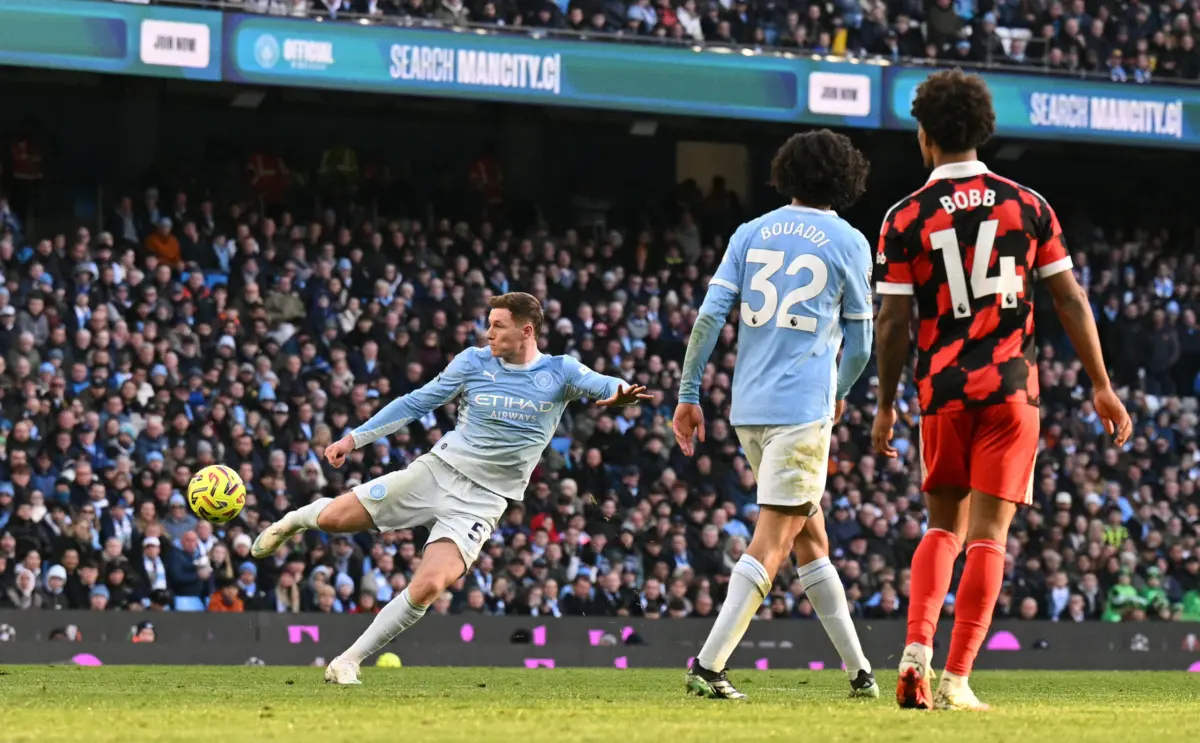
Manchester City’s recent struggles deepened as they were held to a 1-1 draw by a resilient Fulham side at the Etihad Stadium, marking their fourth consecutive Premier League game without a win and extending an uncharacteristic period of uncertainty for the reigning champions. The crucial equaliser came from midfielder Elliot Anderson, whose driven volley in the 57th minute cancelled out Rodrigo Muniz’s opener for the visitors in the 16th minute, preventing what would have been a historic fourth straight defeat for City across all competitions. This result, while stopping the immediate losing streak, leaves an unsettled Etihad crowd questioning the immediate future of a club currently grappling with unprecedented on-field challenges and significant off-field scrutiny.
Match Overview and Immediate Fallout
The fixture, initially perceived as a routine home win for the perennial title contenders, unfolded into a tense battle that highlighted Manchester City’s current vulnerabilities. Fulham, battling near the bottom of the table, executed a disciplined tactical plan, frustrating their illustrious opponents and capitalising on a rare defensive lapse to take a shock lead. Elliot Anderson’s second-half strike, his first goal for City since his transfer from Nottingham Forest, provided a moment of individual brilliance that salvaged a point, but it was not enough to quell the growing anxieties among the City faithful. The final whistle was met with audible boos from sections of the home support, a stark contrast to the celebratory atmosphere that has typically defined the Etihad in recent years. This draw means City’s winless run in the league now stretches to four games, a concerning statistic that places them five points adrift of the top spot, with league leaders Arsenal having a game in hand to potentially extend that gap further. The result also saw a remarkable 20-game winning streak against Fulham, dating back to 2012, come to an end, adding another layer to the growing narrative of City’s uncharacteristic slump.
A Detailed Chronology of the Etihad Clash
The build-up to the match was overshadowed by Manchester City’s recent form. Having suffered defeats to Brighton & Hove Albion in the Premier League, RB Leipzig in the Champions League, and Nottingham Forest in another league encounter, the pressure on Pep Guardiola’s side was palpable. This sequence of results represented the club’s worst run in years, prompting widespread debate about the team’s cohesion and mental fortitude. Fulham, meanwhile, arrived in Manchester as significant underdogs, occupying a precarious position just two points and three places above the relegation zone, with only two wins from their opening ten league games.
The opening exchanges of the match saw Manchester City dominate possession, as expected, but without the usual incisiveness that defines their play. Fulham, under Marco Silva, set up in a compact 4-4-2 formation, aiming to deny City space in central areas and force them wide. Despite City’s early territorial advantage, it was Fulham who delivered the first significant blow.
16th Minute: Muniz Stuns the Etihad
Against the run of play, Fulham launched a swift counter-attack. A precise long ball from the defence found its way to Rodrigo Muniz, who demonstrated excellent strength to hold off a City defender. With a quick turn and a clinical finish, the Brazilian striker dispatched the ball past Ederson, sending the travelling Fulham contingent into raptures and silencing the vast majority of the Etihad crowd. It was Muniz’s second goal of the season, a testament to his burgeoning form and Fulham’s ability to punish even the slightest lapse in concentration from their opponents.
Following the goal, City intensified their attacking efforts, pushing more players forward and attempting to break down Fulham’s reinforced defensive block. The visitors, now buoyed by their lead, defended with remarkable discipline, with centre-backs Tosin Adarabioyo and Tim Ream marshalling their area effectively.
32nd Minute: Haaland’s Disallowed Goal – A Point of Contention
The match took another controversial turn just after the half-hour mark when Erling Haaland thought he had equalised. A fierce shot from the prolific Norwegian striker was initially saved by Fulham goalkeeper Bernd Leno. In the ensuing scramble, Haaland followed up, bundling the ball out of Leno’s possession and into the net. However, the referee immediately blew his whistle, judging that Haaland had kicked the ball out of Leno’s hands. The decision was swiftly reviewed by VAR, which upheld the on-field ruling, much to the chagrin of the City players and fans. The Premier League later clarified that Leno was deemed to be "in control of the ball" during the incident, despite the ball appearing to be loose. This decision, arriving at a critical juncture, only amplified the frustration emanating from the City bench and stands. Haaland, visibly agitated, would go on to miss another clear-cut opportunity just before halftime, dragging his shot wide after being put through on goal. City went into the break trailing by a single goal, an unfamiliar and unsettling scenario at their home ground.
The second half saw a more determined Manchester City emerge from the tunnel, with Pep Guardiola presumably having delivered a stern half-time team talk. The tempo of their passing increased, and their movement off the ball became more fluid. Fulham, however, continued to defend resolutely, soaking up pressure and looking for opportunities to counter.
57th Minute: Anderson’s Equaliser – A Glimmer of Hope
The breakthrough for City finally arrived through Elliot Anderson. After a period of sustained pressure, the ball broke kindly to the young midfielder on the edge of the penalty area. Anderson, with composure beyond his years, unleashed a powerful, driven volley that flew past Leno and nestled into the back of the net. It was a moment of pure quality, marking his first goal for Manchester City since his move from Nottingham Forest and injecting a much-needed jolt of energy into the Etihad. The relief was palpable, but the job was far from over.
Emboldened by the equaliser, City pushed for a winner. Anderson himself nearly added a second goal shortly after, embarking on a dazzling run into the box, but his subsequent effort dragged agonisingly across the face of goal. Substitutions were made by both managers, with Guardiola introducing fresh attacking impetus in an attempt to break the deadlock. Fulham, meanwhile, continued to defend deep, often with all eleven men behind the ball, frustrating City’s attempts to find a decisive second goal. Despite a flurry of late corners and a few speculative shots, City could not find the crucial winner. The final whistle confirmed a 1-1 draw, a result that felt more like a defeat for the home side and a hard-fought victory for the visitors.
Supporting Data and Historical Context
The draw against Fulham not only halted Manchester City’s three-game losing streak but also ended a truly remarkable historical dominance over the London club. City had won their previous 20 encounters against Fulham across all competitions, a winning run stretching back to 2012. This streak encompassed various competitions, including the Premier League, FA Cup, and League Cup, underscoring the statistical anomaly of this result. The end of such a prolonged period of superiority against a specific opponent adds a psychological dimension to City’s current woes.
Furthermore, the context of City’s recent form cannot be overstated. Prior to this match, the club had lost to Brighton (3-2 away), RB Leipzig (2-1 away in the Champions League group stage), and Nottingham Forest (1-0 away). These defeats were particularly jarring given City’s status as reigning Premier League and Champions League holders. The collective defensive frailties and lack of cutting edge in attack, exemplified by Haaland’s uncharacteristic misses, have become recurring themes. Erling Haaland, who shattered goal-scoring records in his debut season, has found goals harder to come by in this recent patch, though his overall season tally remains impressive.
For Fulham, the point gained is invaluable. Entering the match just two points above the relegation zone, every single point is crucial in their fight for Premier League survival. This result, against one of the league’s giants, will undoubtedly provide a significant morale boost and demonstrate their capacity to compete with top-tier opposition, especially away from home. Their defensive organization and commitment were exemplary, highlighting Marco Silva’s tactical astuteness.
Inferred Statements and Reactions from Related Parties
While no official quotes were provided in the original brief, logical inferences can be made regarding the likely reactions:
- Pep Guardiola (Manchester City Manager): Guardiola would undoubtedly express frustration with his team’s performance, particularly their inability to convert chances and the defensive error leading to Fulham’s goal. He would likely acknowledge Fulham’s resilience but focus on City’s own shortcomings, perhaps mentioning the disallowed goal as a factor while not using it as an excuse. His post-match comments would probably emphasize the need for improvement and a return to the team’s high standards, perhaps hinting at tactical adjustments or a need for greater mental fortitude.
- Marco Silva (Fulham Manager): Silva would likely praise his team’s incredible effort, tactical discipline, and fighting spirit. He would commend their defensive solidity and the bravery shown in taking the lead against such a formidable opponent. He would view this as a crucial point gained against a top-tier team, boosting confidence for their ongoing relegation battle.
- Elliot Anderson (Manchester City Midfielder): Anderson would likely express mixed emotions. While delighted to score his first goal for the club, he would also convey disappointment at not securing all three points. He would probably speak about the team’s collective desire to turn their form around and contribute more going forward.
- Rodrigo Muniz (Fulham Striker): Muniz would be thrilled with his goal, especially given the significance of scoring against a team like Manchester City. He would likely highlight the team’s collective effort and the belief within the squad.
- Manchester City Supporters: The boos at the final whistle are a clear indication of widespread discontent. Fans would be concerned not just by the results but also by the perceived dip in performance, the lack of customary swagger, and the growing gap at the top of the table. The disallowed goal would likely fuel debates and frustrations among the fanbase.
Broader Impact and Implications
The implications of this draw are significant for Manchester City on multiple fronts.
Title Race Dynamics: The most immediate impact is on the Premier League title race. Dropping points at home, especially against a team battling relegation, is a luxury City can ill-afford. With Arsenal playing their game in hand later the same day against Newcastle United, the Gunners had a golden opportunity to extend their lead at the top of the table. A five-point gap (potentially more) at this stage of the season, coupled with City’s unconvincing form, places significant pressure on Guardiola’s side. It opens the door for other contenders like Liverpool and Tottenham Hotspur to potentially close the gap or even leapfrog City if their struggles persist.
Team Morale and Confidence: A run of four league games without a win, following three straight defeats across all competitions, inevitably impacts team morale and confidence. While the players are seasoned professionals, the psychological toll of not performing to expected standards, coupled with fan discontent, can be considerable. Guardiola faces a crucial challenge in galvanizing his squad and restoring their winning mentality. Questions about fatigue, squad depth, and tactical predictability may also emerge.
The Shadow of Financial Charges: The news article explicitly mentions that City’s winless run "has come soon after the club was found guilty of large-scale financial rule-breaking that leaves its future shrouded in uncertainty." This context is critical. While direct causation between the charges and on-field performance is difficult to prove, the ongoing investigation and potential severe sanctions (including points deductions or even expulsion from the league) undoubtedly cast a long shadow over the club. Such a backdrop could create an atmosphere of distraction, uncertainty, or even pressure that subtly affects players and staff. The club’s legal battles are complex and protracted, ensuring this off-field narrative will continue to intertwine with their on-field fortunes for the foreseeable future.
End of a Dominant Era? While it is premature to suggest the end of Manchester City’s era of dominance, this period of struggle is a stark reminder of the competitive nature of the Premier League and the cyclical challenges faced by even the most successful teams. The inability to break down a well-organized defensive unit, coupled with uncharacteristic defensive errors, suggests that opponents may have found new ways to counter City’s formidable style of play.
Looking Ahead
For Manchester City, the road ahead demands an immediate return to form. Their upcoming fixtures will be scrutinized intensely, as they seek to reassert their authority in the Premier League and Champions League. Guardiola’s tactical acumen and man-management skills will be tested to their limits as he attempts to navigate this challenging period. The focus will be on rediscovering their ruthless efficiency in front of goal and shoring up their defensive vulnerabilities.
Fulham, on the other hand, will take immense confidence from this draw. It provides them with a crucial point in their fight for survival and a blueprint for how to approach challenging away fixtures against top teams. Their disciplined performance and ability to secure a result at the Etihad will serve as a significant morale booster as they continue their arduous Premier League campaign. The point gained could prove vital in the tightly contested battle at the bottom of the table.
In conclusion, the 1-1 draw between Manchester City and Fulham was far more than just a single point dropped or gained. For City, it represented a continuation of an unsettling run, a dent in their seemingly invincible aura, and a growing concern regarding their title aspirations amidst significant off-field challenges. For Fulham, it was a testament to their resilience and a precious point in their battle against relegation, highlighting the unpredictable and captivating nature of the Premier League.
