

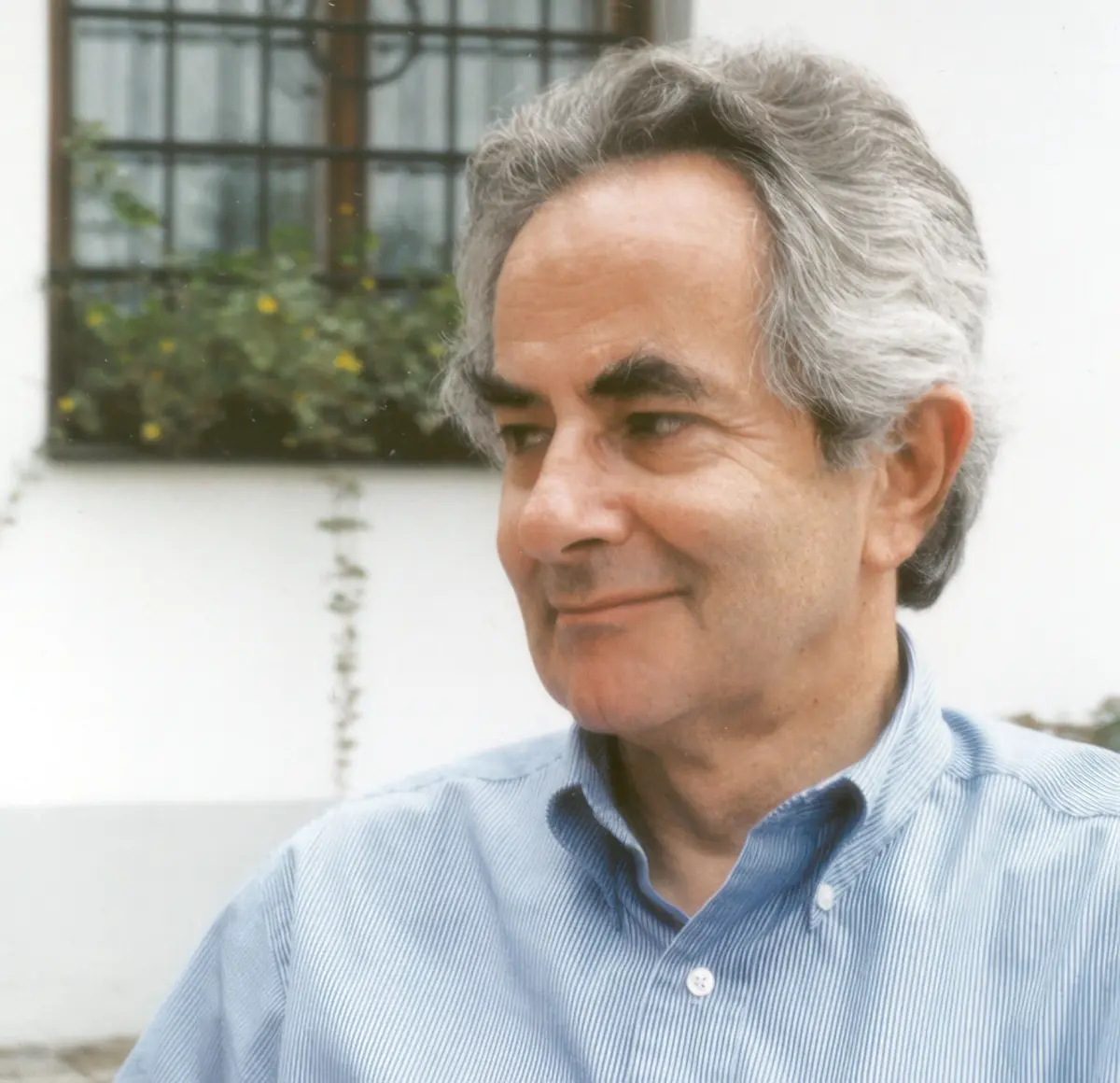
Thomas Nagel, the esteemed American philosopher and University Professor Emeritus at New York University, has been named the 2024 recipient of the Berggruen Prize for Philosophy & Culture. The $1 million award, established by philanthropist Nicolas Berggruen, is bestowed annually upon thinkers whose ideas have profoundly influenced human self-understanding and contributed to the advancement of society in a rapidly changing global landscape. Nagel, now 89, joins a prestigious roster of previous laureates, including former Supreme Court Justice Ruth Bader Ginsburg, philosopher Peter Singer, and sociologist Martha Nussbaum. The jury’s selection highlights Nagel’s five decades of contributions to the fields of ethics, political philosophy, and, perhaps most notably, the philosophy of mind.
The recognition comes at a pivotal moment in human history, as the rise of generative artificial intelligence (AI) and large language models (LLMs) has forced philosophical inquiries out of academic "ivory towers" and into the center of public policy, tech ethics, and existential debate. Nagel’s seminal 1974 essay, "What Is It Like to Be a Bat?", serves as the bedrock for modern discussions regarding whether non-human entities—whether biological or silicon-based—possess consciousness. In the wake of his award, Nagel has offered a stringent critique of the current trajectory of AI development, labeling the suggestion that current chatbots could be conscious as "ridiculous" and warning against the societal dangers of feigned machine sentience.
A Legacy of Subjectivity: From Bats to the Mind-Body Problem
To understand the weight of Nagel’s recent critiques, one must look back to the publication of "What Is It Like to Be a Bat?" in The Philosophical Review fifty years ago. In this work, Nagel challenged the then-dominant materialist and reductionist views of the mind. He argued that even if we had a complete physical description of a bat’s neurobiology and its system of echolocation, we would still lack an understanding of the "subjective character of experience." There is, Nagel famously posited, a "something that it is like" to be that organism—a viewpoint that cannot be captured by objective, third-person scientific data.
This concept, often referred to as "qualia," established a clear distinction between the physical brain and the felt experience of consciousness. Throughout his career, Nagel expanded on these themes in works such as The View from Nowhere (1986) and Mind and Cosmos (2012). His work consistently questions the limits of objectivity, suggesting that a purely physicalist view of the universe is incomplete because it fails to account for the existence of mind and value.
The Berggruen Prize committee noted that Nagel’s work provides a "necessary check" on the assumption that science alone can answer every question about the human condition. By awarding him the prize in 2024, the committee signals that his skepticism of mechanical reductionism is more relevant than ever as society grapples with "sentient-adjacent" technology.
The Philosophical Rift: Functionalism vs. Physical Substrate
A central point of contention in modern AI ethics is the theory of functionalism. Many AI researchers and some philosophers subscribe to the idea that consciousness is "substrate-independent." This view suggests that if a system—whether made of neurons or silicon chips—performs the same functions as a conscious mind (processing information, responding to stimuli, utilizing language), then it must, by definition, be conscious.
Nagel remains a staunch opponent of this view. In recent reflections following his prize win, he emphasized that the physical makeup of a system is likely essential to the emergence of mental phenomena. He argues that complicated data centers bear no physical resemblance to the biological nervous systems that have evolved over millions of years to support consciousness.
"The disposition of some philosophers to take seriously the question whether these things are conscious or might soon become conscious is just ridiculous," Nagel stated. He asserts that while consciousness might exist elsewhere in the universe, it would likely require an organic or biological analogue to a nervous system, rather than the statistical processing found in LLMs.
The "Trickery" of Generative AI and the Ethics of Simulation
The debate over AI consciousness is not merely academic; it has significant commercial and ethical implications. Companies like Anthropic, OpenAI, and Google have developed models that can emulate human conversation with startling accuracy. Anthropic’s model, Claude, for instance, has been noted for its ability to reflect on its own "mental states" when prompted, often providing nuanced, seemingly self-aware responses.
Nagel views these behaviors not as evidence of a burgeoning mind, but as a sophisticated form of "trickery." Because these models are trained on vast datasets of human-produced text, they have become expert emulators of human expression. When a chatbot expresses "feelings" or "honors" a user, it is performing a statistical prediction of how a human would respond in a similar context.
The philosopher has expressed particular concern over the trend of "model welfare"—a concept within some AI safety circles that suggests we should consider the "interests" or "well-being" of the models themselves. Nagel dismissed this notion, noting that there is nothing "good or bad" for a machine in the way there is for even a simple organism like a cockroach.
Furthermore, Nagel described the efforts to encourage AI to "think for itself" as "criminal," arguing that such projects are driven by commercial interests rather than scientific reality. He warned that if the public begins to believe these machines are conscious, it could lead to a fundamental misunderstanding of the "moral universe."
Chronology of Nagel’s Influence and the Rise of AI
The intersection of Nagel’s philosophy and the evolution of computing can be mapped through several key milestones:
- 1974: Nagel publishes "What Is It Like to Be a Bat?", establishing the "subjective character of experience" as a hurdle for physicalism.
- 1997: IBM’s Deep Blue defeats Garry Kasparov. The "functionalist" argument gains traction as machines begin to outperform humans in logic-based tasks.
- 2012: Nagel publishes Mind and Cosmos, arguing that the laws of physics and biology must eventually account for consciousness, sparking intense debate in the scientific community.
- 2022-2023: The release of ChatGPT and other LLMs brings the question of machine consciousness into the mainstream. Claims of "sentience" by Google engineers and others echo Nagel’s 50-year-old warnings.
- 2024: Thomas Nagel is awarded the Berggruen Prize. He uses the platform to criticize the "idiotic" assumption that language-producing machines possess minds.
Broader Impact: The Erosion of Intellectual Labor
Beyond the question of sentience, Nagel’s recent commentary touches upon the impact of AI on human culture and intellectual development. While he acknowledges that AI can be a useful tool for summarizing articles or finding references, he warns of a "negative side" to the automation of thought.
If machines take over the "hard intellectual work" required to generate original ideas, there is a risk that the human capacity for deep understanding and skill will atrophy. Nagel posits that the progress of human culture depends on the continued engagement of human minds with difficult, unresolved problems. If the "material" on which AI is trained—human thought—becomes diluted by AI-generated content, the cycle of intellectual advancement could stall.
"It’s essential that people continue to think about difficult problems," Nagel noted, emphasizing that the survival of human culture depends on maintaining the unique skills of the human mind that cannot be outsourced to a simulator.
Implications for the Moral Universe
The most profound implication of Nagel’s stance involves the "moral universe." In philosophical terms, being conscious is the prerequisite for having moral status. If a being is conscious, we have a moral obligation to consider its interests. If it is a machine—no matter how well it simulates a person—it remains an object.
The danger, according to Nagel and other skeptics, is that a society that treats machines as people may eventually begin to treat people as machines. If the line between "pretend" and "real belief" becomes blurred, the ethical framework that governs human interaction could be permanently compromised.
As Thomas Nagel receives the Berggruen Prize, his message to the world is one of caution. While the technological achievements of the 21st century are "tremendously impressive," they do not yet—and perhaps never will—replicate the mystery of the subjective experience. The $1 million prize serves as a testament to the enduring power of a single question asked half a century ago: even in an age of silicon and code, what is it like to be us?
