

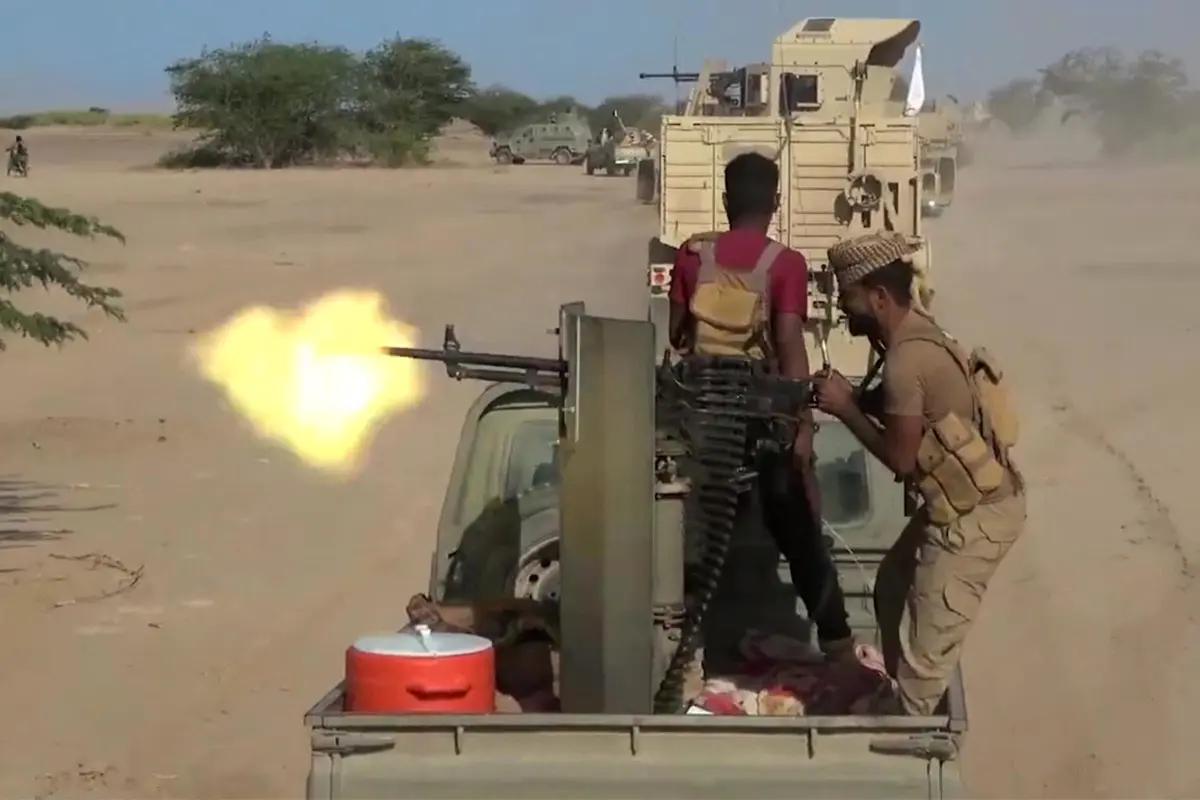
The recent surge in attacks by the Iran-backed Houthi movement against civilian infrastructure within Saudi Arabia, including airports, marks a perilous escalation in the protracted Yemen conflict, fundamentally altering the parameters of engagement and challenging previously observed "red lines." With a documented toll of at least a dozen fatalities and hundreds injured, these deliberate targeting of non-military sites has intensified regional anxieties, raising the specter of a broader confrontation or a debilitating war of attrition. This reckless gambit by the Houthis, widely perceived as serving a larger Iranian agenda aimed at heightening regional tensions, particularly in the run-up to significant international political events, places the conflict at a critical crossroads. The current trajectory presents two distinct, albeit intertwined, scenarios: a concerted, region-wide military operation designed to decisively counter Houthi aggression, or a grinding war of attrition with far-reaching geopolitical and economic consequences.
Background to a Protracted Conflict
The conflict in Yemen, often described as one of the world’s worst humanitarian crises, began in earnest in late 2014 when the Houthi movement, an armed Zaidi Shia group, seized control of the capital Sanaa, effectively ousting the internationally recognized government of President Abd-Rabbu Mansour Hadi. This swift takeover prompted Saudi Arabia and its allies, including the United Arab Emirates, Bahrain, Kuwait, Qatar (initially), Egypt, Morocco, Sudan, Jordan, and Pakistan, to launch a military intervention in March 2015. Dubbed "Operation Decisive Storm," the coalition’s stated aim was to restore the legitimate government and curb what they perceived as growing Iranian influence on their southern flank.
The Houthis, who draw their origins from a Zaidi revivalist movement in Yemen’s northern Saada province, have consistently denied being Iranian proxies, yet their military capabilities and strategic objectives often align with Tehran’s regional interests. Iran, for its part, acknowledges political support for the Houthis but denies providing military assistance, a claim widely disputed by Saudi Arabia and Western intelligence agencies, which cite evidence of advanced weaponry, including drones and ballistic missiles, being supplied to the group.
Over the past nine years, the conflict has settled into a complex tapestry of front lines, proxy battles, and devastating humanitarian consequences. Millions have been displaced, and a significant portion of the population faces severe food insecurity and famine. Attempts at peace negotiations, mediated by the United Nations, have repeatedly faltered, often due to deep-seated mistrust and the shifting military realities on the ground. Previous "red lines" in the conflict typically involved the avoidance of widespread, indiscriminate attacks on Saudi civilian infrastructure or major shipping lanes, a fragile understanding that now appears to have been irrevocated by the Houthis’ recent actions.
Recent Escalation and a Troubling Timeline
The current wave of Houthi aggression represents a significant departure from previous patterns, intensifying both in frequency and the targeting of critical civilian sites. While sporadic cross-border attacks on Saudi Arabia have been a feature of the conflict for years, often involving rudimentary rockets or drones, the recent period has seen an increased sophistication and audacity in these assaults.
- Early 2021: A notable uptick in drone and missile attacks targeting Saudi airports and oil facilities, particularly around the southern cities of Jizan, Najran, and Abha. Abha International Airport, a crucial hub for civilian travel in the region, has been repeatedly struck, leading to civilian casualties and disruptions.
- Mid-2021: Reports indicated the Houthis were deploying more advanced explosive-laden drones, often manufactured with Iranian components, capable of reaching deeper into Saudi territory, including the capital Riyadh. These attacks often coincided with periods of diplomatic activity or internal Saudi political developments, suggesting a strategic intent beyond mere retaliation.
- Late 2021/Early 2022: The escalation reached a new peak, with multiple strikes reported weekly. Targets included commercial airports, energy infrastructure, and residential areas. Specific incidents involving casualties at Abha Airport and damage to oil facilities drew widespread international condemnation, including from the UN Security Council. The Houthis explicitly claimed responsibility for these attacks, framing them as responses to the Saudi-led coalition’s air operations in Yemen. This period solidified the perception that the Houthis were deliberately pushing the boundaries, signaling a willingness to accept severe retaliation in pursuit of their objectives.
This chronology underscores a calculated strategy by the Houthis to exert maximum pressure on Saudi Arabia and its allies, demonstrating an intent to disrupt economic stability and undermine the kingdom’s security. The consistent targeting of civilian infrastructure, far from the front lines of the Yemen conflict, suggests a shift towards a tactic of asymmetric warfare designed to inflict economic and psychological damage, forcing a re-evaluation of Riyadh’s approach to the war.
Scenario One: A United Front Against the Houthis
In response to the Houthi’s increasingly aggressive posture, Saudi Arabia is actively pursuing a strategy to galvanize maximum international support and solidify its regional and international alliances. The primary objective is to forge a united front capable of effectively countering what has evolved into a significant regional security threat.
Riyadh’s immediate focus is on its Gulf Cooperation Council (GCC) neighbors. The collective realization among Gulf states, with the possible exception of Oman, which has historically maintained a more neutral stance and often acted as a mediator, is that the ongoing conflict poses a grave danger to regional stability, extending beyond Saudi Arabia’s borders. Therefore, direct and indirect support from these Gulf states in the fight against the Houthis in Yemen is anticipated, ranging from logistical and intelligence sharing to potential military contributions. The UAE, a key partner in the initial coalition, has recently re-engaged militarily in some parts of Yemen, signaling renewed commitment.
Beyond the immediate Gulf, Saudi Arabia is actively seeking to leverage existing and emerging defense pacts. The "Mecca Pact," a defense agreement signed with Pakistan and Turkiye, represents a critical component of this strategy. While the specifics of its military clauses are not fully public, its ratification by the Turkish parliament, expected in the near future, could pave the way for Turkish military deployment in support of Saudi Arabia. This involvement could take various forms, including troop deployment, air support, or naval assets, significantly bolstering the coalition’s capabilities. Furthermore, indirect involvement from both Turkiye and Pakistan, encompassing crucial logistical support, intelligence sharing, and military training, is reportedly already underway, providing a discreet yet impactful layer of assistance.
The prospect of direct US intervention, while not entirely dismissed, appears less likely in the immediate term. Military engagements in the Middle East have become unpopular among the American electorate, particularly in the lead-up to US midterm elections. However, the US continues to provide intelligence, logistical support, and arms sales to Saudi Arabia, alongside diplomatic efforts to de-escalate the conflict. Any shift towards direct intervention would likely require a significant re-evaluation of US foreign policy priorities and public opinion.
A broad, region-wide coalition would significantly bolster the counteroffensive efforts of forces loyal to the internationally recognized Yemeni government, which are already underway. Such a surge could provide the critical impetus needed to reclaim strategic territories, particularly the western coastal region, including areas beyond Bab al-Mandeb and Dhubab. Control over these vital maritime chokepoints would not only ease pressure on Red Sea shipping, a crucial global trade artery, but also fundamentally shift the military balance in favor of the government. This would directly impact the Houthis’ ability to threaten international navigation and their access to resupply routes.
Opening additional fronts across other Yemeni cities and governorates would strategically stretch Houthi forces, dispersing their resources and increasing the likelihood of further government advances. The ultimate prize in this scenario remains the recapture of Sanaa, the capital. The primary impediment to the Yemeni government’s recovery of Sanaa has historically been internal discord among its various factions, compounded by negative external interference that exacerbates these rifts and weakens the collective effort. However, recent measures by the government, specifically efforts to unify its decision-making and consolidate its military operations command, have shown noticeable progress on the ground. Achieving the ultimate objective of retaking Sanaa, however, requires sustained effort, focused determination, and consistent backing from its allies.
Should government forces achieve substantial gains, it could compel the Houthis to offer concessions in exchange for a pause in fighting. Historical precedents suggest that such offers are often tactical maneuvers, designed not to seek genuine peace but to gain breathing room for regrouping and re-arming. Any future negotiations with the Houthis must proceed with this critical understanding, ensuring that any concessions are verifiable and contribute to a lasting, rather than temporary, cessation of hostilities.
Scenario Two: A War of Attrition
Conversely, if the Saudi-led coalition and the Yemeni government succumb to internal divisions, disagreements, and a lack of unified resolve, the conflict is likely to devolve into a protracted war of attrition. Such a scenario would inevitably slow progress against the Houthis, allowing them to consolidate their positions, maintain their campaign against civilian targets in Saudi Arabia, and intensify pressure on strategically vital areas within Yemen, such as the city of Taiz, which has been under Houthi siege for years.
The human cost of a prolonged war of attrition would be catastrophic. Yemen is already grappling with an unparalleled humanitarian crisis, with millions facing starvation, lack of access to healthcare, and displacement. According to the United Nations, an estimated 24.1 million people – over 80% of the population – require some form of humanitarian assistance, and over 4 million are internally displaced. A continued stalemate would inevitably lead to a further increase in civilian casualties, exacerbate food insecurity, and deepen the humanitarian catastrophe, pushing the country further into an abyss of despair.
Economically, a protracted conflict would have severe repercussions. For Saudi Arabia, a sustained Houthi campaign targeting its infrastructure would necessitate a significant reprioritization of its national budget towards defense spending. This would inevitably divert crucial funds from ambitious development goals outlined in "Vision 2030," such as the NEOM mega-city project, tourism initiatives, and economic diversification efforts. The constant threat of attacks on oil facilities and transport hubs would also deter foreign investment and disrupt supply chains, impacting the kingdom’s economic stability and growth trajectory.
The ripple effects would extend across the wider Gulf economies. Saudi Arabia plays a central role in the regional economy, and any instability affecting the kingdom invariably impacts its neighbors through trade, investment, and shared security concerns. Furthermore, a failure to dislodge the Houthis from their coastal strongholds would perpetuate the crisis in the Bab al-Mandeb Strait, a vital shipping lane connecting the Red Sea to the Gulf of Aden and the Indian Ocean. Disruptions or threats to this strait, which handles approximately 4.8 million barrels of oil per day, would have global ramifications, potentially driving up energy prices and increasing insurance costs for maritime transport, thereby affecting global trade.
In this grim scenario, characterized by a "no victor, no vanquished" deadlock in Yemen, Iran would emerge as the primary beneficiary. A prolonged war of attrition along the Red Sea coast would provide Tehran with significant strategic breathing room, allowing it to alleviate pressure on its own regional war efforts and diplomatic isolation. It would continue to use the "Houthi card" as potent leverage in its intermittent negotiations with the international community, emboldening it to raise the bar regarding its conditions and demands during those critical talks, particularly concerning its nuclear program or regional influence. This strategic advantage would allow Iran to further project power without direct confrontation, utilizing its proxy network to maintain regional instability.
Broader Geopolitical Implications and the Path Forward
The current juncture in the Yemen conflict is fraught with broader geopolitical implications for the Middle East and beyond. The erosion of "red lines" by the Houthis, allegedly at Iran’s behest, risks a dangerous precedent for proxy warfare and regional destabilization. The targeting of civilian airports and infrastructure challenges the fundamental principles of international law and humanitarian conduct in armed conflict.
For Saudi Arabia, the imperative to secure its borders and vital infrastructure is paramount, both for its national security and its ambitious economic transformation agenda. A failure to effectively counter the Houthi threat would not only embolden the group but also undermine regional security architecture and potentially encourage similar non-state actors supported by Iran in other parts of the region.
The humanitarian crisis in Yemen, already catastrophic, stands to worsen significantly under a war of attrition. The international community, including the United Nations and various humanitarian organizations, has consistently called for a cessation of hostilities and a political resolution. However, the recent escalation by the Houthis complicates these efforts, making meaningful dialogue extremely challenging when one party is actively pursuing aggressive military action.
Ultimately, the resolution of the crisis in Yemen appears to hinge on decisive military action led by the Yemeni government, robustly supported by a unified, region-wide coalition. For this to materialize, the Yemeni government must overcome its internal divisions and consolidate its command structures, while simultaneously strengthening its relations and coordination with its regional and international allies. The current moment demands a concerted, strategic response that not only addresses the immediate Houthi threat but also lays the groundwork for a more stable and peaceful future for Yemen and the wider region, preventing a return to the cycle of violence and humanitarian catastrophe. The choice between decisive action and protracted stalemate will dictate the future trajectory of one of the world’s most enduring and devastating conflicts.
