

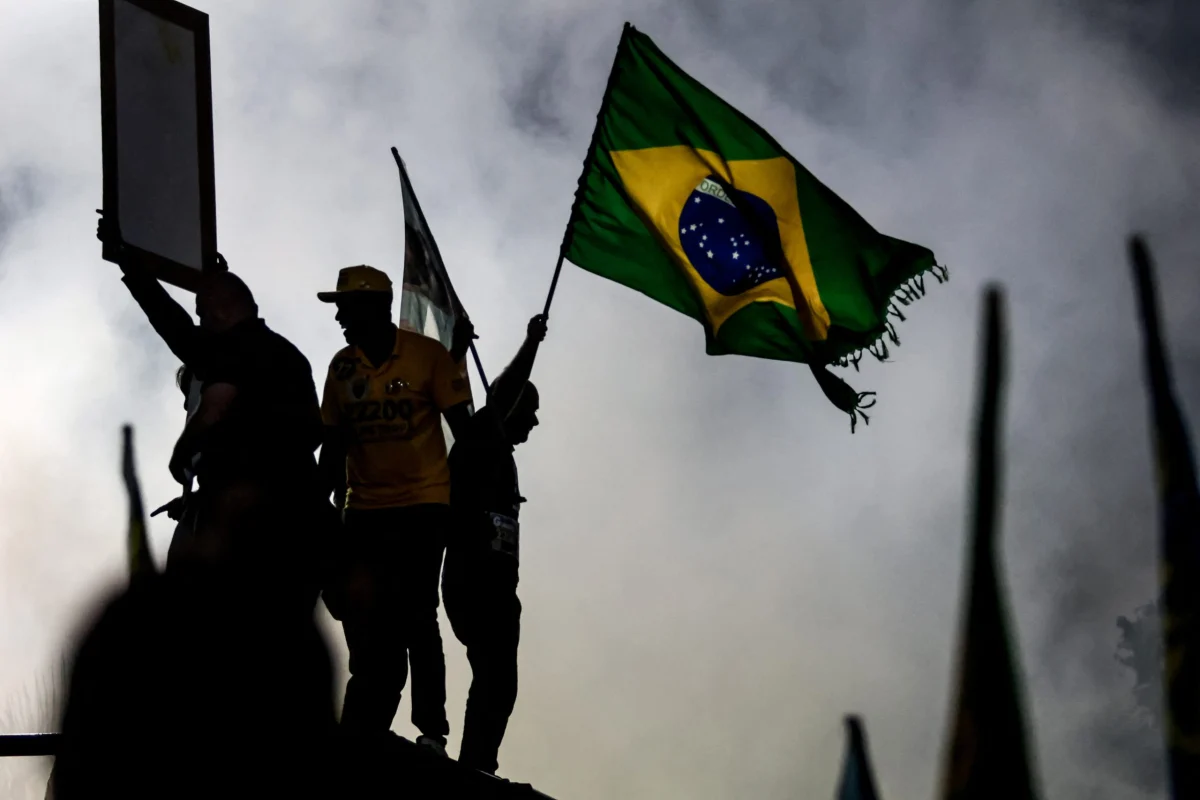
The polls have officially opened across Brazil for a pivotal presidential election that marks a significant crossroads for Latin America’s largest democracy and its 160 million registered voters. In a contest that mirrors the deep ideological polarization of the last decade, left-wing incumbent Luiz Inácio Lula da Silva is seeking a historic fourth non-consecutive term, facing off against Senator Flavio Bolsonaro, the eldest son of former President Jair Bolsonaro. This election is not merely a choice between two candidates but a referendum on two diametrically opposed visions for Brazil’s future, its democratic institutions, and its standing on the global stage.
As the sun rose over the capital of Brasília and the coastal hubs of Rio de Janeiro and São Paulo, long queues formed at polling stations. Beyond the presidency, Brazilians are also casting ballots for governors, senators, and federal and state lawmakers. The electoral rules stipulate that if no presidential candidate secures more than 50 percent of the valid votes today, the two frontrunners will advance to a decisive runoff scheduled for October 25. Most major opinion polls conducted in the final week of the campaign suggest a razor-thin margin, with Lula maintaining a slight edge that falls within the margin of error in several key battleground states.
A Clash of Political Dynasties and Legacies
The 2026 election is defined by the enduring influence of the "Bolsonarismo" movement and the resilient political life of Lula, the 80-year-old leader of the Workers’ Party (PT). Lula, who served as president from 2003 to 2010 and returned to power in 2023, has centered his campaign on the "consolidation of social peace" and the expansion of the social safety nets that defined his earlier tenures. His platform emphasizes the reduction of hunger, the protection of the Amazon rainforest, and the strengthening of labor rights.
Conversely, Flavio Bolsonaro, representing the Liberal Party (PL), has framed his candidacy as a crusade for "liberty" and a rejection of what he terms "left-wing authoritarianism." At 45, the younger Bolsonaro has sought to inherit his father’s populist base while presenting a more polished, legislative-savvy persona. After casting his vote in Rio de Janeiro on Sunday morning, the Senator told a scrum of reporters that his primary goal was to "free the Brazilian people" from a government he claims has stifled the economy through high taxation and failed to protect its citizens from rising crime.
"Brazil needs change," Flavio Bolsonaro declared. "It cannot bear any more suffering, such as high taxes and the tragedy of violence against women. We are confident that the desire for a safer, freer Brazil will prevail, perhaps even in the first round."
The Shadow of the 2022 Election and the Coup Plot
The current political climate cannot be understood without the context of the 2022 election and its tumultuous aftermath. In that cycle, Lula defeated Jair Bolsonaro by a narrow 1.8 percentage points, the closest margin in Brazil’s modern history. The elder Bolsonaro’s refusal to concede and the subsequent January 8, 2023, riots in Brasília—where supporters stormed the halls of power—led to a massive judicial crackdown.
Jair Bolsonaro is currently serving a 27-year prison sentence following his conviction for his role in a conspiracy to overturn the 2022 results. The conviction of the former president, along with several high-ranking military officers, has been a central theme of the 2026 campaign. For Lula’s supporters, the imprisonment of the elder Bolsonaro represents the triumph of the rule of law. For Flavio’s supporters, it is viewed as political persecution, a narrative that the Senator has utilized to galvanize his base.
Historians and political analysts, such as Andre Pagliarini of Louisiana State University, note that this election is a battle over the interpretation of Brazil’s recent past. "The stakes are incredibly stark," Pagliarini observed. "Lula embodies the consolidation of Brazilian democracy since the end of the 21-year military dictatorship, while the Bolsonaro family argues that the institutions erected since 1985 are either rotten or unresponsive to the needs of the common man."
Public Concerns: Security, Corruption, and the Economy
While the candidates focus on grand ideological narratives, the Brazilian electorate is largely preoccupied with immediate socio-economic pressures. Data from a recent Quaest survey highlights a shift in public priorities:
- Public Safety (31%): Violence and organized crime have emerged as the top concerns for voters. Flavio Bolsonaro has capitalized on this by promising a "hardline" approach, including expanding gun ownership rights and increasing police immunity. Lula has countered by focusing on federal coordination and addressing the root social causes of crime.
- Corruption (20%): Both sides have traded accusations of graft. The Bolsonaro campaign frequently references the "Lava Jato" (Car Wash) investigations of the past, while Lula’s camp points to the various scandals and the coup investigations involving the Bolsonaro family.
- The Economy (19%): Inflation and the high cost of living remain persistent issues. Brazil’s economy has shown signs of resilience, but the "feeling" of prosperity has not reached all sectors of the population, particularly in the impoverished North and Northeast regions.
- Healthcare (12%): The long-term effects of the pandemic and the need for more robust public health funding continue to resonate with the working class.
Chronology of the 2026 Campaign Cycle
The road to today’s vote has been marked by several key milestones that have shaped the current landscape:
- January 2023: Following the inauguration of Lula, thousands of Bolsonaro supporters storm the Supreme Court, Congress, and the Planalto Palace. The event triggers a massive investigation into "anti-democratic acts."
- June 2024: The Superior Electoral Court (TSE) maintains the ineligibility of Jair Bolsonaro, solidifying Flavio Bolsonaro as the primary standard-bearer for the right.
- January 2025: Jair Bolsonaro is sentenced to 27 years in prison, causing a temporary dip in the Liberal Party’s polling but eventually leading to a "martyrdom" effect that rallies the conservative base.
- May 2026: Lula officially announces his bid for a fourth term, citing the need to "finish the work of reconstruction" despite concerns regarding his age and health.
- August 2026: The official campaign season begins, dominated by televised debates where Flavio Bolsonaro emphasizes his alliance with U.S. political figures and Lula emphasizes his "Bolsa Família" social program expansions.
- September 2026: A series of major rallies across São Paulo and Minas Gerais show a dead heat between the two candidates, leading to an aggressive final push in the media.
Geopolitical Implications and the "Trump Factor"
The outcome of this election will have profound implications for international relations. Brazil, a key member of the BRICS nations and a global agricultural powerhouse, finds itself at the center of a tug-of-law between the United States and China.
Al Jazeera’s Lucia Newman, reporting from São Paulo, noted that the Brazilian presidency is on a "collision course" with the U.S. political landscape, particularly regarding the influence of Donald Trump. "Trump is a vocal and ardent supporter of the Bolsonaro family," Newman explained. "A victory for Flavio Bolsonaro would likely see Brazil align closely with a Trump-led Washington, potentially cooling relations with Beijing, Brazil’s largest trading partner."
Lula, on the other hand, has pursued a policy of "active non-alignment," seeking to maintain strong economic ties with China while asserting Brazil’s sovereignty at the United Nations. During his campaign, Lula warned against "foreign interference" in domestic affairs, a veiled reference to the support the Bolsonaro family receives from international far-right movements.
Analysis of Potential Outcomes
If Lula secures a victory, it would likely signal a continuation of state-led investment and environmental protections. However, he would face a fractured Congress where the Liberal Party and its allies hold significant sway, potentially leading to legislative gridlock.
A Flavio Bolsonaro victory would represent a dramatic shift back toward privatization, deregulation, and a conservative social agenda. It would also signal that the "Bolsonarismo" movement has successfully transitioned from a cult of personality surrounding the father to a durable political dynasty.
Regardless of the winner, the closeness of the race suggests that the "two Brazils"—one urban, progressive, and focused on social equality, and the other rural, conservative, and focused on security and religious values—will continue to coexist in a state of high tension.
The Voting Process and Security
Brazil utilizes a sophisticated electronic voting system that typically allows for results to be tallied within hours of the polls closing. Despite past criticisms from the Bolsonaro camp regarding the system’s integrity, the Superior Electoral Court (TSE) has implemented additional transparency layers for the 2026 cycle, including expanded public audits and the participation of international observers.
Security has been tightened at polling stations nationwide following reports of localized political violence during the campaign. Over 500,000 security personnel, including members of the National Guard, have been deployed to ensure the safety of voters and election officials.
As the afternoon progresses, the world watches to see if Brazil will choose the path of continuity under Lula or a return to the right under the next generation of the Bolsonaro family. The final results, expected late Sunday night, will not only determine the leadership of the country for the next four years but will also serve as a barometer for the health of democracy across the Southern Hemisphere.
