

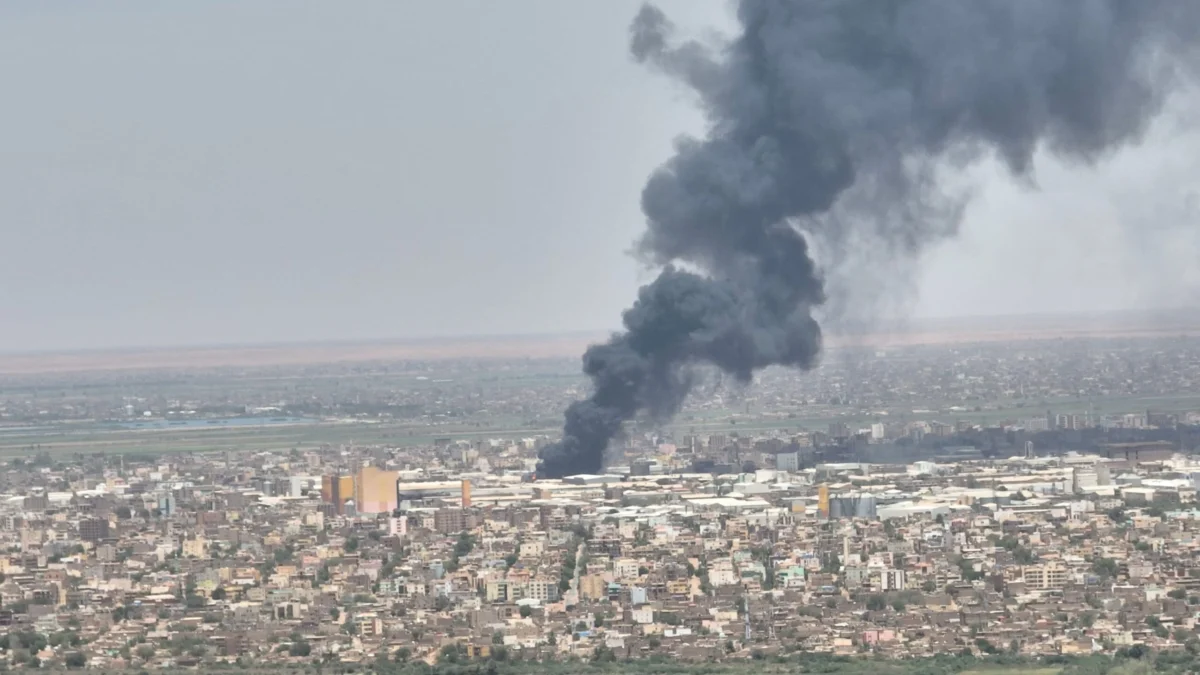
The diplomatic corridors of the Saudi Arabian port city of Jeddah became the focal point of international efforts to stabilize Northeast Africa this weekend as representatives from the Sudanese Armed Forces and the paramilitary Rapid Support Forces arrived for "pre-negotiation" talks. Orchestrated under a joint U.S.-Saudi initiative, these discussions represent the most significant diplomatic intervention since the outbreak of hostiles on April 15, 2023. The conflict, which has pitted two rival generals against one another in a brutal struggle for control over Africa’s third-largest nation, has already resulted in hundreds of fatalities, thousands of injuries, and a mass exodus of approximately 100,000 refugees into neighboring countries. While the international community has expressed cautious optimism regarding the Jeddah summit, the situation on the ground in Khartoum remains volatile, with continued reports of airstrikes and heavy artillery fire undermining the spirit of the negotiations.
The primary objective of the Jeddah talks is not a comprehensive political settlement but rather a "pre-negotiation" phase aimed at establishing a durable humanitarian ceasefire. For three weeks, numerous truce agreements have been announced only to be violated within hours, leaving civilians trapped in a crossfire that has transformed residential neighborhoods into active war zones. Both Riyadh and Washington have urged the Sudanese army, led by General Abdel Fattah al-Burhan, and the RSF, commanded by Mohamed Hamdan Dagalo, popularly known as Hemedti, to engage constructively. However, the rhetoric from both camps suggests a profound lack of trust. Special envoy Dafallah Alhaj, representing the army, has stated that the military will not sit down directly with the RSF delegation, referring to the paramilitary group as "rebellious," while the RSF’s attendance was marked by initial ambiguity, highlighting the fragile nature of the mediation.
Historical Context: From Revolution to Civil War
To understand the current crisis, one must look back to the 2019 popular uprising that ended the 30-year autocratic rule of Omar al-Bashir. Following Bashir’s ouster, a delicate power-sharing agreement was established between civilian pro-democracy groups and the military. This transition was derailed in October 2021 when General Burhan and Hemedti joined forces to orchestrate a military coup, dissolving the civilian-led government and stalling the nation’s democratic aspirations.
However, the alliance between the two generals was a marriage of convenience that quickly soured. The core of the current conflict lies in a dispute over the "Framework Agreement," an internationally backed plan designed to return the country to civilian rule. The sticking point was the timeline and method for integrating the RSF—a powerful paramilitary force with its origins in the Janjaweed militias of the Darfur conflict—into the regular Sudanese army. General Burhan pushed for a rapid two-year integration process, while Hemedti advocated for a ten-year timeline that would allow him to maintain his independent power base. As tensions escalated throughout early 2023, the mobilization of RSF troops near military airbases served as the spark that ignited the full-scale conflict on April 15.
Chronology of the Conflict: Three Weeks of Escalation
The conflict has moved through several distinct phases of escalation leading up to the Jeddah talks:
- April 15–17: Initial clashes erupt in Khartoum and Merowe. The RSF claims control of the Presidential Palace and Khartoum International Airport, while the army utilizes its superior air power to strike RSF positions in densely populated urban areas.
- April 18–24: The fighting spreads to Darfur and North Kordofan. International efforts to evacuate diplomats and foreign nationals begin as the Khartoum airport becomes a primary battlefield.
- April 25–May 1: Several 72-hour ceasefires are brokered by the United States and regional partners. While these allow for some civilian movement and evacuations via Port Sudan, heavy fighting continues in the capital’s "tri-city" area (Khartoum, Omdurman, and Bahri).
- May 2–5: The humanitarian situation reaches a breaking point. The UN warns of a total collapse of the health system. Saudi Arabia and the U.S. formalize an invitation for "pre-talks" in Jeddah.
- May 6: Delegations from both sides arrive in Jeddah, even as explosions continue to rock Khartoum North (Bahri).
The Humanitarian Toll and Infrastructure Collapse
The human cost of the power struggle is staggering. According to data from the Sudanese Ministry of Health and various non-governmental organizations, the death toll has surpassed 500, though the actual figure is believed to be significantly higher due to the inability of medical staff to reach many areas. The World Health Organization (WHO) has reported that nearly 70% of hospitals in conflict-affected zones are out of service. Many facilities have been shelled, while others have run out of basic supplies like oxygen, blood bags, and fuel for generators.
The displacement crisis is equally dire. The United Nations High Commissioner for Refugees (UNHCR) has recorded over 100,000 people crossing borders into Egypt, Chad, South Sudan, and Ethiopia. Internally, hundreds of thousands remain trapped in Khartoum with dwindling supplies of food and water. Looting has become rampant, with the World Food Programme (WFP) reporting that its warehouses were raided, resulting in the loss of thousands of tons of emergency food aid. On Saturday, the WHO successfully delivered a shipment of medical aid to Port Sudan, but the organization emphasized that "security clearances" and "safe passage guarantees" are still lacking, preventing these life-saving supplies from reaching the epicenters of the fighting in the interior.
Geopolitical Interests and Regional Stability
The international community’s urgency in Jeddah is driven by Sudan’s strategic importance. Situated at the crossroads of the Middle East and Sub-Saharan Africa, Sudan shares borders with seven countries, many of which are already grappling with their own internal instabilities. A prolonged civil war in Sudan could destabilize the entire Sahel region and create a massive migration wave toward Europe.
Saudi Arabia’s role as a mediator is particularly significant. Riyadh has deep economic and security interests in Sudan, especially regarding the security of the Red Sea. Both Burhan and Hemedti have historically maintained close ties with the Kingdom, having provided Sudanese troops to support the Saudi-led coalition in Yemen. For the United States, the conflict represents a threat to regional counter-terrorism efforts and a setback for the "Integrated Country Strategy" aimed at fostering democracy in the Horn of Africa. White House National Security Adviser Jake Sullivan’s travel to Saudi Arabia this weekend underscores the high level of American involvement in ensuring these talks do not collapse.
Analysis of the Jeddah Negotiations: Challenges and Prospects
Despite the commencement of talks, several factors suggest that a permanent resolution remains distant. First, the delegations in Jeddah are primarily focused on "technical" aspects of a ceasefire—such as the creation of humanitarian corridors and the withdrawal of troops from hospitals—rather than a political settlement. The Sudanese army’s refusal to engage in "direct" talks with the RSF indicates that they still view the paramilitary group as an illegitimate entity that must be dismantled.
Second, the "zero-sum" nature of the conflict makes compromise difficult. General Burhan views the RSF as a threat to the state’s monopoly on force, while Hemedti views the integration of his forces as a move that would lead to his political and perhaps physical liquidation. Hemedti has positioned himself as a champion of the 2019 revolution to gain civilian support, but his history in Darfur makes him a polarizing figure.
Third, the lack of an enforcement mechanism for any agreed-upon truce remains a major hurdle. Previous ceasefires failed because neither side faced immediate consequences for violations. The Jeddah talks will need to produce a monitoring mechanism—perhaps involving satellite imagery or third-party observers—to hold the warring parties accountable.
The Path Forward
As drone footage continues to show plumes of black smoke rising over the Khartoum skyline, the Jeddah talks represent a slim but vital hope for the Sudanese people. The immediate priority is the cessation of hostilities to allow for the restoration of water and electricity services and the delivery of surgical supplies to remaining hospitals.
However, the international community must also look beyond the immediate humanitarian crisis. If the Jeddah initiative succeeds in establishing a truce, the subsequent challenge will be returning to the transition to civilian rule. Pro-democracy groups in Sudan have expressed concern that a "deal between two generals" might sideline the civilian movement that started the revolution in the first place. The consensus among analysts is that any lasting peace in Sudan must involve a broad spectrum of civilian political actors and a clear, time-bound roadmap for the military’s exit from the political and economic spheres.
For now, the eyes of the world are on the Red Sea coast. The success or failure of the "Jeddah Process" will determine whether Sudan can pull back from the brink of a full-scale civil war or if it will join the ranks of the region’s long-term failed states, with devastating consequences for millions of its citizens.
